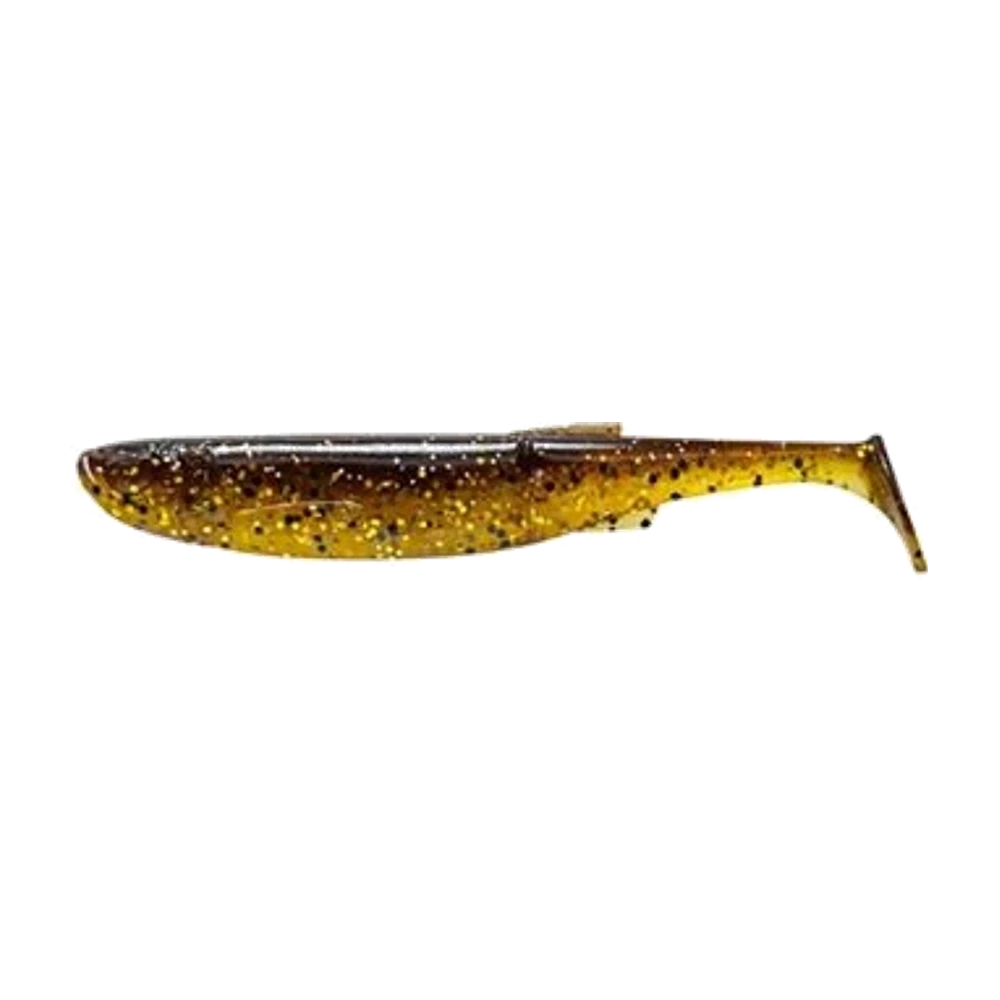
Savage Gear Craft Bleak: the slim shad that copies a bleak
Not sure this lure fits YOUR spot today? CarnaFish tells you in 10 seconds, from a photo.
There is a deeply frustrating scenario in perch fishing: a feeding frenzy starts in front of you, perch smashing bait on the surface, you cast your usual shad into it, and nothing happens. Nothing at all. The fish keep hunting a metre from your lure.
In almost every one of those cases the reason is the same: the perch are locked onto bleak, and your stocky 4 g shad looks nothing like a bleak. A bleak is a long fish, extremely slim, almost flat, with a mirror flank and very little thickness. A standard shad is two to three times wider for the same length.
The Craft Bleak answers exactly that problem. Its silhouette was drawn on that baitfish, and the result shows at the precise moment other shads get ignored.
What the slim profile really changes
You might think the difference is purely cosmetic. It is mostly hydrodynamic.
- Less water resistance. A slim body needs less lead to sink and responds to very light input. You can fish it slower without it going dead.
- A high, tight vibration. The tail works at high frequency with low amplitude. The signal it sends is that of a small stressed fish, not a broad roach thumping its tail.
- A reflective flank over a long length. On every oscillation, the flash is thin and elongated. That is precisely the image a shoal of bleak throws back when light passes through it.
- A silhouette that does not intimidate. To a thirty-centimetre perch, a 10 cm lure that is very slim is still a credible mouthful, where a wide shad of the same length is not.
Head weight, the only real setting
With this lure, almost the whole game comes down to the choice of jig head. The body does not change; what changes is the water layer and the sink rate.
| Situation | Jig head | Effect wanted |
|---|---|---|
| Surface feeding, calm water | 3 to 5 g | stays high, very slow retrieve |
| Searching margins 1-3 m | 5 to 7 g | controlled sink, bottom contact possible |
| Drop-off, jetty, 3-5 m | 8 to 10 g | fast sink, vertical work |
| Moderate river current | 7 to 10 g | holding the seam without being swept away |
Two principles to hold onto. Weight as light as the situation allows: a perch following a slowly sinking lure makes up its mind far more often than a perch watching a leaded lure plummet past. And use a round head rather than a bullet head: the round one keeps the lure horizontal and lets the tail work during the drop.
On the water: when perch are smashing bait on the surface, do not cast into the boil. Cast three metres behind the frenzy and retrieve slowly, crossing under it. The big perch hold below the shoal, picking up injured fry as they sink — that is where they are, not in the froth.
The retrieve: slow first, kicks second
- Cast and let it sink on a half-tight line, following the line with your eyes. Plenty of bites come on that first drop.
- Retrieve slowly and straight, just fast enough to feel the tail beat in the rod tip. If you feel nothing, you are going too slowly for the head weight you are using.
- Add a short kick every five or six seconds: a sharp flick of the rod tip followed by a one-second stop. The lure breaks out, sits sideways for an instant, then picks up its swim again.
- On difficult fish, replace the kicks with simple speed variations: two faster turns, then back to the original rhythm.
- Set the hook by pulling sideways as soon as the tension changes. Perch suck the lure in and spit it out fast.
Vertically or along a deep structure, the sequence gets simpler: sink to the bottom, three or four one-metre pulls, then another controlled drop.
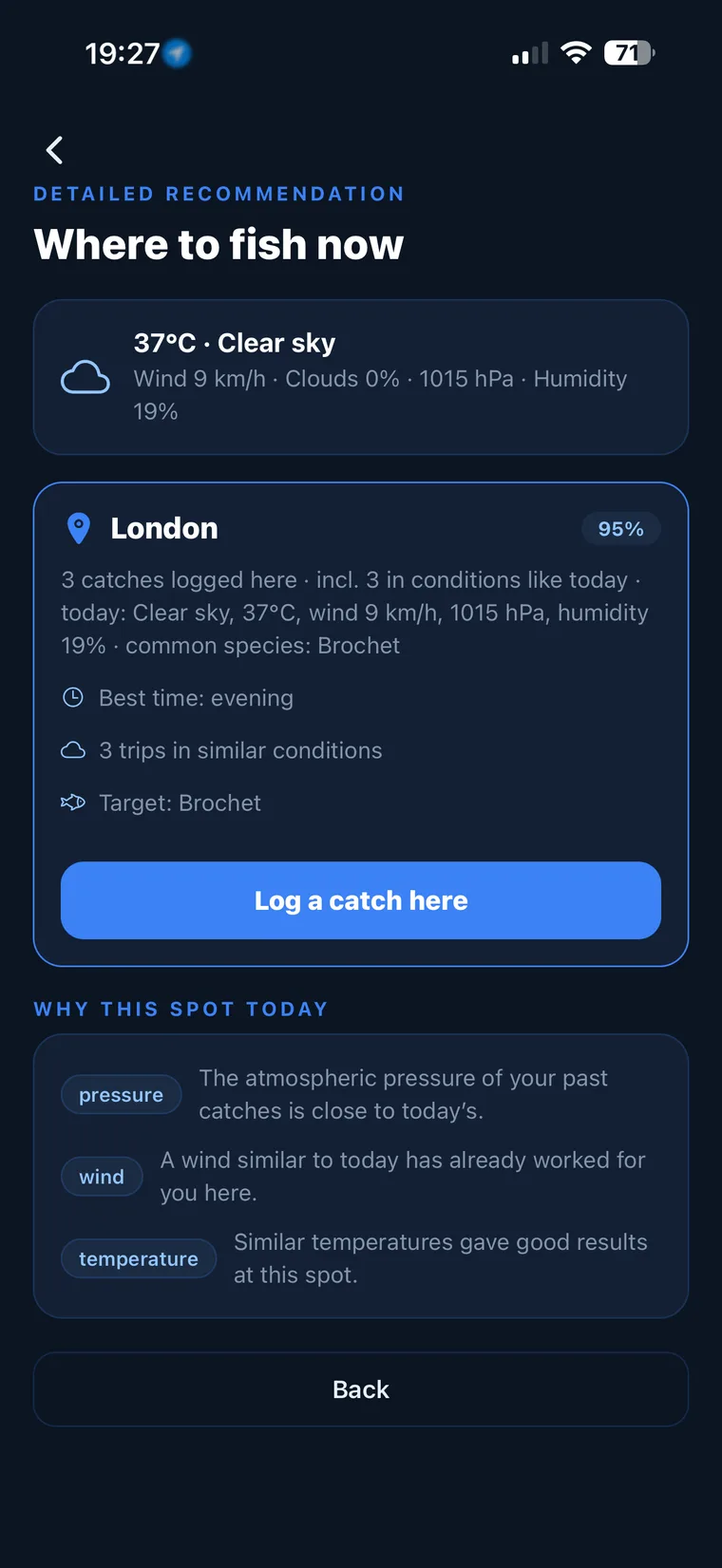
Not sure what to tie on?
Photograph your spot: CarnaFish reads the scene, cross-checks the conditions and gives you the zone, the lure and the retrieve. Free on iOS and Android.
Where it excels, where it is the wrong choice
The windows to look for:
- Clear water, where the fish inspects the lure before deciding.
- Visible shoals of bleak or fry: that is this lure's reference situation.
- Late summer and autumn, when frenzies multiply on the surface and in open water.
- Following perch that shadow a standard shad without taking it.
- Finesse fishing from the bank, where you fish light and slow.
The situations where you should not persist:
- Very coloured water. The signal it sends is weak; a bulkier shad, or a lure with a pronounced vibration, covers the ground better.
- Strong current. The slim body breaks out and spins instead of swimming.
- Hunting big solitary fish: this is not a selective lure, you will catch plenty of average perch.
- Heavily cluttered spots. On a jig head with an exposed hook it snags easily — go for a Texas rig or a drop shot instead.
Craft Bleak or a standard shad
Against a Keitech Shad Impact 3, the difference is not one of quality but of baitfish imitated. The Shad Impact has a fuller body and a rolling swim: it represents a broad baitfish, roach-like, and it puts out more signal. It is the better choice in slightly stained water, or when you are trying to provoke a reaction rather than convince.
The Craft Bleak comes in when the perch have already refused. Its narrow profile and tight vibration make it a far more literal bleak imitation, and it becomes superior in exactly the conditions where the standard shad gets ignored: clear water, selective fish, fine and visible baitfish. Plenty of perch anglers keep one of each in a pocket and switch after ten casts without a bite.
Our guide to perch lure fishing explains how to identify the dominant baitfish before you even cast. And if you are unsure which jig head size to use when you reach the bank, CarnaFish analyses a photo of the spot and answers.
Key takeaways
- A bleak silhouette: very slim body, high-frequency and low-amplitude vibration.
- The main setting is the jig head, 3 to 10 g depending on the layer you want to reach.
- Round head rather than bullet, to keep the lure horizontal on the drop.
- Cast behind a feeding frenzy and cross under it, not into it.
- Avoid it in coloured water, strong current and heavily cluttered spots.
FAQ
What jig head weight for the Craft Bleak?
From 3 to 5 g to fish high over feeding fish, 5 to 7 g to search a margin between 1 and 3 m, and 8 to 10 g beyond that or in current. Always choose the lightest the situation allows.
Why do perch refuse my shads during a feeding frenzy?
Usually because they are locked onto a slim baitfish, typically bleak, and a stocky shad does not match that silhouette. Switching to a narrow body of the same length often fixes it immediately.
Should I cast into the frenzy or beside it?
Beside it, then cross under. The biggest perch hold below the shoal picking up injured fry as they sink, while the surface is occupied by smaller fish.
Is the Craft Bleak suited to zander?
It will catch zander, but it is not its home ground: the slim profile and discreet vibration suit visual perch fishing in clear water better than hunting zander on the bottom.
Can it be fished on a drop shot?
Yes, and it is a good option on difficult fish or cluttered spots. Rigged on a single hook above the weight, it ripples on the spot with very little input.
How does it differ from a Keitech Shad Impact?
The Shad Impact has a fuller body and a rolling swim that imitates a broad baitfish and puts out more signal. The Craft Bleak is slimmer, more discreet, and takes the lead in clear water on selective perch.
The full perch lure guideSeason-by-season strategy: which family of lure, when, and why.Go from theory to fish
CarnaFish reads your spot from a photo and gives you the game plan: zone, lure, retrieve. Free on iOS and Android.