Scottsboro Swimbaits: the hand-poured shad out of Alabama
Not sure this lure fits YOUR spot today? CarnaFish tells you in 10 seconds, from a photo.
A soft shad is not a complicated object: a body, a tail and a material. The material is what separates a forgettable bait from one that catches, and that is exactly what Scottsboro Tackle Co. sells — swimbaits poured by hand in Scottsboro, Alabama, where they are made. The question is what the process actually changes once the bait is in the water, and what you have to accept in exchange.
Hand pouring and what it implies
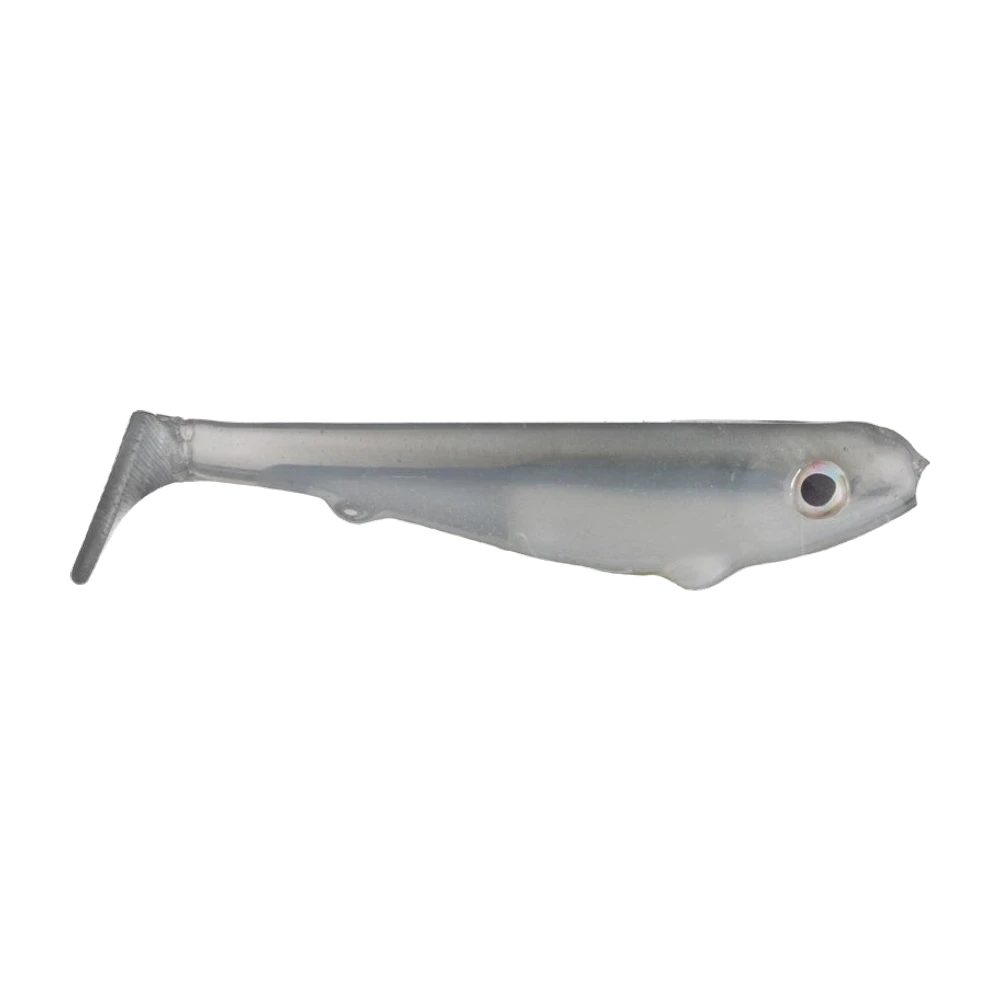
The maker makes one point repeatedly: these swimbaits are poured by hand, one at a time, rather than injection moulded in batches. The process has very concrete consequences. First, the finish: on the sample in the photo you can clearly see the pour line where the peduncle meets the tail, a detail injected baits do not show. Second, the material: hand pouring generally works with a softer plastisol, because it does not have to survive the stresses of a pressurised mould.
That softness has a price. A hand-poured bait wears out faster, tears at the hook hole after a few fish, and does not take kindly to being stored loose against other plastics. In exchange, the tail starts working at speeds where a hard injected shad stays inert, and the body collapses under a jaw, which often buys a fraction of a second before the fish spits it.
Two rigs designed into the mould
This is the most useful part of the description, and it is explicit: the body carries a shallow hook pocket along the belly. The maker states that it allows two distinct rigs.
Screwlock hook, for vegetation
A screwlock style hook, with a spring for the nose, lets you thread the bait by the head, bring the point out through the back and bury it in the plastic. The belly pocket then guides the shank and keeps the bait straight. This is the weedless configuration: pad edges, laydowns, rip-rap. The maker calls it a perfectly weedless presentation, and that is a claim to read as such — in really dense vegetation a sheltered single hook still picks up salad.
Jig head, for open water
The second stated rig: a traditional jig head with the hook exposed, for open water. This is the one that best exploits the swim the maker describes, because it holds the body by the nose without stiffening the rest. On a breakline, a flat or a current seam, that is the one to reach for.
With a body this soft, the adjustment is not made at the reel but at the head weight. Drop one step when the bites come on the fall, go up one step when the bait stops touching bottom where it should. Changing speed means nothing if the bait is not running at the right height.
The stated swim: roll plus kick
The maker describes two combined movements: a side-to-side roll of the body and a natural tail kick. They do not come from the same place. The roll is a matter of volume and distribution — a tall, flat body tips from one flank to the other as soon as water pushes it sideways. The kick comes from the thin peduncle and flat tail visible in the photo: a reduced section behind a wide body is what creates the hinge.
In practice that means a bait to retrieve slowly. A steady straight retrieve is enough to trigger both movements, and speeding up tends to crush the roll in favour of the kick alone. If you want a shad that tolerates speed, a denser injected body such as the Keitech Swing Impact Fat 3.8 handles a fast retrieve better.
The classic mistake
Rigging it on too heavy a head out of habit. On soft plastic, an oversized head drags the nose, pins the body and kills the roll: all that remains is the kicking tail, and you lose most of what you came for. Start with the lightest head that reaches the depth you want, and only go up if drift becomes unmanageable.
What the maker does not publish
Plainly put: the description carries no size table. No length, no weight, no buoyancy class. It states only that several sizes exist and that there is a wide range of baitfish colour patterns. Retail prices spread widely enough to suggest at least two or three formats, or different pack counts, but that is not data: it is an observation about prices.
In practice, ask for the length and the piece count per bag before you order. On a bait sold bare, length dictates hook size and head weight, and getting the format wrong means coming home with a bait you cannot fish on the tackle you packed.
Not sure what to tie on?
Photograph your spot: CarnaFish reads the scene, cross-checks the conditions and gives you the zone, the lure and the retrieve. Free on iOS and Android.
Colours by water clarity
- Clear water: a translucent pearl like the sample in the photo, with a faintly blue back and a silver eye. It passes light and imitates the near-transparent body of a young baitfish.
- Lightly stained water: a more pronounced shad pattern, dark back and light flanks, which keeps a readable contrast once transparency stops doing the work.
- Dirty water: a frankly opaque, dense colour. In low visibility the silhouette works, not the detail of the finish.
A craftsman's bait in a working tackle box
This kind of swimbait belongs next to the industrial references, not instead of them: you pull it out when the fish refuse the hard shads everybody runs across the same spot. To judge whether the situation calls for it, CarnaFish reads a photo of the spot and suggests the zone, the depth and the lure family that fit the conditions of the day. And to build method before tackle, our guide to getting started on bass lays the groundwork. If you want a comparison in the same soft-rolling logic, the Basstrix Paddle Tail remains the benchmark of the genre.
Key takeaways
- Hand poured in Scottsboro, Alabama: that is the manufacturing method, and it explains the softness as much as the relative fragility.
- The shallow belly hook pocket allows two rigs the maker designed for: a weedless screwlock hook, or a jig head for open water.
- The stated swim combines a side-to-side roll and a tail kick; excessive speed crushes the roll.
- No published dimensions: ask the retailer for length and pack count before choosing hook and head weight.
FAQ
How big is a Scottsboro Swimbait?
The maker description gives no figure. It states only that several sizes exist and that the colour range is wide. Since the bait is rigged with an added hook and weight, length is something to ask the retailer before ordering.
Screwlock hook or jig head?
Both are designed for. The maker states that the shallow belly pocket accepts a screwlock hook for a weedless rig, or a traditional jig head for open water. The first travels through vegetation, the second gives the better swim.
Is a hand-poured bait more fragile?
As a rule yes, because the process works with a softer plastisol than industrial injection. Carry spares, do not store them touching other plastics, and expect to change bodies after a few fish.
How fast should it be retrieved?
Slowly and steadily. The maker describes a side-to-side roll combined with a tail kick, and the roll is the first movement speed destroys. If you need to cover water quickly, switch to a denser injected body.
Does it catch anything besides bass?
The description targets bass explicitly. A baitfish profile of this kind can interest pike or a big perch in Europe, but a hand-poured soft plastic does not survive pike teeth for long, and it is not sold for that.
What jig head weight should you pick?
The lightest that reaches the depth you are after. On a soft body, too heavy a head pins the bait and kills the roll: you lose half the action to gain a few seconds on the drop.
The full bass lure guideSeason-by-season strategy: which family of lure, when, and why.Go from theory to fish
CarnaFish reads your spot from a photo and gives you the game plan: zone, lure, retrieve. Free on iOS and Android.