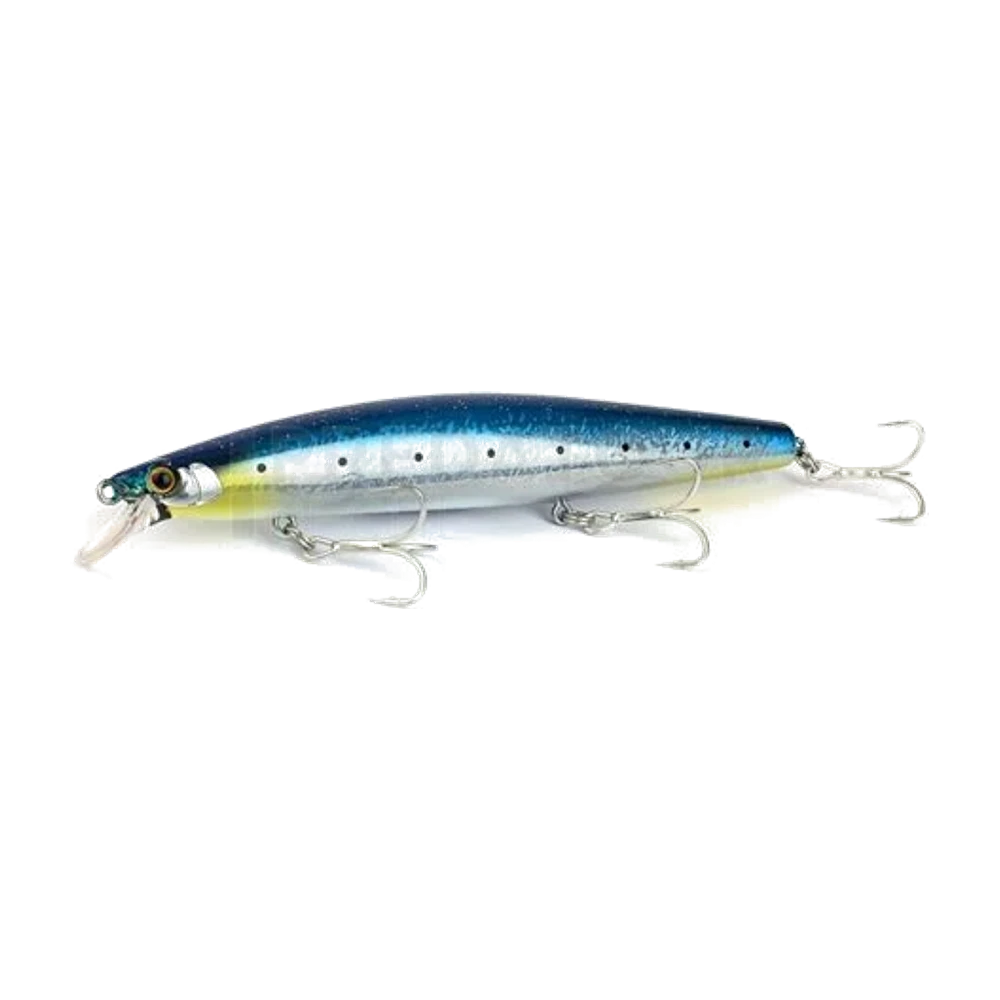
Shimano Exsence Silent Assassin: when noise scares fish off instead of pulling them in
Before tying this one on, it helps to know if the spot actually calls for it. CarnaFish reads the scene from a photo.
Everyone repeats that a noisy lure calls fish from a distance. That holds on a rough sea, in coloured water, or when the bass are actively hunting. It stops being true in two very specific situations: night fishing on calm water, and spots where the bass see thirty lures go past every week.
In those conditions, the rattles inside a standard minnow are no longer a call sign, they are an alarm. A bass that has been hooked once on a clicking lure associates the noise with danger, and a bass hunting by sight in twenty centimetres of flat water needs no acoustic help to find its prey.
The Exsence Silent Assassin is built without a rattle chamber. The weight is either fixed or mobile but damped, and the lure moves through the water without producing a click. What is left is a tight swimming action, a silhouette, and nothing else. On an educated bass, that is often exactly what is needed.
What silence actually changes
Three effects you can verify on the water.
- Follows turn into strikes more often. On a noisy lure, a wary bass tracks it then peels away a metre out. Without the noise, it never gets that late moment of doubt.
- Night sessions become more consistent. After dark, bass hunt with their lateral line and on silhouette. A silent lure with a tight action stays perfectly detectable, but it does not produce the acoustic anomaly that turns a fish away.
- Worn-out spots come back to life. On a headland or a breakwater fished daily, changing the noise is usually more productive than changing the colour.
The trade-off is real: on a rough sea, in the foam, or in heavy water, silence becomes a handicap. Fish only detect the lure within a reduced radius, so you cover ground more slowly.
The retrieve in calm water
A silent lure does not forgive a sloppy retrieve: movement is all it has to get noticed.
- Cast parallel to the bank when fishing a beach or a breakwater at night. Bass patrol the first band of water far more than the open ground.
- Let it settle for two or three seconds after the splashdown. On the sinking version, count the seconds to pick your layer.
- Retrieve slowly and steadily. Much more slowly than in daylight. Night speed is often half the daytime speed.
- Slip in a two-second pause every five or six turns of the handle. On a floater the lure rises gently; on a sinker it drops. Both trigger.
- Slow down again over the last ten metres. A large share of night bites comes within a few metres of your feet.
Set the hook by leaning into the fish, not by ripping the rod up. At night the bite is often heavy and slow: let the fish turn with the lure before you strike.
On the water: at night, stop chasing distance. Bass hunt in the first ten metres far more often than people believe, and a full-blooded cast straight out has you fishing over empty ground for eighty per cent of the retrieve. Cast along the bank, not in front of you.
Choosing size and density
| Conditions | Size | Version |
|---|---|---|
| Calm night, shallow water | 9 to 12 cm | floating or suspending |
| Night with light chop | 12 to 14 cm | floating |
| Daytime on a pressured spot | 9 to 12 cm | floating |
| Wind, or distance needed | 12 to 14 cm | sinking |
| Estuary current | 12 cm | sinking, fished across |
With the sinking version, counting down is not optional: count the seconds of the drop, note the one that produced the bite, and repeat it. One second either way can be the difference between fishing in the shoal and fishing above it.
On night colours, forget subtle shades. The bass sees a silhouette against the light. Two options work: very pale — white, pearl — or very dark, close to black. The in-between tones are the hardest to read.
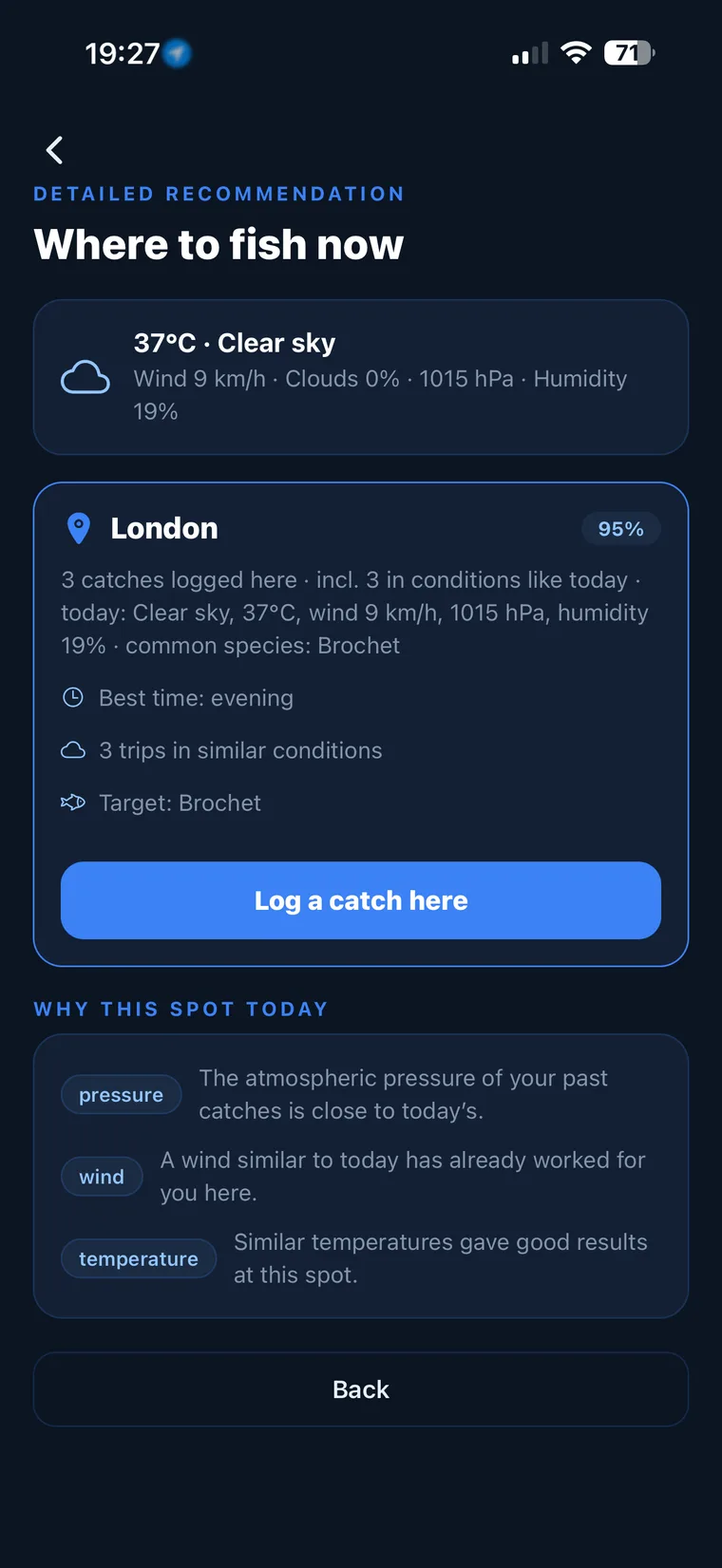
Not sure what to tie on?
Photograph your spot: CarnaFish reads the scene, cross-checks the conditions and gives you the zone, the lure and the retrieve. Free on iOS and Android.
Where it is the wrong tool
Three situations rule it out.
Rough sea and foam. In the background noise of breaking surf, a silent lure goes unnoticed. You need volume, vibration, and ideally noise.
Heavily coloured water after a blow. Detection is then almost entirely down to the lateral line: a high-vibration lure or a blade will be a better fit.
Bass pinned to the bottom in midwinter. This minnow works the upper layer. On fish sitting at five or six metres, a shad on a jig head is the only coherent approach.
Silent or noisy: how to decide
The rule is simple and comes before you even pick a model: the louder the background noise, the louder your lure should be. Calm sea and a dark night, silence. Rough sea and wind, a noisy lure.
A distance-oriented minnow such as the Rapala MaxRap Long Cast remains the best choice when you have to reach a far-out bar into a headwind — its action and its weight system are designed for that. The Exsence Silent Assassin plays the opposite game: less raw range, but a presentation that gets past fish which refuse everything else. For a wider action and a very slim profile in clear water, the Duo Tide Minnow Slim is an interesting alternative.
Our guide to lure fishing for sea bass covers how to read spots and tide windows. And if you are torn between a discreet lure and a noisy one when you get to the spot, CarnaFish analyses a photo of the spot and answers.
Key takeaways
- No rattles: the lure makes no clicking sound at all, which matters on educated bass and at night.
- Retrieve far more slowly at night than in daylight, with a pause every five turns.
- Cast along the bank rather than straight out: bass patrol the first band of water.
- Night colours: very pale or very dark, never in between.
- Handicapped on a rough sea, in coloured water and on deep fish.
FAQ
Why choose a rattle-free lure for sea bass?
Because on calm water, at night, or on a heavily fished spot, the clicking becomes a warning rather than a call. A silent lure with a tight action stays detectable by the lateral line without triggering suspicion.
What retrieve speed for sea bass at night?
Clearly slower than in daylight, often half the speed. Add a two-second pause every five or six turns of the handle, and slow down again over the last ten metres.
What colour for sea bass at night?
Very pale, white or pearl, or on the contrary very dark, close to black. The bass sees a silhouette against the light, so contrast matters more than shade; mid-range colours are the least effective.
Floating or sinking version?
The floater for shallow ground and for night fishing close in, since it rises during the pauses. The sinker to gain distance in wind, or to reach a precise layer by counting the seconds of the drop.
Does this lure work on a rough sea?
Less well. In the foam and the noise of breaking surf, a silent lure is barely detected. Switch to a bulkier, noisier model, or to a high-vibration lure.
How deep does the Exsence Silent Assassin run?
Between thirty centimetres and around 1.20 m depending on the version and the retrieve speed. It is an upper-layer lure, to be set aside when bass are sitting several metres down.
The full sea bass lure guideSeason-by-season strategy: which family of lure, when, and why.Go from theory to fish
CarnaFish reads your spot from a photo and gives you the game plan: zone, lure, retrieve. Free on iOS and Android.