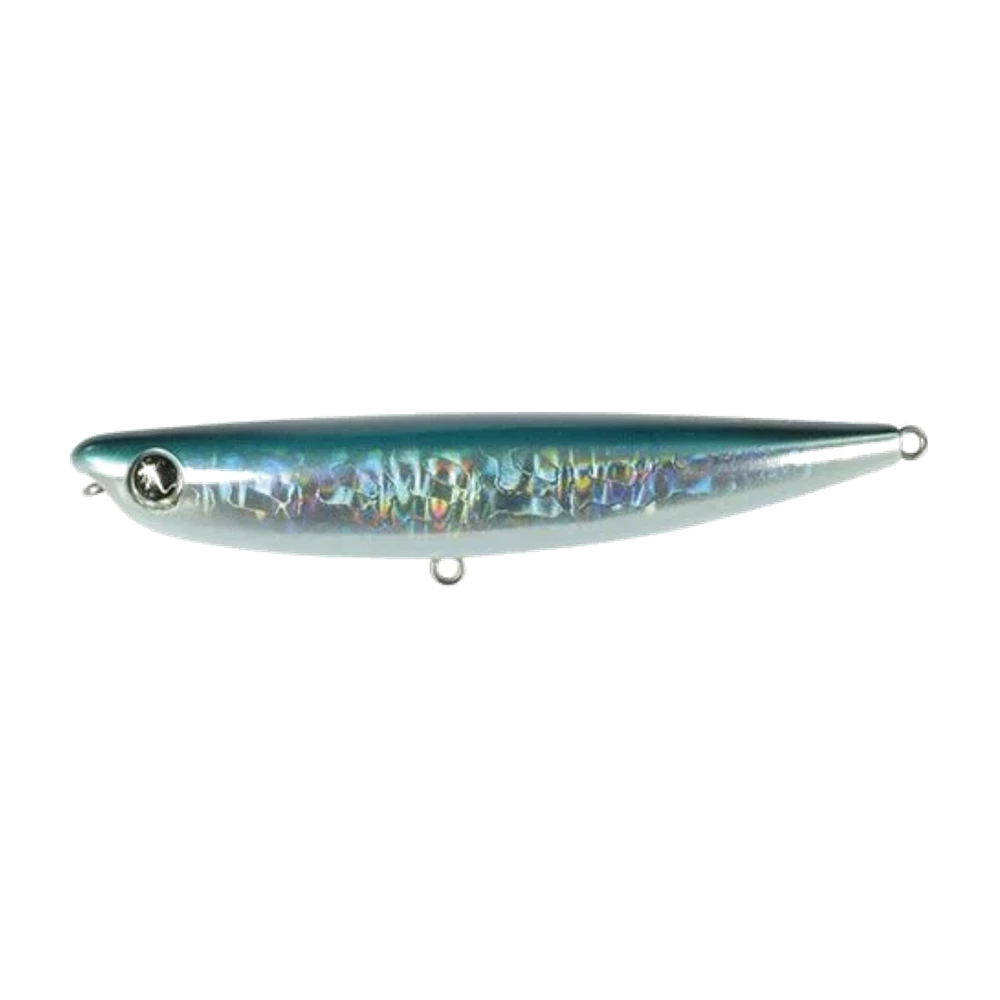
SeaSpin Pro-Q: the sinking minnow you fish just under the surface
Before tying this one on, it helps to know if the spot actually calls for it. CarnaFish reads the scene from a photo.
A sand beach at dawn, glassy sea, a metre twenty of water over fifty metres of width. You know there are bass on it — you heard them smashing bait ten minutes ago. You clip on a sinking lure so you can cast far, you start retrieving, and it ploughs the sand or catches in the weed before it has covered ten metres.
That is the contradiction of shore fishing for bass: you need density to cast, and you must not go down. Most anglers solve it by clipping on a floater, and they lose twenty metres of range — which is the whole zone where the fish are actually feeding.
The Pro-Q is interesting because it answers both needs with one lure. It sinks, so it casts far; but the moment you start retrieving, its slim profile and small lip lift it and hold it very high in the water. The whole technique lies in managing that compromise.
A sinking lure fished like a floater
Here is how it behaves. On a slack line, it drops flat, without nosing down, gliding slightly. On the first pull, it recovers its attitude and climbs back towards the surface. The faster you retrieve, the higher it runs.
That gives you a very wide working range, controlled by just two settings:
- The sink count before you start. Zero seconds to work at 20 or 30 cm, ten seconds or more to reach a layer at two or three metres.
- The retrieve speed. A very slow retrieve keeps it low and slow; a brisk one brings it back just under the surface.
The benefit over a shallow beach is immediate: you cast forty metres, start the retrieve straight away, and the lure crosses the whole zone thirty centimetres down, over the sand and over the weed.
Counting down, the only method that works
On a sinking lure, counting is not a specialist's trick: it is the equivalent of a depth setting. And it is not something to improvise.
- Calibrate at the start of the session. Cast over ground whose depth you know, count until it touches bottom, and remember the number. That gives you the day's real sink rate, which depends on the lure size and on the current.
- Cast and count under your breath before every retrieve.
- Start at the surface. First cast, zero seconds. Second, three seconds. Third, six. And so on down to the bottom.
- Note the depth of the first bite and stay on it. With bass, the active layer shifts through the day but rarely within the hour.
- Retrieve steadily, no twitching. This lure needs no rod work: its continuous swim is what does the job.
- Stop for one or two seconds every ten metres. The lure goes back to its gliding descent, and that is very often when the bass makes up its mind.
On the water: on a beach at dawn, do not start by scanning the whole profile. Make your first five casts with no sink at all, retrieving from the moment it lands. Bass feeding at first light are pinned right under the surface, and a lure that drops even two seconds passes below them unseen. You can go deeper once the sun is up.
The sizes and their ground
| Size | Approximate weight | Best ground |
|---|---|---|
| 9 cm | around 13 g | Lagoons, harbours, brackish ponds, small summer bass |
| 12 cm | around 24 g | Sand beaches, weed flats, the most versatile size |
| 14 cm | around 38 g | Headwind, very long casts, big fish, deeper water |
A word on hooks. In salt water, stock trebles do not last long: rinse in fresh water after every session, check the points systematically, and replace at the first sign of rust. On the bigger sizes, plenty of anglers move to heavy-duty trebles in the equivalent size — which slightly increases the sink rate, so you have to recalibrate your counting.
On line: fine braid of 0.12 to 0.16 mm for distance, a 0.30-0.40 mm fluorocarbon leader of one to one and a half metres for abrasion, and a heavy-duty round snap. The snap is not a luxury here: it lets you change lures without retying a knot with wet hands in the dark.
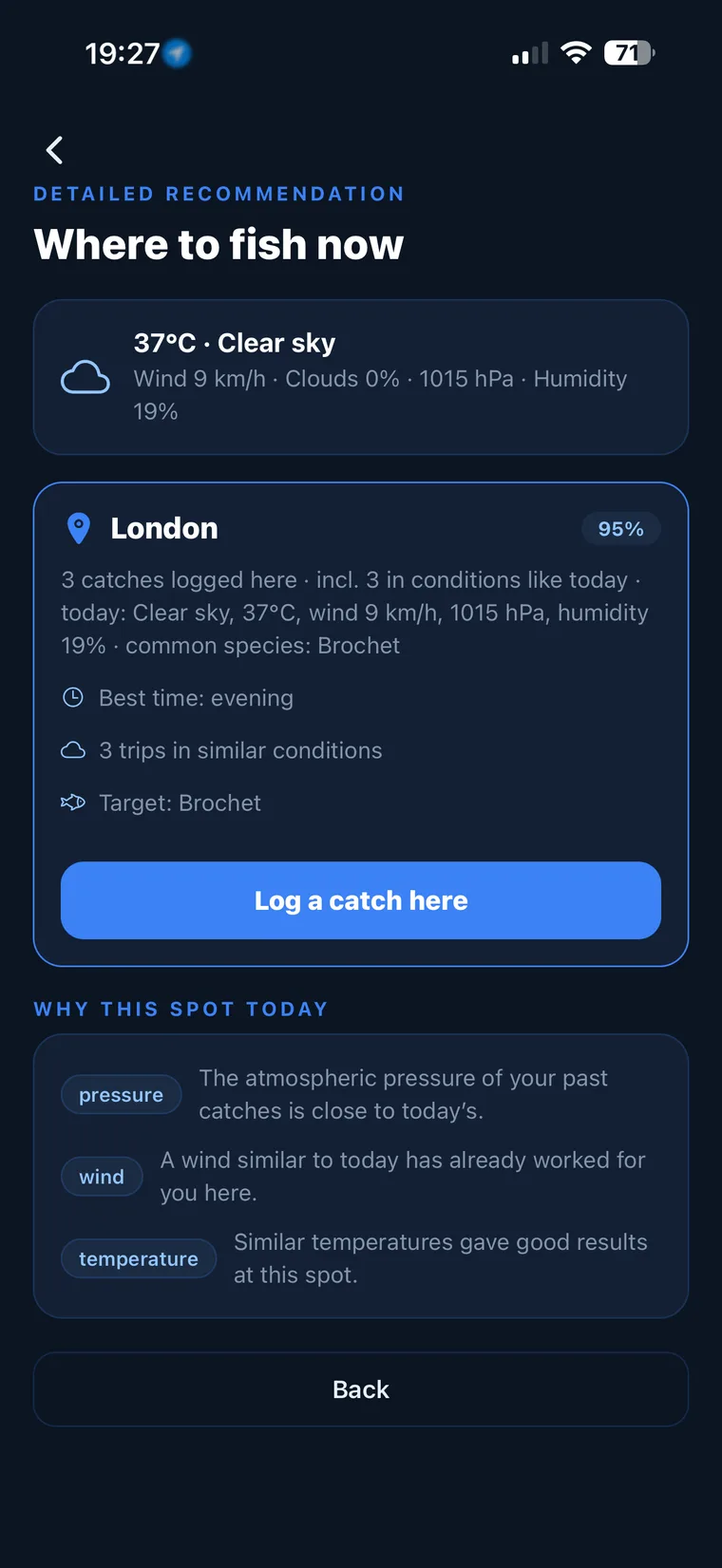
Not sure what to tie on?
Photograph your spot: CarnaFish reads the scene, cross-checks the conditions and gives you the zone, the lure and the retrieve. Free on iOS and Android.
Where it shines, where it is not the right call
Its windows:
- Shallow sand beaches at dawn and dusk, when bass are feeding in a metre of water.
- Weed flats where you have to run over the top of the growth without ever touching it.
- Lagoons, brackish ponds and harbours, on a very slow retrieve, on settled fish.
- Calm to flat seas. That is the condition in which its tight swim reads best.
- Night fishing, where the regularity of the swim counts for more than anything else. Our guide to lure fishing for bass sets out the time windows worth targeting.
Its limits:
- Rough seas and surf. In broken water a tight swim becomes unreadable and the lure loses its grip.
- Strong current. It works poorly when dragged across a powerful seam.
- Bass smashing bait fish: in that case, an erratic lure that changes direction triggers better than a steady swim.
- Ground beyond five metres, where the sink time eats into your fishing time.
Pro-Q, Mommotti or Janas
All three are SeaSpin lures aimed at bass, and it would be easy to mix them up. In reality they answer three different sea states.
The SeaSpin Mommotti is the lure for rough rocky coast. Its density lets it cast into the wind and above all keep its swim in broken water, where the Pro-Q would lose the thread. As soon as it is moving and breaking over the rocks, that is the one to clip on.
The SeaSpin Janas has no lip: it is a stickbait, built for side-to-side darts driven by the rod, especially in current seams and on actively feeding bass. It does not swim on its own, you have to work it.
The Pro-Q takes the third slot: calm sea, shallow water, slow steady retrieve, fish patrolling rather than hunting. It is the lure for the start and the end of the day on a windless beach, and that is where neither of the other two replaces it.
And if you are torn between those three registers when you reach the shore, CarnaFish reads a photo of the spot and answers.
Key takeaways
- It sinks so you can cast far, but climbs on the first pull: you fish it high.
- The sink count is your depth setting; calibrate it at the start of the session.
- On a beach at dawn, start retrieving the moment it lands, with no sink at all.
- A one to two second stop every ten metres restarts the gliding descent and draws bites.
- A lure for calm seas and shallow water; in the surf, switch to something denser.
FAQ
Does the Pro-Q sink fast?
It drops flat and steadily, without nosing down, and the rate depends on the size you pick. The only reliable reference is the one you measure yourself: count until it touches bottom over a known depth, at the start of the session.
What depth should you work it at on a beach?
Between 20 and 50 cm below the surface in most cases, starting the retrieve the moment the lure lands. Bass feeding at dawn in a metre of water sit high: a lure that drops passes underneath them.
Do you need to work it with the rod?
No, a steady straight retrieve is enough and it is what makes the lure work best. Just add a one to two second stop every ten metres: the gliding descent that follows draws a lot of bites.
What size should you start with?
The 12 cm, around 24 g. It casts far, goes anywhere on a beach or a weed flat, and suits bass of all sizes. The 14 cm becomes interesting into a headwind and on bigger fish.
What is the difference with the Mommotti?
The Mommotti is built for rough rocky coast: its density lets it hold its swim in the wash. The Pro-Q is built for calm seas and shallow water, on a slow retrieve. Those are two opposite sea states.
Should you change the hooks for saltwater use?
Rinse in fresh water after every session and check the points systematically. Replace at the first spots of rust, and consider heavy-duty trebles on the bigger sizes — recalibrating your counting, since the lure will sink slightly faster.
The full sea bass lure guideSeason-by-season strategy: which family of lure, when, and why.Go from theory to fish
CarnaFish reads your spot from a photo and gives you the game plan: zone, lure, retrieve. Free on iOS and Android.