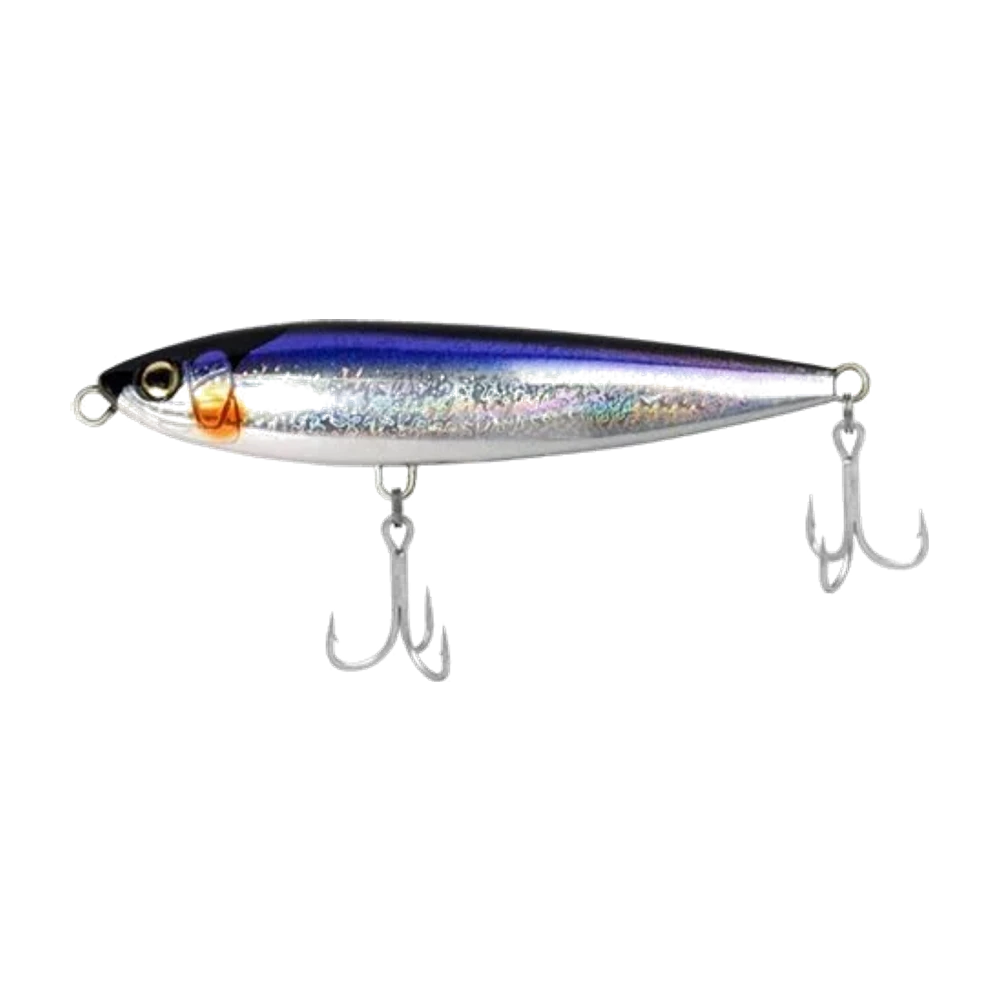
Shimano Coltsniper Rock Walk: fishing over rock when nothing else gets through
Before tying this one on, it helps to know if the spot actually calls for it. CarnaFish reads the scene from a photo.
A rocky ledge under a metre of water is the best bass spot on a coastline, and the worst place to cast a lure. The bottom is a field of rock heads, fissures and mussel beds. A diving lure stays there after three casts. A soft plastic on a jig head, same. A sinking lure, same.
That leaves exactly one usable layer of water: the top twenty centimetres. And up there, only one type of lure does the job properly when the sea is not flat — a stickbait heavy enough to carry in the wind, but sitting low enough not to lift off the water on every wave.
The Rock Walk is calibrated for that very precise compromise. It does not have the spectacular glide of a calm-water stickbait, and that is not what it is asked for. What it is asked for is to keep walking while the surface moves.
Staying glued to the water
The problem with a topwater in a lively sea is easy to describe: between two waves, line tension changes abruptly. The lure is pulled up one moment, released the next. Most stickbaits react by coming out of the water, then landing flat, with no action for two seconds.
Three things limit that on this model:
- A heavily weighted tail and a fine nose. At rest it floats almost vertically, head just under the surface. That position gives it strong vertical inertia: it takes much more than one wave to lift it out.
- A firm step rather than a wide one. Every input produces a clean, short sideways move with an immediate return. A wide step assumes a regular surface; a short step re-forms on the first useful pull.
- Enough mass. At 13 to 20 g depending on size, it keeps permanent contact with the line. A lighter topwater becomes unplayable as soon as the wind passes fifteen knots.
So this lure is not chasing a show. It is chasing continuity: an action present 100 % of the retrieve, even an ugly one, rather than a beautiful action 60 % of the time.
The retrieve: walking down the swell
- Cast into the wind when you can, or across it. With the sea in your face, you lose contact the moment the line bellies.
- Rod low, almost parallel to the water. Unlike a freshwater walking bait, you really do not want to lift: the lure would come off the water.
- Give short, regular inputs, about two a second, recovering half a turn between each one.
- When a wave comes, stop for half a second and let it pass under the lure. Pick up afterwards. Pulling against a wave produces nothing.
- Slow down markedly over visible rock heads or patches of foam. Those are the spots. A bass sitting in a fissure will come up 80 cm to take something off the surface, but it needs a second to decide.
At the end of the retrieve, keep the lure working all the way in. On this kind of spot, a large share of the takes happen in the breaking zone right in front of you, where plenty of anglers have already stopped fishing.
On the water: on a rocky ledge, do not fish the rocks — fish the foam patches. After a wave breaks, the foam takes ten to fifteen seconds to disperse and marks exactly the lane where the churned water has washed out crabs and small fish. Run your lure through the foam trail while it is still visible, not three metres to the side.
Tide window and conditions
| Stage | Depth over the ledge | Verdict |
|---|---|---|
| Low water | Rock exposed | Reconnaissance only, note the fissures |
| Mid-flood | 20 to 50 cm | Too little water, the bass have not moved up yet |
| 2 h either side of high water | 1 to 2 m | The window. Bass feeding over the plateau |
| Mid-ebb | 50 cm to 1 m | Still good, bass dropping back towards the edges |
That is a fundamental difference from current-seam lures, which give their best at mid-tide. Here, you fish around high water, when the plateau is covered, and the ideal is a lively sea but not a wild one: a metre to a metre and a half of swell, a crosswind, and slightly churned water.
In a glassy sea and full sun, this lure is too demonstrative for a clear ledge — that is the moment to drop down in size and in subtlety.
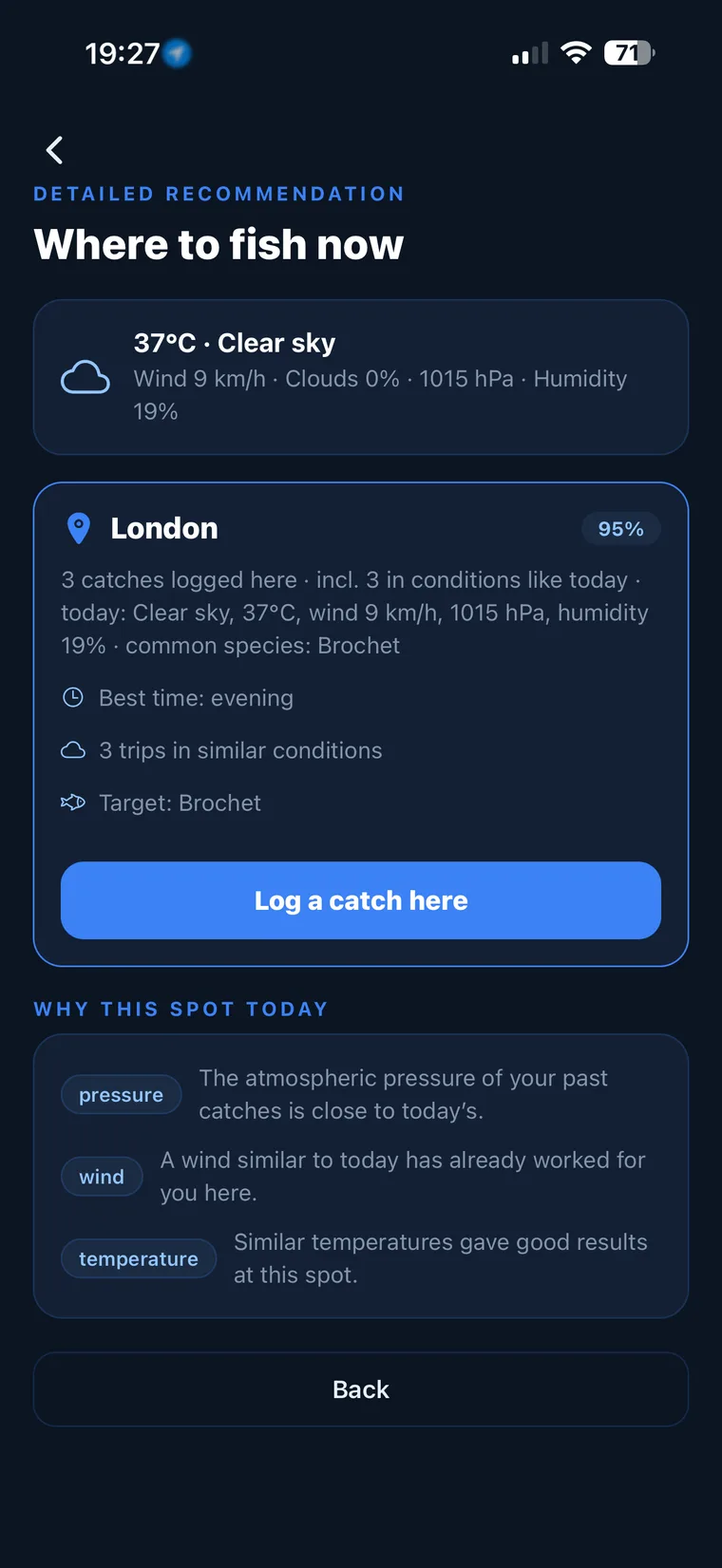
Not sure what to tie on?
Photograph your spot: CarnaFish reads the scene, cross-checks the conditions and gives you the zone, the lure and the retrieve. Free on iOS and Android.
The setup, not to be neglected on this ground
The bass is not the problem; the rock and the mussels are. Three precautions:
A 0.40-0.50 mm leader over one metre. Not for breaking strain, but for abrasion. A 0.30 mm that rubs twice on a mussel bed breaks on the third fish.
Heavy-duty split rings from the start. A bass hitting on the surface, on a lure coming out of the water, concentrates the whole load on a single ring. That is the classic failure point.
Quality trebles, stock size. Going heavier kills the vertical position at rest and therefore the ability to hold in the swell. If you want sharper points, change the brand, not the size.
And check the leader by feel after every fish. On this kind of spot, roughness can be felt with a fingertip well before anything is visible.
Rock Walk, light pencil or current minnow
These three families do not target the same time of day or the same spot.
The Bassday Sugapen is a much smaller, more discreet topwater, cut out for wary bass in calm clear water on sheltered spots. It is unmanageable in a rough sea.
The Daiwa Current Master works below the surface and is reserved for mid-tide, in an established current seam. On a rocky ledge at high water, with no real flow, it has no advantage.
The Tackle House Shores Pencil covers the light end of the surface register: beaches, small harbours, calm dawns. Its size and weight are not suited to a headwind.
The Rock Walk takes the slot the other three leave empty: rough sea, wind, surfacing rock, high water. It is a specialist lure, to be brought out for a precise condition rather than kept permanently on the end of the line. Our guide to lure fishing for bass places those windows within a typical day. And if you are unsure which area to fish on a ledge when you reach the shore, CarnaFish reads a photo of the spot and answers.
Key takeaways
- A weighted tail and near-vertical position at rest: it does not lift off on every wave.
- Rod low, short inputs, two a second. Lifting the rod pulls it out of the water.
- Let the wave pass rather than pulling against it, then pick the cadence back up.
- Its window is two hours either side of high water on a covered ledge, in a lively sea.
- Too demonstrative in a glassy sea, and pointless on a spot with no rocky relief.
FAQ
At what stage of tide should you use the Coltsniper Rock Walk?
In the two hours either side of high water, when the rocky ledge is covered by one to two metres and the bass move up to feed over it. At low water the spot does not exist; at mid-tide, a current lure will often be more relevant.
Can it be fished in a calm sea?
It works, but it is not at its best: its firm step and its weight are built to resist chop and wind. In a glassy sea and clear water, a smaller, more discreet stickbait will take more fish.
What leader for fishing over rock?
Fluorocarbon of 0.40 to 0.50 mm over about a metre, chosen for abrasion resistance rather than breaking strain. Check it with your fingers after every fish: mussels and rock cut into it very quickly.
Should you change the stock hooks?
Change the split rings for heavy-duty models, yes. For the trebles, stay with the same size: going heavier changes the lure's position at rest and costs it the ability to hold in the swell.
How do you work a stickbait in swell?
Rod low, short regular inputs, and above all a half-second pause when a wave passes under the lure. Pulling against the wave produces no action at all and breaks the cadence for several seconds.
What size should you pick?
The 9.5 cm in moderate wind and for average bass, the 11 cm when you need to cast far into the wind or target big fish on an exposed ledge. The extra weight also improves contact in a rough sea.
The full sea bass lure guideSeason-by-season strategy: which family of lure, when, and why.Go from theory to fish
CarnaFish reads your spot from a photo and gives you the game plan: zone, lure, retrieve. Free on iOS and Android.