Storm Gomoku Jig: vertical fishing is won on the line angle
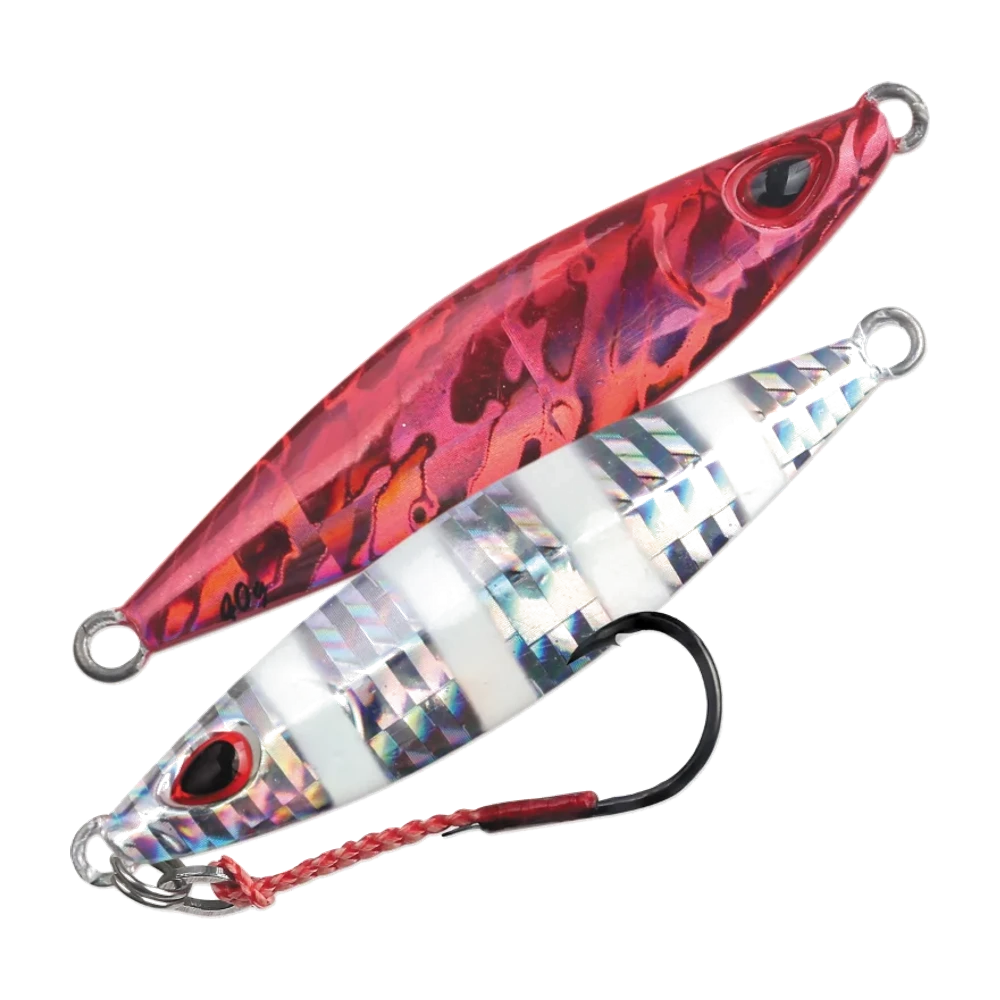
This lure shines under specific conditions. CarnaFish tells you in 10 seconds if today is one of them.
Twenty-eight metres of water, a well-defined pinnacle on the sounder, echoes pinned to the bottom. You drop your jig, you work it for two minutes, and when you look at your line it is running out at forty-five degrees behind the boat. You left the pinnacle a long time ago, your jig is trailing halfway up over nothing, and you are still fishing conscientiously in empty water.
That is the commonest scenario in vertical fishing, and the most expensive. Vertically, the lure is worth nothing until the line is vertical. That is not a slogan: it is the only variable that decides whether you are fishing or just making noise.
The Gomoku Jig is a tool for that style. Slim profile, high density, little water resistance: it drops fast, comes back under the boat easily, and gives the drift less surface to carry away than a wide, flat jig does.
A profile cut to come back under the boat
A flat casting-style jig is designed to flutter for a long time on the fall. That is perfect when you cast from the shore, where a slow fall is an asset. Fished vertically under a boat drifting at a knot, it is exactly the flaw to avoid: the more the lure planes, the further the drift takes it behind you.
The Gomoku takes the opposite line.
- A narrow cross-section and concentrated mass that limit lift, and so limit sideways drift during the descent.
- A short oblique fall rather than a long flutter: the lure slides for a few tens of centimetres then heads back down.
- A pronounced side glide on the lift, produced by the rod stroke: it is that sudden fleeing movement that triggers sea bass, not a steady swimming action.
In plain terms, you trade a little appeal on the fall for a lot of control. On a style of fishing where missing the spot costs you everything, that is a good deal.
Reading the line angle
This is the most useful indicator in this fishing, and the least watched. You read it at a glance, right at the water's surface.
- Under 15 degrees: you are vertical, you are really fishing. That is the goal.
- 15 to 30 degrees: still workable, but you lose feel and you are drifting off the spot. Reel up and drop again.
- Over 30 degrees: you are no longer fishing. Reel up, set the drift back on the spot, go heavier.
| Depth | Light drift | Strong drift |
|---|---|---|
| 15 to 25 m | 30 to 40 g | 50 to 60 g |
| 25 to 40 m | 40 to 60 g | 60 to 80 g |
| 40 to 60 m | 60 to 80 g | 80 g and up |
Two corrections before adding weight: go finer on the braid (dropping from 0.16 to 0.12 mm clearly reduces how much the current grabs sixty metres of line) and use the engine to compensate for the drift. A heavier jig is the last resort, because it degrades the action.
On the water: when your line goes past thirty degrees, do not try to make it up by reeling. Bring it all the way up and drop again. The time lost is twenty seconds; the time lost fishing at an angle without realising it is measured in hours over a day.
The retrieve: the one pitch
The basic vertical stroke is a synchronisation between rod and handle. Once you have it, it becomes automatic.
- Drop with the drag slightly tight, thumb in contact with the spool. Plenty of bites come during that descent: if the line goes slack early, set the hook.
- Touch bottom, then lift immediately by two turns to get out of the snag zone.
- A rod stroke upward of about fifty centimetres, and at the same time a half turn of the handle. The jig glides sideways.
- Bring the rod tip back down with it, without leaving slack. The jig falls obliquely. That is the moment of the bite.
- Link ten to fifteen cycles to cover the lower layer, then drop back to the bottom and start again.
- If you catch a fish, note how many cycles above the bottom it took, and reproduce that height.
For a sea bass sitting tight and apathetic, slow everything down: shorter strokes, pauses of one to two seconds between cycles, letting the jig hang motionless. A lot of strikes come during that stillness.
The rig, and why you leave the treble off
In deep vertical fishing, almost every strike comes from the front, on a lure moving straight up or straight down. Two assist hooks at the head cover that.
The rear treble, on the other hand, brings three drawbacks at depth: it snags on every rock head, it tangles in the assist hooks during the drop, and it makes unhooking a nuisance on a fish brought up from thirty metres. Over clean sandy ground you can keep it. Over rocky pinnacles, take it off at the first snag.
The leader deserves to be generous: one to two metres of 0.35 to 0.45 mm fluorocarbon, joined to the braid with a slim knot, takes the abrasion against rock during the fight.
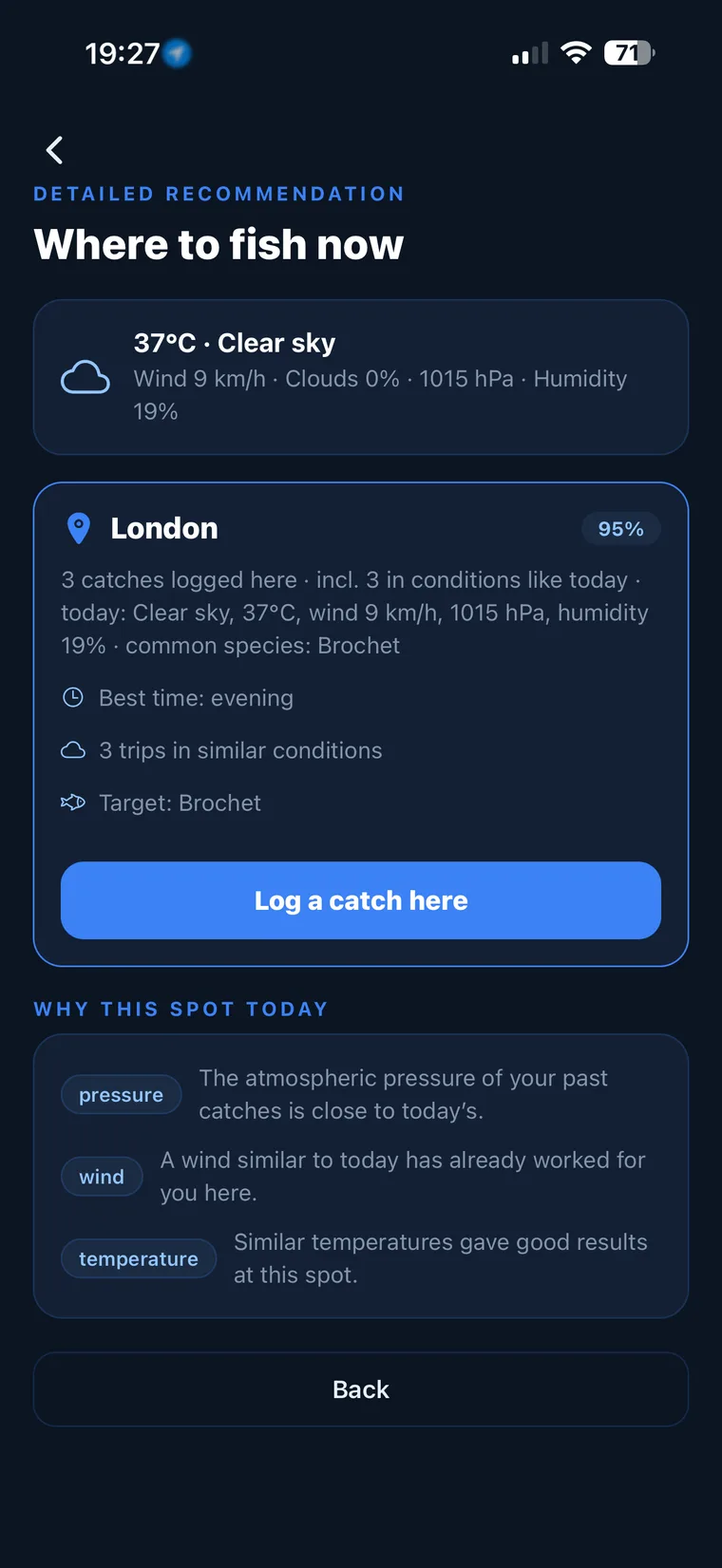
Not sure what to tie on?
Photograph your spot: CarnaFish reads the scene, cross-checks the conditions and gives you the zone, the lure and the retrieve. Free on iOS and Android.
Where this fishing is worth nothing
Vertical fishing assumes three conditions, and it collapses as soon as one is missing: a spot located on the sounder, a manageable drift, and depth. Under ten metres, the boat spooks the fish before your jig arrives. With wind against tide and an erratic drift, you will spend the day reeling up. And on fish scattered in open water, casting and retrieving covers infinitely more ground.
Gomoku or a casting jig
The difference is not a matter of quality but of mission. A Savage Gear Seeker ISO or an Illex Dexter Jig are shaped to fly a long way from the shore and exploit a long fluttering fall. Drop them vertically in thirty metres and they will drift out behind the boat before they reach the bottom.
The Gomoku does the opposite: it casts adequately but not spectacularly, and it excels at dropping straight and coming back quickly under the hull. If your day consists of working pinnacles you have marked on the sounder, it is the right tool. If it consists of following surface feeding activity, take a fast jig such as the Hayabusa Jack Eye.
Our guide to lure fishing for sea bass goes back over reading spots and tide windows. And if you are unsure what weight to drop given the current, CarnaFish analyses a photo of the spot and answers.
Key takeaways
- Line angle is the main indicator: past thirty degrees, you are no longer fishing.
- The narrow profile limits lift and reduces drift during the descent.
- Before adding weight, go finer on the braid and compensate for the drift with the engine.
- The one pitch pairs a rod stroke with a half turn of the handle; the bite comes on the way back down.
- Two assist hooks at the head are enough — the rear treble costs more than it earns over rocky ground.
FAQ
What jig weight should I use at 30 metres?
Between 40 and 60 g with a light drift, 60 to 80 g if the boat is drifting fast. The right benchmark is not depth alone but the angle of your line: it should stay under fifteen degrees.
How do I know whether I am really fishing vertically?
Look at your line where it enters the water. Under fifteen degrees, you are in a fishing position. Between fifteen and thirty, you are losing efficiency. Beyond that, reel all the way up and drop again rather than trying to make it up.
What is the one pitch?
It is the synchronisation of an upward rod stroke with a half turn of the handle, followed by a guided descent of the rod tip. The jig glides sideways then falls obliquely: that is when the fish attacks.
Should I keep the rear treble for vertical fishing?
Rarely. At depth the strikes come from the front, and the treble snags on rock, tangles in the assist hooks and complicates unhooking. Over clean sand you can keep it.
Does fine braid really make a difference?
A lot. Over sixty metres of line in the current, going from 0.16 to 0.12 mm clearly reduces the drag you take and often lets you keep the same weight instead of going heavier.
From what depth does vertical fishing make sense?
In practice beyond fifteen metres. Shallower than that, the noise of the boat and its shadow alert the fish before the jig arrives, and casting from a distance gives better results.
The full sea bass lure guideSeason-by-season strategy: which family of lure, when, and why.Go from theory to fish
CarnaFish reads your spot from a photo and gives you the game plan: zone, lure, retrieve. Free on iOS and Android.