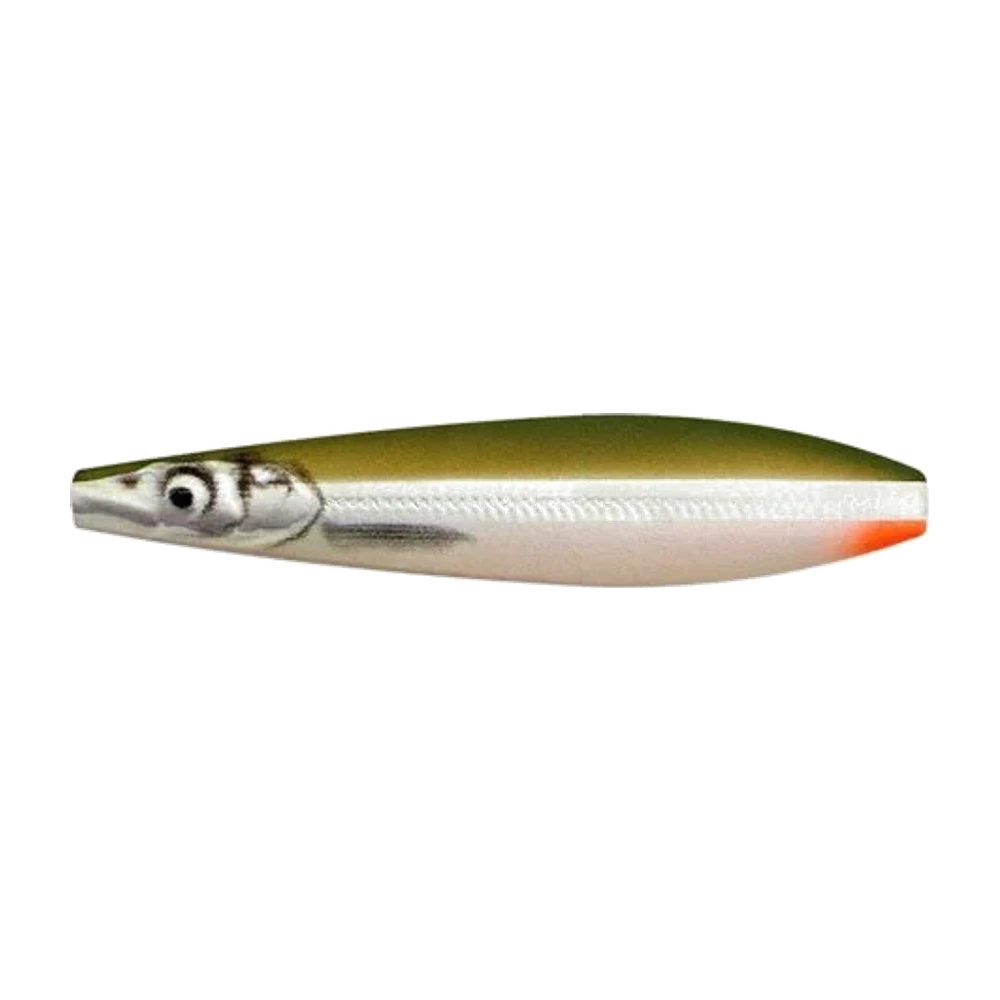
Savage Gear Seeker ISO: reaching sea bass 70 metres out
This lure shines under specific conditions. CarnaFish tells you in 10 seconds if today is one of them.
You are on a rocky point, the wind is in your face, and the birds are working sixty metres out. Everything you have in soft plastics or hard minnows stops at thirty-five metres and tumbles in the gusts. The frenzy will last four minutes, and you are going to watch it.
That precise frustration is what a casting jig solves. A compact, dense piece of metal shaped to cut the air: at equal weight it carries twice as far as a bulky lure. The Seeker ISO belongs to that family, with one quirk — its profile is not symmetrical, and that asymmetry gives it a falling behaviour worth the trip on its own.
A jig that does not drop straight
A perfectly symmetrical jig sinks fast and straight. That works for reaching the bottom, but it is completely mute during the descent: no signal, no reason for a fish to follow it.
The Seeker ISO is domed on one side and flatter on the other. During the fall on a slack line, that asymmetry makes it tip and glide sideways, fluttering, with irregular flashes off the flank. The fish does not see a sinking lead, it sees a small injured fish losing its footing.
Three practical consequences:
- The descent becomes a fishing phase. A good share of the bites comes as the jig falls, not as it comes back.
- Detection changes. A bite on the drop is almost never felt: it is seen on the line, which stops or moves off to the side. You have to watch the line, not the rod.
- On a fast retrieve, the lure tracks straight and becomes pure flight. So you have two radically opposed retrieves with the same lure.
The weight table
Weight is chosen on the wind, the depth and the current — never on the size of the fish.
| Weight | Situation |
|---|---|
| 10 to 16 g | Estuary, shallow beach, light wind, mackerel on the surface |
| 20 to 24 g | The shore angler's compromise: decent distance, control of the fall |
| 30 g | Sustained headwind, current, or water deeper than 8 m |
| 40 g | Very exposed point, strong tidal current, maximum distance wanted |
A useful marker: the heavier you go, the more distance you gain and the less control you keep over the descent. If you no longer feel the bottom or no longer see the line go slack, you are probably one size too heavy.
Two retrieves to know
The first is the fast retrieve. It targets active feeding fish, often on the surface.
- Cast beyond the frenzy, never into it: a jig dropping into the middle of the shoal scatters it.
- Let it sink for two or three seconds only.
- Wind fast and steadily, rod low, pointed at the lure.
- Speed up again over the last five metres. Followers commit at the moment the lure seems to be getting away.
The second is the jerk-and-fall. It targets fish holding station, on a rock or a drop-off.
- Let the jig reach bottom, counting the seconds. Note the number.
- Give two wide upward flicks of the rod tip, taking up the slack.
- Give the line back and let the jig fall freely. This is the key phase: the line has to be slack but watched.
- Pick up contact, start again, working gradually up the water column.
On the water: always count the seconds of the descent on your first cast, then fish at fixed depths. If you hit bottom at twelve seconds and the first bite comes at eight, then every following cast stops at eight seconds. Bass hold in a layer, not in a volume: searching at random has you passing above or below them all session.
The rig: the assist hook is not a gimmick
A casting jig rigged with a single rear treble loses a lot of fish, because they often attack the head of the lure.
- An assist hook at the front, on a solid ring, catches head-on attacks and clearly cuts down on hook pulls. It is the standard rig on this kind of lure.
- The rear treble can stay if you are fishing mid-water, but take it off over rock: you will lose fewer lures and do less damage to released fish.
- A fluorocarbon leader of 0.30 to 0.40 mm, a metre to a metre and a half, protects the braid from abrasion on mussels and rock edges.
- Rinse the lure in fresh water after every session. On metal, the split rings go within a few weeks if you do not, and always at the wrong moment.
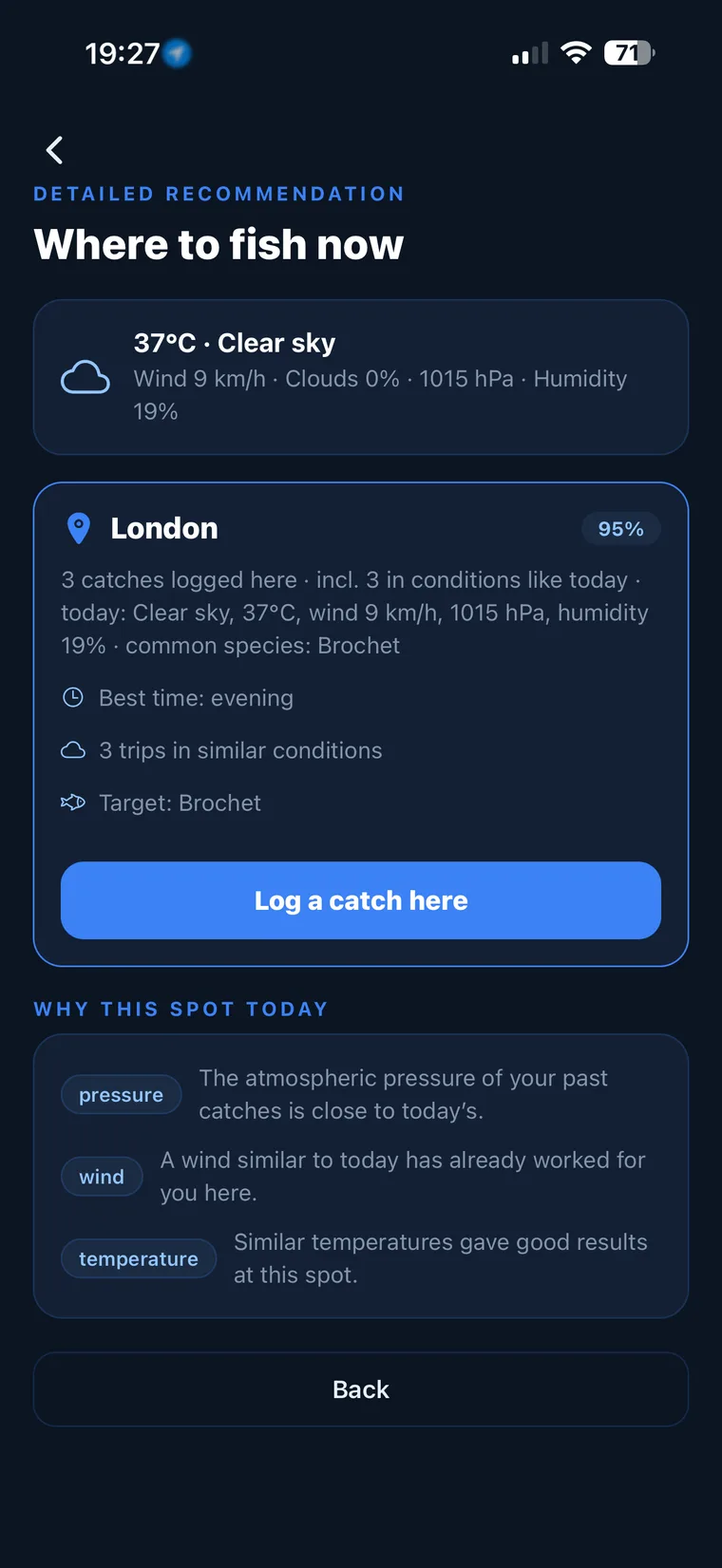
Not sure what to tie on?
Photograph your spot: CarnaFish reads the scene, cross-checks the conditions and gives you the zone, the lure and the retrieve. Free on iOS and Android.
Where it takes the lead, and where it disappoints
Its windows: exposed coastline, wind, distance, active fish. Rocky points, breakwaters, beaches with some swell, estuaries late on the ebb tide. On mackerel in summer, a fast retrieve along the edge of a shoal is often enough to catch one after another.
Its limits are real and worth knowing:
- On posted, apathetic bass in very clear, calm water, it lacks finesse. A soft plastic on a light jig head, retrieved slowly, will beat it.
- Over weed or very broken rock, it snags quickly if you let it touch bottom every time.
- On fish glued to the surface in flat water, the noise of its impact can spook them: better to cast a long way and retrieve immediately.
- In freshwater, it has no real use outside a big deep reservoir.
Seeker ISO or classic spoon
Against an Acme Little Cleo, the difference is stark. A spoon is wide and light for its weight: it wobbles slowly, offers a lot of water resistance and fishes slowly, but it casts badly as soon as there is wind. The Seeker ISO does exactly the opposite: it carries far, sinks fast, and demands either speed or a vertical retrieve. If the fish are close and slow, take the spoon. If they are far out and active, take the jig.
The Savage Gear Line Thru Seeker shares the name and the long-distance remit, but not the principle: the line runs through it, which limits leverage and therefore hook pulls on big bass, and its swim is more imitative on a straight retrieve. The Seeker ISO stays more versatile in depth, since it fishes from the bottom to the surface on the same cast.
Our guide to lure fishing for sea bass covers reading a frenzy and positioning yourself before casting. And if you are unsure which weight to tie on into a crosswind, CarnaFish analyses a photo of the spot and answers.
Key takeaways
- Asymmetrical profile: the jig flutters and glides sideways on the fall, which makes it a fishing phase in its own right.
- A bite on the drop is seen on the line, not felt. Watch the line.
- Count the seconds of the descent and fish at a fixed depth once you have found the layer.
- Assist hook at the front to catch head-on attacks; take the rear treble off over rock.
- Excellent in wind and on active fish; beaten by a slow soft plastic on apathetic bass in clear water.
FAQ
What weight of Seeker ISO should I choose from the shore?
The 20 to 24 g covers most shore situations. Move up to 30 or 40 g only if a headwind, current or depth over 8 m stops you keeping contact.
How do I know what depth to fish?
Count the seconds down to the bottom on your first cast, then note which second the first bite comes at. Then reproduce that sink time exactly on every following cast.
Should I keep the rear treble?
Mid-water, yes, it raises the hook-up rate. Over rock or weed, take it off and keep only the front assist hook: you will lose far fewer lures and do less damage to released fish.
Does the Seeker ISO work for mackerel?
Very well, on a fast steady retrieve along the edges of a shoal, with the light 10 to 16 g weights. Cast beyond the shoal rather than into the middle of it, so as not to scatter it.
Why do my metal lures rust so fast?
Because they are not rinsed. A pass under fresh water after every session, lure taken off the clip, is enough to stop the split rings and hooks failing after a few weeks.
When is a soft plastic the better choice?
As soon as the bass are posted, inactive, in clear calm water, and within casting range. A light jig head retrieved slowly presents a far more credible profile than a fast metal jig in those conditions.
The full sea bass lure guideSeason-by-season strategy: which family of lure, when, and why.Go from theory to fish
CarnaFish reads your spot from a photo and gives you the game plan: zone, lure, retrieve. Free on iOS and Android.