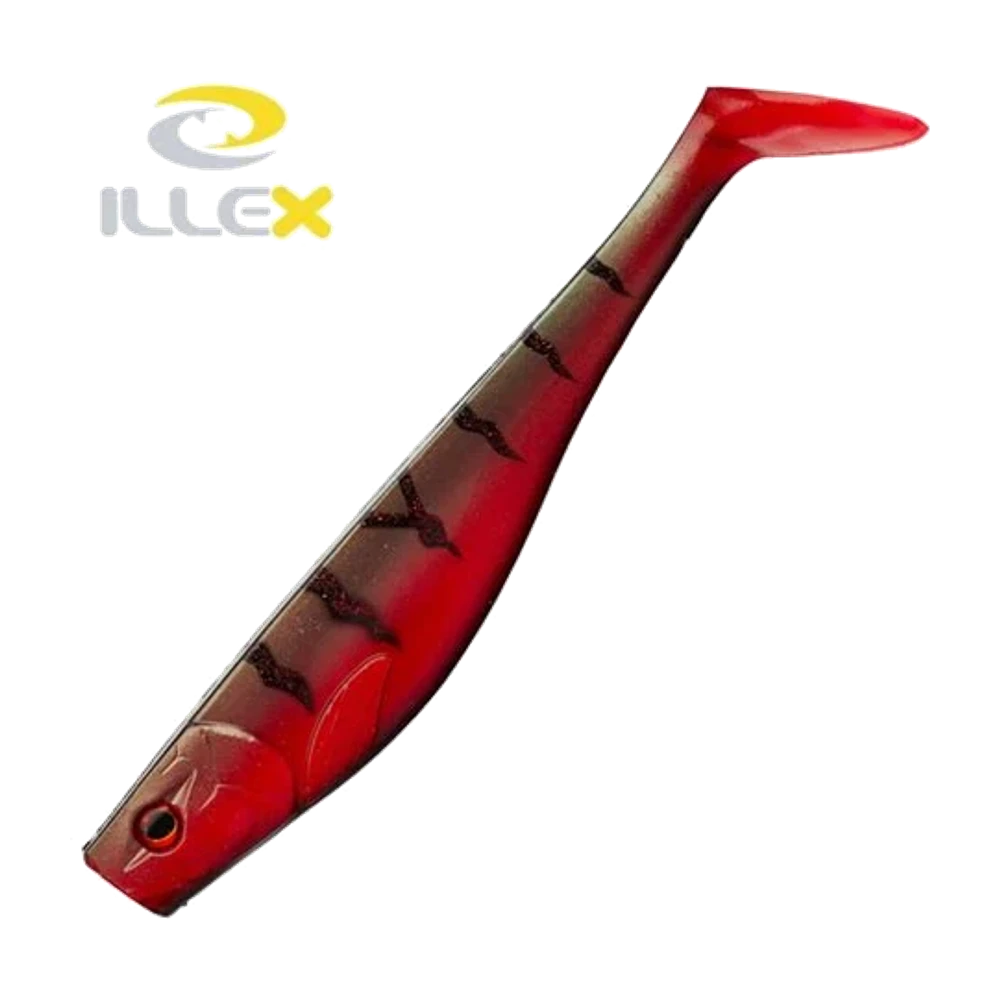
Illex Dexter Jig: the lump of metal that fishes when nothing else gets through
Rather not fish it blind? Photograph your spot — CarnaFish cross-checks the conditions and points you the right way.
A 30-knot headwind, current pushing hard through the channel, and the birds working seventy metres out. You tie on your favourite minnow: it lands at thirty-five metres, gets lifted by the swell and comes out of the water. You tie on a heavy weighted soft plastic: it casts better, but the current takes it and you never touch bottom.
On days like that, the only variable that counts is neither colour nor profile. It is density. A 40 g metal jig takes up the volume of a 5 cm lure and weighs as much as a 15 cm one: it goes through the wind, it goes through the current, and it drops straight. The Dexter Jig is a tool for hard conditions before it is a tool for imitation.
What an asymmetric profile changes on the drop
Not all jigs fall the same way, and that is the one criterion that really deserves your attention when buying.
The Dexter Jig is cut with one flank more hollowed than the other and its mass distributed towards the centre. On a free drop, it does not plunge straight down: it slides sideways, tips over, flattens out, sets off the other way. Seen from below, it is a wounded fish sinking as it drifts, not a lump of lead falling.
The practical consequences:
- The drop takes longer for the same depth, so the lure stays longer in the useful zone.
- The flashes are irregular, which carries further than a regular, rhythmic glint.
- The lure drifts downwind of the line, which forces you to manage your slack — we come back to that below, it is the real trap with this lure.
On a fast retrieve it changes behaviour entirely: it stabilises, vibrates tight and rises. So you have two lures in one, separated by a simple difference in speed.
The retrieve: a sequence in three speeds
Do not lock yourself into a single rhythm. This lure's strength is letting you test the entire water column in three passes.
- Cast and let it sink on a semi-tight line, thumb on the spool or finger on the line. Count. Thirty grams drops around a metre per second in calm water, less in current.
- First pass, fast continuous retrieve from the bottom, with no twitches. You search the whole depth and find out whether there are active fish.
- Second pass, the base rhythm: two or three wide upward rod strokes, then let the jig drop back for two to three seconds, following the fall with the rod tip. You climb back in stages.
- Third pass, the slow rhythm: a single pull, then a long free fall of four to six seconds, almost to the bottom. That is the cold-water, inactive-fish rhythm.
- When you get a bite, do not strike upwards — sweep sideways while continuing to reel. An assist hook finds its hold in the movement, not in the shock.
On the water: virtually every bite comes during the drop, and the line tells you about them before the rod does. Always keep a small visible loop between the tip and the water, and watch it. If it tightens before your count is up, or if it moves off to the side, that is a fish. A jig fished on a completely tight line loses its fluttering drop and you detect nothing any more.
Choosing the weight
| Conditions | Weight | What you are after |
|---|---|---|
| Calm sea, 3 to 6 m depth | 20 to 25 g | slow drop, fine presentation |
| Moderate wind, 6 to 12 m | 30 to 40 g | distance / drop compromise |
| Strong wind or marked current | 40 to 60 g | holding bottom and casting far |
| Feeding fish offshore out of range | 50 to 60 g | distance above all |
The beginner's reflex is to take the heaviest to cast furthest. That is the mistake: beyond a certain weight, the drop becomes vertical and the lure loses exactly what makes fish bite. Take the lightest weight that still lets you control your line and touch bottom when you need to.
On the hardware side, a single short assist hook at the head, with an assist braid of 3 to 4 cm maximum. Too long an assist wraps around the body on every drop. The rear treble is optional: it improves hookups on soft takes, but it snags the bottom and increases lost fish during jumps. On rocky ground, take it off.
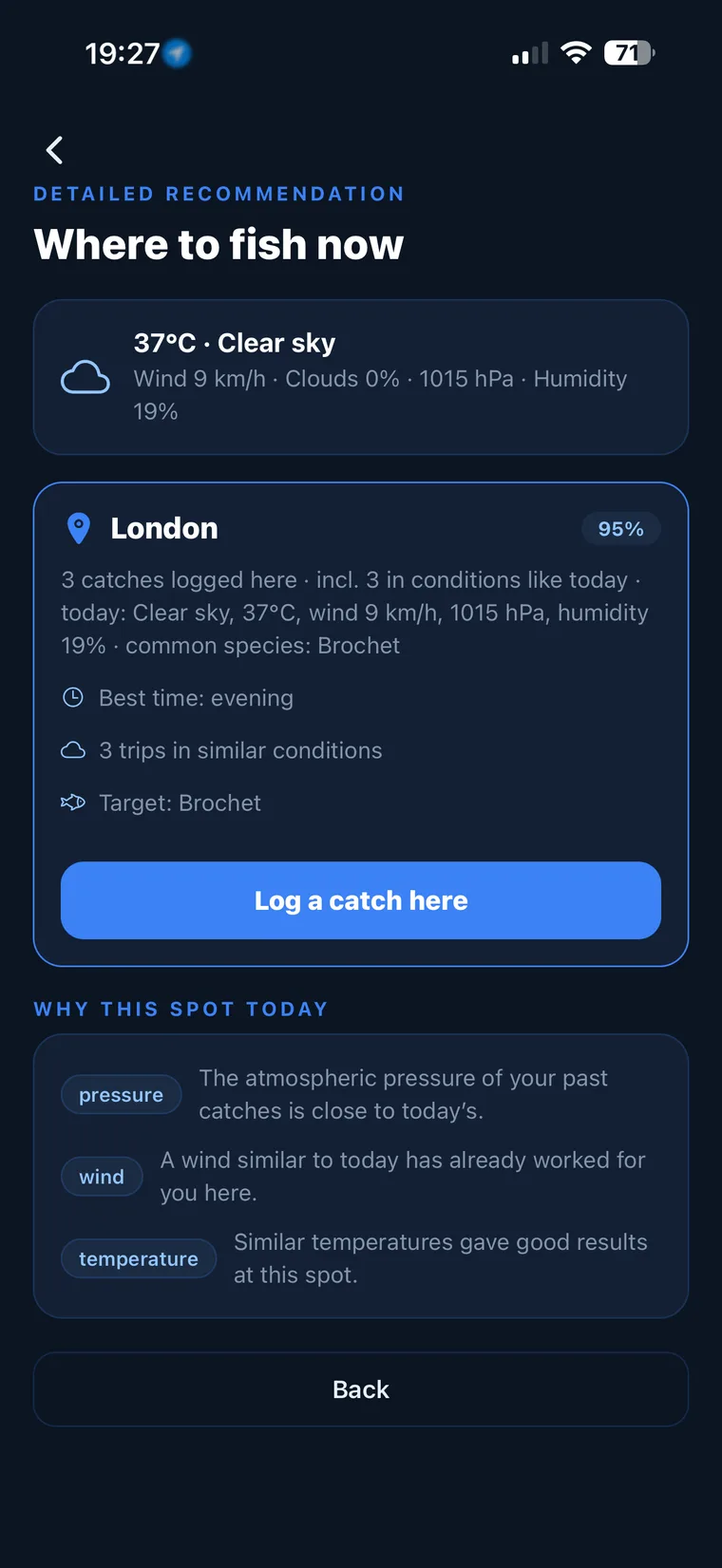
Not sure what to tie on?
Photograph your spot: CarnaFish reads the scene, cross-checks the conditions and gives you the zone, the lure and the retrieve. Free on iOS and Android.
Where it dominates, and where it makes no sense
It dominates everywhere wind, current or distance rule out the other families: exposed points, outer breakwaters, channels, estuary mouths on the ebb, offshore feeding activity from the beach. It is also an excellent fast searching tool: in three casts you know whether there are active fish in the water column.
On the other hand it makes no sense in under 2 m of water: it hits bottom before it has had a chance to flutter. It is also poorly suited to wary sea bass in clear, flat water, where its speed and flash are too aggressive — that is the domain of slim lures. And in timber or kelp, it snags every time.
Dexter Jig or a through-body lure
Against a Savage Gear Line Thru Seeker, the contrast is clear and worth understanding. The Line Thru Seeker relies on a through-body rig that releases the body on the hookset to limit lost fish, and on a rolling action at moderate speed: it is a presentation lure, imitating a swimming fish. The Dexter Jig does not claim to imitate a swimming action — it imitates a prey item that has come loose and is falling, and it does so in conditions where the Seeker can no longer hold its action.
Translated into a decision on the shore: manageable sea and fish following a prey item, tie on the through-body. Strong wind, current, or feeding fish too far out, tie on the jig. Against a Tackle House Tuned K-Ten, the split is on the water layer: the K-Ten works the first few metres under the surface, the jig covers everything below.
Our guide to lure fishing for sea bass explains how to read a current before choosing your lure family. And if you are unsure which weight to tie on facing a sea you do not know, CarnaFish analyses a photo of the spot and answers.
Key takeaways
- Density is the argument: casting into the wind, holding current, reaching the bottom.
- Asymmetric profile: the drop is lateral and fluttering, not vertical.
- Bites come during the drop and are read on the line, not on the rod.
- Take the lightest weight that stays controllable, not the heaviest.
- No use in under 2 m of water, in clear flat water, or over cluttered ground.
FAQ
What weight of Dexter Jig should I choose?
20 to 25 g in a calm sea over shallow ground, 30 to 40 g for everyday use from the shore, and 40 to 60 g in strong wind, current, or to reach distant feeding fish. The lightest that still lets you control your line is always the right choice.
Do I need an assist hook or a treble?
The assist hook at the head is essential, with a short braid of 3 to 4 cm. The rear treble is optional: it helps on soft takes but snags the bottom and encourages lost fish when a sea bass jumps.
How do I detect a bite on the drop?
By watching the loop of line between the rod tip and the water. If it tightens too early or moves off to the side, strike. Fishing on a tight line removes the fluttering drop and makes detection almost impossible.
Can a metal jig be fished on a straight retrieve?
Yes, and it is even the best way to search fast. A fast continuous retrieve stabilises the lure, which vibrates and climbs the water column. That is the pass to make first to find out whether there are active fish.
Can it be used in freshwater?
Technically yes, on perch or zander in big deep lakes, with reduced weights. But it is armed and sized for the sea, and in freshwater blade baits or weighted soft plastics cover those situations better.
Why does my jig tangle on every cast?
Almost always because of an assist hook that is too long, which wraps around the body during the drop or in flight. Shorten the assist braid to 3 or 4 cm and feather the spool slightly at the end of the cast so the lure lands nose first.
The full sea bass lure guideSeason-by-season strategy: which family of lure, when, and why.Go from theory to fish
CarnaFish reads your spot from a photo and gives you the game plan: zone, lure, retrieve. Free on iOS and Android.