Ultimate Fishing Tenya: the Japanese lead head you fish with a shrimp
Not sure this lure fits YOUR spot today? CarnaFish tells you in 10 seconds, from a photo.
There are days afloat when everything that shines gets refused. The jig passes fish ten times over without provoking anything, soft plastics achieve nothing, and yet the sounder shows a compact mass glued to the bottom that will not move a metre. These are fish grubbing through the substrate, not fish hunting in midwater — and no artificial lure interests them that day.
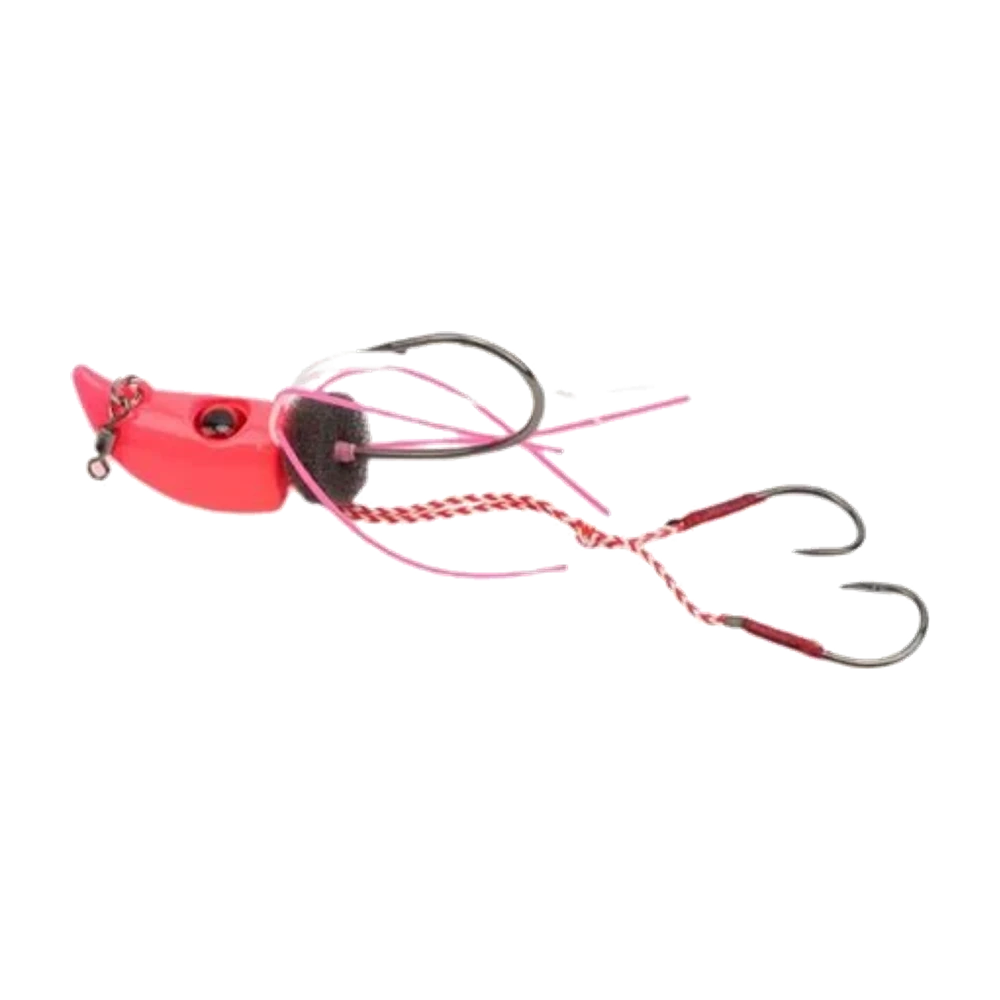
The tenya is the Japanese answer to this situation, and it is radically pragmatic: instead of imitating a prey item, you present a real one, weighted just enough to sink straight and glide. A lead head armed with a heavy-gauge hook, a keeper spike to hold the bait in place, and a whole shrimp mounted on it.
Let us be clear straight away: the tenya is historically a technique for red porgy and sea bream, born in Japan over sand and shell bottoms. Over here it also takes sea bass sitting on hard ground very well, and pretty much anything that grubs the substrate.
What a tenya actually is
It is not a lure, and it is not a standard jig head either. It is an assembly in three parts:
- A flattened or triangular lead head, with the eye placed so the whole thing descends flat with a slight nose-down attitude. The shape decides whether the rig glides or drops like a stone.
- A heavy-gauge main hook, wide open, moulded into the lead. This is the one that hooks the fish.
- A keeper spike — a small metal point fixed to the head — whose only job is to hold the bait in place. On some models it is backed up by a small assist hook.
If you want to understand how this differs from a jig head with a soft plastic, our jig head rig piece covers the logic of that other family. The fundamental difference is simple: on a jig head the lure does the work and the lead carries it; on a tenya the lead does the presentation work and the bait does everything else.
Mounting the shrimp: the move that decides the day
This is where most beginners lose their day. A badly mounted shrimp spins on the way down, kinks the leader, and stops getting eaten.
- Peel the tail only if you are using a grey shrimp or a whole prawn. The head stays on: it leaks scent and it is a powerful trigger.
- Remove the telson — the rigid point at the end of the tail — so you can thread it straight.
- Thread the main hook in through the tail, following the axis of the body. The point should come out on top, about a third of the way along.
- Drive the keeper spike into the head, at the front. The whole thing should now sit dead straight, with no curve.
- Check it by holding it up: if the shrimp forms an arc, start again. A curved bait spins and the day is ruined.
- Add a turn of elastic thread around the body if you are fishing in current or deep, so it does not tear on the way down.
On the water: avoid live shrimp bought from a tank if you can — take them frozen and thaw them just before use, they hold on the hook far better. Live flesh is soft and tears on the first drop or the first missed bite. A tenya wants a bait that survives ten descents, not the freshest one available.
The retrieve: almost nothing, but at the right rhythm
The tenya is fished vertically, on a drift, with the boat moving slowly with the wind or the current.
- Drop under moderate control, thumb on the spool, until you touch bottom. Never let the line run free: the shrimp will tangle.
- Lift 50 cm to 1 m with a slow raise of the rod tip. No sharp jerk — a tenya is not a jig.
- Follow it back down, rod tip tracking the descent, without slackening off. That gliding phase is where almost every bite happens.
- Rest on the bottom for one or two seconds, then start again.
- Manage the drift by paying out line to stay vertical. If your line goes beyond 45°, wind in and drop again: you are no longer fishing the bottom.
- Every five or six sequences, wind up three or four metres while still working the rig: fish sometimes lift off to follow.
The hookset, counter-intuitive
This is the second big trap in the technique. The bite feels like a series of small sharp taps, or like a weight appearing without anything definite. The reflex is to strike immediately.
Do not strike. A fish grubbing the bottom takes the bait in pieces: it nips, it pulls, it repositions. Strike on the first tap and you tear the shrimp out of its mouth.
The right sequence:
- On first contact, do nothing and keep dropping very slightly, as if nothing had happened.
- Wait to feel a weight that stays and that pulls in one direction.
- Set the hook by lifting progressively, with no violent rod stroke. The heavy-gauge tenya hook penetrates on its own if the tension builds steadily.
- Keep constant tension all the way up: on a single hook with little or no barb, two seconds of slack is enough to lose the fish.
Not sure what to tie on?
Photograph your spot: CarnaFish reads the scene, cross-checks the conditions and gives you the zone, the lure and the retrieve. Free on iOS and Android.
Choosing the weight
| Depth and current | Indicative weight |
|---|---|
| 10 to 20 m, light current | 15 to 30 g |
| 20 to 40 m, moderate current | 30 to 60 g |
| 40 to 60 m, or fast drift | 60 to 80 g |
| Beyond 60 m, strong current | 80 to 100 g |
The criterion is not depth alone but your line angle. Take the lightest weight that keeps the line within 45° of vertical. Lighter and you lose contact; heavier and you kill the gliding descent that is the whole point of the technique.
Tenya or jig
The useful comparison is with a Major Craft Jigpara or any slow-jigging jig. They are two opposite answers to the same vertical problem.
The jig looks for a fish that reacts: it flashes, it rises, it drops fast, it triggers a predatory reflex. It excels in midwater on active fish and covers the column far quicker.
The tenya looks for a fish that is feeding. It provokes nothing, it offers. Far slower, it covers only one layer — the bottom — and it wins the days when the jig gets refused: clear water, fish glued to the substrate, heavy fishing pressure.
If you would rather avoid natural bait, a scented artificial shrimp on a tenya head gives decent results, clearly inferior to fresh shrimp on wary fish but far easier to manage on board.
Our guide to lure fishing for sea bass places this technique among the other boat approaches. And if you are unsure what weight to rig for the day's drift, CarnaFish analyses a photo of the spot and answers.
Key takeaways
- A tenya is not a lure: it is an armed lead head presenting a real shrimp.
- A bait mounted dead straight is condition number one; a curved shrimp spins and catches nothing.
- The bite almost always comes during the guided descent, not on the lift.
- Never strike on the first tap: wait for a weight that stays, then build tension progressively.
- Take the lightest weight that keeps your line within 45° of vertical.
FAQ
What is tenya fishing?
It is a Japanese vertical boat technique using a lead head armed with a heavy-gauge hook and a keeper spike, onto which you mount a whole shrimp. It historically targets red porgy and sea bream, and also takes sea bass and bottom-feeding fish very well.
What bait should you use on a tenya?
A whole shrimp is the classic bait, thawed rather than live because it holds on the hook better. A strip of squid or a scented artificial shrimp also work, with a lower conversion rate on wary fish but far better durability.
How do you set the hook on a tenya bite?
Late and gently. Ignore the first small taps, wait to feel a weight that stays and pulls, then build tension progressively by raising the rod. A sharp strike on the first tap tears the bait out of the fish's mouth.
What tenya weight should you choose?
The lightest one that keeps your line within 45 degrees of vertical. In practice, 15 to 30 g in 10 to 20 m with light current, 30 to 60 g between 20 and 40 m, and up to 100 g beyond that or on a fast drift.
Tenya or jig for vertical fishing?
The jig triggers a reflex in an active fish and covers the column quickly. The tenya offers real food to a fish grubbing the bottom, far more slowly. The tenya wins the days of refusals, clear water and heavy fishing pressure.
Why does my shrimp spin on the way down?
Because it is not mounted straight. Check that the hook follows the axis of the body, that the telson has been removed, and that the keeper spike holds the head without twisting it. Held up in the air, the bait should stay perfectly straight.
The full sea bass lure guideSeason-by-season strategy: which family of lure, when, and why.Go from theory to fish
CarnaFish reads your spot from a photo and gives you the game plan: zone, lure, retrieve. Free on iOS and Android.