Westin Percy the Perch: imitating a perch, not a silver baitfish
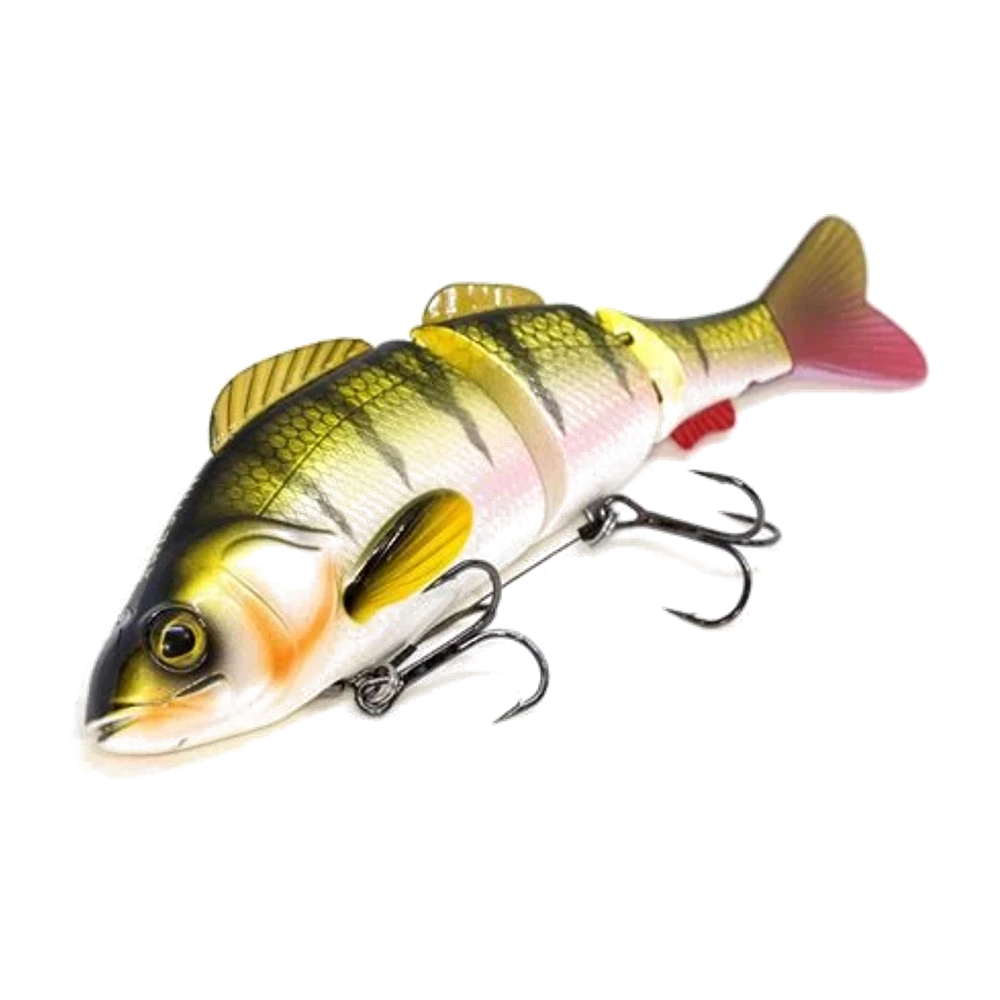
One lure, endless conditions. CarnaFish reads your spot from a photo so you are not just guessing.
Almost every realistic lure on the market imitates a silver baitfish. Roach, bleak, bream: a silver body, a green or blue back, a streamlined profile. It makes sense — that is the dominant forage on a lot of waters.
Except that on a great many European waters — gravel pits, reservoirs, canals, impoundments with rocky margins — pike eat mostly perch. Not occasionally: regularly, and often by preference, because a perch is a slower prey, more predictable in its movements, and present year-round in the same places.
Changing silhouette isn't the same as changing colour. A perch doesn't swim like a roach, doesn't hold in the same places and doesn't get eaten the same way. Tying on a Percy the Perch and carrying on fishing it like a roach imitation misses the point of the lure entirely.
A deep-bodied silhouette, and what that means underwater
A roach is streamlined, longer than it is deep. A perch is short and deep, spiny dorsal raised, flanks barred vertically. To a pike sitting underneath, those are two radically different objects.
More visible surface from below. This is what matters most. A pike hunts by rising: it sees the silhouette cut out against the light. A deep body fills two to three times more of its field of view than a streamlined body of the same length, which makes it detectable from further away in coloured water.
More water displaced at the same speed. The cross-section is larger, so the pressure signal is too. At slow speed — the speed a soft swimbait imposes — that difference is obvious.
A flatter fall. On the stop, a deep body doesn't drop straight down: it tips onto its flank and glides. That barred flank presented broadside is exactly the image of a panicking perch, and it is on that roll that most of the pike that were following without committing finally pull the trigger.
The trade-off: drag. A deep body pushes more water. In the bigger sizes you feel more resistance in the rod and you cast shorter than with a slim imitation of the same weight.
Perch spots are not roach spots
This is the part most anglers neglect, and the part that changes the result the most.
A shoal of roach lives in open water, keeps moving, and the pike following it are mobile too. A perch, on the other hand, lives glued to hard structure: riprap, bridge pillars, jetties, stumps, the edge of a reed bed, a dam wall. It doesn't move away, it circles.
The direct consequence: your Percy the Perch has to run along a structure, not cross an empty expanse. In practice, you cast parallel to the riprap rather than perpendicular to it, you pass within a metre of sunken timber, and you accept making ten casts over three metres of margin instead of ten casts over thirty.
Second consequence: the pike that eat perch are ambush fish sitting tight, not fish out hunting. They don't chase. You have to bring the lure into their window, slowly, and give them a reason to stop it right there.
On the water: when you run along a stretch of riprap, don't reel the lure all the way to the bank. Stop it three or four metres out, let it tip onto its flank and slide down the face of the rock, then lift it sharply. Pike sitting on riprap are almost always in the last two metres, right under your feet — and that's the zone everyone reels straight through on autopilot.
The retrieve: three sequences worth knowing
- The slow straight retrieve. A steady wind, as slow as you can go while keeping the tail beating. This is the searching sequence and the foundation of everything: it should take up half your fishing time.
- The long stop and go. Five or six turns of the handle, then a complete stop of two to four seconds during which you let the lure tip and sink. Restart with one sharp turn. This is the sequence that converts followers.
- The structure-hugger. Along a jetty or a wall, you retrieve keeping the lure twenty or thirty centimetres off the hard stuff, barely varying the speed. No spectacular action, just a prey fish tracking its own shelter. This is the most productive sequence on educated pike.
A fourth, occasional one: the vertical lift under your feet, at the end of the retrieve. You let the lure drop to the bottom, then bring it back up in three slow pulls. Off a steep bank or a quay wall, that is far from a gimmick.
Choosing a size by season
| Period | Size to use | Reasoning |
|---|---|---|
| Opening, spring | 10-14 cm | No young-of-year perch yet, pike just off the spawn, small prey |
| Summer | 12-16 cm | Small perch everywhere, active pike, sustained searching |
| Autumn | 16-20 cm | Pike start selecting big prey ahead of winter |
| Winter | 12-16 cm | Back to a mid size, retrieve slowed right down |
The rule that holds up best: match the size to the perch actually present, not to the pike you're hoping for. If you can see eight-centimetre small perch circling the jetty, a 20 cm lure is off the mark even in autumn.
On hooks, a rear stinger becomes necessary as soon as you're getting short takes: pike often grab a perch across the body, and without a rear hook you pull back a lure that's marked but empty. The stinger rig for pike covers how to set it up. Titanium leader or 0.70-0.80 mm fluorocarbon: with a lure at this price and a fish with these teeth, there's nothing to debate.
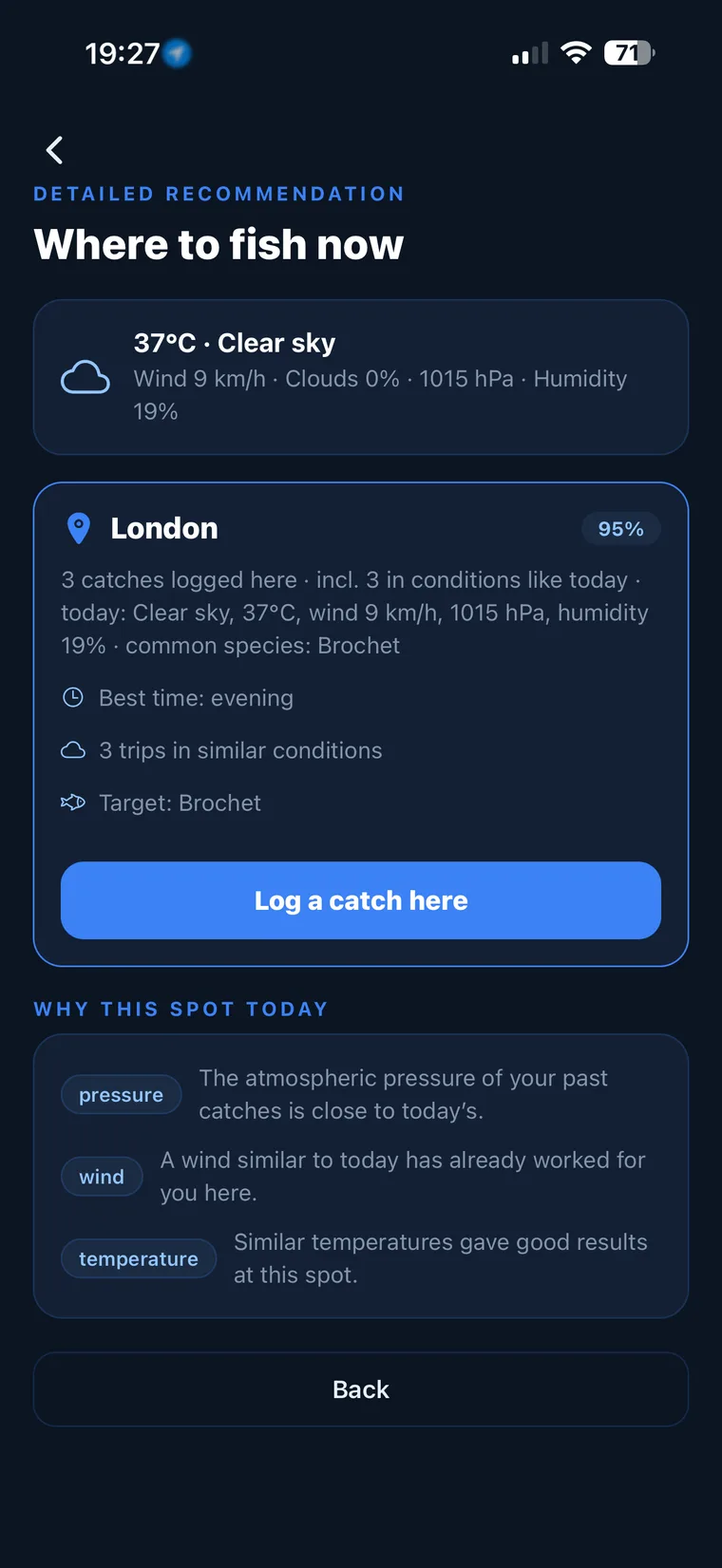
Not sure what to tie on?
Photograph your spot: CarnaFish reads the scene, cross-checks the conditions and gives you the zone, the lure and the retrieve. Free on iOS and Android.
Where it is the wrong choice
Three cases where you should tie on something else. Searching a big expanse, because it fishes slowly and you cover very little ground. Out in open water over identified silver forage, where a streamlined imitation matches what the pike is eating right then. And in heavy, dense weed, where the body depth and the stock hooks snag fast — a weedless lure does that job better.
Percy the Perch or Ricky the Roach
Two lures from the same family that look similar on paper and fish very differently.
The Ricky the Roach imitates a roach: streamlined silhouette, open-water prey, a shoal fish. You fish it covering volumes of water, over weed beds or alongside bait shoals, and the decisive variable with it is the density you pick.
The Percy the Perch imitates a structure-bound prey. The decisive variable isn't density but distance to the obstacle: one pass fifty centimetres off the hard stuff is worth ten passes three metres out. If you're fishing an open lake with roach everywhere, take the Roach. If you're fishing rocky margins, jetties and riprap, take the Perch.
Our guide to choosing a pike lure covers how to decide between these two logics depending on the water. And if you're unsure which spot to attack first when you get to the bank, CarnaFish reads a photo of it and answers.
Key takeaways
- Deep silhouette: more visible from below, more water displaced, rolls flat on the stop.
- Perch are structure prey: run the lure along the rock, don't cross open water.
- Perch-eating pike sit in ambush rather than hunt — you have to deliver the lure to them.
- Never reel all the way in without a deliberate stop right under your feet.
- Match the size to the perch present, not to the pike you're hoping for.
FAQ
Why choose a perch imitation over a roach one?
Because on a lot of waters — gravel pits, canals, reservoirs with hard margins — perch are the dominant prey and stay available all year. Their deep silhouette is also more visible from below in coloured water than a streamlined fish's.
Where should you fish it first?
Along hard structure: riprap, jetties, bridge pillars, stumps, reed bed edges. A perch never strays far from its shelter, so a pass within a metre of the obstacle is worth far more than a pass out in open water.
Do you need a stinger?
As soon as you're getting a run of short takes that don't stick. Pike often take prey across the body, and without a rear hook you reel in a lure that's marked but empty. A titanium or 0.70-0.80 mm fluorocarbon leader is essential in every case.
What size for each season?
10-14 cm in spring, 12-16 cm in summer and winter, 16-20 cm in autumn when pike start selecting big prey. The best guide is still the size of the small perch you can actually see on the spot.
How is it different from the Ricky the Roach?
The Roach imitates a roach and is fished in open water, over weed or near bait shoals. The Percy imitates a structure-bound prey and is fished tight to obstacles. These are two ways of reading a water, not two colours.
Is it suited to fast searching?
No. It fishes slowly, it drags in the water and it casts shorter than a slim imitation of the same weight. To sweep a big expanse, pick a faster lure and come back to the swimbait once you've found the zone.
The full pike lure guideSeason-by-season strategy: which family of lure, when, and why.Go from theory to fish
CarnaFish reads your spot from a photo and gives you the game plan: zone, lure, retrieve. Free on iOS and Android.