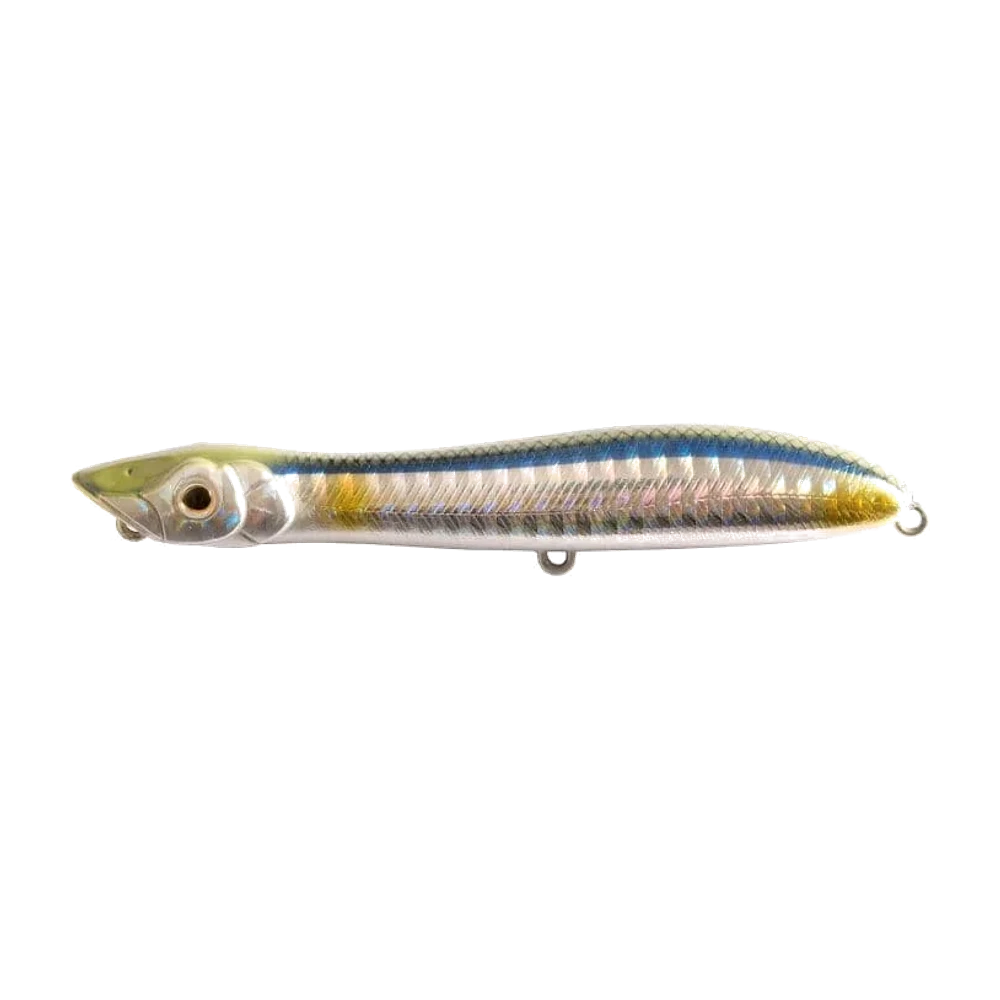
Xorus Patchinko 140: the sea stickbait that changed bass fishing
This lure shines under specific conditions. CarnaFish tells you in 10 seconds if today is one of them.
Before the Patchinko, surface fishing for bass was mostly done with poppers. Lipless stickbaits existed, but few models really coped with the sea: too light to cast far, too unstable as soon as the surface got up. The Patchinko 140 solved both problems at once — very long casts and a glide that stays readable even on broken water — and it became the benchmark on Atlantic rocky points.
Why casting distance is decisive at sea
In freshwater, ten extra metres of cast is a comfort. At sea it is often the difference between fishing and watching.
Bass frequently hunt beyond the breaking zone, along a current edge or over a rocky plateau you can only reach with a long cast. The Patchinko 140 weighs 26 g for 14 cm and has an internal weight transfer: on the cast the mass slides back and stabilises the lure in flight, including into a headwind, the situation where most surface lures start tumbling.
Walking the dog, sea version
The retrieve is that of every stickbait, but with wider amplitudes than in freshwater.
- Rod tip pointed down, almost into the water, so the pull stays horizontal.
- Regular, rhythmic rod-tip strokes, neither too sharp nor too soft, taking up the slack between each one.
- The lure glides alternately left and right, 40 to 60 cm per stroke, never running straight.
Rhythm matters more than force. A steady cadence produces a clean zigzag; irregular jerks pull the lure off its axis and break the action.
Field rule: if your stickbait runs straight, it is almost never the lure. It is that you are pulling too hard, or not taking up enough slack between strokes.
Matching the retrieve to the sea state
- Flat sea, clear water: slow down and lengthen the glide. On a smooth surface, an over-nervous lure looks suspicious.
- Choppy sea: speed up and shorten the strokes. The lure has to stay visible and push enough water to be located.
- Formed swell: work the troughs between waves, and animate more decisively. On a genuinely rough sea a popper will often be more audible.
The tide window matters more than the lure
This is true of all surface bass fishing: the best stickbait in the world does not make up for a bad point in the tide.
The windows to favour are the phases of established current, particularly the start of the flood and the end of the ebb, which concentrate baitfish on specific areas. Dawn and dusk add a further advantage. Our guide to lure fishing for bass covers those windows and the shore marks to favour according to tidal coefficient.
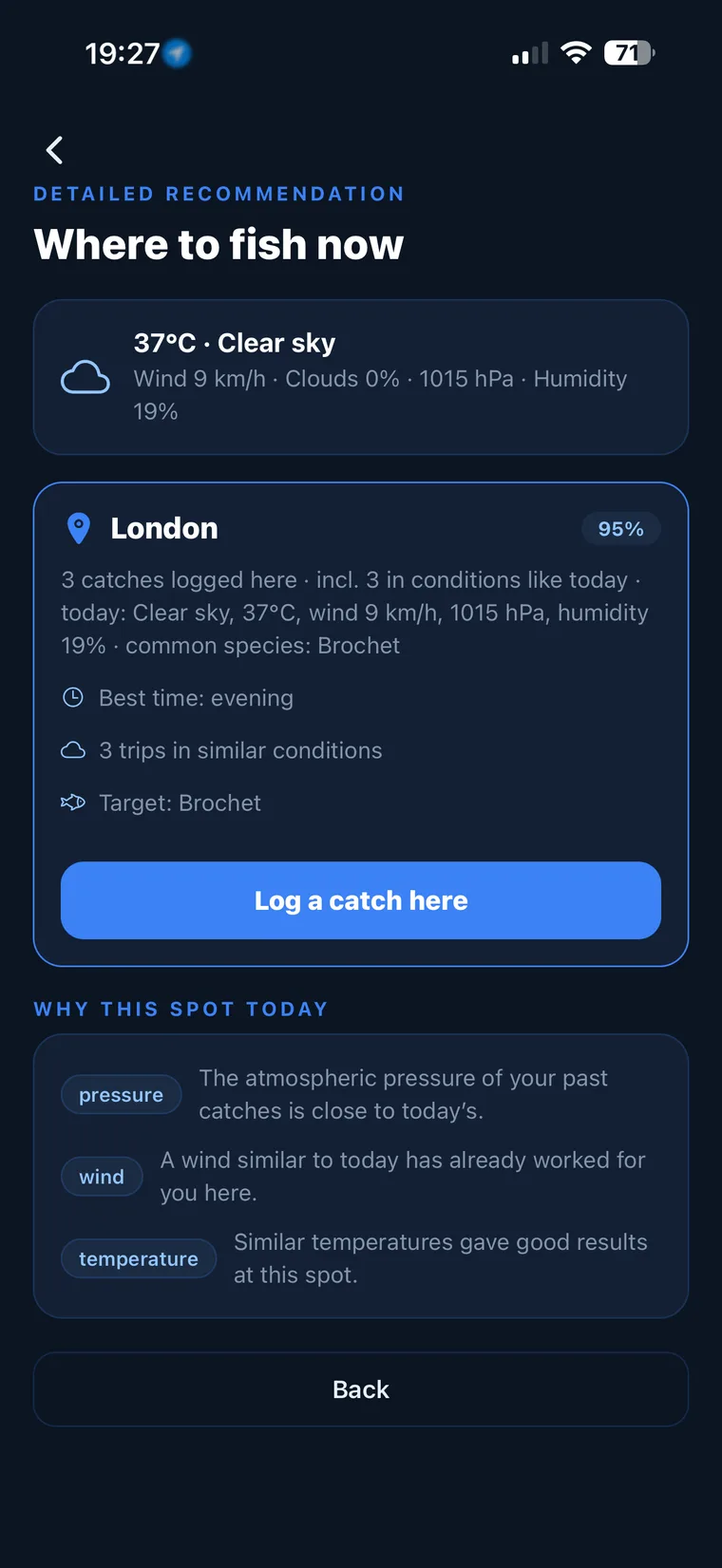
Not sure what to tie on?
Photograph your spot: CarnaFish reads the scene, cross-checks the conditions and gives you the zone, the lure and the retrieve. Free on iOS and Android.
Maintenance, non-negotiable at sea
A surface lure used in salt water takes a beating freshwater never inflicts.
- Rinse with clean water after every session, hooks included. Salt attacks the points within hours.
- Check the split rings: that is the part that fails first on a sea lure.
- Keep spare corrosion-treated hooks. A rusted treble breaks on the strike, and on a good bass that economy costs dearly.
Colours
- Bright weather, clean water: natural blue or green back, imitating sandeel or mullet.
- Overcast: white or pearl, more visible in diffuse light.
- Backlight or late in the day: a dark tone. The bass sees a silhouette cut out against the sky, not a colour.
Patchinko or popper
Both cover the surface but they do not speak the same language. A sea popper produces a loud, intermittent noise that carries far and suits a formed sea or scattered fish. The Patchinko produces a continuous visual signal — the zigzag — more discreet but more credible on a wary bass in clear water.
In practice many anglers start with the stickbait and switch to the popper when the sea gets up or nothing responds. And to know whether the day's conditions justify surface fishing at all, CarnaFish cross-references tide and weather from a photo of your spot.
Key points
- Long casting is its real strength: at sea, range determines access to the fish.
- Walk the dog with the rod tip low, steady rhythm, slack taken up between strokes.
- Slow down on a flat sea, speed up on chop.
- The tide window matters more than the choice of lure.
- Systematic rinsing and corrosion-treated hooks: salt destroys everything else.
FAQ
Why does my Patchinko not zigzag?
You are probably pulling too hard, or not taking up enough slack between strokes. Drop the rod tip towards the water and look for a steady rhythm rather than power.
What line should I use?
Fluorocarbon of 0.30 to 0.40 mm. Finer and you lack abrasion resistance over rock; heavier and you restrict the glide and lose casting distance.
Does the Patchinko work on a rough sea?
Yes up to a point, by speeding up the retrieve. On a genuinely formed sea a popper stays more audible and will often be more effective.
Should I change the stock hooks?
Not immediately, but keep an eye on them. In salt water the points rust quickly; keep a set of corrosion-treated trebles and swap them at the first signs.
What is the best period for this lure?
The phases of established current, particularly the start of the flood and the end of the ebb, preferably at dawn or dusk. The tide window matters more than the lure model.
Is the 140 the right size to start with?
Yes, it is the most versatile format: heavy enough to cast far, bulky enough to interest good-sized bass, and still reasonable to work through a full session.
The full sea bass lure guideSeason-by-season strategy: which family of lure, when, and why.Go from theory to fish
CarnaFish reads your spot from a photo and gives you the game plan: zone, lure, retrieve. Free on iOS and Android.