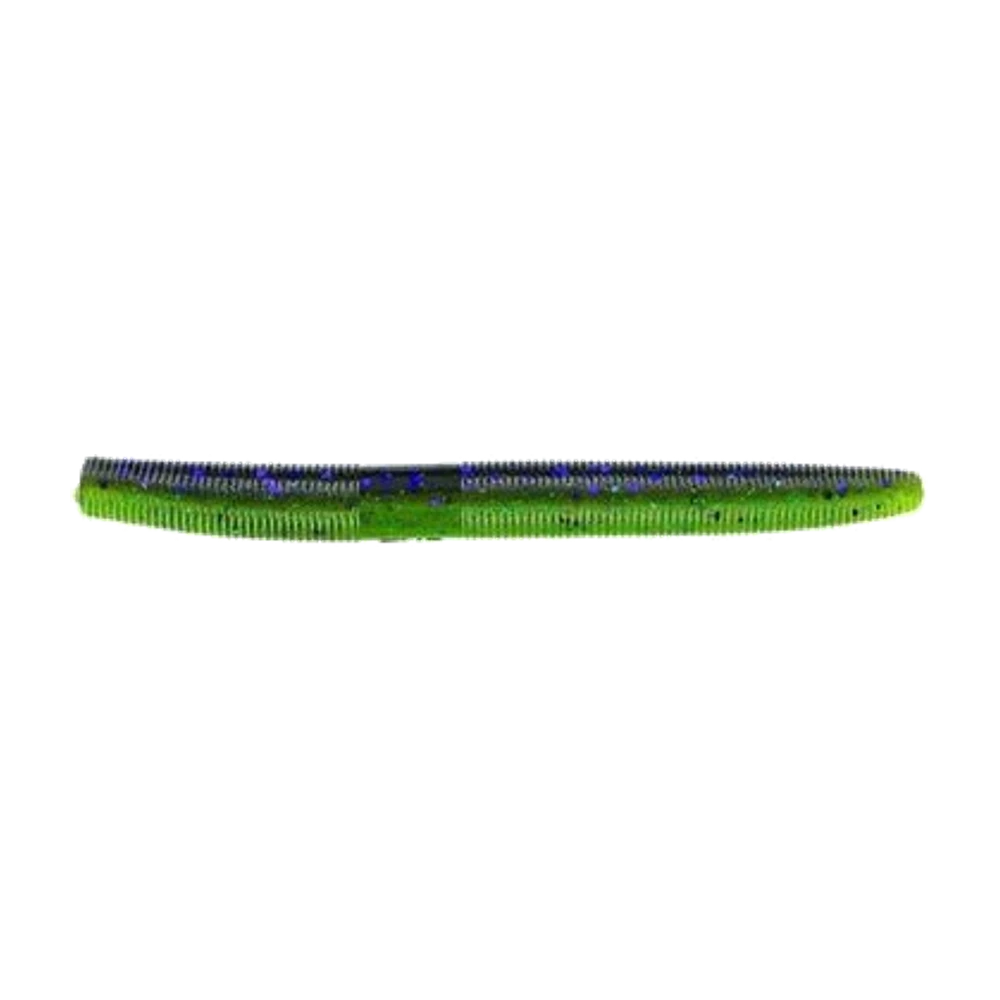
Gary Yamamoto Senko 4-inch: the size that catches when the 5 gets refused
One lure, endless conditions. CarnaFish reads your spot from a photo so you are not just guessing.
The Senko has a quirk nobody has really matched: it does nothing, and that is exactly why it catches fish. No tail, no appendages, no swimming action. Just a heavily salted plastic stick that falls horizontally with both ends shimmying.
The 5-inch model is the benchmark size. The 4-inch is the one you reach for when the 5 stops being enough — and on heavily fished European water, that is most days.
Why dropping an inch changes the outcome
The difference looks trivial on the tackle bench. In the water, it moves three things.
The fall slows down. Less mass over a comparable cross-section means a slower descent. On a wary fish, stretching the presentation by two seconds is often all it takes to convert.
The profile stops being intimidating. On water where bass watch 5-inch Senkos drift past all season, a smaller silhouette doesn't set off the same alarm.
Perch become a realistic target. The 5-inch is too big for most European perch; the 4-inch sits squarely inside their prey size.
The wacky rig, first and foremost
This is the rig that makes the most of what a Senko does. The hook goes through the middle of the bait, perpendicular to it.
The result: both ends hang free and shimmy independently through the whole descent. The bait falls flat, perfectly horizontal, with a movement nothing else reproduces. Our wacky rig guide covers the O-ring and hook choice in detail.
- Cast and do nothing. Watch your line as the bait sinks.
- Wait until it touches bottom or until the line stops running out.
- Two short lifts to bring it up 30 cm, then let it drop again.
- Repeat two or three times before reeling in and casting again.
On the water: nearly every bite comes on that first fall, with you doing nothing at all. Start working the bait the moment it hits the water and you delete the most productive phase of the cast. Watch your line — a bite is visible before it is felt.
A rubber O-ring set around the middle of the bait, with the hook passed under the ring, multiplies its lifespan by five without changing the action.
The other rigs
Weightless Texas. Wide-gap worm hook, no lead at all. Same slow fall, but the bait turns weedless: this is the rig for dense vegetation and low overhanging branches.
Neko rig. A tungsten nail pushed into one end, wacky hook in the middle. The bait goes down nose-first and stands vertically on the bottom, free end quivering. Deadly on fish pinned to the bottom.
Drop shot. The 4-inch Senko fished above a 5 to 10 g weight becomes a stationary presentation. Effective on perch, fished vertically over a marked structure.
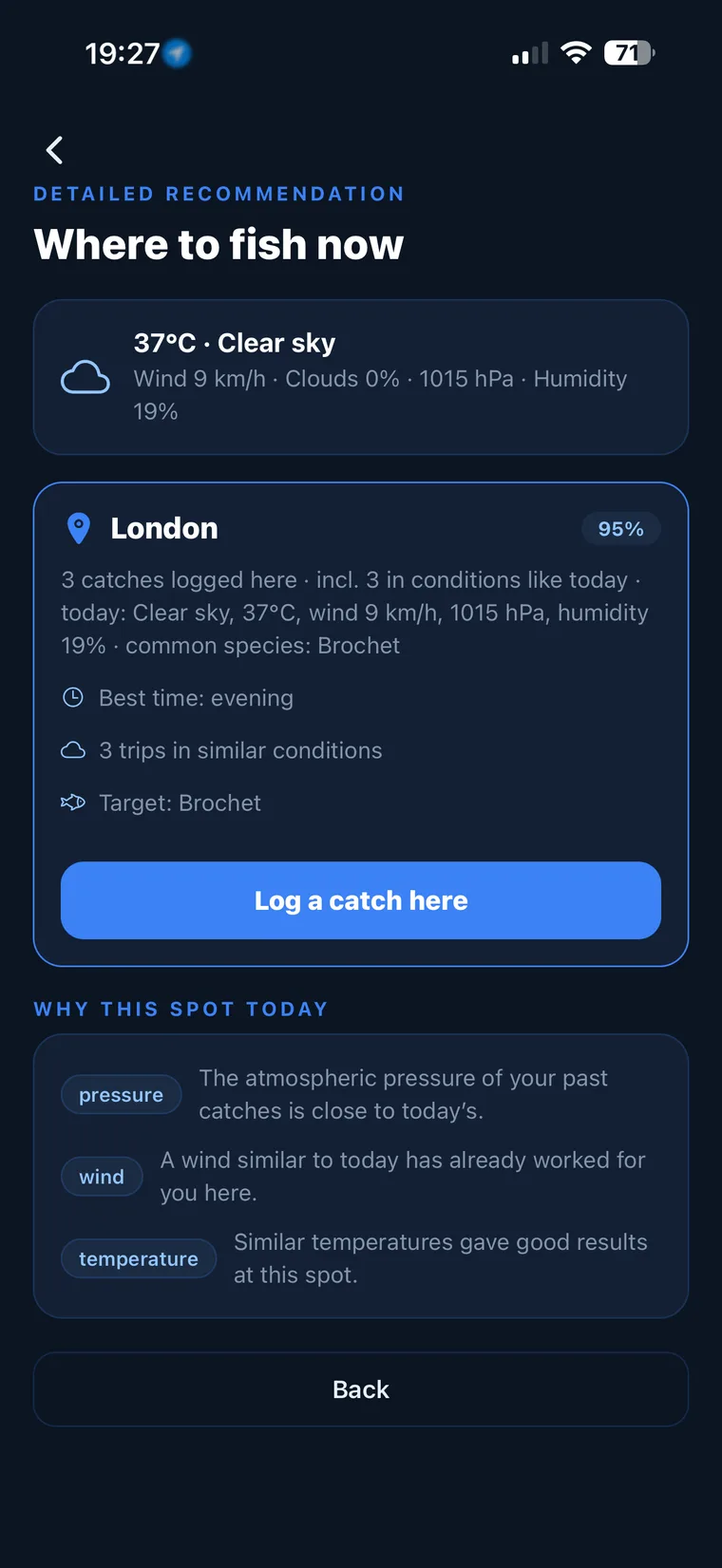
Not sure what to tie on?
Photograph your spot: CarnaFish reads the scene, cross-checks the conditions and gives you the zone, the lure and the retrieve. Free on iOS and Android.
Fragility is a real issue
Yamamoto plastic is deliberately soft and salt-loaded — that is what produces the fall and the shimmy. The trade-off is a short life: one or two fish per bait fished wacky without an O-ring.
Three ways to limit the waste:
- Always use an O-ring when fishing wacky. It is by far the most effective step.
- Use the right hook — a dedicated wacky hook with a weed guard stops you tearing the body on the hookset.
- Reuse torn baits by re-hooking them off-centre, or rig them on a drop shot where the load is lower.
Where and when
- Heavily fished water with educated fish — this is its home ground.
- Shallow margins, docks, laydowns, sparse weed beds.
- Spring and early summer, especially through the spawn when bass are shallow.
- Clear to moderately clear water. In heavily stained water the signal is far too subtle.
Our beginner's guide to bass fishing covers the periods when finesse takes over. And if you're torn between the 4 and the 5 in front of a given spot, CarnaFish reads a photo and answers for you.
Key takeaways
- The bait works on the way down, without you animating it. Do nothing.
- The bite almost always comes on the first fall: watch your line.
- Wacky rig first, O-ring every time for lifespan.
- The 4-inch falls more slowly and puts perch within reach.
- Clear to moderately clear water, educated fish. Useless in heavily stained water.
FAQ
Should you animate the Senko?
No, definitely not at the start. The bait shimmies from both ends during its free fall, and that is when almost every bite happens. Only start working it once it has reached the bottom.
Which rig should I start with?
The wacky rig: hook through the middle of the bait, perpendicular, no weight. It is the rig that makes the most of the horizontal fall and the double-ended shimmy.
How do I stop losing a bait per fish?
Use a rubber O-ring set around the middle of the body and pass the hook under the ring rather than through the plastic. Lifespan goes from one or two fish to around ten, with no change to the action.
When should I pick the 4-inch over the 5-inch?
On heavily fished water with educated fish, in clear water, and any time you're targeting perch. Its slower fall and less intimidating profile convert where the 5 gets refused.
Does the Senko work on perch?
Yes, the 4-inch is well sized for European perch, wacky or on a drop shot. The 5-inch, on the other hand, is too bulky for most of them.
Does it work in stained water?
Not really. Its signal rests on a subtle shimmy and a slow visual presentation. In heavily coloured water, a bait with strong vibration will be far more effective.
The full bass lure guideSeason-by-season strategy: which family of lure, when, and why.Go from theory to fish
CarnaFish reads your spot from a photo and gives you the game plan: zone, lure, retrieve. Free on iOS and Android.