Wacky rig: hook the bait through the middle and then do nothing
Rather not fish it blind? Photograph your spot — CarnaFish cross-checks the conditions and points you the right way.
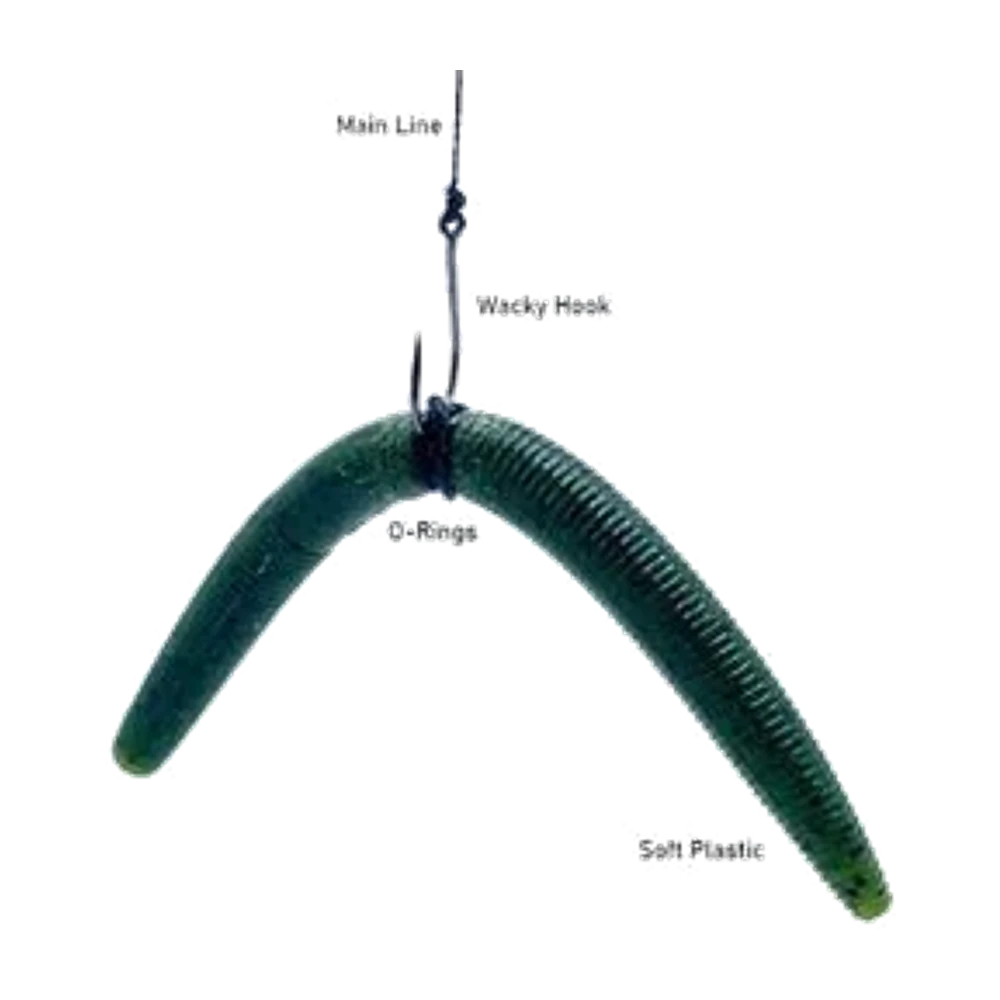
The wacky rig is one of those setups that looks like a mistake the first time you see one. The hook goes through the middle of the bait, perpendicular to it, with no weight. The bait hangs sideways, folded in two.
In the water, that configuration produces something no other rig reproduces: a perfectly horizontal fall during which both ends quiver independently.
What happens on the drop
With no weight, the bait sinks slowly and flat. The two halves — free on either side of the hook — oscillate up and down in rhythm with the water's resistance.
The movement imitates nothing in particular. It is not a fish, not a craw, not a worm. It is an object sinking while vibrating, and for a reason that has never been fully explained, bass take it with frightening consistency.
What is certain is that the rig delivers two measurable advantages: a very slow fall, therefore a long presentation, and no noise or aggressive signal, therefore no reason for the fish to be suspicious.
The rig and the O-ring
The basic setup is to push the hook straight into the plastic, in the middle of the bait. It works, but the bait tears after one or two fish.
The O-ring solves that. It is a small rubber ring you slide to the middle of the bait with a dedicated tool. The hook goes under the ring, not into the plastic.
The result: the bait takes ten fish instead of one or two, with no change in action. On a rig that eats through soft plastics, it is the most cost-effective modification there is.
On the water: the bite comes during the first drop, in 80 % of cases, without you having done a thing. The reflex of starting to work the bait as soon as it hits the water deletes exactly the productive phase. Cast, then do nothing and watch your line.
The retrieve
- Cast beside structure — a jetty, a sunken tree, the edge of a weed bed.
- Do nothing. Watch your line through the whole descent.
- Wait for the line to stop running out, the sign that the bait has reached the bottom.
- Two small pulls to lift it 30 cm, then let it drop back.
- Repeat two or three times, then reel in and cast somewhere else.
You see the bite before you feel it: the line moves off to the side, or stops sinking earlier than expected. Set the hook by tightening progressively.
The variations
The weighted wacky (Neko rig). A tungsten nail of 1 to 3 g inserted into one end. The bait sinks head first, faster, and stands vertically on the bottom where it keeps quivering. That is the version for fishing deeper or in current.
The weedless wacky. A wacky hook fitted with a wire guard lets you fish sparse vegetation without fouling, at the cost of a slightly lower hookup rate.
The wacky on a jig head. To reach a precise layer of water quickly while keeping the quiver, particularly when fishing vertically.
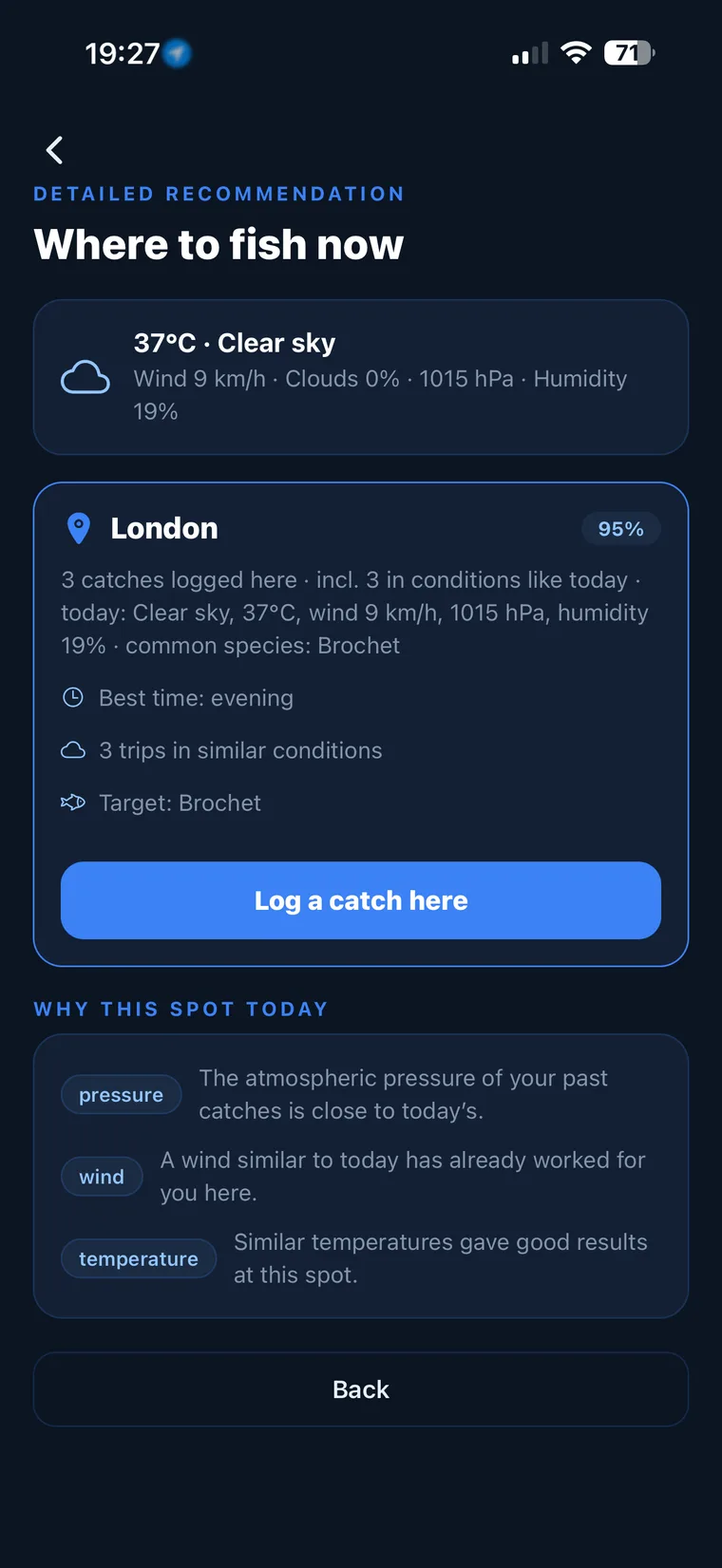
Not sure what to tie on?
Photograph your spot: CarnaFish reads the scene, cross-checks the conditions and gives you the zone, the lure and the retrieve. Free on iOS and Android.
Wacky or Texas
The two rigs often use the same bait but answer opposite needs.
The Texas rig is there to fish inside the cover: buried point, no snagging, powerful hookset. It is the rig for dense vegetation.
The wacky is there to maximise the presentation in relatively open water: slow fall, constant quiver, exposed hook and therefore an excellent hookup rate. It fouls as soon as the vegetation thickens.
In practice: wacky along clean margins and vertical structure, Texas as soon as you go into the salad.
The right baits
The rig demands a straight, uniform bait with no appendages, whose two halves can move freely:
- Stick worms like the Senko — the reference choice.
- Scented stick worms like The General, which add a scent trail.
- Straight worms of 10 to 13 cm.
Creature baits, craws and shads do not suit: their appendages unbalance the fall.
Our beginner's guide to bass fishing covers the situations where finesse is the answer. And if you are unsure whether to switch to a wacky on a given spot, CarnaFish analyses a photo and answers.
Key takeaways
- Hook through the middle, no weight: the bait sinks flat, quivering at both ends.
- 80 % of bites come during the first drop. Do nothing and watch your line.
- The O-ring multiplies the life of the bait by five without changing the action.
- Neko rig (a nail in one end) to fish deeper or in current.
- Wacky in open water, Texas as soon as the vegetation thickens.
FAQ
How do you set up a wacky rig?
Push the hook through the middle of the bait, perpendicular to its axis, with no weight at all. The two halves must hang freely on either side. An O-ring set in the middle, with the hook passed under it, extends the life of the bait enormously.
What is the O-ring for?
It is a rubber ring placed in the middle of the bait, under which you pass the hook instead of pushing it into the plastic. The bait then takes around ten fish instead of one or two, with no change in action.
Should you work a wacky rig?
No, certainly not at the start. Almost every bite comes during the free fall, with no input at all. Only work it once the bait has reached the bottom, with two small pulls followed by a fresh drop.
What is the Neko rig?
It is a weighted wacky: a tungsten nail of 1 to 3 g is inserted into one end of the bait. It then sinks head first and stands vertically on the bottom. That is the version for fishing deeper or in current.
Wacky or Texas, which should I pick?
Wacky in open water along structure: slow fall and an excellent hookup rate. Texas as soon as the vegetation thickens: the buried point avoids snagging. The two answer opposite needs.
Which baits suit the wacky rig?
Straight, uniform baits with no appendages: Senko-style stick worms, straight worms of 10 to 13 cm. Creature baits, craws and shads unbalance the fall and do not suit.
The full bass lure guideSeason-by-season strategy: which family of lure, when, and why.Go from theory to fish
CarnaFish reads your spot from a photo and gives you the game plan: zone, lure, retrieve. Free on iOS and Android.