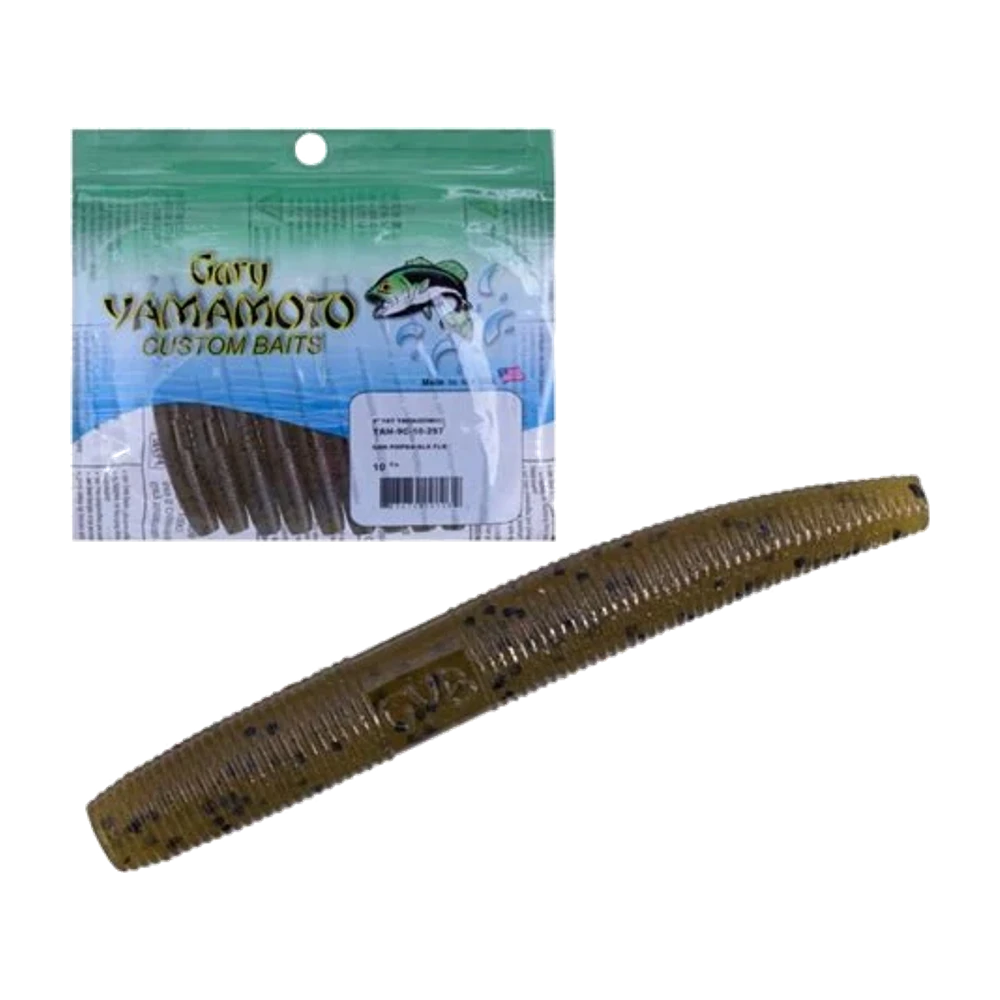
Gary Yamamoto Yamasenko 3-inch: the little stick that unlocks perch
Rather not fish it blind? Photograph your spot — CarnaFish cross-checks the conditions and points you the right way.
There's a scene that comes round every late summer: the perch are visible, grouped on a shallow bar, and they refuse everything. They follow hardbaits without touching them, they slide away from shads on jig heads. The fish aren't absent, they're on their guard.
In that situation the answer is almost never a more aggressive retrieve. It's a smaller bait that falls more slowly and does almost nothing. The 3-inch Yamasenko exists for exactly that slot: a 7.6 cm plastic stick with no tail, no blade, no particular shape — and it shimmies on its own all the way down.
A bait with no action except on the fall
This is the part that throws anglers meeting this style of bait for the first time. Retrieved in a straight line, a plastic stick does nothing whatsoever. It has no tail and no lip: it just drags.
Everything it does comes from its horizontal fall. The plastic is salt-loaded, which makes it dense and soft at the same time. Hooked through the middle and left alone, the bait drops flat, undulating from both ends with a fine, irregular shimmy that's hard to reproduce any other way. Underwater it reads as a wounded baitfish sinking without a struggle — a signal very few wary fish resist.
Two immediate consequences:
- The fishing phase is the descent. If you're retrieving, you've already finished fishing.
- Fall time is your only real adjustment. It depends on how much weight you add, and it should stay as long as possible.
What the 3-inch size really changes
The bigger sizes in the range are bass baits. The Senko 4-inch is the standard for average bass, the Senko 5-inch targets bigger fish and casts far better. The Fat Senko, thicker again, falls faster and moves more water.
The 3-inch drops into another category entirely. At 7.6 cm and around 3.5 g:
It fits inside a perch's mouth. Trivial but decisive. A 25 to 35 cm perch can't swallow a 12 cm stick: it pinches it, drops it, and you count the missed bites. The 3-inch goes in first time.
It falls more slowly for the same weight. Less mass for a proportionally larger surface: the descent is longer, so the window to attack is longer too.
It becomes uncastable without the right tackle. That's the price. Three and a half grams on a medium-power rod simply won't go. You need a light outfit, and it isn't negotiable.
| Item | Recommendation |
|---|---|
| Rod | 1.90 to 2.10 m, 2-10 g power, sensitive tip |
| Reel | Size 1000 to 2000 |
| Braid | 0.06 to 0.08 mm |
| Leader | 0.16 to 0.20 mm fluorocarbon, about 1 m |
| Wacky hook | Thin wire, size 1 or 1/0 depending on brand |
Three rigs, three problems solved
Wacky, for clear water and settled fish. Push the hook straight through the middle of the body, perpendicular to it. The bait hangs in a U and drops flat, shimmying on both sides. It's the most productive rig on wary perch, and it's also the one that destroys the most baits — a rubber O-ring around the body easily doubles their life.
Drop shot, for holding a precise depth. The bait is nose-hooked, fifteen to forty centimetres above a weight resting on the bottom. You can let it quiver in place for tens of seconds without it sinking. This is the rig to reach for when perch are pinned to the bottom on a drop-off.
Weightless nose-hooked, for the margins. Single hook through the head, no weight at all. The bait sinks slowly straight down, along a dock or a quay wall. Less spectacular than wacky, but it snags far less.
On the water: with this bait, never set the hook hard. The hooks are thin wire and the line is light. When you feel the weight, drop the rod first, take up the contact, then lift progressively. A violent hookset opens the hook or rips the bait off. That restraint is worth more fish than any colour change.
The retrieve: count, wait, do nothing
- Cast gently, letting the rod load. A 3.5 g bait is lobbed, not whipped.
- Let it sink on a semi-slack line and count the seconds. Keep your eyes on the line.
- Once it's on the bottom or at the depth you want, wait five seconds. No exceptions. That's often when the bite comes.
- Two small shakes of the rod tip, without moving the bait more than twenty centimetres.
- Let it drop back and repeat two or three times.
- Cast again: ten falls over the same square metre beat one long retrieve.
If perch are touching without getting hooked, extend the wait after the fall rather than downsizing the hook. Nine times out of ten, they come back.
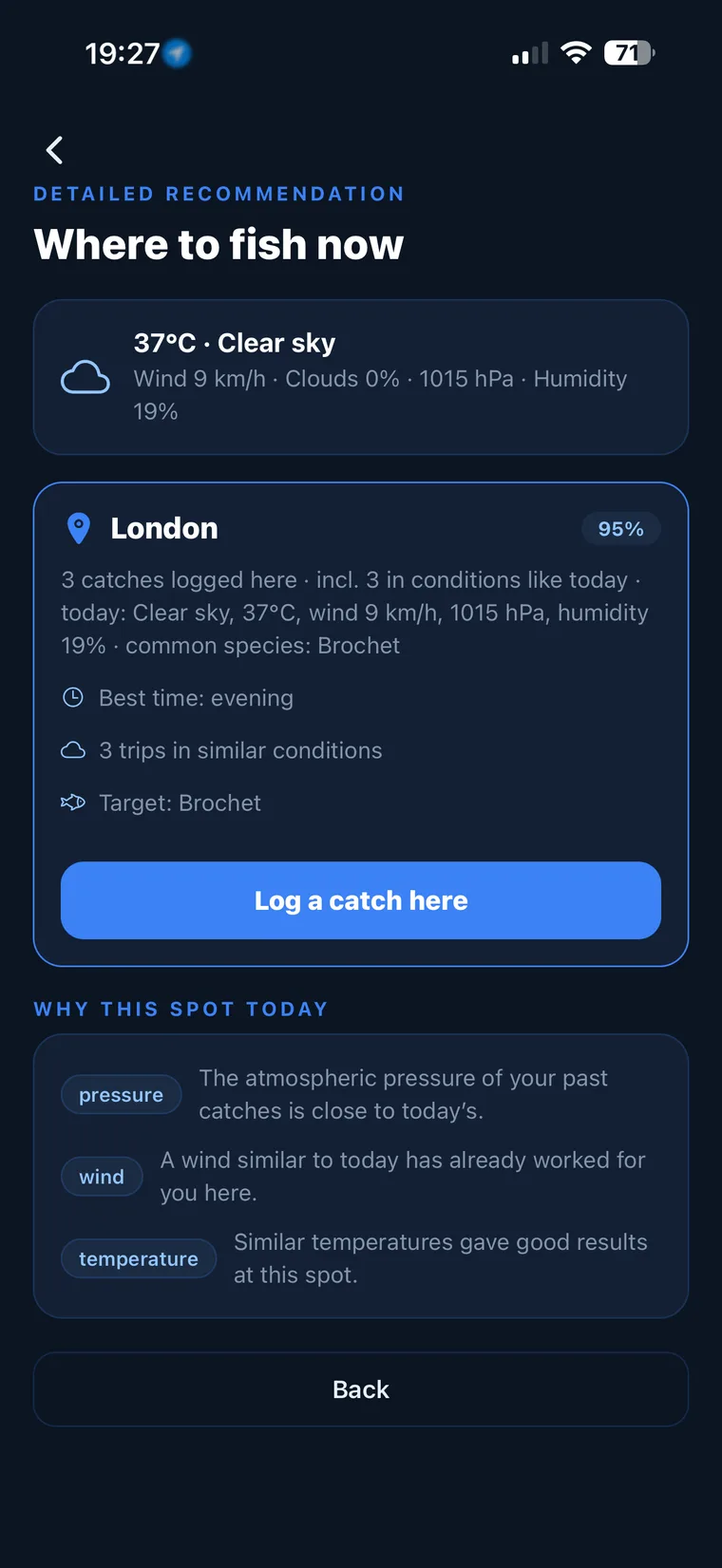
Not sure what to tie on?
Photograph your spot: CarnaFish reads the scene, cross-checks the conditions and gives you the zone, the lure and the retrieve. Free on iOS and Android.
Where it works, where it doesn't
Its home ground: gravel pits and clear lakes, dock edges, quay walls, perch bars, heavily fished water where the fish have seen everything. The temperature window is wide, from 10 to 26 °C, with remarkable results in high summer when nothing else will move a fish.
Its limits are sharp. In coloured water, a bait with no vibration and no bulk goes unnoticed: you need something else. In sustained wind, you lose control of the slack and stop detecting anything. Past three or four metres, the fall gets too long to manage without weight. And in a flowing river, the whole idea of a vertical fall stops making sense.
Yamasenko 3 or Senko 4
The choice isn't about the size of the fish you're after but about how wary it is and how big its mouth is.
Take the Senko 4-inch any time you're targeting bass: it casts better, it hooks better, and its fall is still slow enough. Take the 3-inch when you're after perch, when the water is very clear, or when the fish refuse everything else — including the 4-inch. On pressured water, that half inch is the difference between a blank and a session.
Our wacky rig guide covers fitting the O-ring and choosing the hook. Our guide to lure fishing for perch puts this bait back into the logical order of a session. And if you're torn between wacky and drop shot in front of a spot, CarnaFish reads a photo of it and answers for you.
Key takeaways
- The action only exists during the fall: you don't retrieve this bait, you let it sink.
- The 3-inch size fits inside a perch's mouth, unlike the 4 and the 5.
- Light tackle is mandatory: 2-10 g rod, 0.06-0.08 mm braid, 0.16-0.20 mm fluorocarbon.
- Wacky in clear water, drop shot to hold a depth, nose-hooked along the margins.
- Progressive hookset, never sharp. Thin-wire hooks don't forgive.
FAQ
Should I retrieve the Yamasenko or let it drop?
Let it drop. This style of bait has no action at all on a continuous retrieve: everything happens during the horizontal fall, when both ends shimmy. Make lots of short casts rather than long retrieves.
What tackle do I need to cast a 3.5 g bait?
A 1.90 to 2.10 m rod in 2-10 g power, a 1000 or 2000 reel, 0.06 to 0.08 mm braid and a 0.16 to 0.20 mm fluorocarbon leader. With a heavier outfit, the bait simply won't go anywhere.
Why do my baits tear so quickly on a wacky rig?
Because the hook goes through very soft plastic in the middle of the body. Fit a rubber O-ring around the bait and pass the hook under that ring: the lifespan at least doubles.
What's the difference with the Senko 4-inch?
The 4-inch targets bass and casts more easily. The 3-inch is sized for perch: it fits in their mouth, falls more slowly, and gets bites from fish that have already refused the bigger size.
How long should I wait after the fall?
At least five seconds once the bait has reached the depth you're after. If perch are touching without getting hooked, extend that wait further before changing anything about the rig.
Does it work in coloured water?
Barely. With no vibration and no bulk, it stays almost invisible as soon as visibility drops below a metre. In that case, a shad with a strong paddle tail or a vibrating bait will be far more effective.
The full perch lure guideSeason-by-season strategy: which family of lure, when, and why.Go from theory to fish
CarnaFish reads your spot from a photo and gives you the game plan: zone, lure, retrieve. Free on iOS and Android.