Z-Man Crosseyez Chatterbait: the bladed jig built for heavy timber
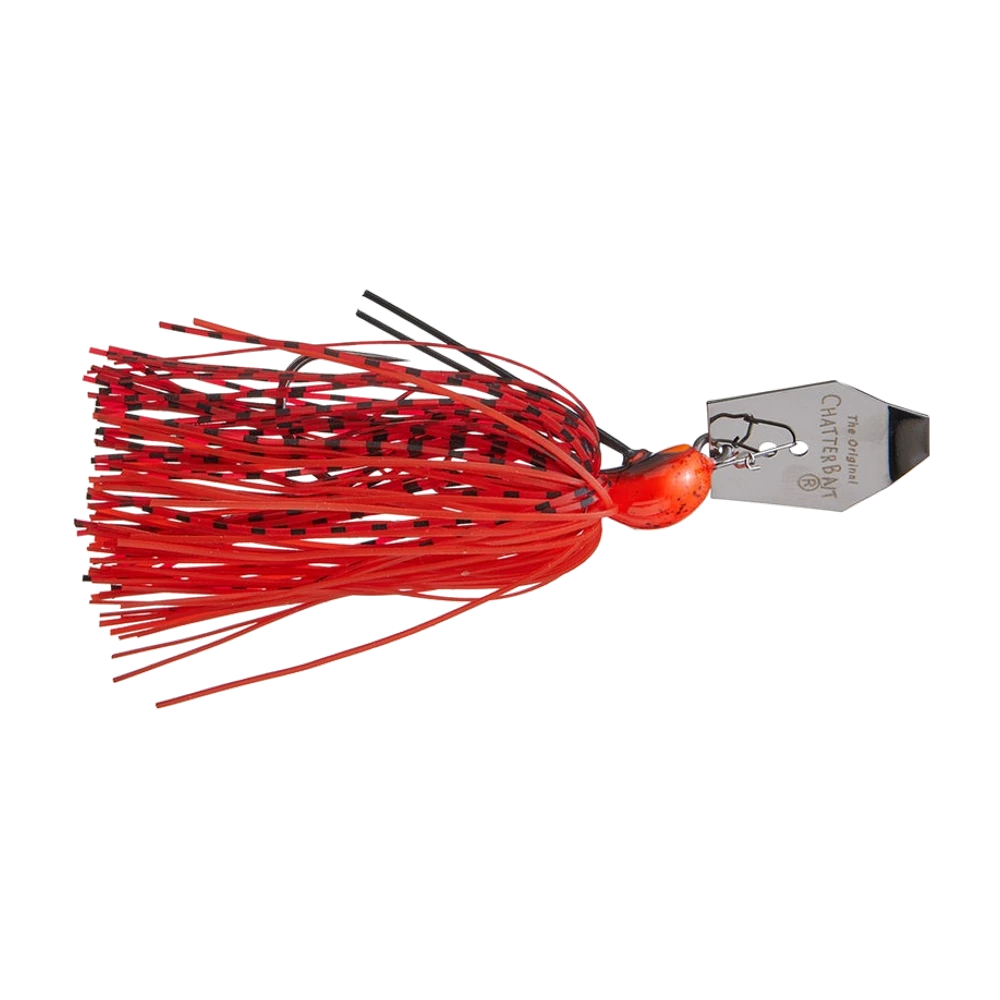
This lure shines under specific conditions. CarnaFish tells you in 10 seconds if today is one of them.
There is a precise moment when an ordinary bladed jig runs out of road: when the fish has tucked itself inside a fallen tree, between the branches, and you have to get the lure in there without leaving the hook behind. Most bladed jigs hang up on the second limb. The Crosseyez Chatterbait was drawn to keep moving.
A weedguard that changes where you can fish
The most concrete difference on this model is a detail you barely notice on the rack: a coated multi-strand wire weedguard, set in a V and adjustable. Three things follow from it.
First, the lure deflects off cover instead of burying itself in it. A bundle of strands opened into a V presents an angled surface that slides over a branch, a lily stem or a stump. Second, that bundle prevents snagging but also fouling: filamentous weed and debris slide off instead of wrapping around the shank, which saves you from dragging a salad back every third cast. Third, it folds back on the hookset. A weedguard that is too stiff protects the hook beautifully and costs you fish; this one gives under pressure so the point can get through.
Being adjustable matters as much as the rest. Early in the season, along a clean bank, you can spread the strands slightly to open up access to the hook. In midsummer, inside a flooded reed bed, you close them up. It is a two-second adjustment with your fingers, and it decides whether you spend the day fishing or unhooking.
The hardware, which is the real subject on a bladed jig
Z-Man specifies a custom 5/0 O'Shaughnessy single hook. That is not an idle choice: the O'Shaughnessy is a round-wire, straight-point pattern, less needle-sharp than a flat-forged hook but far harder to open under sideways pull. On a fish heading into timber, that is exactly the trade-off you want. The 5/0 also gives a generous gap, which allows bulky trailers without choking the hooking surface.
The dual trailer keeper deserves a mention. It combines a spike moulded into the lead head with a wire spike, so two systems working in different directions. In practice a soft trailer stays put for a dozen fish instead of sliding off on the second. This is one of the rare points where a premium bladed jig earns its price through use rather than finish.
Before you cast, run a simple test: hold the lure by the line tie and pull gently backwards on the trailer. If it moves under light finger pressure, it will move on the first fish. Re-rig it so both spikes are properly engaged, not just the one in the lead.
The blade, the skirt and the rest
The blade is a hex-shaped super-hard stainless ChatterBlade hinged directly to the line tie. The hexagonal geometry produces a wider, lower-pitched vibration than an oval blade: the lure thumps noticeably within the first turns of the handle, with no need to speed up. The line tie itself is a purpose-designed snap meant to limit debris build-up and last — a historic weak point on this lure family, where the line tie ovalises and eventually saws through.
For the skirt, Z-Man uses hand-tied silicone banded to the hook shank with stainless wire rather than a rubber collar. The rubber collar is the part that fails first on a cheap bladed jig, often after a single season in storage. Stainless wire simply does not age the same way.
What the description does not say
Let us be blunt: the manufacturer publishes no length, no weight, no size breakdown for this model. There is no spec table at all. On a bladed jig, that is a real gap, because the weight sets the running depth and the rod you need. Check the weight on the packaging before you buy, and do not go by looks: two bladed jigs of identical bulk can carry very different heads.
Where to use it and how to work it
The natural home of this lure is cover. A fallen tree in two metres of water, a lily-pad edge, gravel-pit stumps, a flooded reed line in spring: anywhere an ordinary bladed jig would force you to pass a metre away from the interesting water, this one lets you go inside.
The base retrieve is a slow to medium straight wind, rod tip slightly up, deliberately hunting for contact. Every time the blade clips a branch or a stem, the lure kicks sideways for ten to twenty centimetres — and that is very often when the bite comes. Do not steer around cover: aim at it.
Across Europe this way of fishing works on pike holding along the margins as well as on bass. Where pike are present, use a thick fluorocarbon leader at a minimum, or a supple titanium one: a vibrating blade triggers very committed strikes and the line often ends up inside the mouth.
The classic mistake
Fishing too fast in order to feel the vibration. Plenty of anglers wind quicker because the feedback in the rod is reassuring. The result is a lure that climbs in the water column, flies over the cover and never meets the fish. The right speed is the slightly frustrating one where you only just feel the blade working and the lure touches something every two or three seconds.
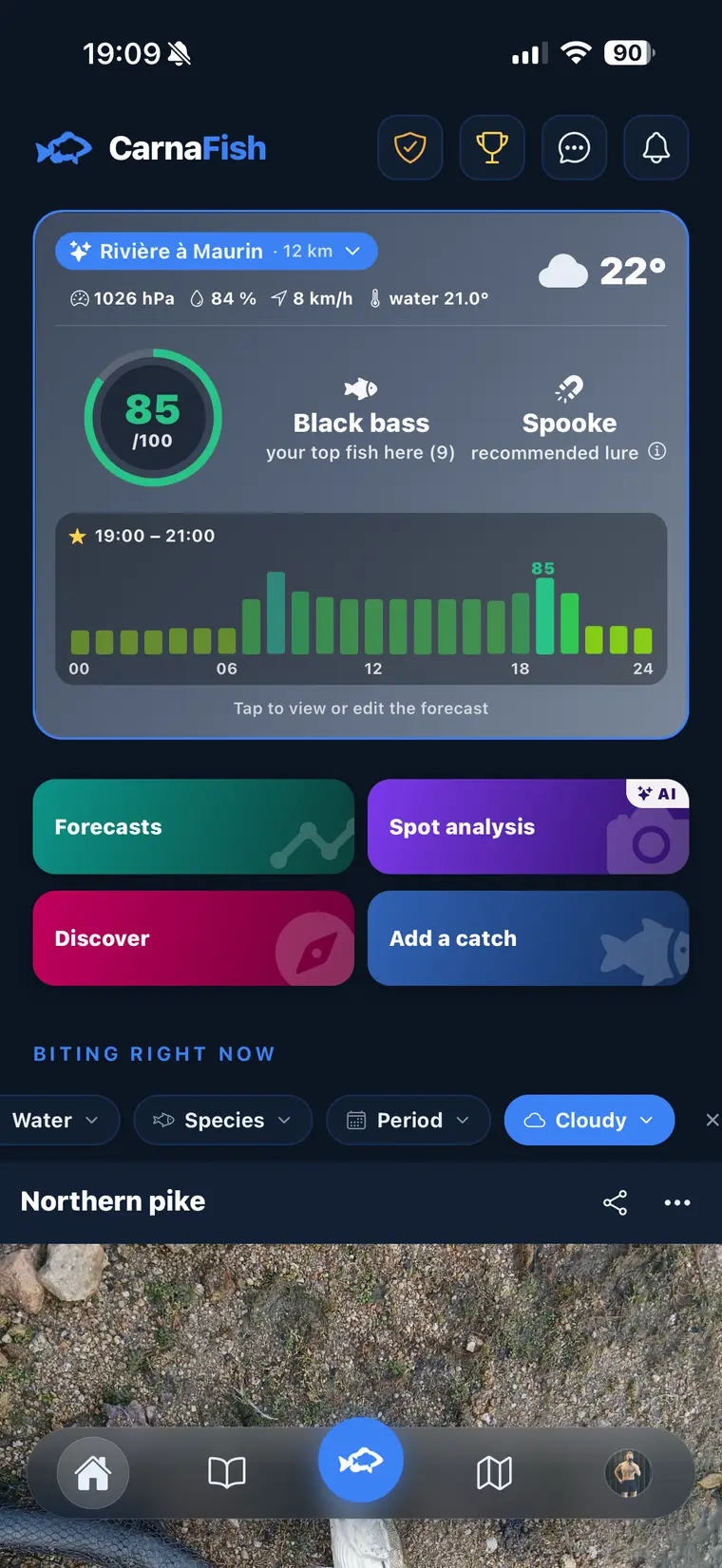
Not sure what to tie on?
Photograph your spot: CarnaFish reads the scene, cross-checks the conditions and gives you the zone, the lure and the retrieve. Free on iOS and Android.
Colors by water clarity
- Stained water, early season: the red barred with black shown in the photo, a combination that reads as a crayfish in breeding colour and stays visible in loaded spring water.
- Clear water: olive greens and natural browns, which let the blade do the work without adding an aggressive visual signal.
- Milky water or heavy overcast: white, which keeps a readable contrast in low light when natural tones disappear.
Placing it in the range
Z-Man builds several bladed jigs that are not aiming at the same thing. The Z-Man ChatterBait Jack Hammer is about a very tight vibration and holding its track at speed; the Z-Man ChatterBait Freedom CFL lets you swap head and trailer in seconds. The Crosseyez is the heavy-cover model, the one you tie on when the water you want to fish is full of wood. To dress it, the Z-Man ChatterSpike is a pintail trailer that extends the vibration instead of competing with it.
Which still leaves the question of whether the bank opposite deserves a bladed jig at all, or calls for a slower presentation. That is exactly what CarnaFish is for: one photo of the spot, and the AI suggests a zone, a depth and a lure type suited to the conditions of the day. To build the foundations around bass, our beginner's guide to bass fishing covers the classic holding spots and the tackle.
Key takeaways
- The coated wire weedguard, V-shaped and adjustable, is the real reason to buy this model: it opens up cluttered water.
- A 5/0 O'Shaughnessy hook and a dual spiked trailer keeper: hardware built for fighting fish hard and keeping the trailer in place.
- Hex-shaped super-hard stainless blade and a snap line tie: wide vibration from slow speeds, and no line tie that ovalises.
- Neither length nor weight is published: read the packaging before buying, because the weight dictates the running depth.
FAQ
How much does the Crosseyez Chatterbait weigh?
The manufacturer publishes no weight in its description, and no spec table comes with the model. The weight is printed on the retail packaging, which is the only reliable source, and it is worth checking since it determines running depth and rod power.
What is the wire weedguard for?
It does two jobs: deflecting cover so the lure does not hang up, and stopping filamentous weed from wrapping around the shank. It is adjustable by hand and folds back on the hookset so the hook point can get through.
Which trailer should I put on it?
A slim-tailed pintail trailer extends the vibration without blurring it; a paddle tail widens the signal instead. The dual keeper, with its moulded spike and its wire spike, holds either one without slipping.
Can you fish for pike with this chatterbait?
Yes, and it is a common use across Europe along weed edges and drowned trees. Add a thick fluorocarbon leader or a supple titanium one: the vibrating blade draws very committed, wide-open strikes.
Why do the silicone skirts come loose on my other chatterbaits?
Because they are usually held by a rubber collar that hardens and splits in storage. On the Crosseyez the skirts are hand-tied and banded with stainless wire, which does not age the same way.
How fast should I retrieve?
Slow to medium, just fast enough to feel the blade working and no more. If you speed up so you can feel it better, the lure rises in the water column and sails over the cover where the fish are sitting.
The full bass lure guideSeason-by-season strategy: which family of lure, when, and why.Go from theory to fish
CarnaFish reads your spot from a photo and gives you the game plan: zone, lure, retrieve. Free on iOS and Android.