Z-Man GrubZ: the grub that survives the whole day
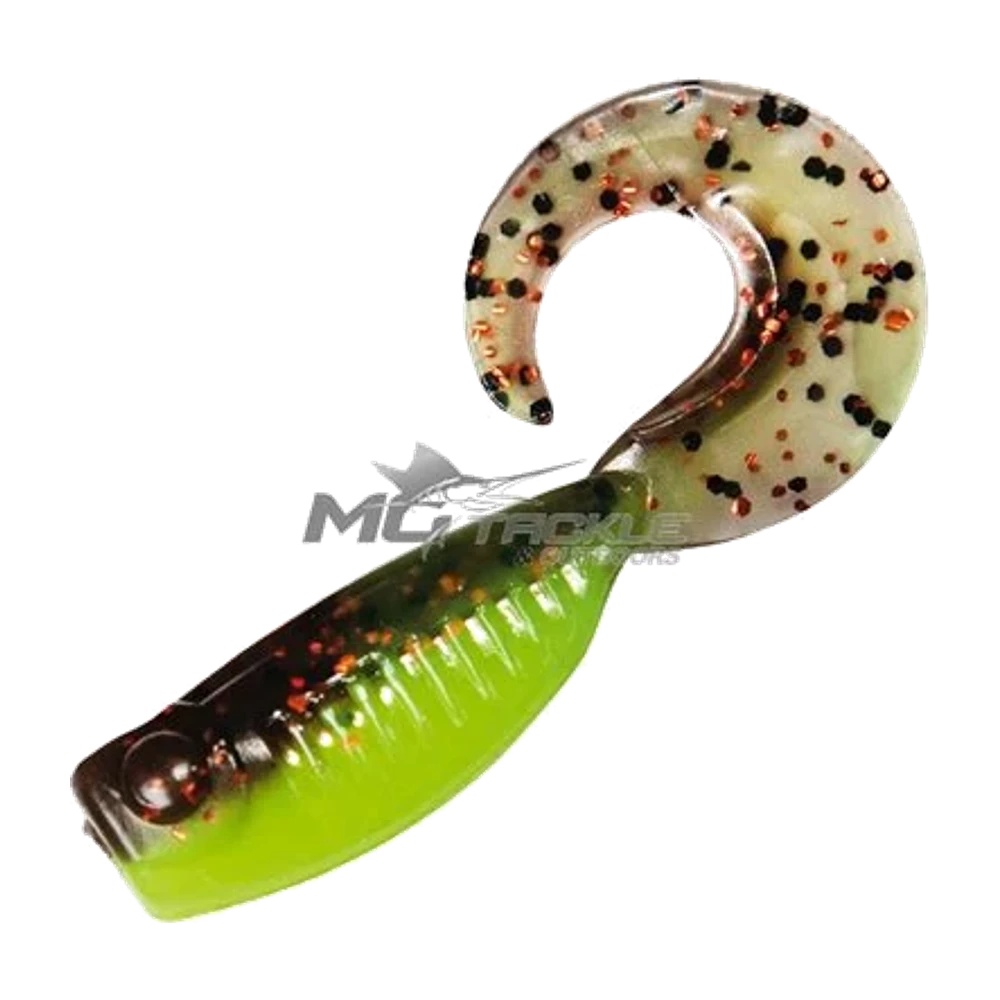
This lure shines under specific conditions. CarnaFish tells you in 10 seconds if today is one of them.
You know the scene. The perch are there, the bites keep coming, and on the fifth one you reel in a grub cut in half at the hook. You change it. Two fish later, same again. In an hour of active fishing you have got through six lures and lost a quarter of an hour re-rigging — almost always at the worst possible moment, the one where the shoal is under the rod tip.
That is exactly the problem the GrubZ attacks. Its material, ElaZtech, is not conventional soft PVC: it is an elastomer that stretches enormously before it gives, to the point that a single lure routinely takes ten fish without tearing at the hook exit.
But reducing this lure to its "unbreakable" side would be to miss the point. The material also changes its buoyancy, its behaviour at rest, and therefore the way you need to fish it.
What ElaZtech really changes
Three concrete differences compared with a PVC grub:
- It floats. ElaZtech is less dense than water. Rigged on a jig head sitting on the bottom, the GrubZ body rights itself and stays off the substrate, tail in the air. A standard grub just slumps flat in the silt.
- It stretches instead of splitting. The hook perforation does not propagate into a tear. That explains the longevity, but also the fact that you can re-rig the same lure after shifting it.
- It is heavier per unit than you would think, which helps when casting an unweighted lure on a light offset weight.
The trade-off is that this material cannot be stored in contact with standard PVC: in the same box, the two react and degrade each other. Keep your GrubZ in the original bag or in a dedicated compartment.
The retrieve: exploiting the body that stands up
The body's buoyancy is the real technical argument, and it calls for a bottom presentation rather than a straight mid-water retrieve.
- Cast and let it drop on a semi-tight line, following the line with your eyes. A lot of perch bites come on that initial fall.
- Touch bottom, then wait for the line to go completely slack. At that moment the body pivots upward and the tail sits 30 or 40 cm above the substrate.
- Leave it two to four seconds doing nothing. This is the phase specific to this lure: the grub holds its vertical posture, and the slightest swirl sets the curly tail turning.
- One short, slow pull of the rod tip, 30 to 50 cm, not a sharp snap. The tail should start spinning without the lure lifting more than a metre.
- Let it drop back under control, then pick up again at step 2.
For zander, slow down further: longer pulls, five to eight seconds of dead time. On active perch you can switch to a slow straight retrieve, light jig head, thirty centimetres off the bottom.
On the water: if the GrubZ tail is not turning, it is almost never the lure's fault — your jig head is too heavy and you are pulling too fast for the depth. Drop one weight step before you change colour; you will get the rotation back and, with it, the bites.
Weight: the starting table
The jig head dictates everything on this lure. Here are sensible starting points, to be adjusted for current and wind.
| Depth | Jig head | Rhythm |
|---|---|---|
| 0 to 2 m | 3 to 5 g | slow pull, short pauses |
| 2 to 4 m | 5 to 7 g | pull + 3 to 5 s pause |
| 4 to 6 m | 7 to 10 g | long pulls, constant bottom contact |
| Strong current | +2 to +3 g | stay on bottom contact, tight line |
Choose a hook with a wide shank and a well-clear eye: ElaZtech is thick and elastic, so a fine-wire hook penetrates it poorly and the lure slides. On an offset weight, a 2/0 Texas hook with a reinforced shank holds better than a finesse model.
Where it wins, and where it disappoints
The GrubZ is a lure for long sessions and lots of fish. It excels:
- On an active shoal of perch, when every minute spent re-rigging is a minute of bites lost.
- Over silty bottoms or ones littered with plant debris, where its buoyancy keeps it visible instead of letting it sink in.
- Bank fishing on heavily fished spots, when you want to work the same place for thirty minutes without constant handling.
Conversely, it is poorly suited to two situations. First, fast mid-water searching over a big area: a paddle-tail shad puts out more vibration and covers water better. Second, a standard drop shot rig — the elastic material tolerates fine nose-hooked hooks badly, it slips and spins around the shank. For that technique, our drop shot rig page lists better-suited profiles.
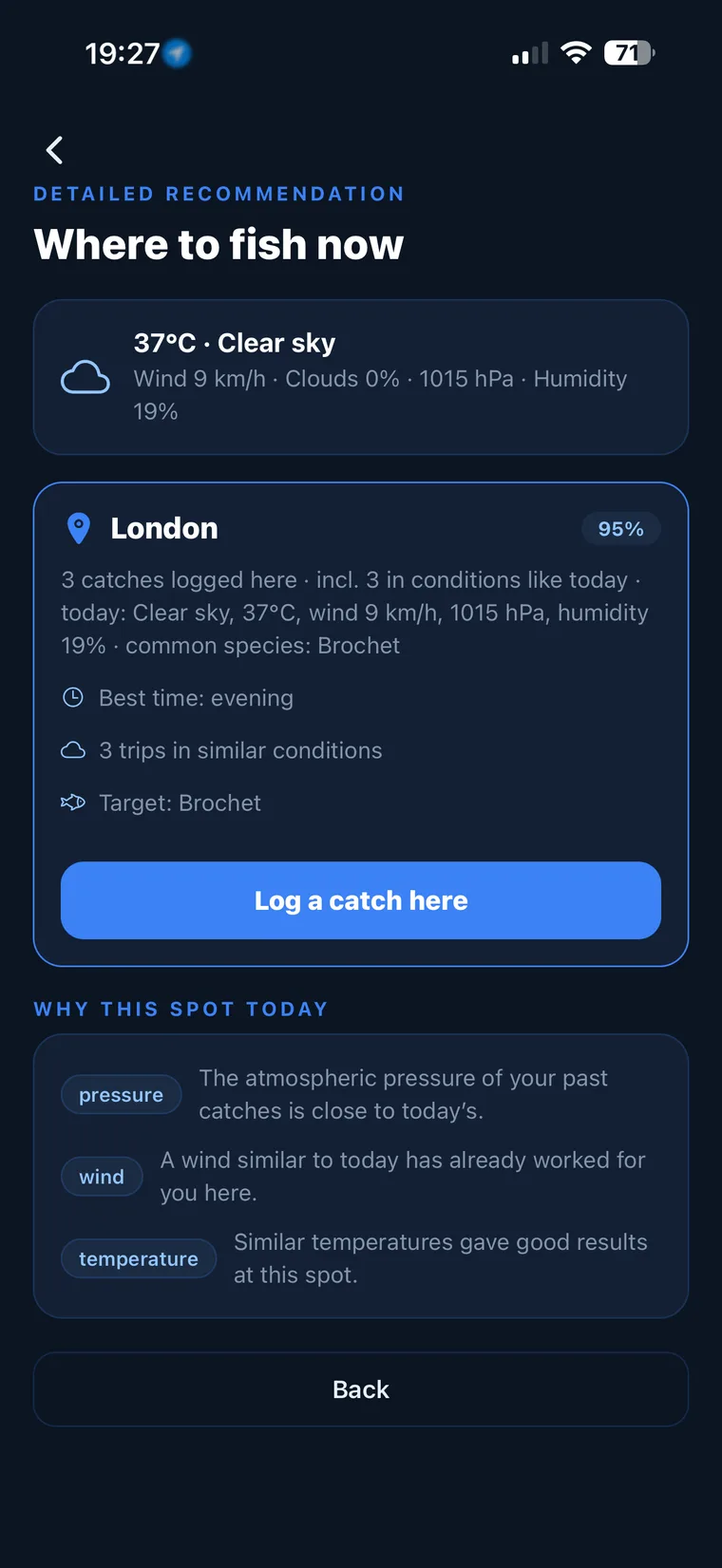
Not sure what to tie on?
Photograph your spot: CarnaFish reads the scene, cross-checks the conditions and gives you the zone, the lure and the retrieve. Free on iOS and Android.
Colours and visibility
- Clear water, perch: translucent with flake, plus a contrast point on the tail. The spinning curl creates an intermittent flash perch pick up from a distance.
- Stained water, zander: opaque white, or a touch of chartreuse on the tail only. Zander hunt by silhouette more than by colour.
- Dark bottom and low light: a dark back over a pale belly is still the most reliable compromise.
GrubZ or TRD Ned Rig
Both come out of the same material but target opposite situations. The Z-Man TRD Ned Rig is a static, extreme-finesse lure: small volume, no vibration, fished by letting it live on the bottom for apathetic or educated fish. The GrubZ adds a signal — the curly tail — and gets fished on the move. In cold water with fish glued to the bottom, the TRD comes out ahead. As soon as fish are hunting in shoals and you need to locate them, the GrubZ is more effective because it calls.
Against a standard shad on a plain jig head, the GrubZ needs less speed to come alive: its curl starts turning at a pace where a paddle tail is still dead. That is its real niche, more than mere durability. Our guide to perch fishing with lures covers how to work these two families through the same spot. And if you are unsure what weight to rig when you reach the bank, CarnaFish analyses a photo of the spot and answers.
Key takeaways
- ElaZtech does not tear: count on ten fish per lure instead of two.
- The body floats and stands up on the bottom, tail clear of the substrate: work the pauses.
- The curl turns at very low speed. If it does not turn, lighten the jig head.
- A wide-shank hook is compulsory; the thick material slips on fine wire.
- Never store it with standard PVC lures, both materials degrade.
FAQ
Is the Z-Man GrubZ really indestructible?
No, but it routinely takes ten fish where a PVC grub takes two or three. The material stretches instead of tearing around the hook. It does eventually give after several snags pulled free.
What jig head should I use with it?
Reckon on 3 to 5 g down to 2 m, 5 to 7 g between 2 and 4 m, 7 to 10 g beyond. Always favour the lightest weight that lets you keep bottom contact.
Why is the tail not turning?
Almost always because the jig head is too heavy for the depth, or because your pull is too abrupt. Lighten one step and slow down: the curl starts at a very low speed.
Can I store it with my other soft plastics?
No. ElaZtech reacts chemically with the PVC of standard soft plastics; both deform and stick together. Use the original bag or a separate compartment.
Is it any good for zander?
Yes, provided you slow right down: long pulls, five to eight second pauses, constant bottom contact. The body's buoyancy keeps the lure visible during the dead time, which works in its favour on this fish.
What is the difference with a paddle-tail shad?
The shad sends out a more powerful low-frequency vibration and covers more water on a straight retrieve. The GrubZ produces a subtler signal but starts at a far lower speed, which makes it better on inactive fish and bottom presentations.
The full perch lure guideSeason-by-season strategy: which family of lure, when, and why.Go from theory to fish
CarnaFish reads your spot from a photo and gives you the game plan: zone, lure, retrieve. Free on iOS and Android.