Zoom Horny Toad: the soft frog you never stop reeling
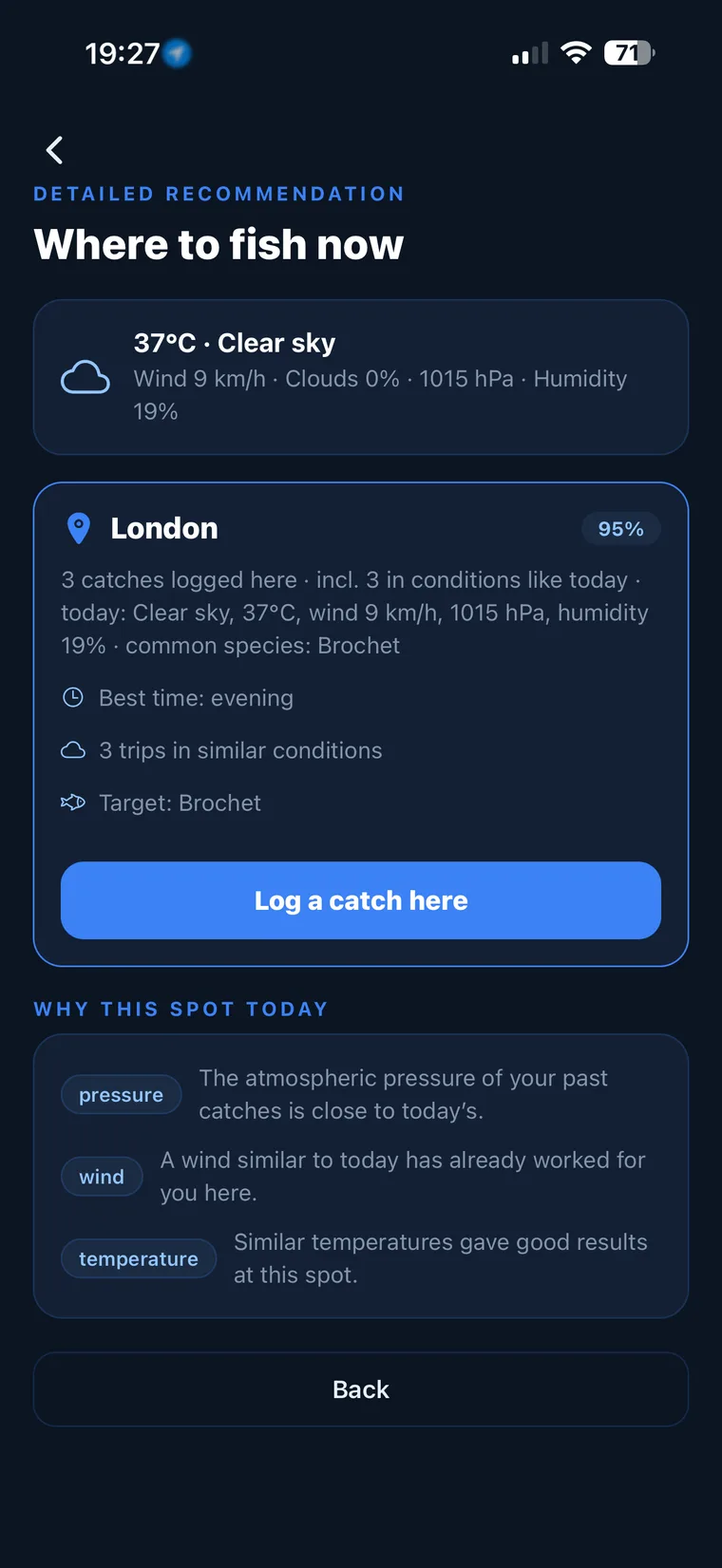
Before tying this one on, it helps to know if the spot actually calls for it. CarnaFish reads the scene from a photo.
A thirty-metre mat of lily pads. A classic hollow-body frog is made for this — except that with it, you will spend twenty minutes working each hole, walking the dog and pausing. That is patient, precise fishing, excellent when you know where the fish are.
But you do not know yet. You have just arrived, and the first thing you want is to find out which part of the mat has activity on it.
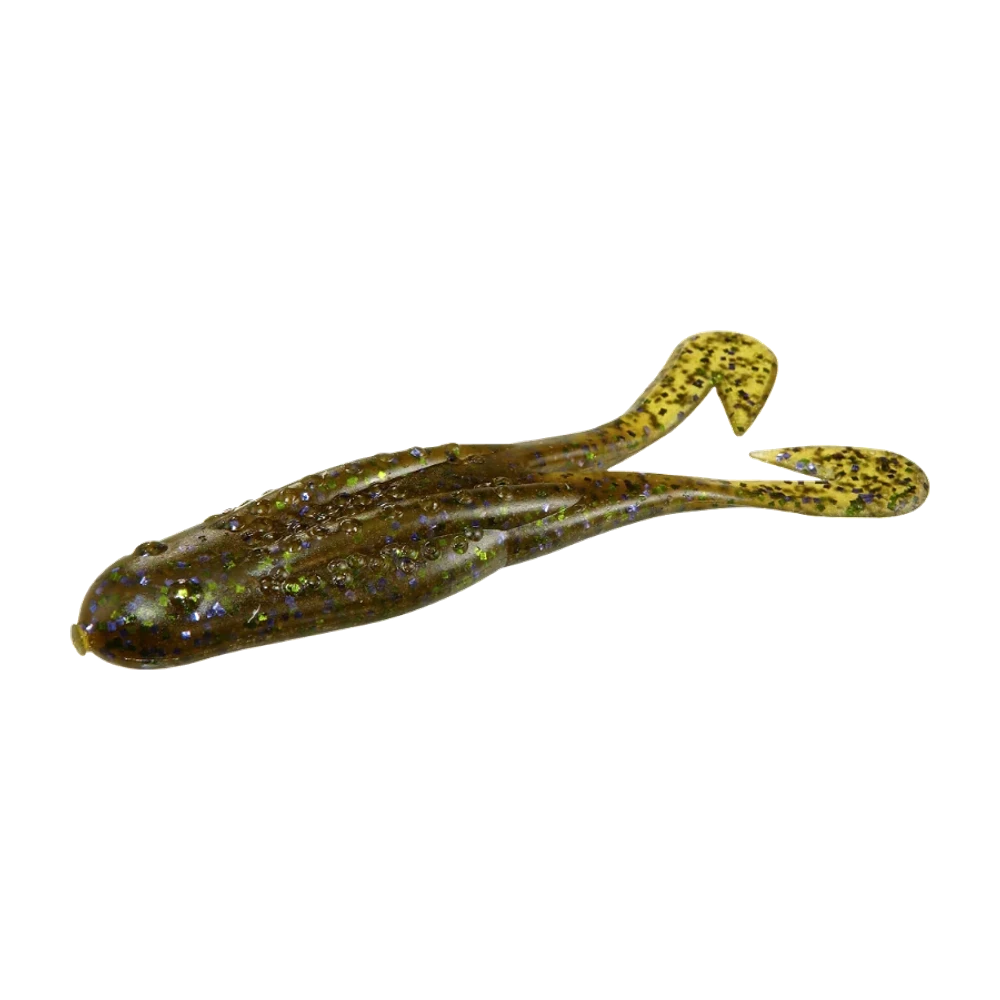
That is exactly what the Horny Toad is for, and it is why you must not confuse it with a hollow-body frog. It is not a hollow shell that collapses on the hookset, it is a solid soft plastic Texas-rigged on a wide gap hook, and it is fished on a continuous retrieve, never stopping. You are not working a spot: you are sweeping an area.
Two flat legs, and a noise that never stops
The body is simple, almost crude. Everything happens on the two rear appendages, wide and flat.
As soon as you start reeling, they begin turning alternately and slapping the surface. The result is continuous splashing, a steady "tac-tac-tac" that leaves a trail of foam behind the bait. That sound is very different from a frog's: it never breaks off, and it carries far enough to bring up a fish sitting two or three metres below the vegetation.
Two other traits matter:
- The body is soft and solid. It goes through weed without loading up, slides over lily pads, and collapses under the fish's teeth to let the hook point out.
- The bait sinks the moment you stop. That is not a flaw to fix: it is the reason you never stop. At the end of the retrieve, in open water, letting the toad dive fifty centimetres actually adds a trigger.
The rig: the hook is half the bait
There are no trebles here. A single hook, Texas-rigged, and choosing it changes everything.
| Item | Choice | Why |
|---|---|---|
| Hook | Wide gap or swimbait hook 4/0 to 5/0 | The gape has to be wide to clear the thick body |
| Weight | None, or 3 to 5 g built-in | A little weight steadies it in wind and adds casting distance |
| Braid | 0.30 to 0.50 mm | No mono, no fluoro: you have to drag the fish out of the vegetation |
| Rod | H or MH, 2 m to 2.20 m | Power to set the hook at range through weed |
Rig it with the point just tucked under the skin of the back, never buried deep. The technique is the same as the one described on our Texas rig page, with one nuance: on a toad, position the eye so the bait stays perfectly straight, with no twist, or it will spin as soon as you speed up.
One small detail that makes a big difference: add a short piece of heat shrink tubing or a bait keeper behind the eye to stop the body sliding down the shank. Without it, you will be pushing it back up every three casts.
The retrieve: one speed, held
- Cast beyond the mat, onto the bank or into dry vegetation if you can, then gently pull the bait into the water.
- Start reeling the instant it lands. Leave the toad for one second doing nothing and it sinks and fouls in the weed.
- Hold a constant speed, rod tip high, just fast enough for the legs to slap continuously. You should hear the rhythm.
- Do not pause at all, except in clean holes: there, a one-second stop followed by a sharp restart draws out followers.
- At the edge of the mat, in open water, let the bait dive for one or two seconds before lifting out.
On the water: when a bass blows up on the toad without getting hooked, do not cast straight back to the same place. Wait a minute, then send a hollow-body frog onto the boil. The fish has shown itself, it is located, and it will take a bait that stays put far more willingly than a second fast pass.
Missed fish are part of the system
It has to be said plainly: with this kind of bait, the miss rate is high. A bass that comes through a mat of weed to grab a bait that is speeding past does not always get hold of it cleanly.
Three adjustments that clearly improve the outcome:
- Wait until you feel the weight. That is the universal topwater rule, and it is even truer here. On a visual blow-up, count a full beat before setting.
- Set hard, and sweep. You have to drive a single hook through a thick soft body, at fifteen metres, with vegetation on the line. This is not a finesse hookset.
- Check the point every ten minutes. It dulls on vegetation and stems. A soft point explains half the misses.
Not sure what to tie on?
Photograph your spot: CarnaFish reads the scene, cross-checks the conditions and gives you the zone, the lure and the retrieve. Free on iOS and Android.
Where it dominates, and where the hollow frog takes over
The Horny Toad wins on:
- Big vegetation mats that need sweeping fast to locate activity.
- Submerged weed beds in shallow water, where it runs just above them.
- Edges of filamentous algae that a hollow frog tends to pick up.
- Light wind days, where the continuous noise cuts through the chop.
Leave it in the box for:
- A precise spot you have identified: you cannot make it stay put.
- Very thick, waxy lily pads: the soft body jams where a hollow one slides.
- Open water with no vegetation: other topwaters do better.
- Wary fish in very clear water: the bait is big and loud.
Horny Toad or hollow-body frog
This is the comparison to understand, because the two look alike from a distance and are fished nothing alike.
A Spro Bronzeye Frog has a hollow body that collapses on the hookset to free two points. It floats at rest, it is walked in a hole in the mat, and it sits on the thickest pads without going through. That is spot fishing, and patience. A Booyah Pad Crasher follows the same logic in a more affordable format.
The Horny Toad is a solid soft plastic on a single hook. It sinks at rest, so it has no static phase, and it produces continuous splashing instead of a silent glide. It is covering fishing: you sweep fast, you locate, and then you switch to the hollow frog to convert.
The two complement each other in the same box, and having them on two ready rods is the most effective way to fish a big mat. Our beginner's guide to bass fishing applies the same two-stage search logic. And if you are unsure whether to sweep or work a spot when you arrive in front of a weed bed, CarnaFish analyses a photo of the spot and answers.
Key takeaways
- A solid soft plastic on a Texas rig, not a hollow frog: it sinks at rest, so you never stop reeling.
- The two flat legs produce continuous splashing that brings fish up from a distance.
- A 4/0 to 5/0 wide gap hook and 0.30 to 0.50 mm braid: no mono, no fluorocarbon.
- A high miss rate is normal: wait for the weight, set hard, and check the point often.
- A fast search tool; once a fish is located, switch to the hollow-body frog.
FAQ
What is the difference between a soft toad and a hollow-body frog?
The hollow frog floats, collapses on the hookset and is walked on the spot. The toad is a solid soft plastic on a single hook, it sinks at rest and is fished on a continuous retrieve. One works a spot, the other sweeps an area.
What hook should I use on a Horny Toad?
A wide gap or swimbait hook in 4/0 to 5/0, with a wide gape to clear the thick body. A lightly weighted version, 3 to 5 g, steadies the bait in wind and adds casting distance.
Should I pause the retrieve?
No, except in a clean hole in the mat. The bait sinks the moment it stops and fouls in the vegetation. Start reeling the instant it lands and hold a constant speed to the edge of the mat.
Why am I missing so many fish?
Because the bass is attacking a moving bait through vegetation, and because you have to drive a single hook through a thick body. Wait until you feel the weight before setting, sweep firmly into the hookset, and check the sharpness of the point regularly.
What line should I use?
Braid, 0.30 to 0.50 mm, and nothing else. Mono and fluorocarbon stretch and break on vegetation: you need to set the hook at range and pull the fish out of the weed in one movement.
What should I do after a miss?
Do not keep hammering the same place. Let a minute pass, then send a hollow-body frog into the area of the boil: the fish is located and will accept a bait that stays put more readily than a second fast pass.
The full bass lure guideSeason-by-season strategy: which family of lure, when, and why.Go from theory to fish
CarnaFish reads your spot from a photo and gives you the game plan: zone, lure, retrieve. Free on iOS and Android.