Zoom Trick Worm: the floating worm that fishes the middle layer
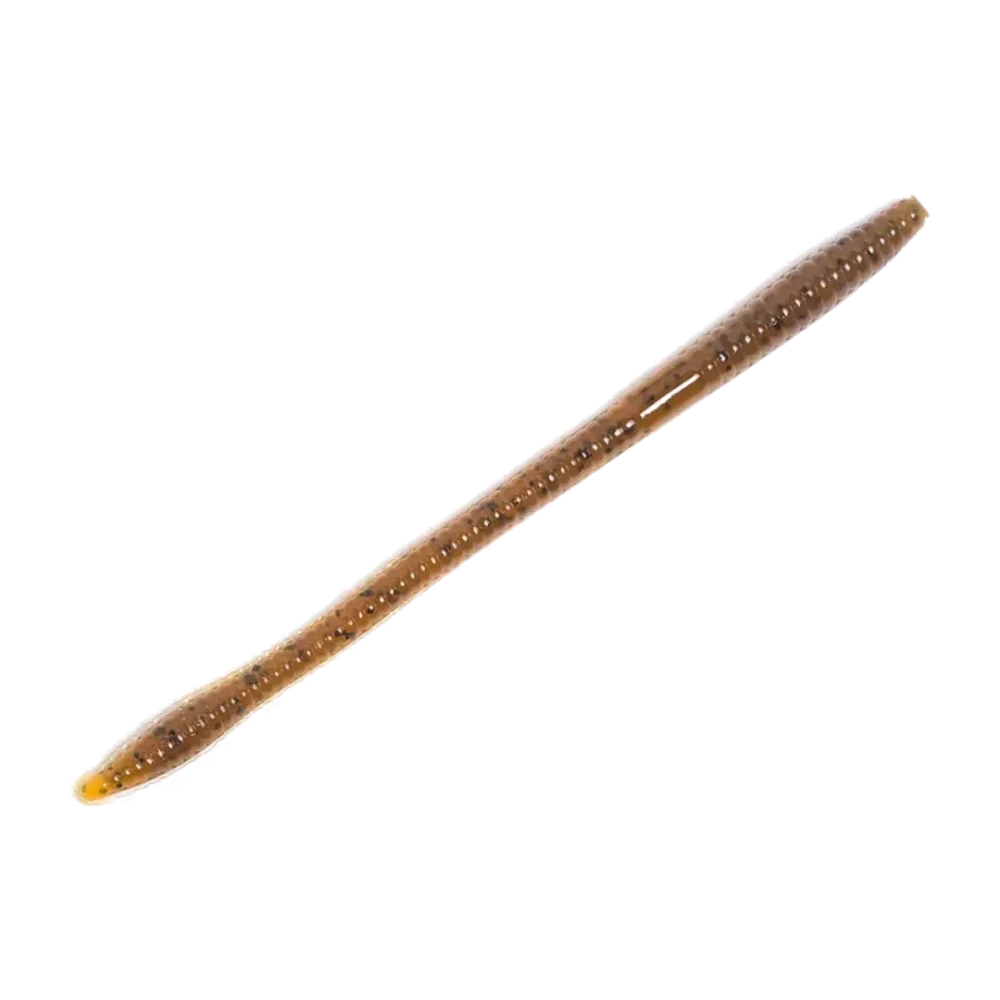
This lure shines under specific conditions. CarnaFish tells you in 10 seconds if today is one of them.
Most soft worms are designed to work on the bottom: they sink, you drag them, you hop them. The Trick Worm does the opposite. Its material floats, and rigged without lead it stays just under the surface, horizontal, shimmying on the spot instead of dropping. That intermediate layer — between surface and bottom — is the one most lures cross without stopping, and it is exactly where many bass hold in summer.
Buoyancy changes everything
A classic salted plastisol worm sinks. The Trick Worm rises slowly when you stop working it.
Three consequences:
- It stays in the fish's field of vision instead of crossing it. A bass sitting under a jetty sees it for several seconds.
- It comes alive at the slightest pull and stops dead, because it has no downward inertia. The contrast between movement and stillness is very marked.
- It almost never fouls, since it floats above submerged vegetation instead of diving into it.
The three rigs
Weightless Texas — the reference rig
A wide-gap Texas hook, 3/0 to 4/0, threaded through the head with the point tucked under the skin. No lead at all. The worm stays horizontal just under the surface and shimmies sideways with each pull. This is the rig that best exploits the buoyancy, and it comes through everything — weed, branches, sparse lily pads.
Wacky
A fine hook through the middle of the body, at right angles. The worm folds into a V and both ends flutter. Slower, more subtle, to be saved for very wary fish on precise spots.
With a nail weight
A small tungsten nail inserted in the head. The worm then sinks slowly while keeping its shimmy. This is the variant for when bass are a little deeper, without losing the lure's characteristic behaviour.
The retrieve: two pulls, one pause
The movement is short and repeats.
- Two sharp pulls of the rod tip, 20 to 30 cm, sending the worm left and right on or just under the surface.
- A pause of two to four seconds. The worm settles, rises imperceptibly, and its ends keep moving.
- Take up the slack on the reel without moving the lure, then start again.
Field rule: on a floating worm, the take almost always happens during the pause, and it is often invisible. Watch your line more than your lure: line moving sideways is a fish.
Where to cast it
The Trick Worm is a precision lure, cut out for targets you can see.
- Under jetties and overhangs, skipping it across the water.
- Along weed edges, where it floats above without fouling.
- Around submerged trees, where its buoyancy lets it pass over branches.
It has no value for broad searching or deep water: it is a lure you cast at an identified target.
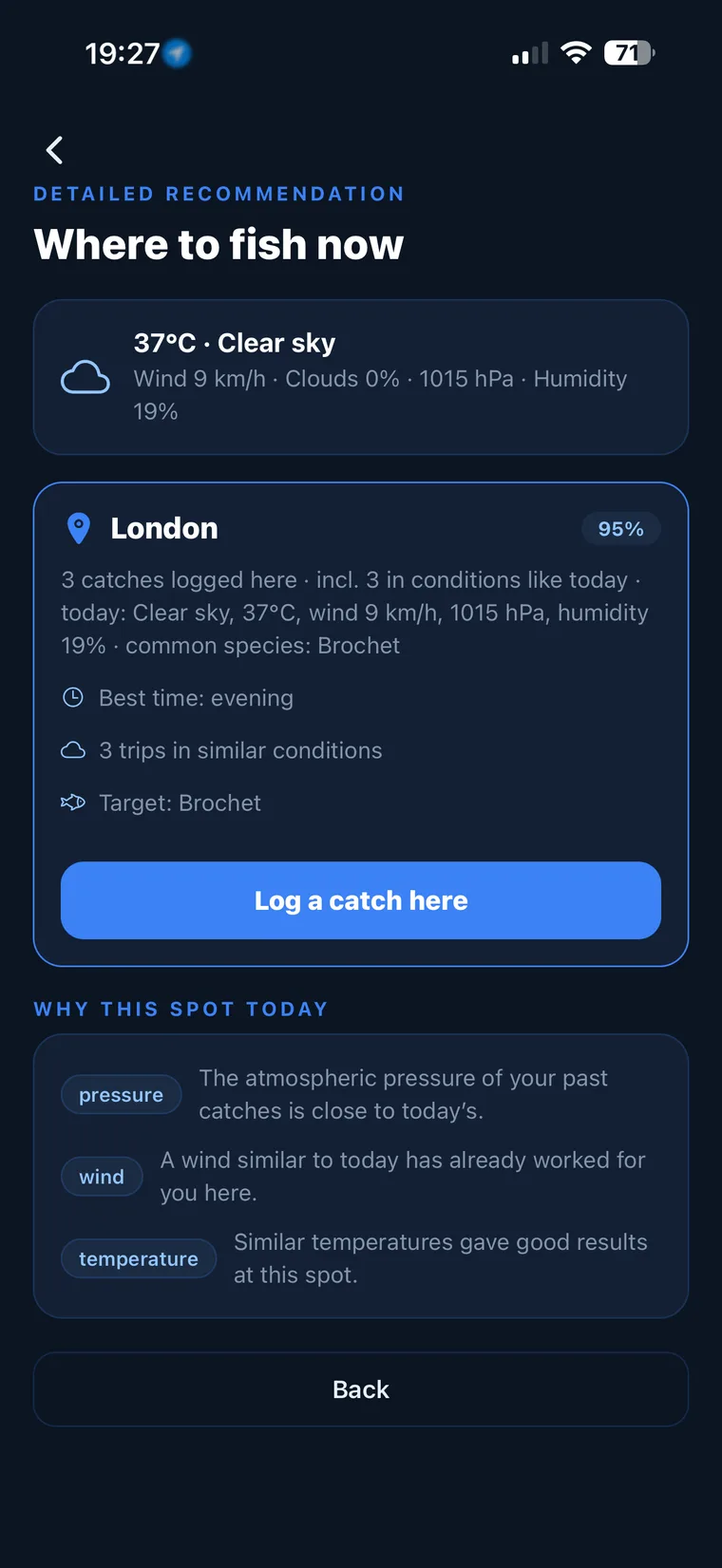
Not sure what to tie on?
Photograph your spot: CarnaFish reads the scene, cross-checks the conditions and gives you the zone, the lure and the retrieve. Free on iOS and Android.
Colours, and one special case
- Clear water: white or bubblegum. These bright tones imitate nothing natural, but they have a precise function — they let you see your lure, and therefore follow its behaviour and detect a take visually.
- Stained water: green pumpkin, more natural and more credible.
- Low light: black, whose silhouette stands out well seen from below.
Choosing white is therefore not an aesthetic decision: it is a detection tool, particularly useful when you are learning this kind of lure.
Trick Worm or Senko
The Senko is dense and sinks on its own, wobbling: a lure for a vertical fall alongside structure. The Trick Worm floats and works horizontally in the sub-surface. The two cover different layers and complement each other: Senko to search the column alongside a vertical obstacle, Trick Worm to work just under the surface over a cluttered bottom.
For the basics of the species, our beginner's guide to bass fishing covers tackle and spots. And if you are unsure which layer to attack on arrival, CarnaFish analyses a photo of the spot and suggests an approach.
Key points
- Floating plastic: the worm stays in the sub-surface instead of sinking.
- Weightless Texas as the main rig, wacky for finesse, nail weight to go down.
- Two pulls, a two to four second pause — the take comes on the pause.
- Watch the line, not the lure: the take is often invisible.
- White is not a natural colour, it is a tool for tracking your lure by sight.
FAQ
Why does my Trick Worm not sink?
That is normal and intended: its material floats. If you want it to go down, insert a small tungsten nail weight in the head, which keeps the shimmy while making it sink slowly.
What hook for the Texas rig?
A wide-gap Texas hook, 3/0 or 4/0 for a 16.5 cm worm. Too small and hooking becomes unreliable on a body of that length.
Why fish white when it imitates nothing?
Because you can see your lure. That lets you control its behaviour, place it precisely under an obstacle, and see the take before you even feel it — a real advantage while learning the technique.
What depth does it work at?
From the sub-surface to about a metre depending on the rig. Weightless it stays in the top thirty centimetres; with a nail weight it sinks slowly deeper.
How do I detect takes?
By watching the line during the pause. A take on a floating worm is often silent: the fish inhales the lure without a knock, and the only sign is line moving sideways.
Does the Trick Worm foul in vegetation?
Very little on a weightless Texas rig, since it floats above submerged vegetation instead of diving into it. That is one of its main strengths on cluttered spots.
The full bass lure guideSeason-by-season strategy: which family of lure, when, and why.Go from theory to fish
CarnaFish reads your spot from a photo and gives you the game plan: zone, lure, retrieve. Free on iOS and Android.