Zoom Ultra Vibe Speed Craw: the crawfish that works as it falls
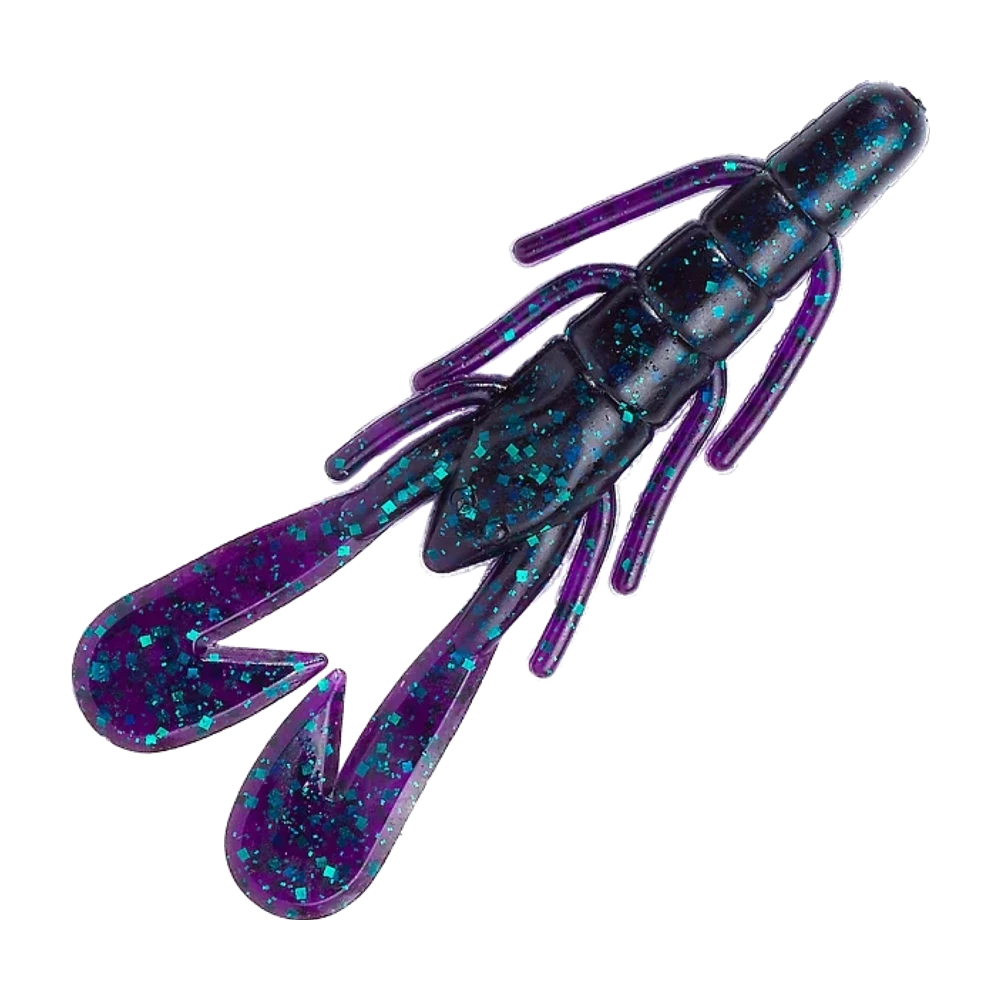
This lure shines under specific conditions. CarnaFish tells you in 10 seconds if today is one of them.
A bass sitting under a stump chases nothing. It waits for something to pass fifty centimetres from its nose, and it decides in a second. In that context, a bait that only has an action on the retrieve is useless: at the moment it crosses the fish's decision zone, it is falling, not swimming.
Hence the value of a crawfish with flat pincers. The body can be perfectly still and two wide, flat appendages keep kicking under the effect of the fall alone. That is the whole principle behind the Speed Craw, and it is why it is used more often as a complement to another lure than on its own.
Why flat pincers rather than bulky ones
A "realistic" crawfish with thick, sculpted claws looks great in your hand. In the water, it is often inert: the volume of plastic is too stiff to move by itself.
The Speed Craw's pincers are thin, wide and flat, with ribs. That profile has three properties:
- It kicks in opposition. The two pincers do not go the same way: they open and close alternately, which creates genuine water displacement, not just a quiver.
- It fires on very little energy. A thirty-centimetre free fall is enough. On a simple twenty-centimetre pull along the bottom, they start moving again.
- It produces a signal aimed upward. The bait sits on the bottom, pincers raised, in the defensive posture of a real crawfish. That is exactly the silhouette a bass looks for on hard bottom.
The body itself is short and chunky, with rings. It is designed to hold on a wide gap hook and to take hits without tearing on the first fish.
Its main use: jig and chatterbait trailer
This is where it is used most, and also where it changes the most.
Behind a jig. The jig brings the mass, the weed guard and the overall silhouette. The trailer brings the movement during the fall, and the bulk. Threaded onto the jig hook, pincers up, the Speed Craw turns an inert jig into a bait that lives through every second of the descent. The rule: thread it dead straight, or the jig will spin on the lift.
Behind a chatterbait. Here the role is different: the blade already produces all the vibration. The trailer adds bulk, brakes the bait slightly — which lets you retrieve more slowly at the same depth — and stabilises the swim. A chatterbait that keeps blowing out is often fixed simply by adding a trailer.
On a weighted Texas rig. Here the Speed Craw becomes a standalone bait again. A 7 to 14 g bullet weight, an offset hook, and you fish cluttered margins by letting the bait drop down alongside each piece of cover.
| Rig | Typical weight | Use |
|---|---|---|
| Jig trailer | 10 to 18 g jig | Laydowns, rocky breaks, vertical bank fishing |
| Chatterbait trailer | 10 to 14 g blade | Sparse weed, mid-depth searching |
| Weighted Texas | 7 to 14 g bullet | Stumps, lily pads, docks |
| Carolina | 14 to 21 g egg sinker | Deep flats, searching hard bottom |
The retrieve: the fall first, the pull second
- Cast right against the cover, not a metre off. The useful zone is often thirty centimetres wide.
- Let it drop on a semi-tight line. Neither fully slack — you would not see the bite — nor tight, which would pendulum the bait away from the cover.
- Watch the line. During the fall, the bite is visible: the line stops before the expected depth, or moves off to the side.
- Once it is down, wait three seconds doing nothing. The pincers keep moving as they settle.
- Two small twenty-centimetre pulls, rod from ten to eleven o'clock, then let it drop back.
- Do not search on the way back. If the spot has produced nothing in three or four falls, cast somewhere else.
On the water: body colour matters far less than how the pincers sit on the rig. Mount them back to back, facing up, never flat on the sides. A Speed Craw rigged flat spins on itself when you pull and loses all the opposed kicking — and that is the most common rigging mistake on crawfish trailers.
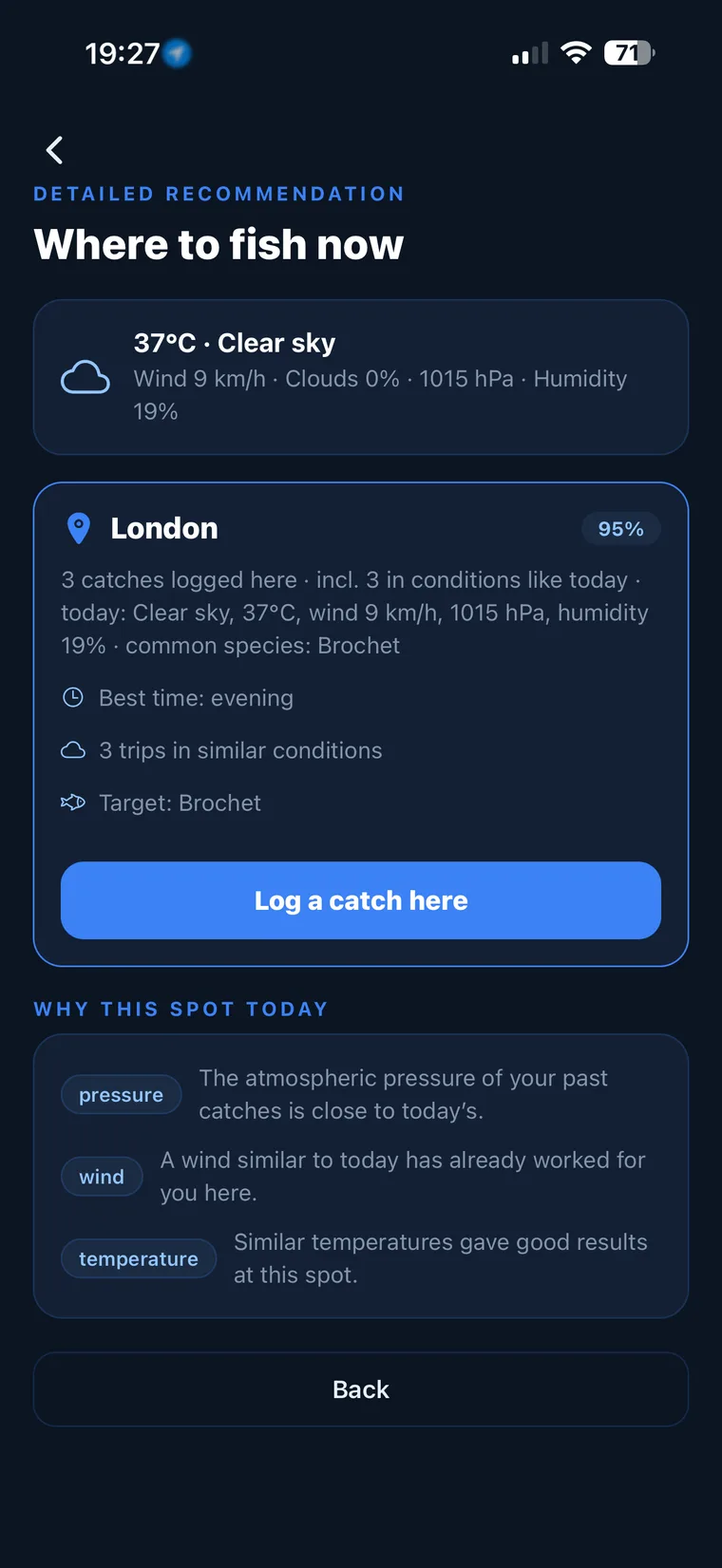
Not sure what to tie on?
Photograph your spot: CarnaFish reads the scene, cross-checks the conditions and gives you the zone, the lure and the retrieve. Free on iOS and Android.
When it is the right call, and when it is not
The Speed Craw wins when:
- The bottom is hard: rock, gravel, riprap, bridge concrete. That is the crawfish's real habitat, and the bass knows it.
- The fish are holding on a precise piece of cover rather than scattered.
- The water is between 12 and 25 °C, with a clear peak in spring, when crawfish become a major prey item.
- You need to get into the clutter, thanks to weightless or Texas rigs.
It is unsuited, on the other hand, when the fish are chasing baitfish in open water: no crawfish silhouette will compete with a shad or a hard bait there. It is also out of place over deep silt, where the bait disappears into the sediment, and on a big water you need to cover fast: its rhythm is slow by nature.
Speed Craw or Rage Craw
The Strike King Rage Craw has far wider, ribbed pincers that produce a broad, very visible kick. It is a strong signal bait: it shows up from a distance, it works well in stained water, and it gives a jig the bulk to target big fish.
The Speed Craw plays tighter. Its finer pincers create a fast kick rather than a wide one, and its overall profile is more compact. On educated bass, in clear water, or when fish refuse bulk, this discreet format converts better. Plenty of anglers carry both and change trailer before they change jig.
For rigging without a weight or a weed guard, our page on the Texas rig covers running an offset hook through a short body like this one. And our beginner's guide to bass fishing explains when crawfish beat baitfish through the season. If you are unsure which rig to pick in front of a cluttered piece of cover, CarnaFish analyses a photo of the spot and answers.
Key takeaways
- The flat pincers kick in opposition from the moment it falls: the bait works even when it looks motionless.
- It is a jig or chatterbait trailer first, a standalone bait second.
- Rig the pincers back to back and facing up, or the bait spins and loses its action.
- The bite shows on the line during the fall before you feel it in the rod.
- A hard-bottom, precise-spot bait; of no interest on fish feeding in open water.
FAQ
How do you rig the Speed Craw as a jig trailer?
Thread the body onto the jig hook, dead straight and in line, with the pincers facing up and back to back. An off-centre rig makes the jig spin on the lift and kills the pincer kick.
Should I fish it on the bottom or in mid-water?
On the bottom, and above all during the fall phases alongside cover. It is a crawfish bait: its silhouette only makes sense over hard bottom or against structure, not in the middle of the water column.
What colour should I choose?
Brown, green pumpkin and black cover most of it over hard bottom. In stained water or in spring, blue-flake tones or orange pincers add contrast that helps fish find it.
What is the difference with a Rage Craw?
The Rage Craw has much wider pincers and a broader kick, so a strong signal that helps in stained water. The Speed Craw is more compact with a faster, tighter kick, better suited to clear water and wary fish.
Can it be fished weightless?
Yes, on a plain offset hook, for very slow falls under docks or along weed edges. The descent takes a long time, which gives the pincers time to work, but bite detection means watching the line constantly.
When does it work best?
In spring above all, when crawfish are a major bass prey item, then all summer over hard bottom. In cold water it remains usable as a jig trailer with very slowed-down movements.
The full bass lure guideSeason-by-season strategy: which family of lure, when, and why.Go from theory to fish
CarnaFish reads your spot from a photo and gives you the game plan: zone, lure, retrieve. Free on iOS and Android.