O.S.P DoLive Craw: the craw that works on the way down
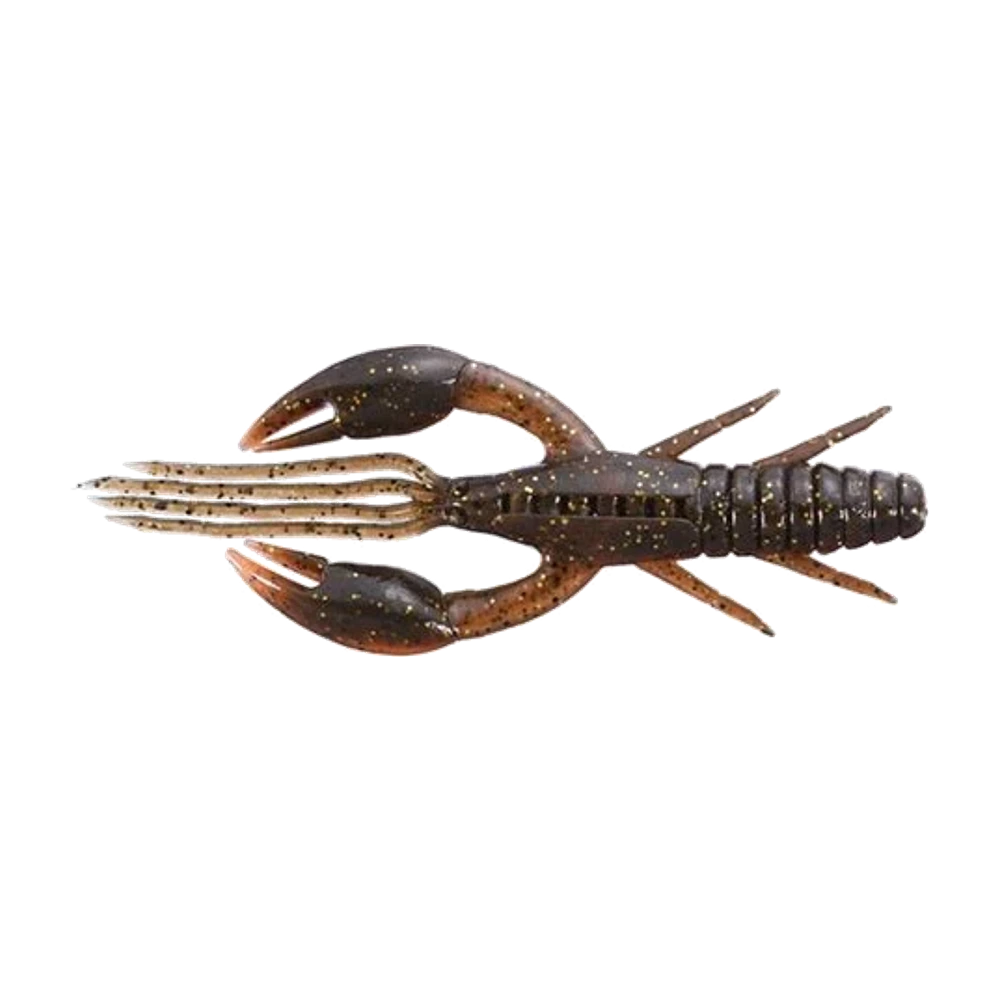
The right lure in the wrong spot still catches nothing. CarnaFish spots the zone that works, from a single photo.
Ask yourself honestly: when you fish a soft plastic craw, what does your lure actually do between the moment it hits the water and the moment it hits the bottom?
In most cases, nothing. It sinks nose down, weight first, at a speed that gives a fish sitting halfway up no chance of seeing it coming, let alone of making up its mind. You then work it properly on the bottom, but you have already thrown away half of your presentation.
And a bass sitting a metre down along a piece of sunken wood, a jetty or a wall is a common case. The DoLive Craw is built around that exact phase: flat appendages that lean on the water, brake the drop and make it readable instead of simply enduring it.
What happens between the splashdown and the bottom
The O.S.P craw carries flattened, ribbed appendages, broader than the slim pincers you find on many Western models. On the fall, those surfaces work as brakes.
The drop slows noticeably. At equal weight, you easily gain one to two seconds of fall per metre compared with a craw with slim appendages. That sounds trivial until you count the number of bites that come during that phase.
The lure stays flat. The appendages, set laterally, stabilise the body so it drops keeping a horizontal attitude rather than nosing over. To a fish looking sideways, the silhouette stays that of a craw, not that of a projectile.
The appendages undulate continuously. They do not flap violently, they undulate slowly, driven by the vertical movement alone. It is a discreet movement, exactly what you need on a pressured fish that has already refused two noisy lures.
There is a rigging consequence to draw from that: the heavier you go, the more you cancel the effect. Weight here is a necessary evil, not a parameter to maximise.
Jig trailer: what the body brings
That is its second major use, and probably the most widespread in Japan.
Behind a jig skirt, a trailer has to do two things: add volume to the silhouette and extend the movement once the skirt has closed up. A craw with big rigid pincers does the first but not the second — it moves on the pull, then freezes.
The DoLive Craw does the opposite. Its appendages keep undulating on a simple vibration of the rod tip, even though the jig has not moved a centimetre. On a precise spot — the foot of a stump, the corner of a jetty — you can keep the lure in the same place for twenty seconds while still giving it movement.
One practical detail: trim the base of the body to match the trailer length to the skirt. Too long and it swings the jig round and unbalances the whole thing on the fall.
The retrieve: the shake that goes nowhere
- Cast past the spot and follow the drop on the line, semi-tight. Do not wind anything during that phase, you would cancel the braking.
- Spot the arrival on the bottom by the line going slack. A line that stops too early is a bite.
- Wait five seconds doing nothing. The appendages finish their movement well after the lure has settled.
- Shake on the spot: ten to fifteen seconds of short vibrations of the rod tip, without taking up line. The lure stays where it is, the appendages work.
- One pull of thirty centimetres, then let it drop back under control. You have just recreated a fall phase.
- Repeat three or four times over the same square metre before moving on.
On a promising spot, you can spend two or three minutes without ever moving the lure more than a metre.
On the water: when you fish along a wall, a rock revetment or a bridge pier, do not cast out and retrieve towards the hard stuff. Cast thirty centimetres off the wall, let the lure drop parallel to the face without doing anything, and simply follow the line. A craw falling down a wall is an image the bass knows by heart; a craw crossing open water is not. The drop along the hard edge is worth half the bites on that kind of spot on its own.
Rigs and weights
| Rig | Weight | Situation |
|---|---|---|
| Weighted Texas | 3.5 to 7 g | Cluttered margins, 1 to 3 m, slow fall wanted |
| Weighted Texas | 10 to 14 g | Dense wood, thick weed, or 4 to 6 m |
| Jig trailer | to suit the jig, 7 to 14 g | Stumps, jetties, precise spot fishing |
| Tokyo rig | 5 to 10 g | Cluttered bottom, lure held off the substrate |
| Carolina rig | 10 to 20 g weight | Clean flat, slow searching over a large area |
The rule stays the same as for anything that plays on the fall: the lightest weight the situation allows. You only go heavier for three valid reasons — reaching a depth, punching through dense vegetation, or fighting wind that is costing you contact.
On line, 0.30 to 0.35 mm fluorocarbon tied direct if you are fishing close to cover. On a Texas rig, set the hook with a firm pull rather than a sharp lift: the point has to get through the back of the lure first.
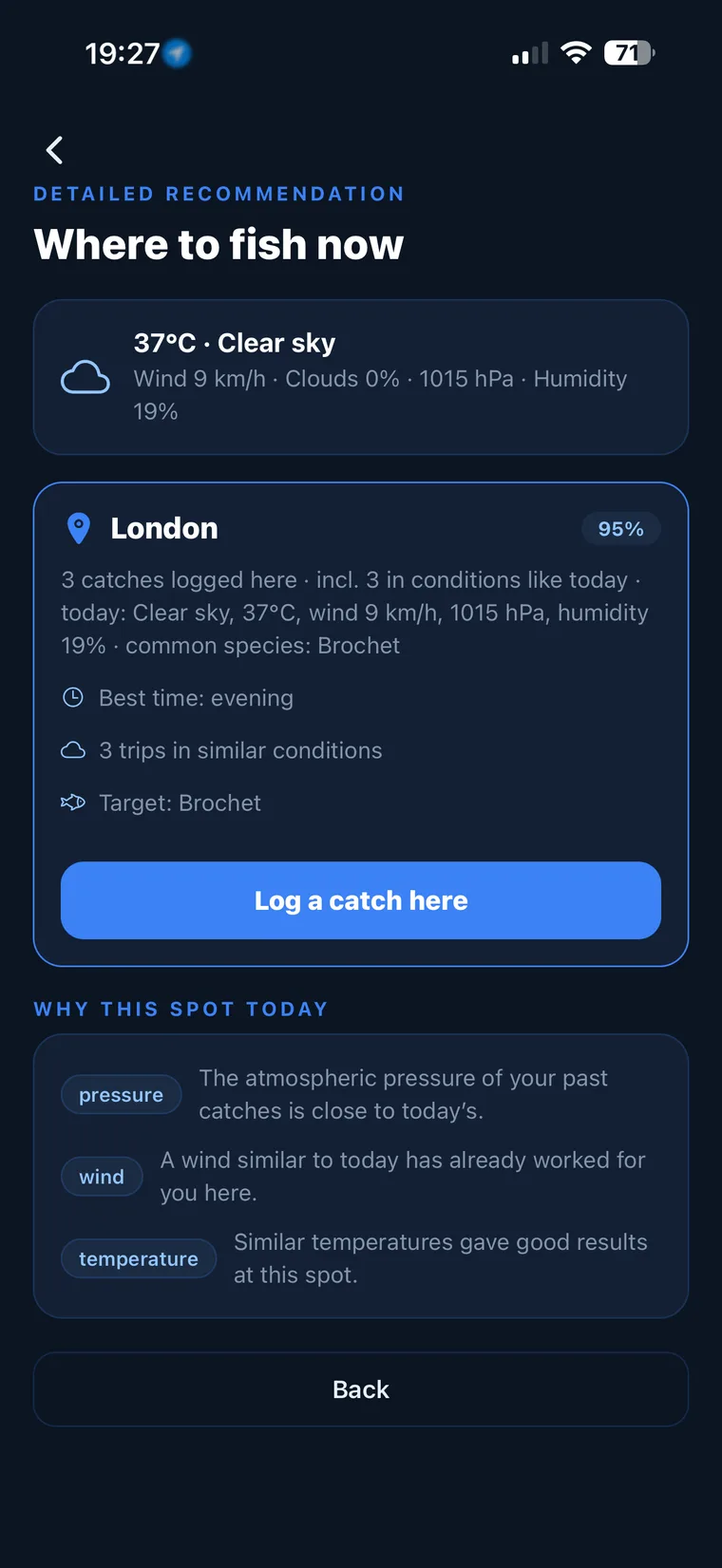
Not sure what to tie on?
Photograph your spot: CarnaFish reads the scene, cross-checks the conditions and gives you the zone, the lure and the retrieve. Free on iOS and Android.
Season, spots, and where it is no use
The craw is a bottom prey, available year-round but exploited most by bass in spring and autumn. That is when it takes precedence over a baitfish imitation.
- Spring, on hard bottoms that warm first and where the crayfish come out.
- Autumn, when the bass come back to the margins and root through the substrate.
- All season on cluttered spots: wood, rocks, jetties, where the Texas version goes anywhere.
It is poorly suited, on the other hand, to fast searching, and it brings nothing on a fish chasing bait in open water, where a shad or a topwater will produce ten times more. Over a soft silty bottom, a craw is not a credible prey.
DoLive Craw or a craw with floating pincers
The Keitech Crazy Flapper bets on the posture at rest: its pincers float and rear the lure into a defensive position as soon as it is still on the bottom. Its strong moment is the complete stop.
The DoLive Craw bets on the fall trajectory and on continuous movement during the shake. Its strong moment is the drop, and the phase where you make it vibrate without moving it. The two are complementary rather than competing: on a vertical spot where the lure spends a lot of time falling — a wall, a jetty, a submerged tree — the DoLive Craw is ahead. On a flat where the lure spends most of its time sitting still, the Crazy Flapper takes the lead again.
If you want the same worked-fall logic with a baitfish silhouette rather than a craw, the DoLive Shad from the same brand applies the same principle to a finesse shad. And for setting up the weedless version, our Texas rig page walks through the steps.
Our beginner's guide to bass fishing revisits the choice between craw and baitfish imitation by season. And if you are unsure what weight to rig when you reach the bank, CarnaFish analyses a photo of the spot and answers.
Key takeaways
- The flat appendages brake and stabilise the fall: the drop becomes a presentation.
- The lightest weight possible — going heavier cancels the point of the lure.
- The shake on the spot works the appendages without moving the lure a centimetre.
- Along a wall, let it drop parallel to the face rather than crossing open water.
- An excellent jig trailer, provided you match its length to the skirt.
FAQ
Why does the DoLive Craw fall slowly?
Because its flattened, ribbed appendages lean on the water and brake the fall, while holding the body flat instead of letting it nose over. At equal weight, you gain one to two seconds of drop per metre over a craw with slim appendages.
What weight should you use on a Texas rig?
3.5 to 7 g between one and three metres when you want to keep the slow fall, 10 to 14 g in dense wood or beyond four metres. Always pick the lightest weight the depth, the vegetation and the wind allow.
Is it a good jig trailer?
Yes, that is one of its main uses. Its appendages keep undulating on a simple vibration of the rod tip while the jig does not move, which lets you keep movement going on a precise spot for a long time. Match its length to the skirt by trimming the base if needed.
What is the difference with the Keitech Crazy Flapper?
The Crazy Flapper plays on the posture at rest: its pincers float and rear the lure up on the stop. The DoLive Craw plays on the drop and on continuous movement during the shake. The first shines on a flat where the lure sits still, the second on a vertical spot where it spends time falling.
What season should you use it in?
Mainly in spring, on hard bottoms that warm up first, and in autumn when the bass come back to root along the margins. It stays useful all season on cluttered spots, where a Texas rig goes where a lure with trebles would snag.
How do you set the hook on a Texas rig?
With a firm, long pull rather than a sharp lift. The point has to get through the back of the lure before it reaches the jaw, which needs a longer hookset stroke than a lure with an exposed hook.
The full bass lure guideSeason-by-season strategy: which family of lure, when, and why.Go from theory to fish
CarnaFish reads your spot from a photo and gives you the game plan: zone, lure, retrieve. Free on iOS and Android.