Predator Fishing Tackle: What Budget to Start With
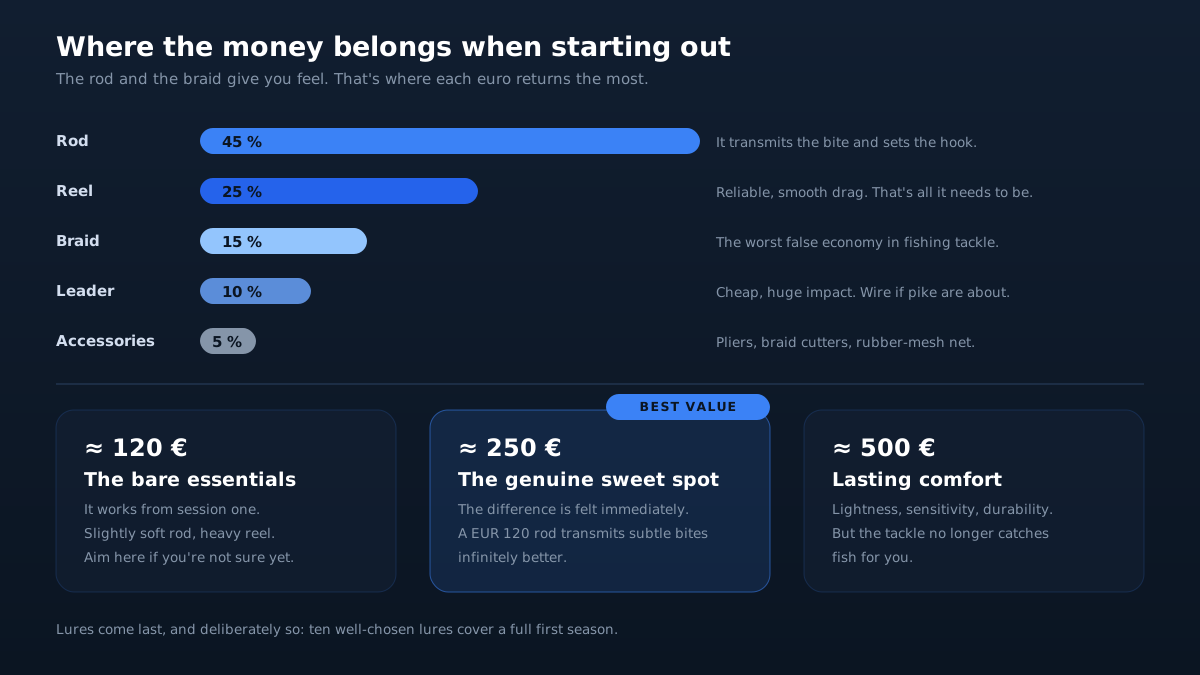
Tackle is the area where beginners spend worst: too many lures, not enough rod, and a bargain braid that spoils everything else. Here's how to split a starting budget so every euro actually helps you catch fish.
The starting rule: one versatile outfit
The classic mistake is buying three specialist rods before landing a first fish. A single well-chosen outfit covers pike, zander, perch and bass for at least a full season.
The compromise that forgives the most:
- Rod: 2.10 m, rated 10-40 g, tip action.
- Reel: size 3000.
- Braid: 15/100.
- Leader: 30/100 fluorocarbon, plus fine wire wherever pike are present.
With that you can cast soft plastics from 8 to 15 cm, jerkbaits and spinnerbaits, and still drop down to perch if you push it a little.
Three outfits
Around €120 — the bare essentials
- Entry-level rod: €45-60
- Size 3000 reel: €40-50
- 15/100 braid, 130 m: €15-20
- Fluorocarbon and a few clips: €10
It works. The rod will be a little soft and the reel a little heavy, but you'll catch fish on your first session. This is the budget to aim for if you're not yet sure the sport will stick.
Around €250 — the genuinely right call
- Mid-range rod: €100-130
- Size 3000 reel: €80-100
- Quality braid: €25-30
- Leader material, clips, pliers, cutters: €20
This is the tier where the difference is felt immediately. A €120 rod transmits subtle bites infinitely better than a €50 one — and on zander, that's the difference between feeling the take and never knowing it happened.
If you only remember one budget, it's this one.
Around €500 — lasting comfort
- High-end rod: €200-280
- Reel: €150-200
- Premium braid and accessories: €50
You gain lightness, sensitivity and durability. Be aware, though: at this level the tackle no longer catches fish for you. The gain is real but far smaller than the jump from €120 to €250.
Where the money should go first
If your budget is tight, this is the order.
1. The rod. It's what transmits the bite and sets the hook. An angler with a good rod and an average reel will out-fish the reverse every time. Put 40-50 % of the budget here.
2. The braid. Skimping here is the worst calculation available: cheap braid twists, frays and loses its round profile within a few sessions. Good braid lasts seasons.
3. The leader. Cheap, huge impact. Decent fluorocarbon prevents abrasion break-offs, and a wire leader stops you leaving a lure in a pike's mouth.
4. The reel. It needs to be reliable with a smooth drag, and that's it. A decent 3000 at €80 does the job for years.
5. The lures. Last, and deliberately so. See below.
A good angler with average tackle catches more than a beginner with competition gear. The order of priorities matters more than the total.
The lure budget: fewer, but better
This is where most money is wasted. A box of ten well-chosen lures is plenty for a first season:
- 4 soft plastics of 10-12 cm plus jig heads of 7, 10, 14 and 20 g. This is your bread and butter, for pike as much as for zander.
- 2 small soft plastics of 5-7 cm with light heads for perch.
- 1 spinnerbait for stained water and snaggy ground.
- 1 jerkbait for clear water.
- 1 topwater lure for summer.
- 1 spoon to cover water fast.
Budget €60-90 for that set. You'll then fill gaps based on what works on your own water, not on what works in videos.

Not sure what to tie on?
Photograph your spot: CarnaFish reads the scene, cross-checks the conditions and gives you the zone, the lure and the retrieve. Free on iOS and Android.
What you don't need at the start
- A second rod "just in case". You won't use it until you know what kind of fishing you actually do.
- Exotic lures. Jointed swimbaits at €40 can wait until you can already catch on a simple soft plastic.
- A portable sounder, as long as you're fishing from the bank.
- Ultra-specific jig heads. Four classic weights cover 95 % of situations.
- The giant tackle box. It will fill itself, far too quickly.
By contrast, three accessories totalling under €30 are genuinely essential: long pliers for unhooking, braid scissors, and a rubber-mesh net if you release your fish.
Maintenance, or how to double the lifespan
- Rinse in fresh water after every session in the sea, reel included. Salt destroys tackle far faster than use does — it's the key point in shore sea bass fishing.
- Cut off and bin the first metre of braid regularly: that's the section that has taken all the abrasion.
- Back off the drag between sessions so you don't compress the washers.
- Dry the rod before putting it back in its sleeve.
And if you don't know what to buy for your water
Tackle depends first on the water you fish: a big deep river doesn't call for the same weights as a two-metre pond. Before buying, go and look at your spot and see what it demands — that's the whole point of our guide on how to read a fishing spot.
And if you're still unsure on the bank, CarnaFish, the AI fishing app, analyses a photo of your spot and suggests a zone, a lure type and a retrieve suited to the conditions — which helps steer your purchases towards what actually works where you fish.
Key takeaways
- One versatile outfit: 2.10 m, 10-40 g, size 3000 reel, 15/100 braid.
- The best value sits around €250.
- Priority order: rod, then braid, then leader, then reel, and lures last.
- Ten well-chosen lures are enough for a first season.
- Pliers, cutters and a rubber-mesh net: €30 that changes everything.
FAQ
What is the minimum budget to start predator fishing?
Around €120 for a complete, functional outfit: entry-level rod, size 3000 reel, braid and leader. Add €60-90 of lures. That's plenty to catch your first fish. If you can stretch to €250, the gain in sensitivity is far more pronounced than the one from €250 to €500.
Should I spend on the rod or the reel?
The rod, without hesitation. It's what transmits the bite and sets the hook. A decent €80 reel does the job for years provided it's reliable with a smooth drag, whereas a soft rod will cost you subtle bites all season. Budget 40-50 % of the total on the rod.
What versatile rod covers pike, zander and perch?
A 2.10 m rod rated 10-40 g with a tip action, on a size 3000 reel with 15/100 braid. It casts soft plastics from 8 to 15 cm, jerkbaits and spinnerbaits, and remains usable on perch if you push it slightly. It's the compromise that forgives most when you don't yet know which fishing you'll favour.
How many lures do I need to start?
About ten, no more: four soft plastics of 10-12 cm with four jig head weights, two small soft plastics for perch, a spinnerbait, a jerkbait, a topwater lure and a spoon. Budget €60-90. You'll then fill gaps based on what works on your own spots, not on what you see in videos.
Does cheap braid really make a difference?
Yes, and it's the most common false economy. Cheap braid twists, frays and loses its round section within a few sessions, which degrades casting distance and sensitivity. Good braid at €25-30 lasts several seasons — it's the best value-per-euro item in the whole setup.
Do I need a wire leader for every predator?
Only where pike are present, but then without exception: their teeth cut fluorocarbon even in heavy diameters. For zander alone, 25-30/100 fluorocarbon is enough; for perch, 16-22/100 and definitely no wire, which costs you bites. If you're unsure whether pike are about, fit the wire: a fish that swims off with a lure in its mouth rarely survives.
What tackle should beginners avoid?
A second rod, overpriced jointed swimbaits, a sounder while you're still fishing from the bank, and ultra-specific jig heads. Conversely, three accessories totalling under €30 are essential from session one: long pliers, braid scissors and a rubber-mesh net.
How do I look after my fishing tackle?
Rinse everything in fresh water after each sea session, reel included. Regularly cut off and bin the first metre of braid, which takes all the abrasion. Back off the drag between sessions so you don't compress the washers, and dry the rod before sleeving it. Those four habits comfortably double the life of an outfit.
Go from theory to fish
CarnaFish reads your spot from a photo and gives you the game plan: zone, lure, retrieve. Free on iOS and Android.