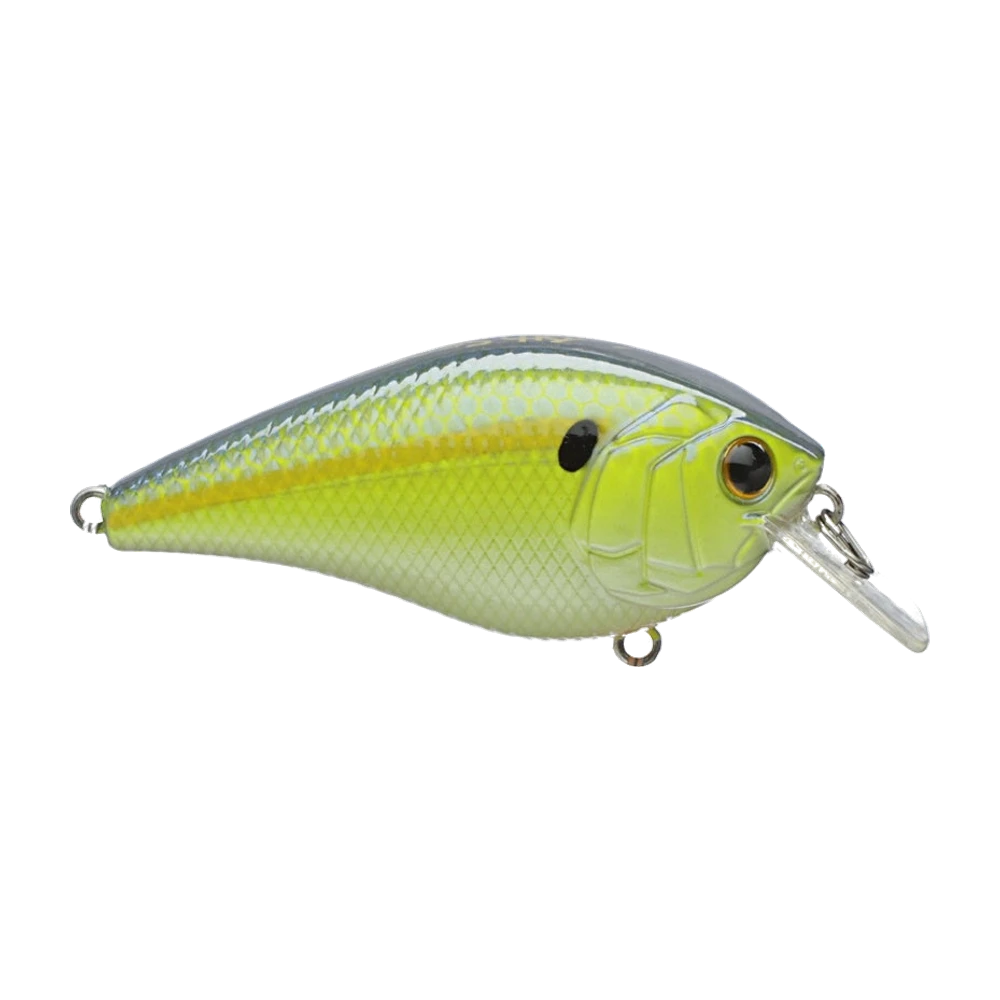
6th Sense Crush Squarebill 100X: the squarebill that goes through wood
The right lure in the wrong spot still catches nothing. CarnaFish spots the zone that works, from a single photo.
There is one move no finesse lure lets you make: cast into a pile of drowned branches fifteen feet off the bank and wind back flat out, hoping it collides with something. The Crush Squarebill 100X is built for that. It is a big floating squarebill, thrown to provoke a reaction rather than to convince, and its ground is the shallow cover most crankbaits never come out of.
The square bill is a bumper before it is a bill
Square bills get sold as diving systems. They are not: at 2 to 5 ft of running depth, the 100X does not get any deeper than a small round crank. Its bill does something else.
Wide and flat, it reaches the obstacle before the trebles do. On contact it absorbs the impact, pivots and kicks the whole lure sideways. Two effects: the hooks almost never hit the wood first, and the body's brutal deflection creates exactly the surprise that triggers a strike. A bass sitting under a limb will not react to a lure tracking straight past six feet away; it reacts to a lure that bounces off its limb.
6th Sense leaned into that by giving the 100X a high buoyancy. Stop reeling and it rises. Wedged in a fork, a single one-second stop is often enough for it to float back out over the snag on its own.
A big body, an accepted intent
At 2.75 in and 5/8 oz, the 100X sits at the top of the squarebill class. That volume has three concrete consequences.
First a wider, harder wobble that pushes a lot of water. In stained water or a wind-churned surface, this is the lure that gets detected from a distance. Second a comfortable casting weight, which lets you aim at a gap in the vegetation eighty feet away without fighting the breeze. Third, a natural size filter: small bass rarely commit to a lure this big, big ones have no such reservations.
A faint rattle, described as a light knocking, rounds it off. This is not a loud lipless bait: the sound calls fish at short range without saturating the environment. If you need total silence on heavily fished water, the lure to reach for is the Crush Silent Squarebill 50S, not this one.
How to work it: fast, and in contact
The most widespread error with a squarebill this size is fishing it like a regular crankbait, at a medium pace above the bottom. It loses all its point that way.
The right rhythm is fast. Wind quickly enough that the lure works hard and hits whatever sticks out: stumps, rocks, weed stems, dock pilings. Every impact is a bite opportunity. In grass, push the speed up a notch further — what Americans call burning — and snap the rod the moment the lure grabs a stem, to tear it free and send it off sideways.
The rig, and why the rod matters as much as the lure
Fluorocarbon in 15-20 lb for most situations: it handles abrasion from wood and rock, and its slight sink helps the lure reach depth. In dense vegetation, switch to braid with a heavy fluoro leader, purely so you can rip hard.
For the rod, go medium with a moderate action. Too stiff a blank pulls trebles out of fish during head shakes, and that is the number one failing of the crankbait angler who came from soft plastics. Back the drag off a little too: the fish has to be able to take line without tearing the hook out.
The 100X is not an efficiency lure, it is a provocation lure. If you make thirty casts without touching an obstacle, you have tested nothing at all. Ten precise casts into the wood beat fifty in open water.
And for pike on the bank
The size and the wide wobble make the 100X credible on pike in shallow margins, particularly early in the season over grassy flats. Two caveats: an abrasion-resistant leader, and accepting that the factory size 2 trebles are not sized for genuinely big pike. For a dedicated pike session a bulkier lure makes more sense — but for an opportunistic hit during a bass trip, the 100X holds up.
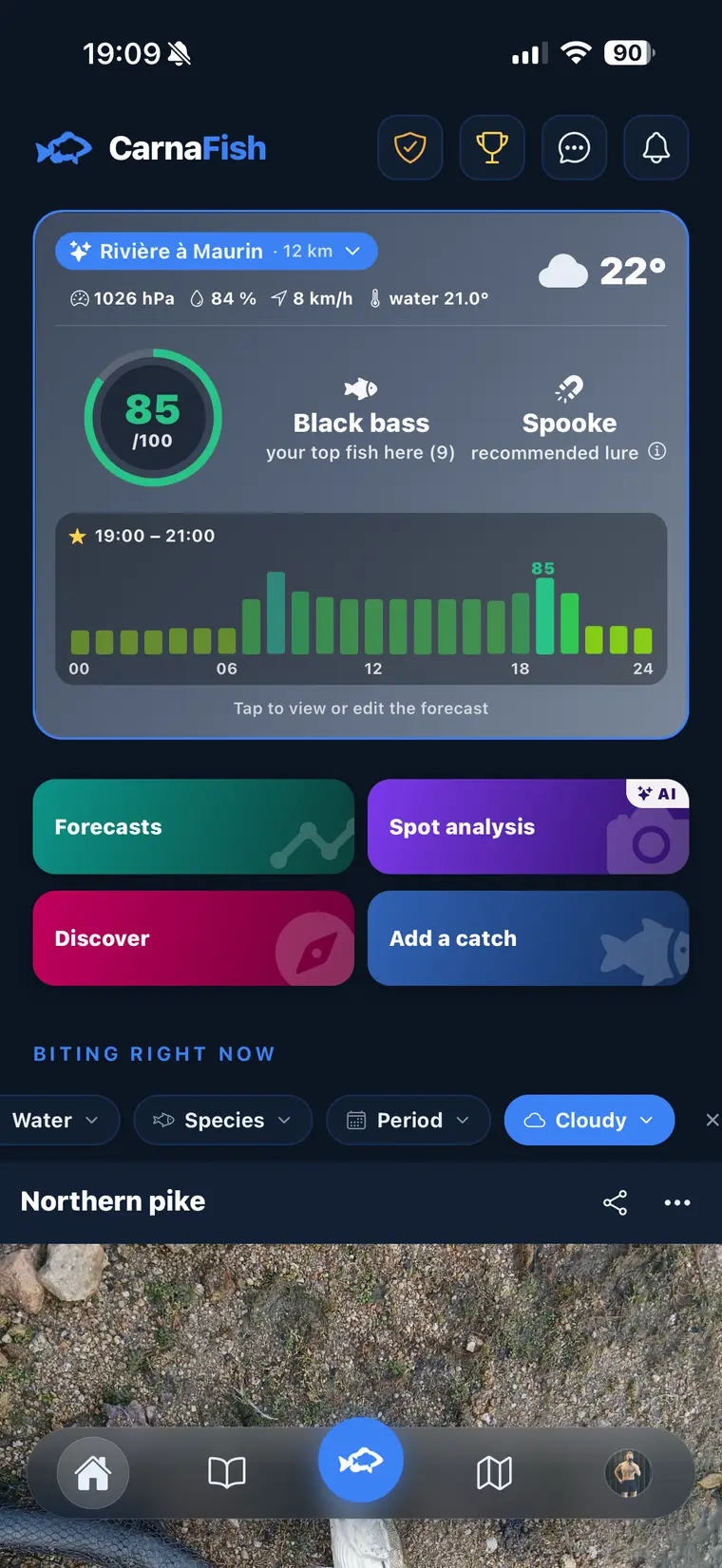
Not sure what to tie on?
Photograph your spot: CarnaFish reads the scene, cross-checks the conditions and gives you the zone, the lure and the retrieve. Free on iOS and Android.
Colors by water clarity
- Clear water: blue-silver shad, a natural finish that exploits the 3D detailing without adding artificial contrast.
- Spring over rock or gravel: red craw, matching active crayfish coloration in the season when bass hunt them.
- Stained water or a windy day: black-back chartreuse, so the lure stays findable once visibility drops under three feet.
Where it sits among the other big squarebills
Against a Strike King KVD 1.5 Squarebill, the 100X is bigger, heavier and deflects far more violently, though the KVD stays more versatile on average fish. Against a Spro Fat Papa, it trades depth for the ability to get through wood. And if what you want is the tight vibration of a flat side rather than a wide wobble, the Crush Flat 75X is the match.
Choosing between these models comes down almost entirely to the real depth of the spot and the nature of the cover. That is exactly what CarnaFish establishes from a photo of the water: zone, depth and lure family matched to current conditions. To build out the rest of your fishing, our beginner's guide to bass fishing covers tackle and the classic spot types.
The short version
- The square bill exists to absorb impacts and deflect the lure, not to dive deep.
- High buoyancy floats it out of snags on its own as soon as you stop reeling for a second.
- The big body pushes a lot of water and filters fish by size, at the cost of fewer bites.
- Medium moderate-action rod and a drag that is not cranked down, or the trebles pull during the fight.
FAQ
How deep does the Crush Squarebill 100X run?
Between 2 and 5 ft depending on speed, line diameter and cast length. Despite the big bill it is not a diver: it is a bank-and-shallow-flat lure.
Why is it floating?
To get out of snags. Stop the retrieve and it rises, often freeing itself from a branch or a fork on its own. That is what lets you fish the heart of the cover without losing one on every cast.
Fast or slow?
Fast. This lure wants a committed retrieve, even burning it through vegetation. The goal is to force a reaction on contact with an obstacle, not to present a believable prey item.
Can you fish it for pike?
Yes, in shallow margins, especially early in the season. Plan on an abrasion-resistant leader and keep in mind that the factory size 2 trebles are not sized for very big pike.
What is the difference from the silent 50S?
Three things: the 100X is substantially bulkier, it carries a faint rattle where the 50S has none, and it is designed for aggressive fishing in cover rather than for wary fish in clear water.
What line should I use?
Fluorocarbon in 15-20 lb in most cases, for abrasion and the slight sink. In very dense vegetation, switch to braid with a heavy fluoro leader so you can rip the lure free hard.
The full bass lure guideSeason-by-season strategy: which family of lure, when, and why.Go from theory to fish
CarnaFish reads your spot from a photo and gives you the game plan: zone, lure, retrieve. Free on iOS and Android.