Berkley Powerbait Power Stinger: the trailer built for bladed jigs
This lure shines under specific conditions. CarnaFish tells you in 10 seconds if today is one of them.
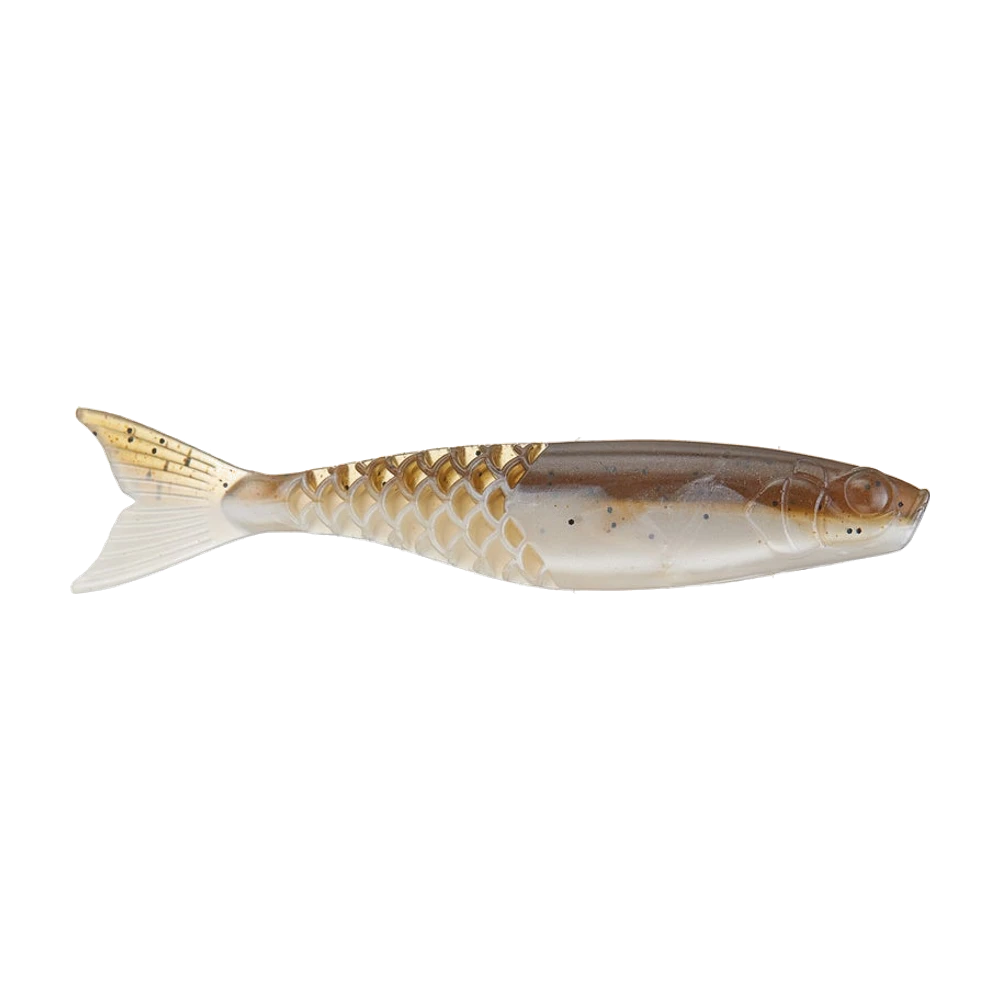
Most of the trailers we pin behind a bladed jig were designed for something else: paddle shads, creatures, grubs we repurpose because they happen to be in the box. The Power Stinger is one of the rare bodies drawn from the start for that exact job, and the first thing you notice is what it doesn't have: no big paddle, no flapping arms, no appendage that works on its own.
A body that carries instead of producing
The engineering idea is one word: honeycomb. Berkley moulded the inside of the body as a honeycomb structure so the vibration the blade puts out travels down the whole trailer rather than dying inside a block of solid plastic. The forked tail, at the end of the chain, finishes the job by shivering at whatever rate the blade dictates.
That's the opposite of the usual reasoning. A big-paddle trailer adds its own action to the jig's, and the two signals stack — sometimes useful, often muddy, and always at the cost of extra drag that loads the blade and slows its beat. The Power Stinger produces almost nothing on its own: it lets the blade set the tempo and simply extends it. On a well-balanced bladed jig you feel the difference in the rod, with a cleaner and more regular vibration coming back up the line.
The logical downside is that you have to take it as it comes: on a plain jighead, with no blade in front, this trailer doesn't do much. If you want a shad that swims by itself on a straight retrieve, go for a Keitech Swing Impact Fat 3.8 and keep the Power Stinger for what it was built for.
The dense head is the real selling point
The second design choice is far more down to earth, and it may be the one that changes most over a full day: the head of the bait is moulded in dense plastic. It takes the hook point without tearing and, more importantly, it doesn't creep back down the shank after three fish.
Anyone who has fished a bladed jig knows the irritating little ritual: sliding the trailer forward a centimetre after every catch, then finding on the fifth fish that the nose is shredded and the bait has to go. With seven baits per pack in 8.9 cm and five in 10.2 cm, the Power Stinger is clearly a consumable — just a consumable that lasts longer than average.
The body also carries two slots, one along the back and one along the belly, that guide the shank whichever way you rig it. That's what lets you use it as a bladed jig trailer, on a wide-gap Texas rig, or on an exposed jighead.
Before you thread the trailer on, lay it alongside the jig's hook and mark exactly where the point should exit. A trailer threaded a single millimetre crooked makes the whole thing spin on the retrieve, and you'll spend the day convinced your bladed jig is out of tune.
Two sizes, two bladed jigs
The Power Stinger comes in 8.9 and 10.2 cm. That's not a convenience detail: the trailer's length governs the blade's beat rate. A long trailer adds drag, loads the blade and gives a slower, wider vibration; a short trailer lets the blade beat fast and tight.
The 8.9 cm is the default on a 10 to 14 g / 3/8 to 1/2 oz bladed jig, the one you run in spring along shallow banks and at moderate retrieve speeds. The 10.2 cm pairs with a heavier jig, 14 to 21 g / 1/2 to 3/4 oz, and comes into its own in autumn when the forage has grown and you're winding faster. Berkley doesn't publish a weight for either version, so you have to run them to feel what they do to the balance of the rig.
Rigging without killing the vibration
Three mistakes come up constantly. First: threading the trailer too far up the shank until it jams against the skirt. The body compresses, loses its ability to carry the vibration, and the whole thing goes dull. Leave two or three millimetres of play.
Second: trimming the silicone skirt to "make room". The skirt is part of the triggering bulk; if you want less mass, use a slimmer trailer rather than a butchered skirt.
Third: rigging it crooked. The body has to sit perfectly in line with the shank, back up. Half a degree off is enough to make the whole rig roll the moment you speed up.
Where it produces
Behind a bladed jig, the Power Stinger covers the same water as its jig: emerging grass in spring, reed edges, wind-swept shallow flats, and anywhere a firm vibration carries in lightly stained water. For bass it's a fast search rig. For pike, the same combination works well in autumn along weed-line breaks, provided you add a steel or titanium leader — a bladed jig gives your knot no protection against teeth.
If you want to compare the jigs themselves, a Zman Chatterbait Jackhammer and a Strike King Thunder Cricket don't beat at the same frequency, and the same trailer behaves differently on each. It's a pair you tune together, never an accessory you pick at random.
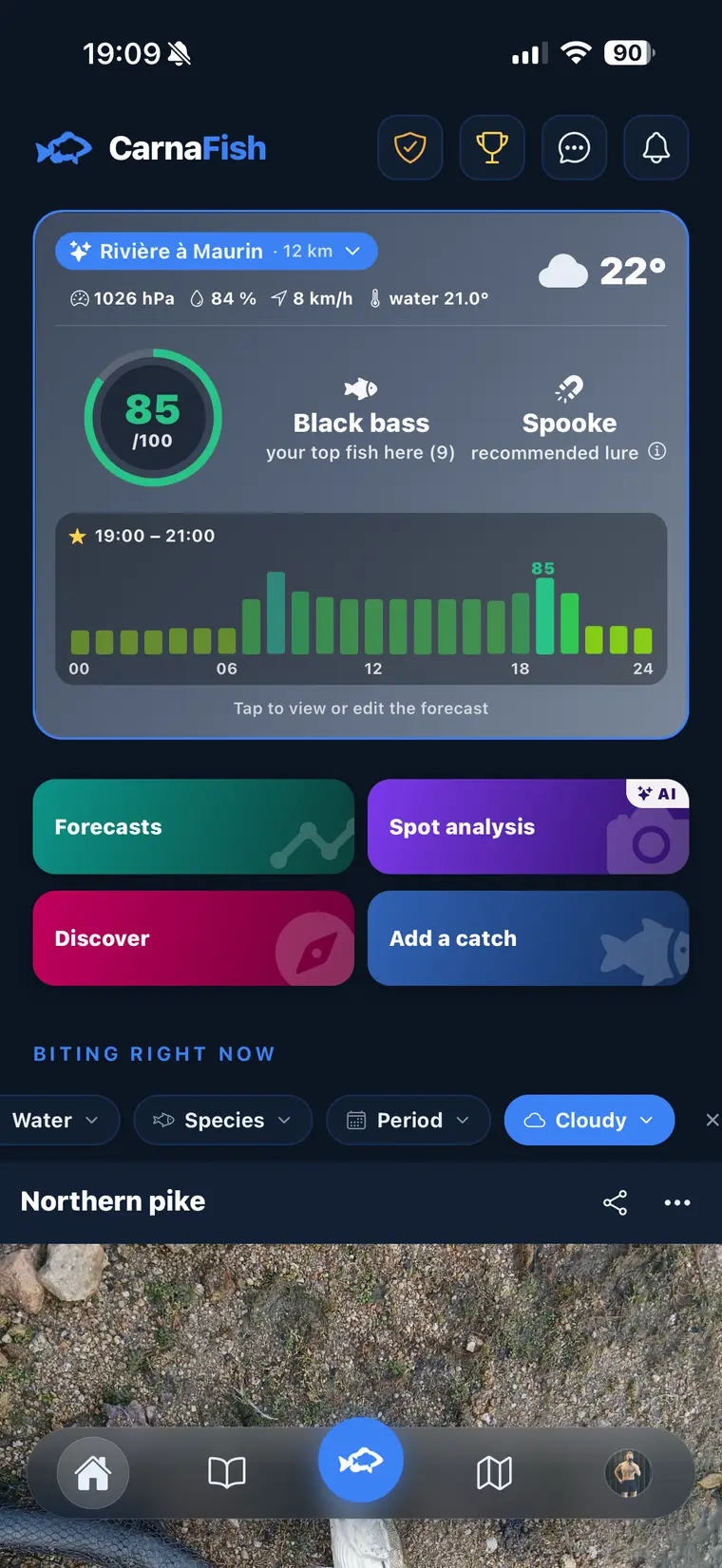
Not sure what to tie on?
Photograph your spot: CarnaFish reads the scene, cross-checks the conditions and gives you the zone, the lure and the retrieve. Free on iOS and Android.
Colours by water
- Clear water: a bronze-gold back over a pearl belly, as in the photo. The pronounced scale moulding catches side light without throwing an aggressive flash.
- Stained water: a touch of chartreuse, mostly on the tail. That's the detail that gives the fish an aiming point when visibility drops under a metre.
- Low light: a dark, plain silhouette. With a bladed jig, the vibration already handles detection; colour only has to confirm the target at the last moment.
A trailer won't save a bad spot
The best bladed jig and trailer combination is worth nothing if the zone is empty. That's exactly what CarnaFish saves you: a photo of the water, and the AI suggests the zone, the depth and the type of presentation that fit the day — before you've spent an hour combing a fishless bank. To build the groundwork on lure choice and classic spots, our beginner's guide to bass fishing covers the essential families.
What to remember
- Honeycomb body: it carries the bladed jig's vibration out to the tail instead of producing an action of its own.
- Dense head plus back and belly slots: the trailer doesn't creep down the shank or tear after three fish.
- Two sizes, 8.9 cm (7 per pack) and 10.2 cm (5 per pack); Berkley doesn't publish the weights.
- On a bare jighead it has almost no action of its own: this is not a straight-retrieve swimbait.
FAQ
Is the Power Stinger only a trailer?
That's its intended use and where it's at its best. The back and belly slots also allow a Texas rig or a jighead, but with no blade in front its own action stays very subdued.
Which size behind a bladed jig?
The 8.9 cm on a 10 to 14 g jig, the 10.2 cm on a 14 to 21 g jig. A longer trailer slows and widens the blade's beat, a shorter one lets it vibrate fast and tight.
How many baits per pack?
Seven in 8.9 cm and five in 10.2 cm. That matches the use case: a bladed jig trailer is still a consumable, even with a denser moulded head.
Why does my rig spin on the retrieve?
Nine times out of ten the trailer is threaded crooked. The body has to sit perfectly in line with the shank, back up, and must not jam against the skirt.
Can I fish pike with this combination?
Yes, especially in autumn along weed-line breaks, but the steel or titanium leader isn't negotiable: nothing protects the knot on a bladed jig.
Should I trim the skirt to make room for the trailer?
No. The skirt is part of the bulk that triggers the strike. If you want less mass, pick a slimmer trailer rather than cutting the skirt down.
The full bass lure guideSeason-by-season strategy: which family of lure, when, and why.Go from theory to fish
CarnaFish reads your spot from a photo and gives you the game plan: zone, lure, retrieve. Free on iOS and Android.