Berkley Thin Fisher: the blade bait with three tow points
The right lure in the wrong spot still catches nothing. CarnaFish spots the zone that works, from a single photo.
December, ten degrees of water, a zander glued to the bottom of a hole the sounder puts at eight metres. No soft plastic talks him into it, no crankbait gets down there. That is the exact slot the blade bait fills: a flat piece of metal you drop vertically and tear off the bottom in short strokes. The Thin Fisher adds one adjustment to that recipe that most blades do not have — three tow points instead of one.
Three eyes, three different lures
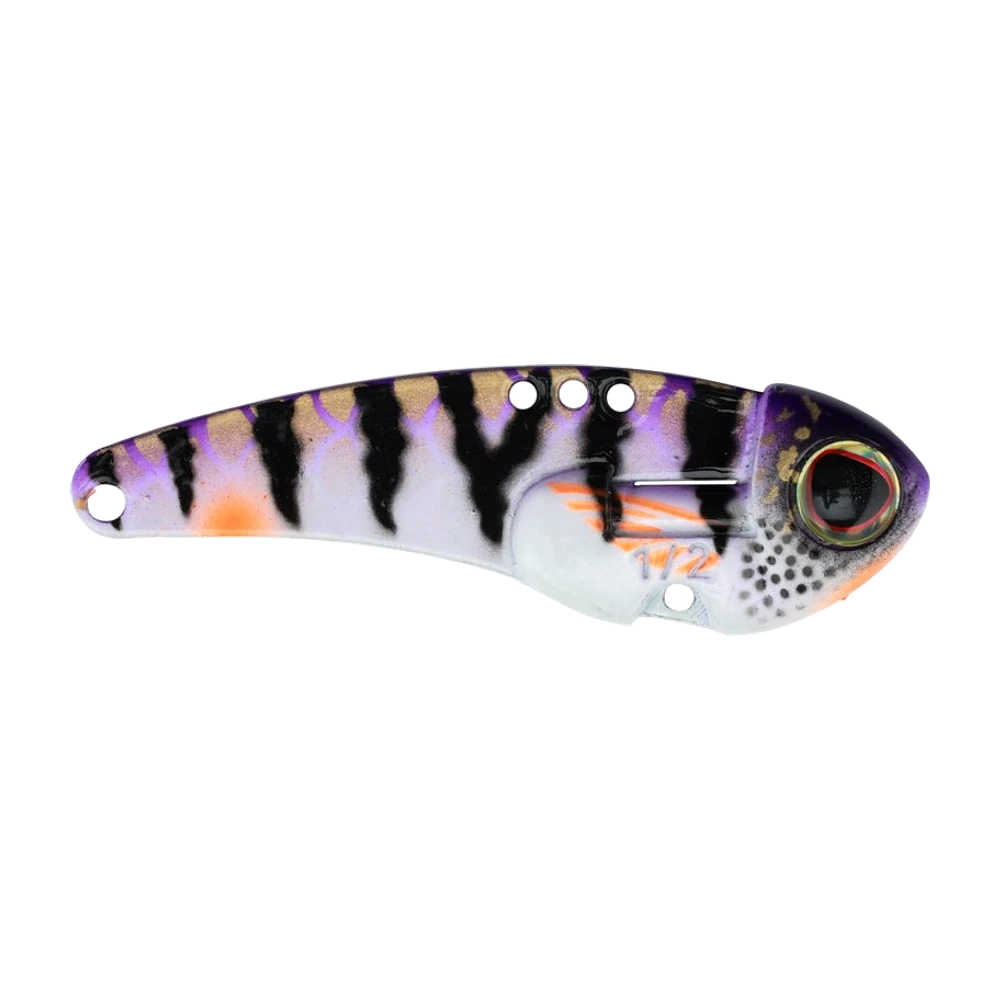
Berkley takes the compact shad-shaped silhouette of the original Johnson Thin Fisher and rebuilds it with upgraded finishes and components. The important part sits on the back: three holes in a line, and the one you choose changes the fishing more than any colour swap ever will.
- Front eye: light, tight vibration. This is the one for fast retrieves, when you want to cover water or trigger a reaction from an active fish. The blade stays stable even when you push the pace.
- Middle eye: medium vibration. The all-round setting, and the one to start with on an unfamiliar spot.
- Rear eye: wide vibration. It gets the blade working at the slowest speeds, which is precisely what you need in cold water, when the fish will no longer chase anything.
The principle is worth remembering: the further back the attachment point, the greater the amplitude and the lower the minimum working speed. In January on a lethargic zander, go to the rear. In October over feeding perch, go to the front.
The noise, and why it matters here
A conventional blade bait only makes noise through its split rings and the body cutting water. The Thin Fisher adds a rattle chamber built into the metal body, which makes it one of the loudest blades on the market. The sound is sharp and metallic, very different from the dull growl of a plastic lipless such as the Duo Realis Vibration 62.
That high frequency travels well in cold water, where dense water carries high frequencies extremely efficiently, but it is nothing like universal. On a heavily pressured clear-water fishery it can also push fish away. If you are stacking up follows without bites, this is usually the first parameter to change — before colour.
The side flash plays the same role visually. The body is thin, flat and tips over hard at every oscillation: on each half turn a broad flash fires off sideways. That is what makes the blade readable from a distance in water with one metre of visibility.
How to actually work it
Vertically, under the boat
The historic instruction manual for the blade. You drop it on a tight line until it touches, then rip it 30 to 50 cm with a sharp flick of the wrist and follow it back down without ever letting slack appear. Ninety per cent of bites come on the fall, and they register as nothing more than dead weight: the blade simply does not come back. Fish on a slack line and you will never feel them.
On a cast and retrieve
Cast, let it drop on a count, then work it back in short pulls broken up by pauses, keeping regular contact with the bottom. Berkley explicitly recommends varying the pace from slow to fast and slipping in short hard rips: that change of rhythm, far more than average speed, is what triggers reaction bites.
The classic mistake
Fishing a blade like a spoon, on a steady straight retrieve. A blade bait does not live on consistency: it needs verticality, bottom contact and breaks in rhythm. A straight retrieve sometimes works on actively feeding perch, but it misses most of what this lure can do and, above all, it costs you every bite on the drop.
Fish the Thin Fisher on fine braid with a short fluorocarbon leader rather than straight mono. Mono stretches and absorbs exactly the small nothing you have to feel to detect a bite on the fall — that is the difference between ten bites felt and two.
Picking the size, and what the hardware changes
Three sizes in the range: 3.8 cm for 5.3 g, 4.4 cm for 7.1 g and 5.7 cm for 14.2 g. These are not three versions of the same lure but three jobs.
The smallest is a perch blade, ideal in clear reservoirs where fish are feeding on small fry. The middle one covers most zander situations down to six or seven metres. The heaviest drops fast and holds in current: that is the one for big rivers or deep holes, where a light blade drifts away before it ever reaches the bottom.
The blade ships with split rings, Fusion19 black nickel trebles and a good easy-change snap, which exists precisely so you can switch tow points without retying. The one photographed here is shown bare, with no rings or hooks fitted, which makes the three holes along the back easy to see — in the pack you will find it fully rigged.
One word on those trebles: on a thin blade they catch the line easily during the fall, the familiar tangle that brings back a dead lure. Check the bait visually after every violent rip; it is a flaw inherent to the whole family, not to this model in particular.
Not sure what to tie on?
Photograph your spot: CarnaFish reads the scene, cross-checks the conditions and gives you the zone, the lure and the retrieve. Free on iOS and Android.
Colors for water clarity
- Clear water: the Purple Tiger pattern of the lure photographed here, or a perch finish, both of which rely on metal flash more than on colour.
- Low light, deep water: white and silver, the maximum reflection available when light is scarce.
- Stained water: chartreuse and orange, which stay readable at short range where flash no longer carries.
On a blade, colour matters less than on most lures: the primary signal is vibration and sound. Change the eye before you change the colour.
Where it sits among the other vibrating lures
Against a plastic lipless or a bladed jig such as the Z-Man ChatterBait JackHammer, the metal blade has one clear advantage: density. It drops faster, holds depth better and can be fished vertically, three things no plastic vibrating lure does as well. In exchange it is unusable in weed and forgives no lapse in concentration. If you want a vibrating lure to search a shallow edge, look instead at the Lucky Craft Bevy Vibration or the 6th Sense Slice Blade Bait.
Lure choice only counts once you know where the fish is, and that is exactly what CarnaFish is for: one photo of the spot, and the AI suggests the zone, the depth and the family of lure that fit the day's conditions. To lay the groundwork for cold-water fishing, our beginner's guide to lure fishing for zander covers the lies and rigs worth knowing.
Key points
- Three tow points: front for speed, middle for versatility, rear for the slow retrieves of cold water.
- The rattle chamber makes it a very loud blade, an asset in cold water but not on pressured clear water.
- Most bites come on the fall: fish a tight line or you will not feel them.
- Three sizes from 3.8 to 5.7 cm, chosen by depth and current, not by the size of the fish.
FAQ
Which tow point should I start on?
The middle one. It gives a medium vibration that suits most situations and acts as your reference point: if fish do not respond, you know which way to move — back to slow things down, forward to speed them up.
Which Thin Fisher size for zander?
The 4.4 cm, 7.1 g version covers most holes down to six or seven metres. Move up to the 5.7 cm, 14.2 g as soon as you fish deeper or in current, where a light blade drifts away before it reaches the bottom.
Why does my hook tangle in the line on the drop?
That is the classic flaw of thin blades: the front treble swings up towards the line during the fall. Keep your rips shorter, stay in permanent contact with the lure and check it visually after every big stroke of the rod.
Does a blade bait work outside winter?
Yes, but cold water is where it has no equal, because it lets you fish very slowly while still producing vibration. The rest of the year, a lipless or a bladed jig usually covers water more efficiently.
Do I need a wire trace?
Only if pike use the spot. On a pure zander or perch session, fluorocarbon of 0.25 to 0.30 mm stays more discreet and transmits bites on the fall better, which matters enormously with this lure.
Can the Thin Fisher be fished straight, like a crankbait?
Technically yes, but you give up the essential part. A blade bait lives on broken rhythm, hard rips and controlled falls. A steady retrieve only catches fish that are already active and costs you every bite on the way down.
The full zander lure guideSeason-by-season strategy: which family of lure, when, and why.Go from theory to fish
CarnaFish reads your spot from a photo and gives you the game plan: zone, lure, retrieve. Free on iOS and Android.