Clutch OG Glide Bait: the 20 cm glide that sinks slowly
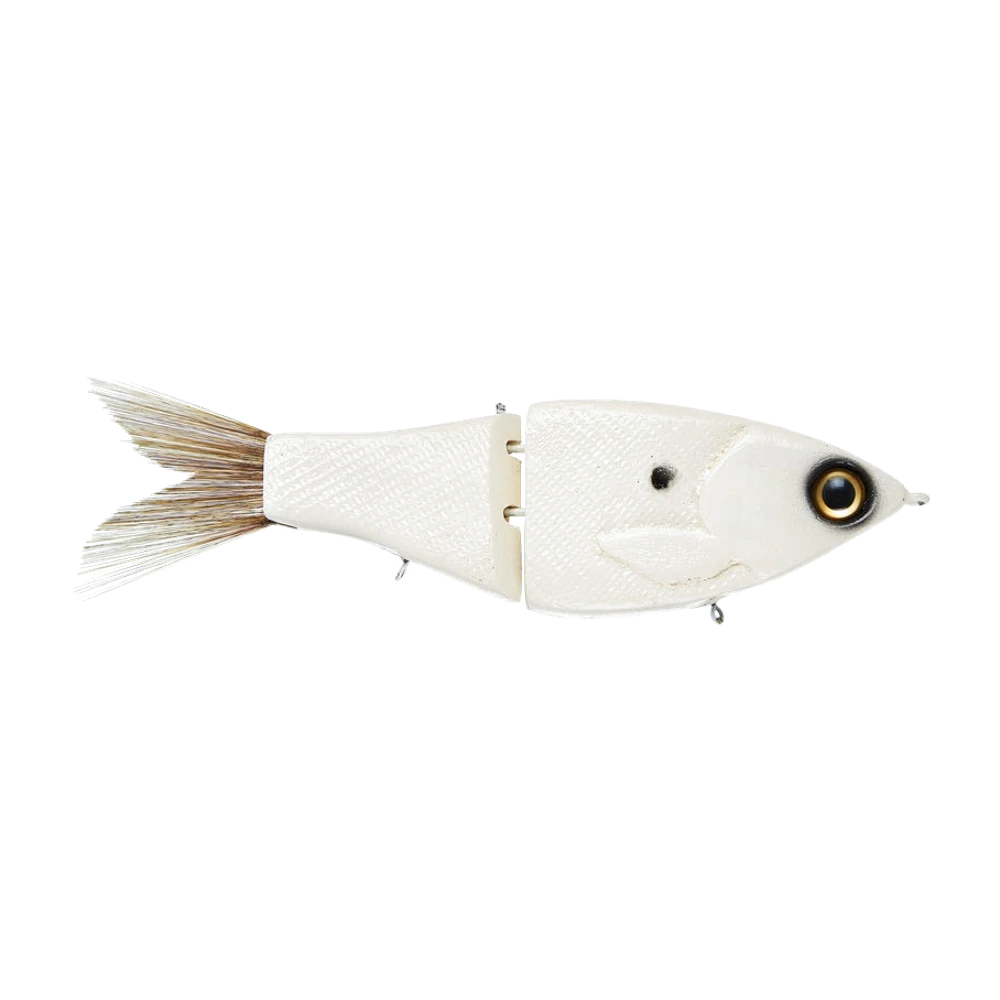
This lure shines under specific conditions. CarnaFish tells you in 10 seconds if today is one of them.
There is a very specific moment, on a lake bank late in the day, when a big fish follows without committing. You see it come in behind the lure, it settles a metre back, and the second you speed up it peels off. That is exactly the situation glide baits exist for: stopping the lure dead in front of the fish and making it pivot in place, without it dropping like a stone or popping up to the surface. The Clutch Swimbait Co. OG Glide Bait is built around that one second.
Twenty centimetres, 85 grams, and what that means
The manufacturer lists a single size: 7-3/4 in, or 19.7 cm, at 3 oz, which is 85 g. Those two numbers decide everything else. An 85 g bait rules out the do-it-all rod: you need a genuine swimbait stick with real power down to the butt, otherwise every cast turns into a wrestling match and the swim suffers for it. It is also a bait that filters: you will get fewer bites than with a crankbait, but the fish that come for it are rarely small.
The body is moulded from the brand's own resin blend, described as more buoyant than most baits on the market without giving up durability. The spec table, meanwhile, classes the lure as a moderate slow sink. The two statements do not actually clash: a lighter matrix offset by internal ballast is precisely what produces a slow, controlled descent, the kind that gives a fish time to make up its mind. When in doubt, trust the table rather than the sales line: this bait sinks, slowly.
Two retrieves, two jobs
The slow slalom
This is the baseline retrieve, and the one that covers the most water. Slow, steady reeling, rod tip low, blank in line with the lure: the body swings into a wide S, each section kicking alternately left and right. The point is not to imitate one specific prey but to produce a lateral travel nothing else in the box can match. Along a drop-off or a line of laydowns, that pendulum sweep is what pulls a fish from ten metres off the retrieve path.
Chopping it in place
The other use, which the maker claims explicitly, is short-range work on isolated targets: a fallen tree, a piling, an edge of reeds. Pitch the bait two metres past the cover, let it settle for a second, then give two or three sharp rod strokes without reeling. The lure spins on itself, changes heading and eases back down. The slow sink pays off fully here: the bait stays in the strike zone far longer than a heavy glide that dives the moment you stop.
Count your pause seconds under your breath. On this kind of glide, going from two seconds to four changes more than any colour swap ever will. Most follows convert during the stillness, not during the pull.
Where and when to pick it up
The OG Glide is a clear to lightly stained water bait, for spots where fish hunt by sight: lake banks, gravel flats, rocky points, the edges of submerged structure. It is not a bottom-searching tool and has no business in water with thirty centimetres of visibility, where a fish will not see it early enough to commit.
In Europe it has a second life its American maker did not necessarily plan for: pike. A 20 cm body on a slow swim, late in autumn on a big water, is exactly the prey profile big pike look for before winter. If that is your use, the leader changes — see below.
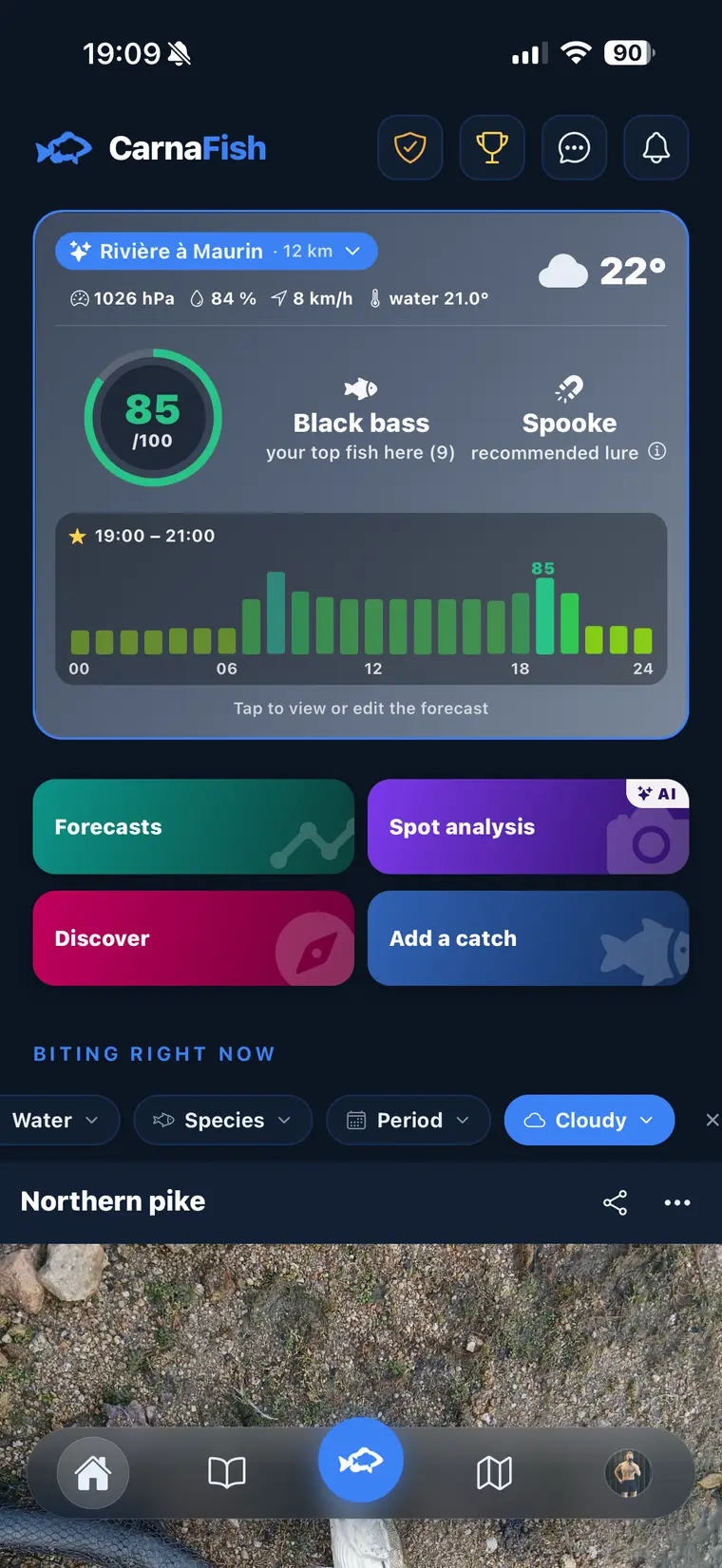
Not sure what to tie on?
Photograph your spot: CarnaFish reads the scene, cross-checks the conditions and gives you the zone, the lure and the retrieve. Free on iOS and Android.
Tackle that holds up
Plan on a 7'6" to 8' swimbait rod in XH power, with a blank that can take 85 g on the cast without folding. For line, two schools: 30-40 lb braid for direct contact and long-range hooksets, or heavy fluorocarbon straight through for a slightly wider swim. The BKK trebles and split rings come fitted, so the bait is fishable straight out of the package — which is not true of every swimbait at this price.
The classic mistake
Working it too fast. A glide bait retrieved at crankbait pace loses its lateral travel: the body tracks straight and just vibrates, and the whole point disappears. If you cannot feel the lure swing left then right through the rod, you are reeling too fast. Slow down until the pendulum comes back, then hold that rhythm.
The second mistake is less obvious: a knot cinched straight onto the nose ring. As with a Sebile Magic Swimmer 128, a restricted tie point cuts the width of the S. Round snap or loop knot, every time.
Colour by water
The product description does not detail the palette, which changes from series to series, so think in tone families rather than trade names.
- Clear water and bright light: pearl white, as pictured. A pale silhouette that stays readable at distance without flashing.
- Lightly stained water: a green-back, silver-flank pattern that borrows the codes of a roach or a young baitfish.
- Low cloud, dark water or evening sessions: a dark tone, which reads from below against the residual light on the surface.
The right lure never replaces reading the spot, and that is exactly what CarnaFish is for: a photo of the spot, and the app suggests the zone, the depth and the lure type suited to the day's conditions. To work out whether a big glide is the right tool today rather than a bottom bait, our guide to choosing a pike lure runs through the families worth knowing.
Key takeaways
- One size in the range: 19.7 cm / 7.75 in for 85 g / 3 oz, rated moderate slow sink by the maker.
- Two complementary retrieves: slow slalom to cover water, chopping in place for isolated cover.
- The slow sink is the main asset, keeping the bait in the fish's decision zone longer.
- Reeling too fast flattens the S and turns the glide into an ordinary swimbait.
FAQ
Does the Clutch OG Glide Bait float or sink?
It sinks. The maker's table rates it a moderate slow sink, even though the resin itself is pitched as more buoyant than average. In practice it eases down on the pause instead of nosing hard for the bottom.
What rod do you need to cast 85 g?
A 7'6" to 8' swimbait rod in XH power, not a general-purpose casting rod. Anything lighter makes the cast uncomfortable and tires the blank out over a season.
Are the hooks included?
Yes, the bait ships with two BKK trebles and split rings already fitted. The catalogue photo shows it bare, hook hangers empty, but that is a product shot: the lure is fishable as supplied.
Can it be used for pike?
Yes, and with this size it is a very logical use in Europe. In that case add a bite-resistant leader, heavy fluorocarbon or titanium, which is not needed for bass.
How does it differ from a Japanese jointed glide?
A Megabass I-Slide leans on finish detail and a very crisp glide; the OG Glide leans on mass, slow sink and the ability to be chopped on the spot. They complement each other more than they compete.
What is the alternative when fish are pinned to the surface?
A wakebait like the Clutch Wake Gill Wakebait stays in the top thirty centimetres from the first turn of the handle to the last, where the glide always ends up sinking. That is the right relay in spring when fish are shallow.
The full bass lure guideSeason-by-season strategy: which family of lure, when, and why.Go from theory to fish
CarnaFish reads your spot from a photo and gives you the game plan: zone, lure, retrieve. Free on iOS and Android.