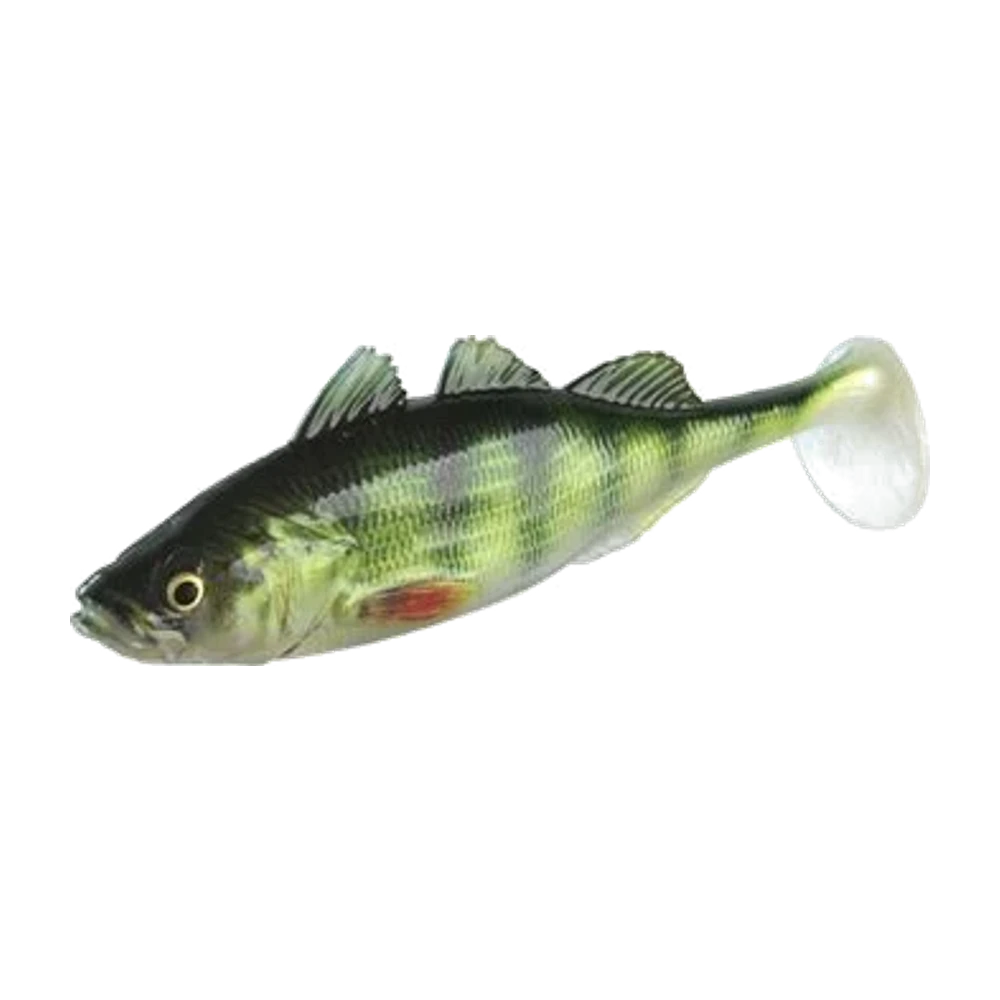
Daiwa Prorex Live Bait Shad: weighting a big shad without killing its action
Rather not fish it blind? Photograph your spot — CarnaFish cross-checks the conditions and points you the right way.
You rig a sixteen-centimetre shad to go and find a big pike. You want to fish at five metres, so you pick a thirty-five gram head to "hold bottom". You retrieve, you feel the lead grinding, all is well.
Except your lure is not swimming. It is being dragged along the bottom, nose down, body rigid, paddle barely stirred by the movement. You are fishing with a weighted lump of plastic, not with a shad.
This is the most common and the most invisible problem in big-soft-plastic pike fishing. A bulky shad needs to be underweighted, not overweighted, because its entire value lies in the volume of water it moves while swimming slowly — and a lure that no longer swims no longer moves anything.
The water it moves is the signal
A pike does not detect your prey the same way depending on visibility.
In clear water, it sees. Silhouette, flash and colour count. In coloured water, in water stained by rain, in late autumn when turbidity rises, sight only reaches one or two metres. The fish then switches to its lateral line and detects pressure variations.
That is where a thick shad gains on a slim one. A massive body with a wide cross-section and a broad paddle pushes a quantity of water that a slender profile simply cannot produce. A pike sitting four metres off the lure's path feels it before it sees it, and it has time to get into position.
Two consequences for the fishing:
- This is not a speed lure. The signal is built on the amplitude of the movement, not on its frequency. Retrieving fast does not improve it, it flattens it.
- The size is not a whim. Dropping below twelve centimetres loses you exactly what you picked this lure up for. If you want small and discreet, change model.
The weighting trap
Here is the calculation that fixes most problems. The question is not "what weight will hold bottom" but "what is the minimum weight that reaches my target layer at the speed I want to fish".
| Lure size | Target depth | Jig head |
|---|---|---|
| 12 cm | 1 to 3 m | 10 to 15 g |
| 12 cm | 3 to 6 m | 15 to 21 g |
| 15 cm | 1 to 3 m | 15 to 21 g |
| 15 cm | 3 to 6 m | 21 to 28 g |
| 18-20 cm | 3 to 6 m | 28 to 35 g |
| 18-20 cm | 6 to 8 m, or current | 35 to 45 g |
Two checks to make on the water, every time:
The edge test. Before fishing seriously, run the lure past two metres from you, at the speed you intend to use, and watch it. If the paddle is not beating firmly and the body is not rolling, your head is too heavy. Drop a notch.
The trim test. The lure has to swim level, not nose down at forty-five degrees. A nose-down attitude means either too heavy a head or a badly threaded lure — the second case is very common and takes thirty seconds to correct.
On the water: when you need to go deeper, do not reach for a heavier head first. Start by casting further and counting more seconds of drop. A lure cast forty metres and sunk for ten seconds reaches the same layer as a lure cast twenty metres with ten extra grams — and that one is still swimming properly. You only go up in weight once that margin is used up.
The retrieve: the bottom-hugging slow roll
- Cast and count the drop, on a semi-tight line. Note the number at which the lure touches bottom: that is your reference for the whole spot.
- Wait a second of solid contact, then start a slow, steady straight retrieve.
- Look for intermittent contact: the lead should touch bottom every five to ten seconds, not permanently. If you are grinding non-stop, speed up slightly or lighten. If you never touch, slow down.
- Mark a two-second stop every ten to fifteen turns of the handle. The lure drops back and tips over, and that is a powerful trigger on a sitting pike.
- Do not set immediately on a soft take. Let the fish turn, regain contact, then set firmly with a sideways sweep.
One variation worth testing in midwinter: the same retrieve but at mid-water, never touching bottom. Cold-water pike often hold suspended above the holes rather than glued to the substrate, and a purely bottom-hugging retrieve misses them completely.
Hooks and leader
On a lure this size, the hooking arrangement is not optional.
The head hook must be wide and strong in the wire, with enough gap to clear the lure's back. A hook too small on a thick body will not penetrate.
The rear stinger is necessary from fifteen centimetres upwards. Pike often attack across or from behind, and a lure with no rear hook will bring you back tooth marks, not fish. The stinger rig for pike describes how to fit one and the wire length to respect.
The leader: titanium, or 0.70 to 0.90 mm fluorocarbon. On this lure size and this fish, there is no sensible compromise. Main line of 0.25 to 0.35 mm braid, and a rod able to handle a fifty to eighty gram setup.
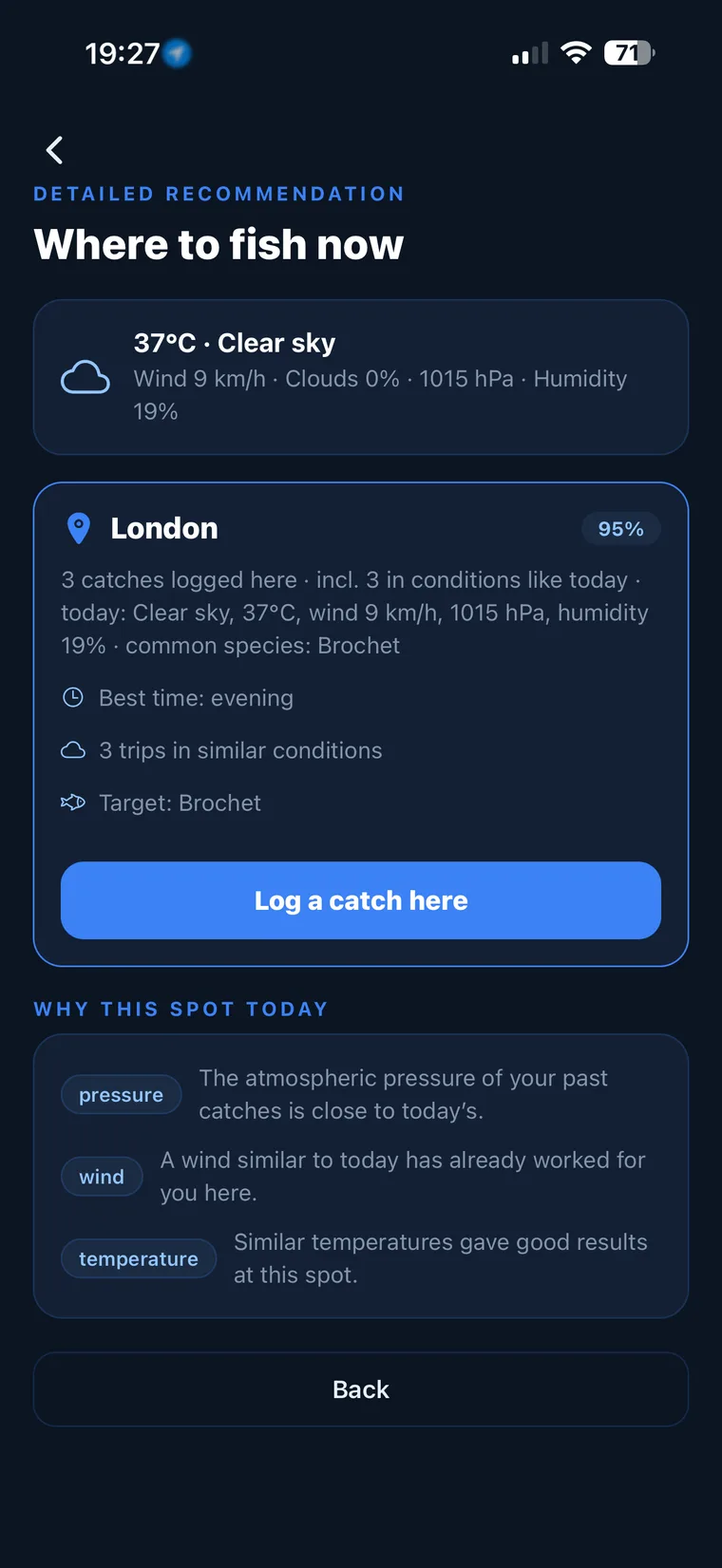
Not sure what to tie on?
Photograph your spot: CarnaFish reads the scene, cross-checks the conditions and gives you the zone, the lure and the retrieve. Free on iOS and Android.
Where it takes over, where it is too much
Its window is clear:
- Autumn and early winter, when pike are selecting big prey and the water is colouring up.
- Stained or turbid water, where the volume displaced makes up for the lost visibility.
- Holes, deep plateaux, channel edges, from a boat or from a bank that gives onto deep water.
Conversely, it is too much in very clear, calm water on pressured pike, where a bulky slow-swimming lure looks suspect and produces more follows than attacks. It is also poorly suited to dense weed — the jig head collects everything — and to fine fishing in shallow margins, where even its lightest head is already too heavy.
Live Bait Shad or a rigged swimbait
A Westin Percy the Perch or an equivalent swimbait on its factory harness plays on realism and precision of passage: you run along a structure, you work three metres of margin, you rely on silhouette.
The Live Bait Shad plays in another register: you cover depth and volume of water, you match the weight to the layer, and you rely on displacement rather than silhouette. It is also far more forgiving — you can replace it for the price of a soft plastic when a pike has destroyed it, which is no small thing when you fish flooded timber.
If you want still more volume and a very deep profile, the Fox Rage Big Eye Pro Shad XXL pushes the logic further, at the cost of an even slower action. Our guide to choosing a pike lure helps you decide by season and by water. And if you are unsure what weight to fit when you get to the bank, CarnaFish analyses a photo of the spot and gives you an answer.
Key takeaways
- The water displaced is the signal: an overweighted lure no longer swims and no longer signals anything.
- Look for the minimum weight that reaches the layer, not the one that "holds bottom".
- Check the action two metres from you before fishing: paddle beating, body level.
- Intermittent bottom contact every five to ten seconds, not continuous.
- Stinger compulsory from 15 cm, titanium or 0.70-0.90 mm fluorocarbon leader.
FAQ
What jig head weight for a 15 cm shad?
From 15 to 21 g down to three metres, 21 to 28 g between three and six metres. Always take the lightest weight that reaches the target layer: beyond that, the lure is dragged instead of swimming and loses the water displacement that makes it worth using.
How do I know if my shad is overweighted?
Run it past two metres from you at your fishing speed and watch it. If it swims nose down, if the paddle beats weakly or if the body does not roll, drop a notch in head weight. A nose-down attitude can also come from a lure badly threaded on the shank.
Do I have to touch bottom constantly?
No. Look for intermittent contact, roughly every five to ten seconds. Grinding continuously slows the lure, damages the paddle and snags. If you never touch, slow down slightly before adding weight.
Is the stinger essential?
From fifteen centimetres, yes. Pike frequently attack across or from behind, and a lure hooked only at the head will bring you tooth marks and no fish. Allow a short wire so the stinger stays flat against the flank.
Does it work in winter?
Yes, it is one of its best periods, provided you slow right down and test mid-water. Cold-water pike often hold suspended above the holes rather than glued to the bottom, and a purely bottom-hugging retrieve misses them.
When is a realistic swimbait the better choice?
In clear, calm water, on pressured pike or fish sitting along a precise structure. The big shad plays on volume and on the depth covered, the realistic swimbait on silhouette and precision of passage.
The full pike lure guideSeason-by-season strategy: which family of lure, when, and why.Go from theory to fish
CarnaFish reads your spot from a photo and gives you the game plan: zone, lure, retrieve. Free on iOS and Android.