Daiwa Steez Shad: the crankbait you fish by hitting things
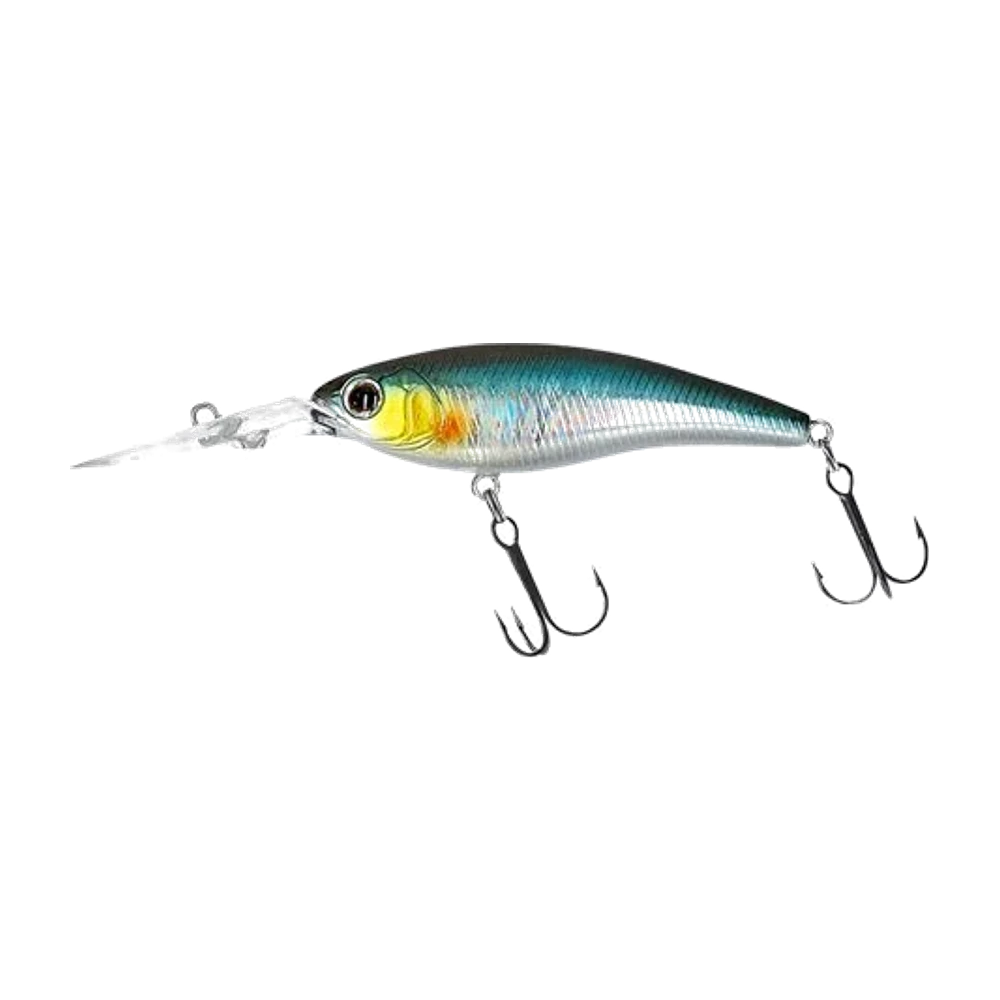
This lure shines under specific conditions. CarnaFish tells you in 10 seconds if today is one of them.
A crankbait reeled through open water, touching nothing, catches very few fish. That holds in summer as in winter, on a rich lake as on an empty gravel pit. The crankbait was never designed to swim prettily in the middle of nowhere: it was designed to hit something — a rock, a stump, a branch, the bottom itself — and lose its balance for a moment before resuming its action.
That loss of balance, that quarter-second deflection, is what triggers the strike. And it is exactly what the Steez Shad does well, because its slim shad profile gives it a tight vibration that a collision interrupts very cleanly, without sending the lure spinning out of control.
Slim profile, tight vibration: what it changes
Picture two crankbaits that dive to the same depth. One has a round, wide body; the other a flat, tall shad-style body.
- The round body rolls a lot. It puts out a broad, low-frequency wave, very easy to detect in stained water and at distance. It calls fish in.
- The shad body rolls little and vibrates fast. The signal is tight, high-frequency, low-amplitude. It does not carry as far, but it stays believable in clear water, where a lure that thrashes too much looks suspicious.
The Steez Shad clearly belongs to the second family, with two practical consequences.
- It works in clear, cold water. That is the classic window for a slim-profile crank: gin-clear water, sluggish bass, conditions where a round crank gets refused.
- It resumes its action instantly after a knock. A wide body that hits a stump often veers sideways for a metre before settling. The slim profile straightens up within a few centimetres, which lets you link contacts together instead of restarting the retrieve each time.
Its lip holds it in a useful band between roughly 1.5 and 2.5 m depending on the version — the depth of most margins, the tops of drop-offs and the dead weed beds of early season.
Fish the collision, not the retrieve
Here is the full sequence, the one that changes results.
- Work out the real depth of the spot. If the bottom is at 2.5 m and your crank only reaches 2 m, you will never touch a thing. The lure has to be able to reach the substrate or the cover.
- Cast past the target zone, by three to five metres. A crank needs distance to get down to its maximum depth.
- Retrieve at a steady, moderate speed until the first contact. You should feel the lip scraping.
- On contact, stop dead for a second. The lure rises slightly, frees itself, and that rise after the knock is the most productive moment of the cast.
- Start again and hunt for the next contact. A good cast hits four or five times.
The commonest mistake is to speed up to free the lure when it snags. You need to do the opposite: stop. Positive buoyancy does all the work and lifts you off the obstruction without setting the hooks into wood.
On the water: when you feel contact, do not set the hook on reflex. Nine times out of ten it is wood, and one time out of ten it is a fish that took just after the knock. Wait for a weight that pulls, not a weight that resists. A parabolic rod will help you more than any drag setting.
Adjusting depth without changing lures
You can shift the running depth by about 50 cm without changing the model.
| Setting | Effect on depth | When to use it |
|---|---|---|
| 0.30 mm fluorocarbon | Highest running depth of the range | Submerged weed, bottom at 1.5 m |
| 0.25 mm fluorocarbon | Reference setting | Everyday use |
| 0.20 mm fluorocarbon | 20 to 40 cm deeper, longer casts | Bottom at 2.5 m, need to scrape |
| Rod tip lowered to the water | 20 cm deeper at the end of the cast | Final stretch of the retrieve near the bank |
| Rod held high | Lifts the lure | Clearing a known obstruction |
Line diameter is the real dial: the thinner it is, the less drag it creates and the less it holds the lure up. Going from 0.30 to 0.20 mm shows up immediately in the number of bottom contacts you get.
Where it excels, and where to reach for something else
The Steez Shad is built for clear to lightly stained water over hard bottom: gravel, rock, boulders, isolated stumps. It is excellent in spring before the spawn, when bass move up onto 2 m flats, and again in autumn on those same areas.
It is a poor fit:
- In very murky water, where its tight signal does not carry far enough. A round crank or a lipless will call from much further away.
- In dense weed and tight laydowns, where two bare trebles snag constantly. A squarebill clears cover far better.
- Beyond 3 m, simply out of range: switch to a deep-diving crank rather than trying to force this one down.
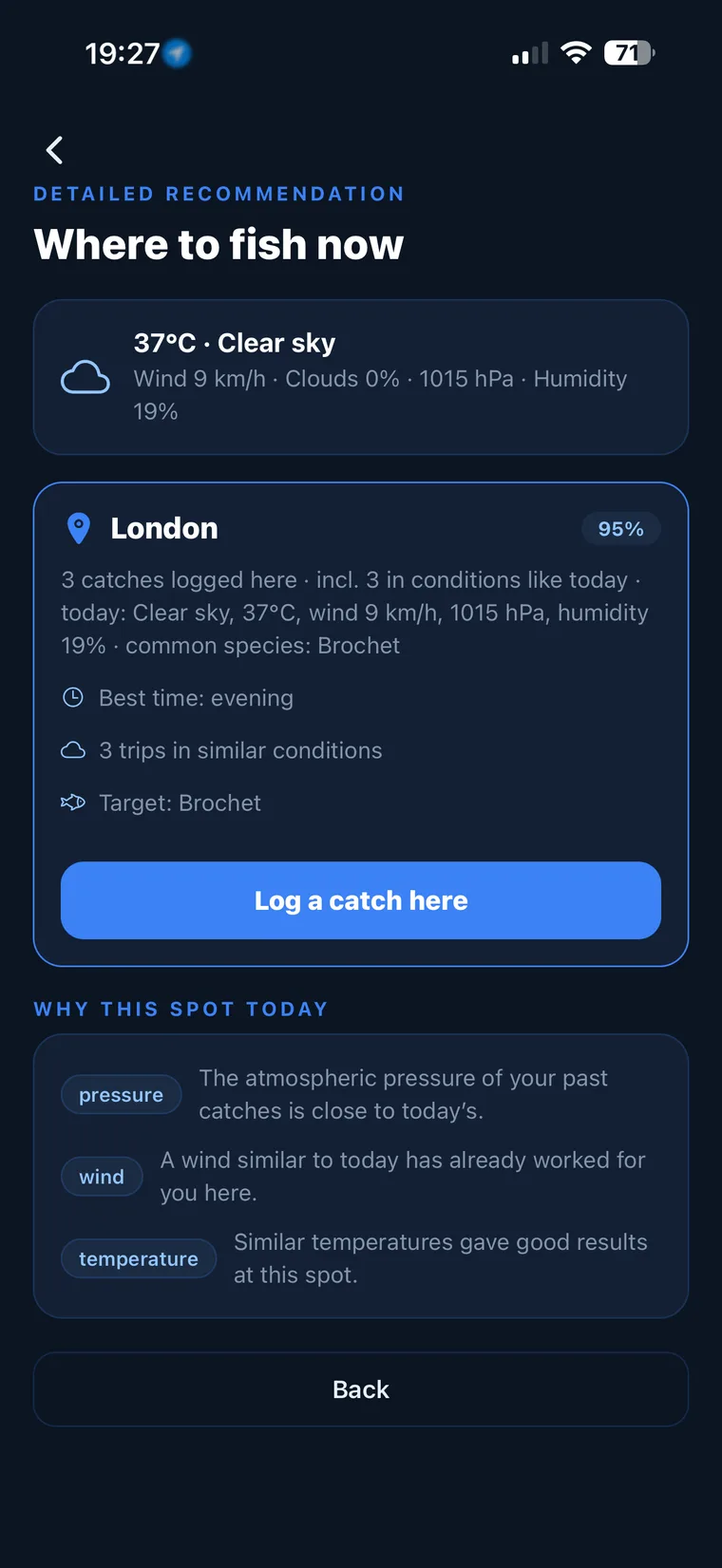
Not sure what to tie on?
Photograph your spot: CarnaFish reads the scene, cross-checks the conditions and gives you the zone, the lure and the retrieve. Free on iOS and Android.
Colours
- Clear water over rock: natural roach or baitfish, translucent. The lure has to stay believable through the whole retrieve, not just at the instant of the knock.
- Early spring over hard bottom: craw patterns, brown or red. That is the dominant prey at that time of year on that kind of substrate.
- Lightly stained water or overcast skies: dark back and contrasting flank, or a touch of chartreuse under the throat.
Steez Shad or a round crankbait
The Rapala Shad Rap is the historical benchmark for the slim-profile crankbait, with an even subtler action and a very similar use. The Steez Shad sets itself apart mainly through a slightly stronger vibration and a quicker recovery after contact, which makes it more pleasant to fish over a bottom littered with boulders.
The Strike King KVD Squarebill answers a different need: its square lip is made to deflect off wood and stumps without hanging up, on a wider body with a stronger signal. Over a laydown, it goes through where the Steez Shad plants itself.
Finally, a compact crank like the Megabass Griffon covers the layer above, between 1 and 1.5 m, with more pronounced roll. The Steez Shad remains the choice for the 2 m band in clear water over hard bottom. Our beginner's guide to bass fishing sets out the order in which to attack these different layers. And if you are unsure which depth to target when you reach the bank, CarnaFish analyses a photo of the spot and answers.
Key takeaways
- A crankbait is fished by hitting things: with no contact with the bottom or cover, it produces very little.
- Shad profile, tight vibration: this is a clear-water crank, not a calling lure for dirty water.
- On contact, stop for a second instead of speeding up. The rise after the knock is when the bite comes.
- Line diameter adjusts depth by around 50 cm without changing lures.
- Wrong tool for heavy wood, thick weed, and anything deeper than 3 m.
FAQ
How deep does the Steez Shad run?
Between roughly 1.5 and 2.5 m depending on the version and the line used. A thin 0.20 mm fluorocarbon gains it 20 to 40 cm over 0.30 mm, at the same cast length and speed.
Why is my crankbait not catching?
Usually because it is not touching anything. A crankbait reeled through open water, with no contact with the bottom or cover, removes the deflection that triggers the strike. Pick a spot whose depth matches the lure's diving range.
What should I do when the lure hangs on a stump?
Stop reeling and let it float up for a second. Buoyancy frees it on its own. Speeding up or setting the hook on reflex is the surest way to bury it for good.
What rod suits crankbait fishing?
A parabolic rod that bends well down the blank. It cushions a bass's head shakes and stops you pulling hooks on trebles, but it also keeps you from setting too hard when you touch cover.
What is the difference with a squarebill?
A squarebill has a square lip designed to deflect off wood without hanging up, on a wider body with a stronger signal. The slimmer Steez Shad works better in clear water but snags more readily in branches.
Does it work in cold water?
Yes, that is one of its better windows, provided you slow the retrieve right down and multiply the stops after contact. Below 10 °C, stretch the pauses to two seconds after each knock.
The full bass lure guideSeason-by-season strategy: which family of lure, when, and why.Go from theory to fish
CarnaFish reads your spot from a photo and gives you the game plan: zone, lure, retrieve. Free on iOS and Android.