Daiwa Current Master: presenting a minnow across a current seam
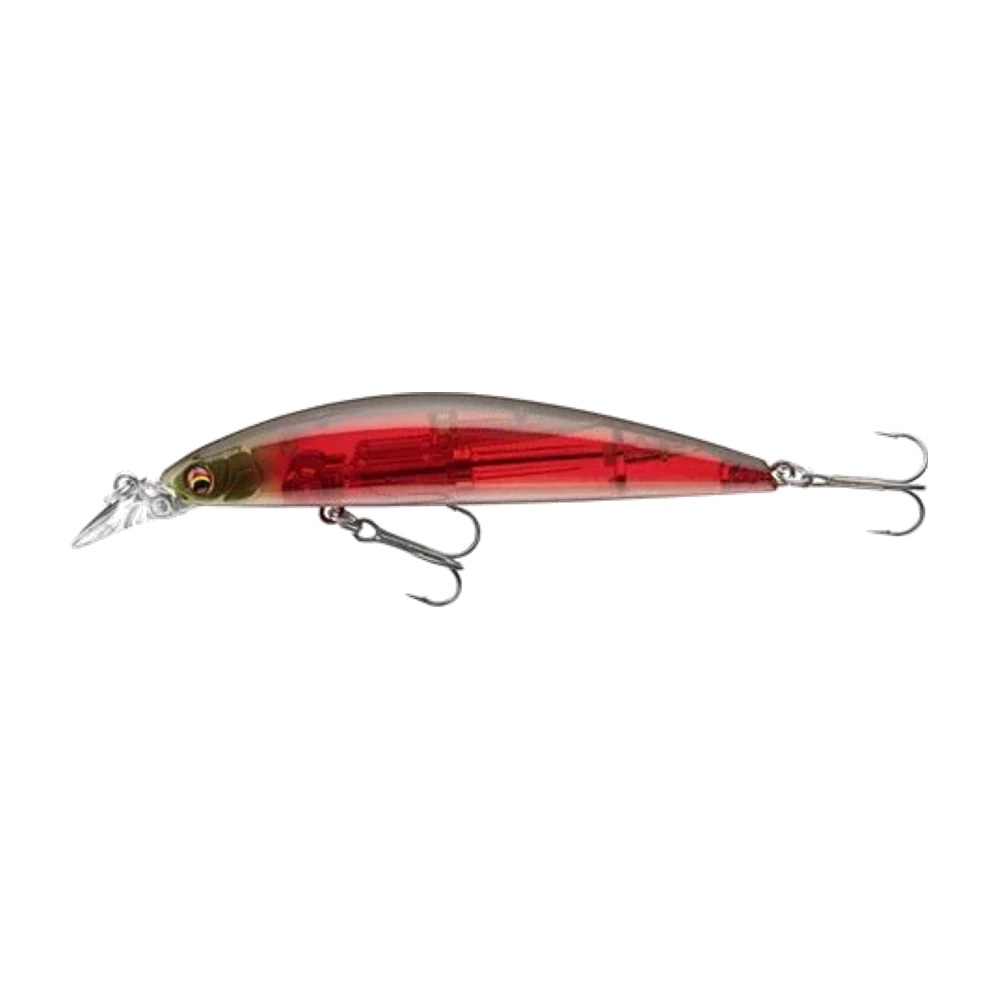
One lure, endless conditions. CarnaFish reads your spot from a photo so you are not just guessing.
On a spot with current, the question is almost never "which lure". It is "from which angle". A rocky point swept by the ebb, a gap between two sandbars, the mouth of a channel: in every case, the bass is not wandering around. It holds downstream of an obstruction, in the calmer water, and takes whatever the current brings it. It faces upstream. Always.
Which means a lure retrieved into the current arrives from behind, in its blind spot, looking like a prey item swimming back up the flow — something no exhausted baitfish ever does. And a lure pulled too fast across the flow leaves the seam before it ever reaches the fish.
The technical difficulty lies elsewhere: most minnows cannot handle side pressure. As soon as the current pushes on their flank, they lie over, rise to the surface and start vibrating at random. The Current Master is designed around that single problem.
Tracking true under side pressure
Three design choices explain it.
A short but very wide lip. It is not there to make the lure dive — it works in the top metre — but to create a bearing surface that keeps the body aligned with the pull, even when the push comes from the side.
A transfer weight that locks once the lure is swimming. Like many saltwater minnows, it has a moving ball that slides back on the cast to gain distance. The important part is that it returns to its low seat as soon as the lure starts to swim: the centre of gravity drops, the lure settles and no longer rolls over on itself under the current.
A flat back and a rounded belly. That section reduces the grip the current gets on the upper part of the body. A round-backed minnow gets rolled by a fast seam; this one tends to right itself.
In practice you feel it immediately: on a line tightened across a two-knot current, the vibration stays regular at the rod tip instead of breaking up into chaotic jolts. That regularity is your only measuring instrument when you cannot see the lure.
The retrieve: let the current do the work
- Cast at 45° downstream, never square to the bank. The lure has to enter the seam from the top.
- Close the bail and simply take up the slack. The current gets the lure working on its own; sometimes all you have to do is keep contact without reeling.
- Let the lure swing through its arc across the current. That phase — the swing — produces almost all the takes.
- Slow down when it reaches the edge between the fast seam and the calm water. Half a second of hesitation exactly on that boundary is worth ten retrieves through the middle of the flow.
- Finish with two or three turns in the dead water, then recast. Do not reel the whole arc back at a constant speed: you are wasting the productive part.
If the current is weak, add a slow, steady retrieve to compensate. If it is strong, you can even feed line to let the lure drop deeper into the seam before the arc begins.
On the water: on a current spot, the thing you move between casts is not the lure, it is yourself. Make three casts from one point, then move five metres along the bank. The arc your lure describes sweeps one precise band; stay put and you swing fifty times down the same lane and never find the one where the bass is sitting.
The right stage of the tide
This is the single parameter that decides success, ahead of colour or size.
| Stage | Value of this lure | Notes |
|---|---|---|
| Slack high or low water | Low | No current, no holding fish. Switch to topwater or a bottom approach |
| First hour of run | Medium | The current is building, the lies are not yet defined |
| Mid tide, current at its peak | Maximum | This is its window: clean seams, bass in position, lure in its element |
| Last hour of run | Good | The current fades, slow down and work closer to the margins |
In other words, this lure is for the two or three hours around mid tide, flooding or ebbing depending on how the spot is laid out. It is a short window, and it is also the most productive of the day on this kind of mark.
On size: the 9 cm for bass of 40 to 55 cm in moderate current, the 12 cm when the flow is strong or when good-sized sandeels and sprats dominate. A lure that is too light in strong current will rise to the surface whatever you do.
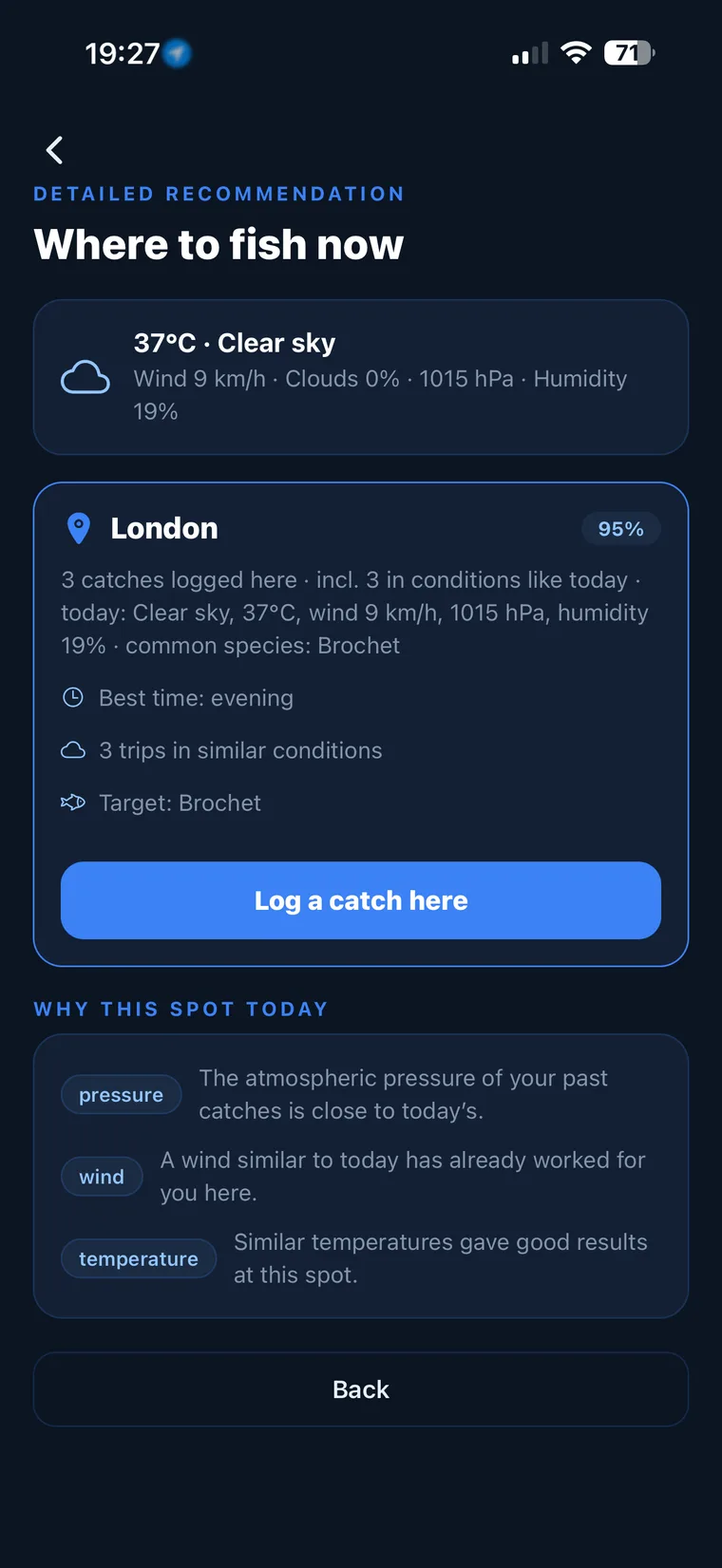
Not sure what to tie on?
Photograph your spot: CarnaFish reads the scene, cross-checks the conditions and gives you the zone, the lure and the retrieve. Free on iOS and Android.
Where it excels, where it is the wrong call
Its ground:
- Gaps between sandbars, in estuaries or bays, on the ebb around mid tide.
- Rocky points that create a clean back-eddy visible on the surface.
- Channel mouths and river outflows, in daylight as at dusk.
- Breakwaters and pier heads exposed to a cross current, where bass tuck in behind the blocks.
Its limits:
- Flat water with no current. With no seam to work, it loses its edge: any minnow will do as well.
- Heavy seas with big swell. It works in the top metre; a lifting swell pulls it out of the water regularly.
- Deep water. It will not go beyond about 80 cm under tension. To cover 3 or 4 m you need something else.
- Static night fishing. Not its register: it demands a reading of the current that assumes you can see the surface.
Current Master or Switch Hitter
Both are saltwater minnows from the same brand, and yet they are fished in completely different ways.
The Daiwa Morethan Switch Hitter sinks and is fished mainly at night, on the drift, with no animation: you let it down, tighten up, and simply follow it. It casts a long way into the wind and works lower in the water column.
The Current Master stays high, is fished in daylight, and instead demands active management of your angle and swing speed. It gives its best when you can see the surface and read where the seam breaks.
On a spot with no established current, a classic floating minnow such as the ima Sasuke stays more versatile. And if the bass are feeding openly on top, a stickbait like the Tackle House Shores Pencil will take over. Our guide to lure fishing for sea bass explains how to move through those three registers over a single tide. And if you are unsure about your casting angle when you reach the shore, CarnaFish analyses a photo of the spot and answers.
Key takeaways
- Wide lip, weight that reseats once swimming, flat back: built not to lie over under side pressure.
- Cast at 45° downstream and let the lure swing through its arc. The swing produces most of the takes.
- Slow down exactly on the boundary between the fast seam and the calm water.
- Its window is the two or three hours around mid tide, not slack water.
- With no current, in heavy swell, or below a metre down, it loses all its interest.
FAQ
When in the tide should I fish the Current Master?
Around mid tide, flooding or ebbing, when the current peaks. That is when the seams are clean and the bass are holding downstream of obstructions. At slack water, with no flow, it has no particular advantage left.
How deep does it work?
Between 30 and 80 cm under tension, a little shallower if you lift the rod. It is not a deep-searching lure: it works the top layer, where the current is easiest to read.
Do I need to work it with the rod?
Rarely. In an established current, line tension alone is enough to keep it swimming through its arc. Add a slow retrieve only when the flow weakens or at the end of the tide.
Which size should I pick?
The 9 cm for average bass in moderate current, the 12 cm when the flow is strong or the baitfish present are a good size. A model that is too light rises to the surface as soon as the current pushes on it.
What is the difference with a sinking saltwater minnow?
A sinking model drops through the column and is often fished at night, on the drift, with no animation. The Current Master stays high, works the surface seam and demands active reading of the current and the casting angle.
What leader should I use in saltwater?
Fluorocarbon of 0.30 to 0.40 mm over about a metre, joined to 0.12-0.16 mm braid. Step up to 0.40 mm as soon as you fish among rock or mussels, which cut line far faster than the bass themselves.
The full sea bass lure guideSeason-by-season strategy: which family of lure, when, and why.Go from theory to fish
CarnaFish reads your spot from a photo and gives you the game plan: zone, lure, retrieve. Free on iOS and Android.