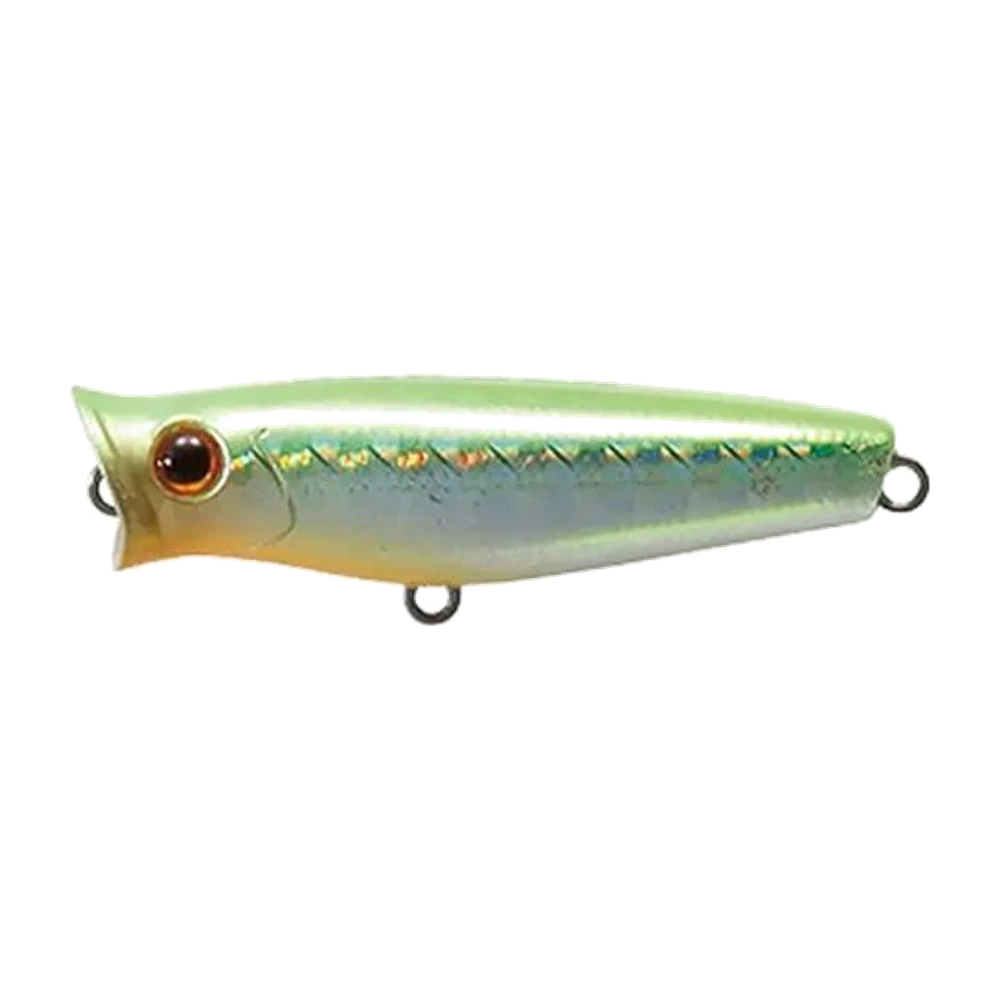
Tackle House Shores Pencil: fishing the top twenty centimetres on a beach
Not sure this lure fits YOUR spot today? CarnaFish tells you in 10 seconds, from a photo.
A sandy beach on a rising tide, an hour before first light: there are twenty centimetres of water over the first few metres, forty a little further out, and bass of 40 to 55 cm following the waterline in as it advances. They are there for the shrimp and the worms the flood digs out, and they will not drop down to find a lure at two metres — there are no two metres.
The technical problem is twofold. You need a lure that fishes a ridiculously thin layer of water without scraping the sand or blowing out on top. And you need to cast far, because on a beach you are often forced to reach a bar or a rip forty metres out, with a headwind at dawn.
A strict topwater solves half the problem: it stays up, but it is light and it does not carry. A diving lure solves the other half and buries itself in the sand. The sinking pencil is the answer in between, and the Shores Pencil is a very characterful example of one.
A sinking lure that does not sink while you wind
This is the trait to understand before anything else. The Shores Pencil sinks at rest — that is what gives it its mass, its casting distance and its resistance to wind. But the moment you start winding, its streamlined body and slightly nose-up attitude make it rise and settle just under the surface.
Put another way, depth is not a fixed figure: it is a setting you hold in your right hand.
| Retrieve speed | Working layer | Use |
|---|---|---|
| Stopped, free line | Sinks about 30 cm per second | Counting down a hole |
| Very slow | 30 to 40 cm | Estuary channel, mid-flood |
| Medium | 10 to 20 cm | The default setting on a beach |
| Fast with the rod high | Surface, visible wake | Bass hunting on show |
The body is smooth, with no lip. What creates the action is the imbalance between rear mass and front volume: the lure rolls on its axis with a fairly wide amplitude, which produces regular flashes of flank. On water at dawn, with little light, that is the signal that carries furthest — more than noise or vibration.
Follow the flood, do not fish it on the spot
On a beach, the spot is not fixed. It moves with the water, and the most effective way to fish is to go with that movement.
- Arrive at low water or just after, and walk the beach to find the gullies, rips, bars and changes in sand colour. That dry recce is worth ten blind sessions.
- Start fishing as soon as the water covers the first gullies you found. Bass come in early, often long before you would imagine.
- Fan your casts — three casts per position: left, straight out, right — then move ten to fifteen metres along the beach.
- Wind slowly and steadily, rod at half height, keeping slight tension. The lure should roll, not wobble.
- Put in two sharp twitches as the lure passes over a gully or the edge of a rip, then go back to the steady retrieve. It is that occasional break that triggers, not a continuous animation.
- Move back with the tide: as the water advances, step back up the beach and keep fishing the same relative depth.
On the water: on a beach, do not fish parallel to the shore out of habit. A bass following the flood moves across as much as along, and a perpendicular cast retrieved right to your feet crosses three different depth layers in a single pass. Until you have located the fish, that perpendicular cast is what tells you the most, fastest.
Fishing light without losing distance
A lure of 8 to 13 g needs matched tackle. This is where plenty of anglers handicap themselves without realising it, using gear rated for lures twice as heavy.
The braid. Drop down to 0.10 to 0.14 mm. On a beach, the distance difference between 0.14 mm and 0.20 mm with a 10 g lure is measured in metres, not centimetres. And a finer line also catches less crosswind, which bellies the line and loses you contact.
The leader. A metre of 0.25 to 0.30 mm fluorocarbon is enough over sand: there is no serious abrasion, unlike a rocky spot. Heavier, and you choke the roll of a light lure.
The rod. A 2.40 to 2.70 m model rated 7 to 25 g.
The hooks. Keep the stock size: on a sinking lure, heavier trebles speed up the descent and stop you holding the top twenty centimetres.
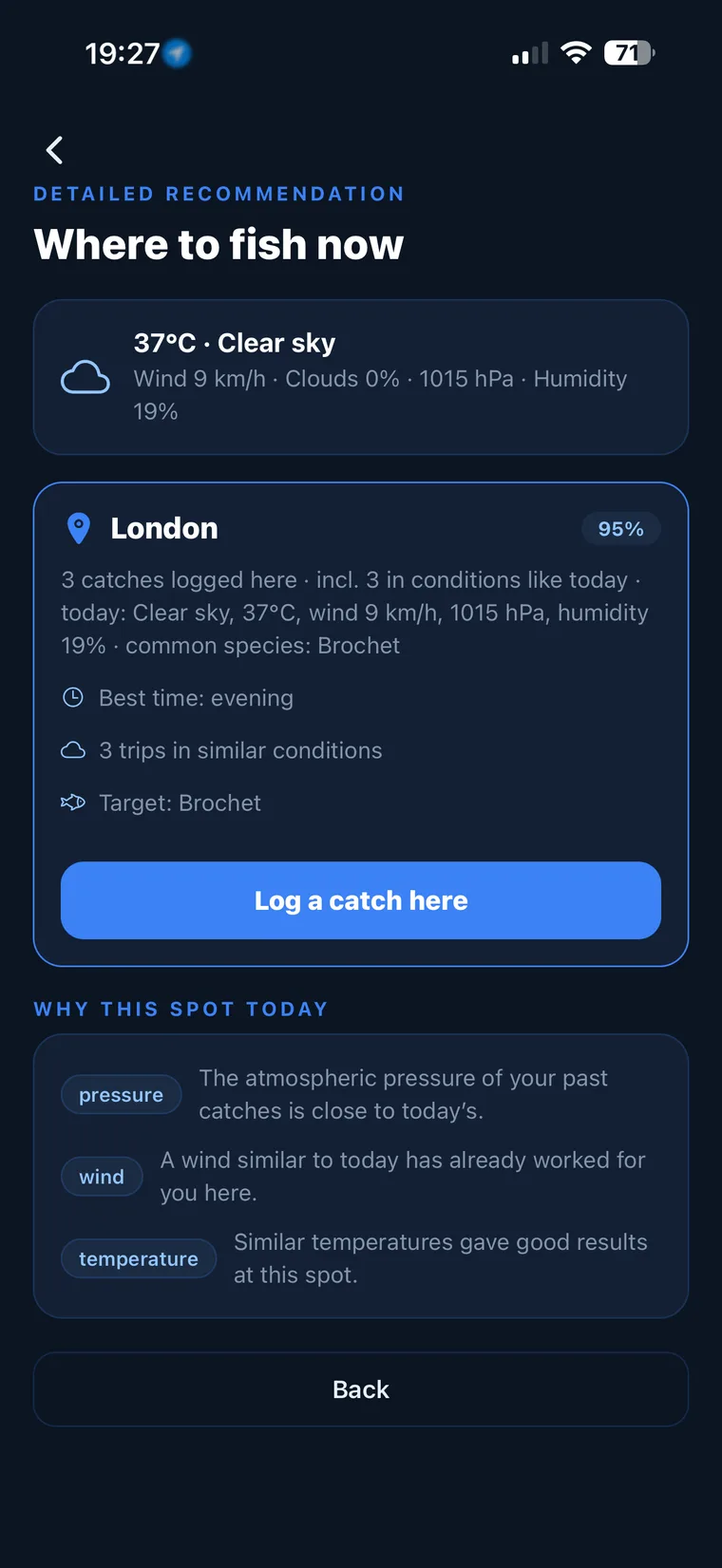
Not sure what to tie on?
Photograph your spot: CarnaFish reads the scene, cross-checks the conditions and gives you the zone, the lure and the retrieve. Free on iOS and Android.
Its window, and its off days
It is at its best:
- At dawn and dusk, from spring to late autumn, on bass of 40 to 55 cm feeding lightly.
- Over the first two or three hours of the flood, as water progressively covers a beach or a sandy foreshore.
- In calm estuaries and small harbours, where shallow water and a flat surface demand a discreet presentation.
- In a slight sea, with under a metre of swell.
It is unsuited, on the other hand:
- In a big sea and strong wind. Its moderate weight and fine action are no longer enough; you need a heavier, more demonstrative lure.
- On rocky mussel-covered flats. Two bare trebles on that ground means breakages on every cast.
- In a running tidal current. It is too light to hold its line in a fast run.
- On big bass feeding noisily: the size and the subtlety do not match what they are after at that moment.
Shores Pencil, Sugapen or Rock Walk
Three lures for the top layer of water, three situations that barely overlap.
The Bassday Sugapen works strictly on the surface, walking the dog automatically on a simple retrieve. It leaves a visible wake and suits short, sheltered spots. It is even more discreet, but it never goes down: if the bass are twenty centimetres lower, you are fishing over their heads.
The Shimano Coltsniper Rock Walk picks up exactly where the Shores Pencil stops: rough sea, wind, rocky flats covered at high water. It is heavier and firmer, built to keep working when the surface moves.
The Daiwa Current Master is reserved for tidal current lines at mid-tide, where the Shores Pencil simply drifts off.
So the Shores Pencil occupies a narrow but very common window: little water, calm sea, low light, and a twenty to forty centimetre layer to hold precisely. Our guide to lure fishing for sea bass sets out how to link these three families across one tide. And if you are unsure which zone to attack when you arrive on a beach, CarnaFish analyses a photo of the spot and answers.
Key takeaways
- Sinks at rest, rises to just under the surface as soon as you wind: depth is driven by speed.
- The wide roll produces flashes of flank, the best signal in low light.
- Recce the beach at low water, then follow the flood, moving every ten to fifteen metres.
- 0.10-0.14 mm braid and a 0.25-0.30 mm leader: fine tackle buys real metres with 10 g.
- Out of its depth in a big sea, over rock and in a running tidal current.
FAQ
How deep does the Shores Pencil work?
Between 10 and 40 cm depending on your retrieve speed: the slower you wind, the deeper it runs. At rest it sinks about thirty centimetres per second, which also lets you count it down over a hole or a channel.
When should I fish a bass beach with this lure?
Over the first two or three hours of the flood, at dawn or dusk for preference. Bass come in with the first few centimetres of water to pick off the prey the tide digs out, and they stay very high in the column.
What braid for a 10 g lure?
A fine braid, 0.10 to 0.14 mm, with a metre of 0.25 to 0.30 mm fluorocarbon leader. Anything heavier costs you several metres of distance and catches far more crosswind on an open beach.
How do I work it?
A slow, steady retrieve is enough in most cases: the lure rolls on its own. Add two sharp twitches as it passes over a gully or the edge of a rip, then pick the steady rhythm back up.
Is it suitable for rocky spots?
No, it is a lure for sand and calm water. On a flat covered in mussels and crevices, its bare trebles snag constantly and its fine leader wears through very fast; a heavier, better-armed stickbait is the one to use.
Which size should I choose?
The 7 cm on very calm water, in an estuary or for modest bass; the 9.5 cm when you need to cast further, in light wind or on an open beach. The bigger model's distance gain counts for more than the difference in silhouette.
The full sea bass lure guideSeason-by-season strategy: which family of lure, when, and why.Go from theory to fish
CarnaFish reads your spot from a photo and gives you the game plan: zone, lure, retrieve. Free on iOS and Android.