Illex Ninja Pintail: the soft plastic that does not vibrate, and why that is an asset
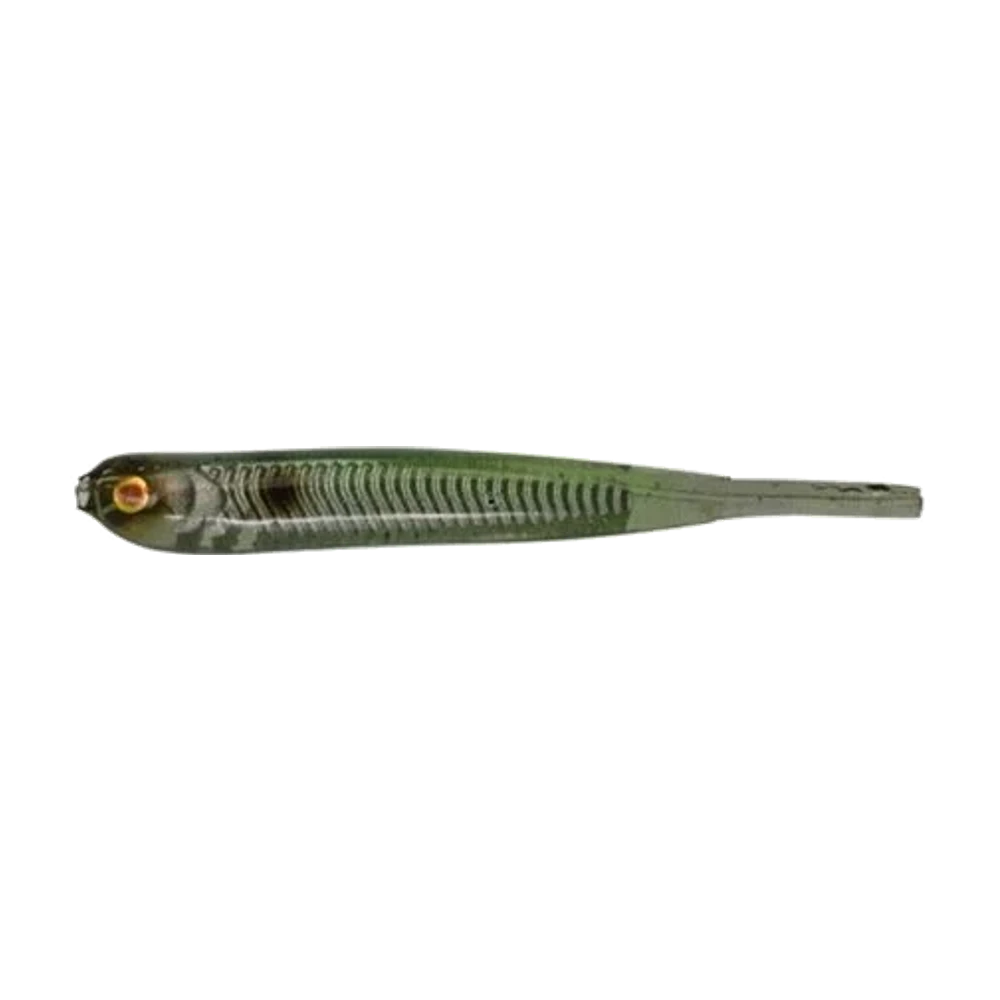
One lure, endless conditions. CarnaFish reads your spot from a photo so you are not just guessing.
You are fishing a gin-clear gravel pit in the middle of a summer afternoon. The perch are visible, they follow your shad right to your feet, they look at it, then they turn around. You slow down, you go lighter, you change colour: nothing. The fish is not afraid of the lure, it simply does not want it.
What is happening, nine times out of ten, is that your lure is doing too much. A cupped paddle beating on every centimetre travelled sends out a permanent, regular, mechanical signal. In clear water and under heavy pressure, a fish that sees everything has no reason to believe it.
The Ninja Pintail removes that signal entirely. Its tail is fine and tapered, with no paddle: it does not beat, it undulates. The lure has no vibration of its own. What looks like a weakness is in fact the operating principle.
A lure that does nothing by itself
That is the mental switch to accept. A paddle-tail shad works even if you wind it in mindlessly: the paddle does the job for you. The pintail does not.
With no input from you, it slides through the water like an inert piece of plastic. With the right input, it does three things no paddle can:
- It darts sideways. One twitch sends it twenty or thirty centimetres to the side, with no vibration, like a small fish dodging. That is a flight movement, not a swimming one.
- It stays alive at a dead stop. The fine tail keeps undulating for several seconds after the body has stopped, driven by the slightest current. That residual movement is what triggers the follower.
- It falls flat, slowly. On a light weight the drop is cushioned and horizontal, very different from the nose-down fall of a weighted shad.
Four rigs, four ways of fishing
| Rig | Weight | What you are fishing |
|---|---|---|
| Drop shot | 5 to 10 g sinker, 20-40 cm tag | Located, settled fish, vertical or short cast |
| Light jig head | 1.5 to 5 g | Margins, gentle slopes, darting action |
| Split shot | 2 to 4 g shot at 40 cm | Slow searching in very clear water |
| Ned rig | 2 to 5 g ned head | Hard bottom, apathetic fish, stand-up presentation |
The drop shot remains the reference rig: it holds the lure at a fixed height above the bottom and lets you make it undulate on the spot for thirty seconds without moving it a centimetre. On visible perch, that is unbeatable.
The light jig head is the searching rig: you cover ground while keeping a slow fall.
The retrieve: provoke, then wait
- Cast and let it drop on a semi-tight line, watching the line. The fall is slow and bites on it are frequent.
- Two short, sharp wrist twitches, rod tip down. The lure darts sideways.
- A dead stop of three to five seconds. Do not move. This is where the tail works on its own.
- Take up just the slack without moving the lure.
- Repeat, advancing barely a metre each cycle.
For zander in winter, slow down further: one twitch, then eight to ten seconds of stillness. For active perch in summer, you can link series of three faster twitches to force a reaction.
On the water: on a pintail the bite almost always comes within the two seconds following the stop, not during the twitch. Start the retrieve again straight after the dart and you remove the one phase where the fish makes up its mind. Count under your breath if you cannot hold the wait.
Line and rod matter as much as the lure
A lure with no vibration of its own sends no information back to your hand. Everything has to come from the line-and-rod combination.
Fine braid, 0.08 to 0.10 mm, with a fluorocarbon leader of 0.18 to 0.22 mm over a metre. The braid transmits the bite, the fluorocarbon supplies the discretion and takes the abrasion.
An L or ML rod with a sensitive tip, 2 to 2.30 m. You should see the tip load before you feel anything.
A hook matched to the finesse. On a drop shot, a straight single in size 1 or 2, nose-hooked. On a jig head, a fine-wire hook that does not distort the soft body.
And a practical note: this kind of slim soft plastic wears out quickly at the collar. A dot of glue on the jig head triples its life.
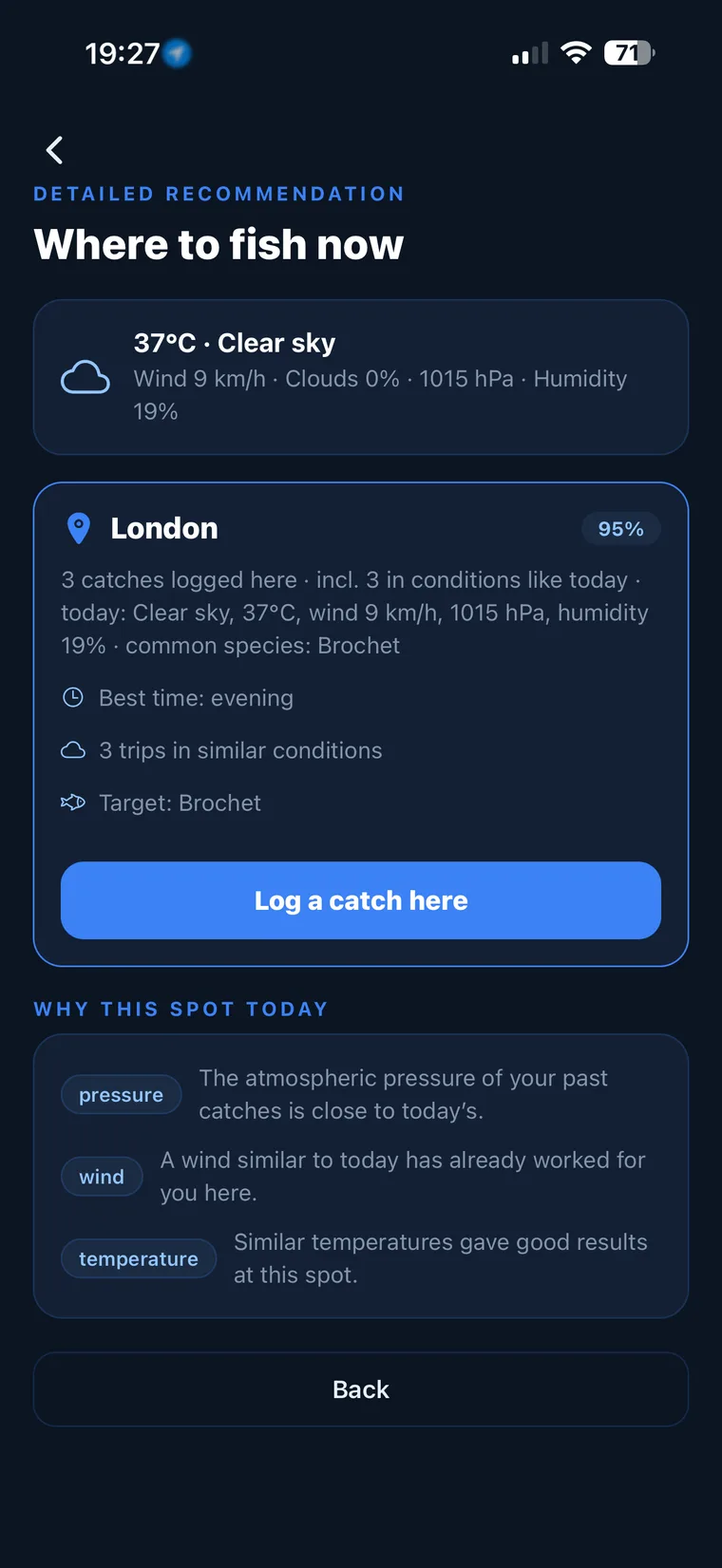
Not sure what to tie on?
Photograph your spot: CarnaFish reads the scene, cross-checks the conditions and gives you the zone, the lure and the retrieve. Free on iOS and Android.
Its windows, and its blind spots
Where it wins:
- Clear water and heavy fishing pressure, when everyone else is throwing paddles.
- Visible fish following without biting: the dart followed by the stop converts the follower.
- After a cold snap or a pressure change, when the fish turns apathetic.
- Precision fishing on a known spot, especially drop shot along a jetty or a drop-off.
Where not to tie it on:
- Stained or coloured water: with no vibration, the fish cannot locate it. That is a hard limit, not a nuance.
- Searching large areas: far too slow to sweep unfamiliar water.
- Strong current: the fine tail flattens out and the lure loses its undulation.
- Pike or big predators: the size and the material are not built for it.
Pintail or paddle-tail shad
A Keitech Shad Impact 3 or a Savage Gear Craft Shad have a tail that beats: they put out a signal, they fish on a simple straight retrieve, and they let you locate fish on water you do not know. In slightly stained water or on an active fish, they catch more, faster.
The Pintail comes afterwards. It is a second-pass lure: you found the zone with a paddle, the fish is there but refusing, and you switch register completely. The difference is not a matter of general finesse, it is an inversion of the principle — a lure that calls against a lure that reassures.
Our guide to lure fishing for perch explains how to chain those two approaches in one session. And if you are torn between a paddle and a pintail on arriving at a clear gravel pit, CarnaFish analyses a photo of the spot and answers.
Key takeaways
- Tapered tail with no paddle: no vibration of its own, and that is the principle, not a flaw.
- It does nothing by itself: all the action comes from your twitches, then from the residual undulation on the stop.
- The bite comes within two seconds of the stop, not during the twitch.
- Drop shot for settled fish, light jig head for slow searching.
- Unusable in stained water or strong current: there, a paddle takes over.
FAQ
Why a soft plastic with no paddle tail?
Because a tail beating constantly sends out a regular, mechanical signal that heavily fished clear-water fish eventually refuse. The pintail removes that signal and plays instead on the sideways dart and the undulation on the stop.
Which rig should I favour?
Drop shot to work a settled fish without moving the lure, a light 1.5 to 5 g jig head to search. The ned rig is a good alternative on hard bottom with apathetic fish.
Does it work in murky water?
No, that is its real limit. With no vibration, the fish cannot locate it beyond what it can see. As soon as visibility drops, go back to a paddle-tail shad or a vibrating lure.
When should you set the hook?
As soon as the rod tip loads or the line moves sideways during the stop phase. On a drop shot rig with a nose-hooked single, a firm sideways sweep is more effective than a vertical strike.
What line should I use?
Braid of 0.08 to 0.10 mm with a metre of fluorocarbon leader in 0.18 to 0.22 mm. The braid is essential: the lure sends nothing back, so the line transmits everything to you.
Does it catch zander?
Yes, especially in cold, clear water at a very slow rhythm: one twitch then eight to ten seconds of stillness. For zander, the larger sizes on a slightly heavier weight give better results.
The full perch lure guideSeason-by-season strategy: which family of lure, when, and why.Go from theory to fish
CarnaFish reads your spot from a photo and gives you the game plan: zone, lure, retrieve. Free on iOS and Android.