Deps DeathAdder: the soft plastic that works under jetties
This lure shines under specific conditions. CarnaFish tells you in 10 seconds if today is one of them.
The best fish in a developed lake are almost never reachable by casting straight out in front of you. They sit under the jetty, under the sailing club platform, under the moored dinghy, under the low branches of a willow touching the water. A metre and a half further out, in open water, there is nothing. The problem is not working out what they will eat: it is getting a lure in there at all.
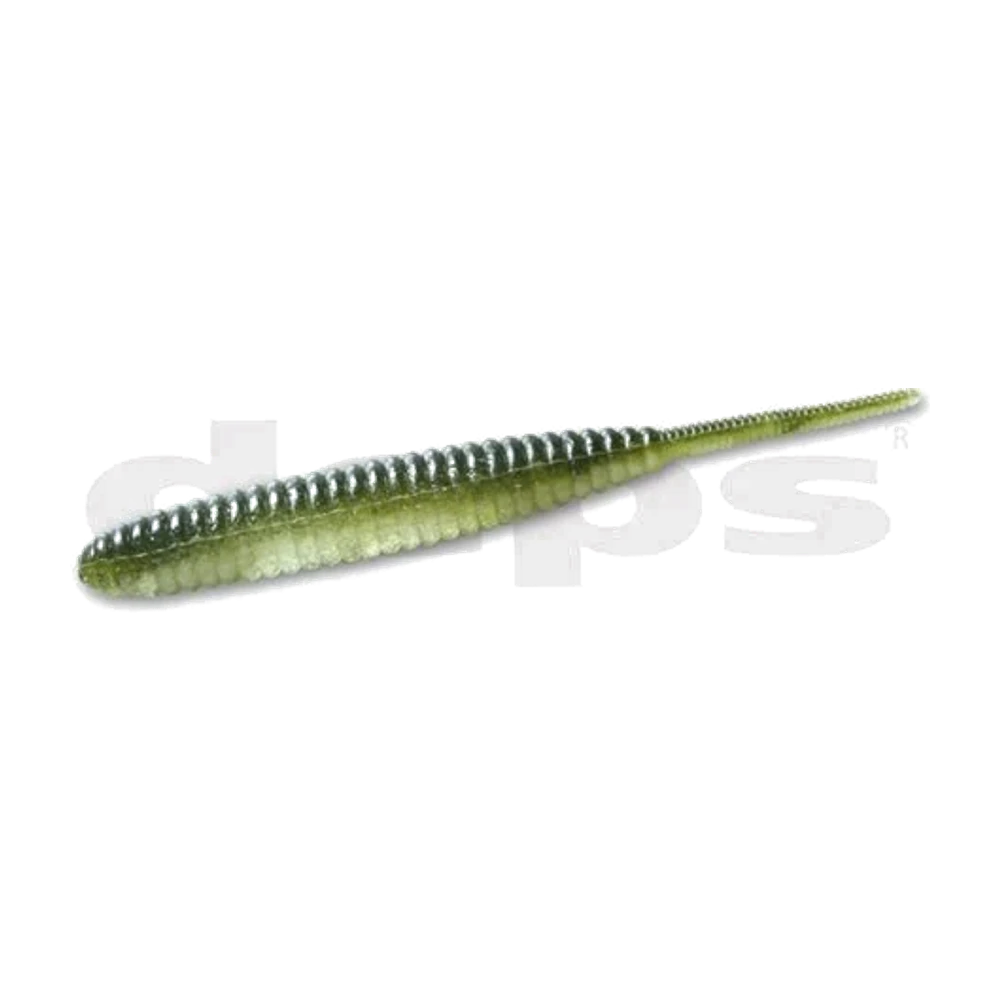
The DeathAdder is built for exactly that. Its flat, dense body has two properties that work together: it skips across the water like a flat stone when you cast it low under an obstacle, and once it gets there, it falls slowly, rocking from side to side, without you doing anything at all. The first gets you access, the second gets you the bite.
A flat body, two consequences
The flattened section of this lure is not a styling choice. It explains everything about how it behaves.
- On the cast, the flat face bounces. A round-sectioned lure digs in on first contact with the water. A flat body thrown low skips two, three, sometimes five times, and carries three metres under a piece of structure you cannot even see into.
- On the drop, that same face brakes. The lure does not fall, it glides and tips alternately to one side then the other, in a slow rocking motion. Weightless, the descent takes several seconds per metre.
- The thinner rear section follows a beat late. It waves on its own with every tip, adding a continuous micro-movement throughout the fall.
It is the combination that matters. A lure that drops fast under a jetty passes in front of the fish in a second. The DeathAdder stays in its field of view long enough for the decision to happen — and for a bass sitting in the shade, that decision often takes five to ten seconds.
Skipping: technique and setup
The low skipping cast comes together in one session if you get three things right.
- Cast underhand, arm low, on a flat trajectory. The rod works horizontally, never above shoulder height.
- Aim at the water a metre short of the cover, not at the cover itself. You want the first bounce to happen out in the open.
- Feather the spool lightly with thumb or finger on the last bounce, so the lure enters the water without a splash.
Gear: fine braid, around 0.12 mm, with a 0.25 mm fluorocarbon leader. A medium-length rod, around 2 m, is easier to handle than a long one for a low cast under a low obstacle.
On the water: after skipping, do not take up the slack straight away. Leave the line completely slack for the whole descent and watch the line, not the lure. In this kind of fishing you see the bite before you feel it: the line moves sideways or simply stops going down. Tighten up and you turn a rocking descent into a pendulum swinging back towards you, and you lose most of the movement.
Three rigs, three situations
| Rig | Behaviour | When to use it |
|---|---|---|
| Weightless Texas | Slowest, flattest descent, weedless | Under jetties, over weed, shallow water |
| Neko (nail in the head) | Head-down descent, tail quivering upwards | Hard bottom, 2 to 3 m, settled fish |
| Wacky (hooked in the middle) | Flat descent, both ends folding | Very wary fish, clear water, shallow |
| Jig trailer | Adds glide to a jig on the drop | Timber, cluttered margins |
Our wacky rig page and the Texas rig page cover how to set each one up. Two points specific to this lure: on a weightless Texas, pick a wide-gap hook and set it in the front third so you do not kill the rocking action; on a wacky, an O-ring is essential, because the body is dense and tears quickly without protection.
For perch, drop one size and switch to neko with a light nail: the movement is livelier, the profile more discreet, and the whole thing stays castable on light gear.
Where it excels, and where it is useless
Its windows:
- Man-made structure — jetties, hulls, pilings, platforms — where access matters more than anything else.
- Shaded margins in summer, when bass glue themselves to cover and refuse to come out.
- Educated fish in clear water, where a lure that does almost nothing works better than one that thrashes about.
It is useless in three situations. Covering water: three casts an hour does not fill a net. In strong wind, where you can no longer see the line and visual bite detection disappears. Beyond 3 to 4 m, where the sink time gets so long it is no longer workable — a weighted rig or a drop shot is the better answer there.
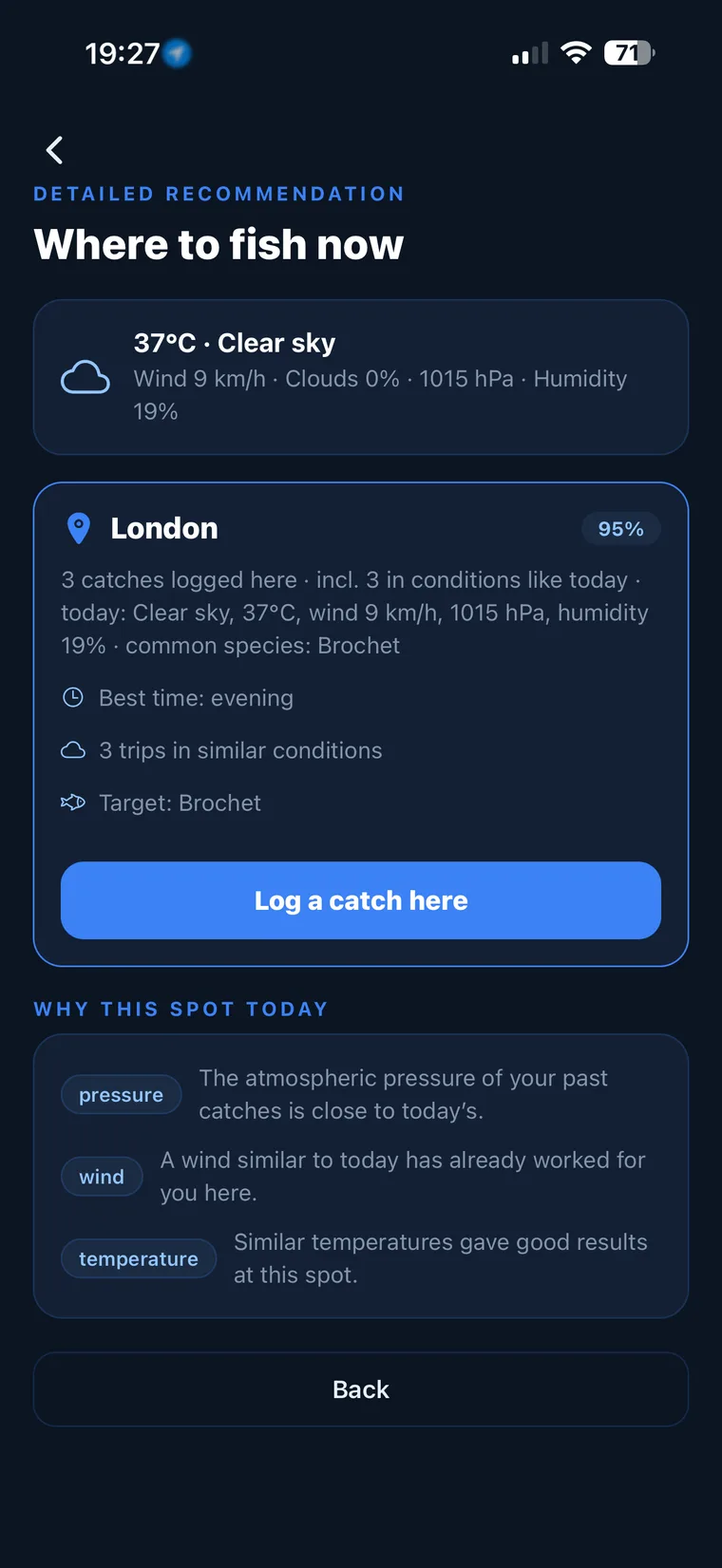
Not sure what to tie on?
Photograph your spot: CarnaFish reads the scene, cross-checks the conditions and gives you the zone, the lure and the retrieve. Free on iOS and Android.
Colours
- Clear water, full sun: translucent with flake, or light natural. The lure is seen close up and for a long time, so it has to stay believable.
- Under dark structure: a high-contrast silhouette, dark brown or black. Seen backlit from the shade, it is the outline that counts.
- Lightly stained water: a natural body with a bright tail, which gives the fish a point to fix on during the rocking fall.
DeathAdder or a classic stick
The Yamamoto Senko 5 is the benchmark of the category, with both ends quivering on the drop and a density that gives it a slightly faster, straighter fall. It is the lure of last resort, the one that catches everywhere and demands no technique at all.
The DeathAdder stands apart on two concrete points. Its flat body skips distinctly better on a low cast: you can measure it, you get under cover where a round stick digs in on the first bounce. And its descent is flatter and slower, with a pronounced sideways tip rather than a quiver on the spot.
In practice: if you are fishing open water or a clear bank, a classic stick does the job perfectly well. If the point is to reach a fish under low structure and keep it in front of the lure for several seconds, the DeathAdder takes the lead. Our beginner's guide to bass fishing sets out the order in which to attack a developed lake. And if you are unsure which rig to tie on facing a cluttered spot, CarnaFish analyses a photo of the spot and answers.
Key takeaways
- The flat body does two jobs: it skips on a low cast, then it brakes the descent.
- All the action is in the fall. Do not retrieve, let it drop and watch the line.
- Slack line is mandatory: a tight line turns the rocking into a pendulum and kills the movement.
- Weightless Texas under structure, neko over hard bottom, wacky on very wary fish.
- Not suited to covering water fast, to strong wind, or to depths beyond 3 to 4 m.
FAQ
What is skipping with a soft plastic?
It is a low cast that bounces the lure across the water like a flat stone, to send it under a jetty, a boat or low branches. A flat, dense body like the DeathAdder's skips far better than a round one.
Does the DeathAdder need weight?
Not under shallow structure: the slow weightless descent is precisely the point of it. To fish 2 to 3 m over hard bottom, switch to a neko rig with a light nail rather than adding a sinker at the head of the line.
How do you detect bites on the drop?
Visually. Keep the line slack and watch it: if it slides off to one side or suddenly stops going down, a fish has taken. At that point, reel up the slack and set the hook sideways.
Which size should I choose for perch?
The smallest version, rigged neko with a light nail. The reduced profile and livelier movement suit perch better, and the whole thing stays castable on light gear.
Do you need an O-ring for a wacky rig?
Yes. The body is dense and tears quickly if the hook goes straight through the plastic. An O-ring dramatically extends how long a lure lasts on this rig.
How does it differ from a Senko?
The Senko quivers at both ends and falls slightly faster and straighter. The DeathAdder skips better on a low cast and tips sideways during a slower descent, which makes it more effective under low structure.
The full bass lure guideSeason-by-season strategy: which family of lure, when, and why.Go from theory to fish
CarnaFish reads your spot from a photo and gives you the game plan: zone, lure, retrieve. Free on iOS and Android.