Deps Slide Swimmer 175: the glide bait you can fish on a normal rod
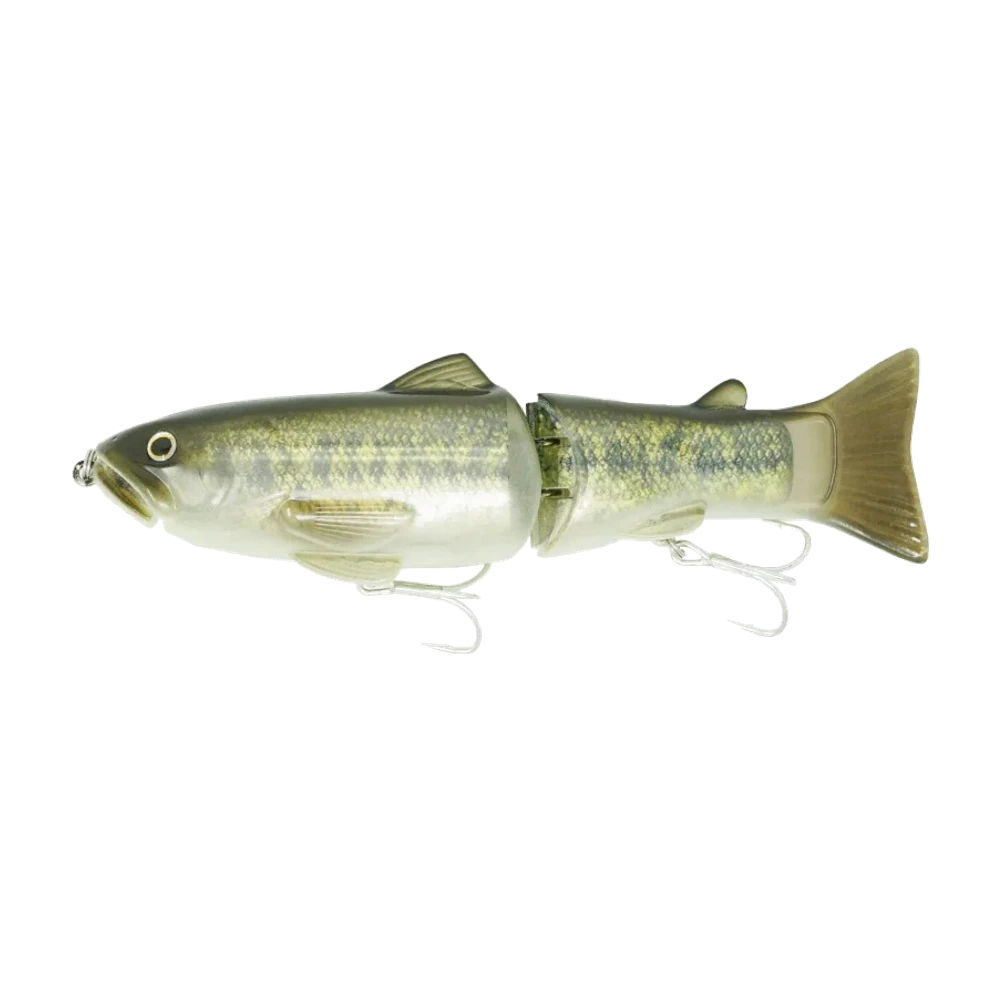
One lure, endless conditions. CarnaFish reads your spot from a photo so you are not just guessing.
The Slide Swimmer 250 has one drawback nobody argues with: it demands gear most anglers do not own and will not buy for three outings a year. A rod rated to 100 g, a reel to match, an arm that can absorb two hundred casts with a 200 g lure — that is a commitment, not a tackle-box choice.
The 175 exists to remove that barrier. It keeps the same gliding mechanics in a size that works on an ordinary heavy casting rod, the one you already use for big soft plastics for pike. The cast becomes repeatable across a full day, and the range of fishable spots widens at a stroke.
This page does not re-explain how a glide bait works — the 250 covers that. It deals only with what the smaller size changes in practice.
The gear threshold, and why it matters
Between 250 mm and 175 mm the difference is not cosmetic: it moves the lure from one equipment category into another.
| Slide Swimmer 250 | Slide Swimmer 175 | |
|---|---|---|
| Rod power | Extra-heavy, 80-200 g | Heavy, 30-80 g |
| Braid | 0.40-0.50 mm minimum | 0.30-0.40 mm |
| Leader | 0.70-0.90 mm | 0.50-0.60 mm |
| Casts in a day | A few dozen | Several hundred |
| Target species | Sizeable pike | Bass and pike of all sizes |
The practical consequence is simple: with the 175 you do not have to build your day around the lure. You tie it on when the situation calls for it, you put it away, you go back to your usual fishing. With the 250 you set up a dedicated outfit and fish the big lure or nothing.
A second, less obvious consequence: fatigue decides the quality of the retrieve. A badly worked glide bait does not glide, it pulls straight. After an hour with a lure that is too heavy for your outfit, your action collapses and the lure stops doing the one thing you bought it for. The 175 is still being worked properly at dusk.
Bass come into range
That is the clearest change. A 250 mm glide bait is out of reach for a European bass in the vast majority of waters. At 175 mm the lure is still substantial but becomes credible prey for an adult bass, and above all it becomes a trigger for the fish that follow without eating.
Two uses work particularly well on bass:
- During the spawn and just after, as an irritant rather than a meal. The bass is not eating the lure, it is moving it away. The hits are violent and often badly placed: keep your trebles sharp.
- On big autumn fish that trail bait shoals in open water. The glide bait is one of the very few lures that will bring them ten metres to take a look.
For pike, the 175 does not replace the 250 on waters holding very big fish, but it covers far better the lakes where the population is dominated by 60 to 90 cm fish — which is to say most waters.
Smaller spots become fishable
A 250 mm glide bait needs room: it slides wide, it wants several metres of clearance either side to express its action, and it needs a long run for the fish to spot it, follow it and make up its mind.
The 175 slides less wide. That is a loss on big water, and a gain everywhere else:
- Small ponds and gravel pits under two hectares, where the 250 is out of the productive zone in three pulls.
- Backwaters and canals, where the available width is ten to fifteen metres.
- Weed bed edges, tracking a metre off the vegetation without the lure diving into it on every glide.
- Under jetties and between moored boats, on short, controlled pulls.
On the water: in a tight spot, do not chase the maximum glide. Halve the length of your pulls and increase their frequency. You get a movement in tight S shapes, almost on the spot, that keeps the lure in the productive zone three times longer. That rhythm, not the long glide, is what catches fish on small waters.
The retrieve, adjusted to the size
- Cast and let the lure settle for a second after it lands, long enough for both segments to line up.
- A soft pull of thirty to forty centimetres, rod low, then take up the slack on the handle. The lure sets off to one side.
- Do it again straight away: the second pull sends it the other way. It is the sequence that creates the S, not the isolated pull.
- Every four or five pulls, hold a two-second pause. On the sinking version the lure settles flat; on the floater it rises slowly, rolling as it goes.
- At the end of the retrieve, put in two quick pulls then stop dead. Followers overwhelmingly commit on that stop.
The commonest mistake with this size is working it like the 250, with big metre-long pulls. The lure is lighter: it breaks out of its glide and slews sideways. Cut the amplitude, keep the rhythm.
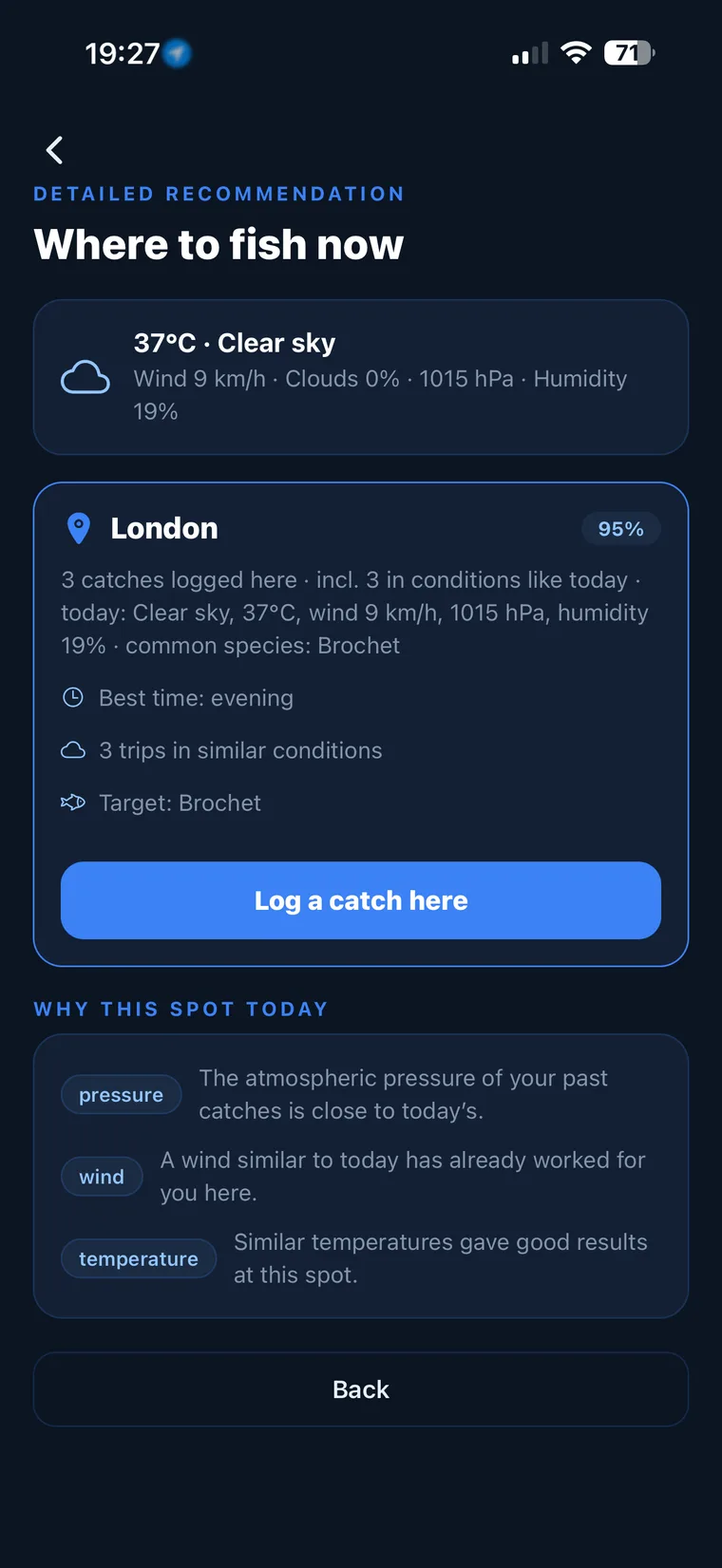
Not sure what to tie on?
Photograph your spot: CarnaFish reads the scene, cross-checks the conditions and gives you the zone, the lure and the retrieve. Free on iOS and Android.
Where it falls short
Two limits deserve honesty. On very big waters holding pike over a metre, the 175 is a compromise: it has neither the volume nor the signal of the big version to pull a fish from a distance. And in very cold water, in midwinter, the gliding rhythm is still too fast for fish that have stopped moving — a slowly worked soft plastic will do better.
Nor is it an efficient searching lure in terms of water covered: you move slowly, and a full day on a glide bait often ends with very few bites, but good fish. That is a deliberate choice, not an accident.
175, 250, or another glide bait
The Slide Swimmer 250 keeps the advantage wherever sheer volume is the deciding factor: big waters, fish over a metre, the hunt for an exceptional specimen. The 175 takes the lead everywhere else, quite simply because you will actually fish it instead of leaving it in the box.
If you want a first taste of the family without investing in a dedicated outfit, the Westin Swim Glidebait is a more accessible entry point, with a less pronounced glide but a more forgiving action. The Gan Craft Jointed Claw plays a slower, more gliding game.
Our beginner's guide to bass fishing places the glide bait among the lures used to hunt big fish. And if you are torn between long glides and tight S shapes when you arrive at a narrow spot, CarnaFish analyses a photo of the spot and answers.
Key takeaways
- The 175 works on a heavy casting rod rated 30-80 g: that is what changes everything compared with the 250.
- Several hundred casts a day remain possible, so the retrieve does not degrade.
- Bass become a realistic target, as an irritant in spring and on big autumn fish.
- In a tight spot, halve your pulls to get tight S shapes rather than a long glide.
- It falls short on very big waters holding big pike, and in midwinter.
FAQ
What gear do you need for the Deps Slide Swimmer 175?
A heavy casting rod rated 30 to 80 g, 0.30 to 0.40 mm braid and a 0.50 to 0.60 mm fluorocarbon leader are enough. That is an outfit many anglers already own for big soft plastics for pike.
Does the 175 really catch bass?
Yes, unlike the big version. At 17.5 cm the lure is still substantial but becomes credible for an adult bass, and it also works very well as an irritant in spring, when the hits have nothing to do with feeding.
Should you work it like the 250?
No, and that is the commonest mistake. The 175 is lighter: big metre-long pulls break it out of its glide. Cut the amplitude to thirty or forty centimetres and keep a steady rhythm.
Can you fish it on a small water?
Yes, and that is exactly one of its advantages over the big version. On under two hectares, in a backwater or a canal, shorten your pulls to get a movement in tight S shapes that keeps the lure in the productive zone.
Floating or sinking version?
The floater is more forgiving and lets you fish above weed and obstacles, rolling back up on the pauses. The sinker gives you access to a lower layer of water and a flat, highly triggering descent, but it snags more.
How many bites should you expect in a day?
Few, and you have to accept that. A glide bait covers water slowly and selects fish: a handful of bites across a whole day is a normal result, with a distinctly better average size in return.
The full bass lure guideSeason-by-season strategy: which family of lure, when, and why.Go from theory to fish
CarnaFish reads your spot from a photo and gives you the game plan: zone, lure, retrieve. Free on iOS and Android.