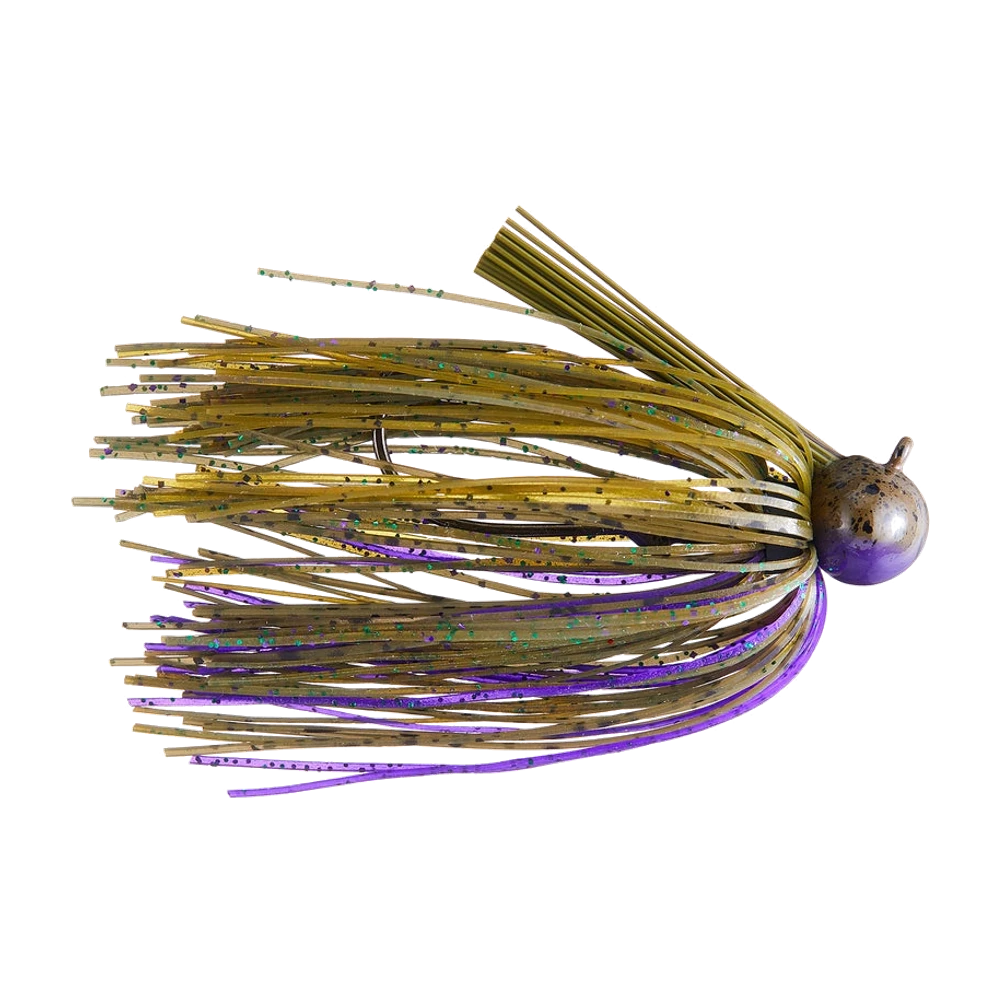
Dirty Jigs Tour Level Finesse Football Jig: the hard-bottom jig
This lure shines under specific conditions. CarnaFish tells you in 10 seconds if today is one of them.
Clear water, 7 m (23 ft) down, a gravel flat tipping over into a break. That is the kind of spot where a bass sees the lure coming from a long way off and turns down anything that looks approximate, without even giving you a follow to learn from. The standard answer these days is a highly detailed soft plastic on a finesse rig. The Tour Level Finesse Football Jig comes at it from the other side: keep the jig — the constant bottom contact, the ability to hold in wind, the weight that tells you what you are dragging over — but slim it down, with a skirt you tune yourself before you ever cast.
What Dirty Jigs states, and what it leaves out
The manufacturer's copy is short and boils down to four verifiable points. The head carries a premium powder coat finish, chosen above all for realistic looks. The skirt ships full length, meaning untrimmed, so you decide on the final profile. The hook is a 60-degree flat line-eye Gamakatsu 4/0 jig hook. And the intended use is spelled out: clear, deep water, where a fish has all the time it needs to study a bait before committing.
What is missing matters just as much. Dirty Jigs publishes no length, no weight and no weight range for this model, and says nothing about the exact head geometry. So you will not read a confident 3/8 oz or 1/2 oz here, because no source supports it. Read the weight off the package when you buy: that number, and nothing else, sets your fall rate, the line diameter you can get away with and the rod power you need. A bottom jig whose weight you do not know is a jig you are fishing blind.
One more thing sits in the dealer's note: Dirty Jigs is moving from a two-tone painted head to a solid one, and both run side by side in stock until the older ones sell through. You may therefore receive either paint scheme for the same color code. That is a production transition, not a defect.
The detail that matters most on this jig is neither the paint nor the skirt: it is the hook. A Gamakatsu 4/0 with a flat line eye means heavy wire and a point that takes several fish without opening up. On a bottom presentation at seven or eight metres, where the hookset has to travel through a lot of line before it reaches the fish, that is exactly what you want.
A full-length skirt changes the way you fish it
Plenty of jigs arrive with a skirt already trimmed at the factory to a middling length that suits everyone roughly and nobody exactly. Here the strands come whole. That is a genuine tuning parameter, not a cosmetic detail, because the skirt does two jobs: it sets the apparent bulk of the lure, and it slows the fall by flaring like a parachute.
A full skirt gives you a wide profile, a slowed descent and a lot of movement at rest — every bit of current works the strands while the jig itself does not move an inch. That is what you want on a holding, inactive fish you need to talk into biting rather than startle. A skirt cut short at the front, the profile usually called a spider cut, clears the head, speeds up the fall and tightens the silhouette. You gain apparent finesse and search speed, you give up some of that passive movement.
How to trim without ruining the skirt
Trim dry, with the skirt dry and fanned out, using straight, genuinely sharp scissors. Always cut less than you think you need: you can take another millimetre off, you cannot glue one back on. Start with the front strands, the ones pointing toward the line eye, and let the rear strands run well past the hook bend — they are what extends the silhouette and what soft bites land on. A reliable reference point is to cut the front strands level with the hook bend, then dunk the jig in a bucket and look at it flared before touching it again.
Working it: the jig earns its keep while stopped
The temptation with a bottom jig is to retrieve it. That is the mistake half of all first-time users make. Cast, let it drop on a controlled slack line — line slightly tight, rod tip following it down — and watch your line as much as your tip: a good share of your bites comes on that initial fall, and shows up as line moving sideways or stopping too early.
Once it is down, you work in short, slow drags, the jig scraping the substrate over a few dozen centimetres, then you give line back and wait. Two, three, sometimes five seconds. That pause is when the skirt flares, when the trailer resettles and when the bass makes up its mind. In clear deep water, being too slow is almost never the error.
The trailer is not an accessory: it sets the fall rate as much as the profile. A craw with big flat claws such as the Strike King Rage Craw slows the drop noticeably and adds kick, which pays in warm water on active fish. A tighter, quieter body like the Zoom Z Craw lets the jig fall straighter and suits cold water and sluggish fish better.
The classic mistake
Pairing this jig with too stiff an outfit. Because it is sold under a finesse label but carries a heavy-wire hook, people hesitate between two worlds. Lean toward sensitivity: a medium-heavy rod with a slightly forgiving tip, thin braid and a 25-30 lb fluorocarbon leader give you both bottom feel and the backbone to drive a 4/0 at seven metres.
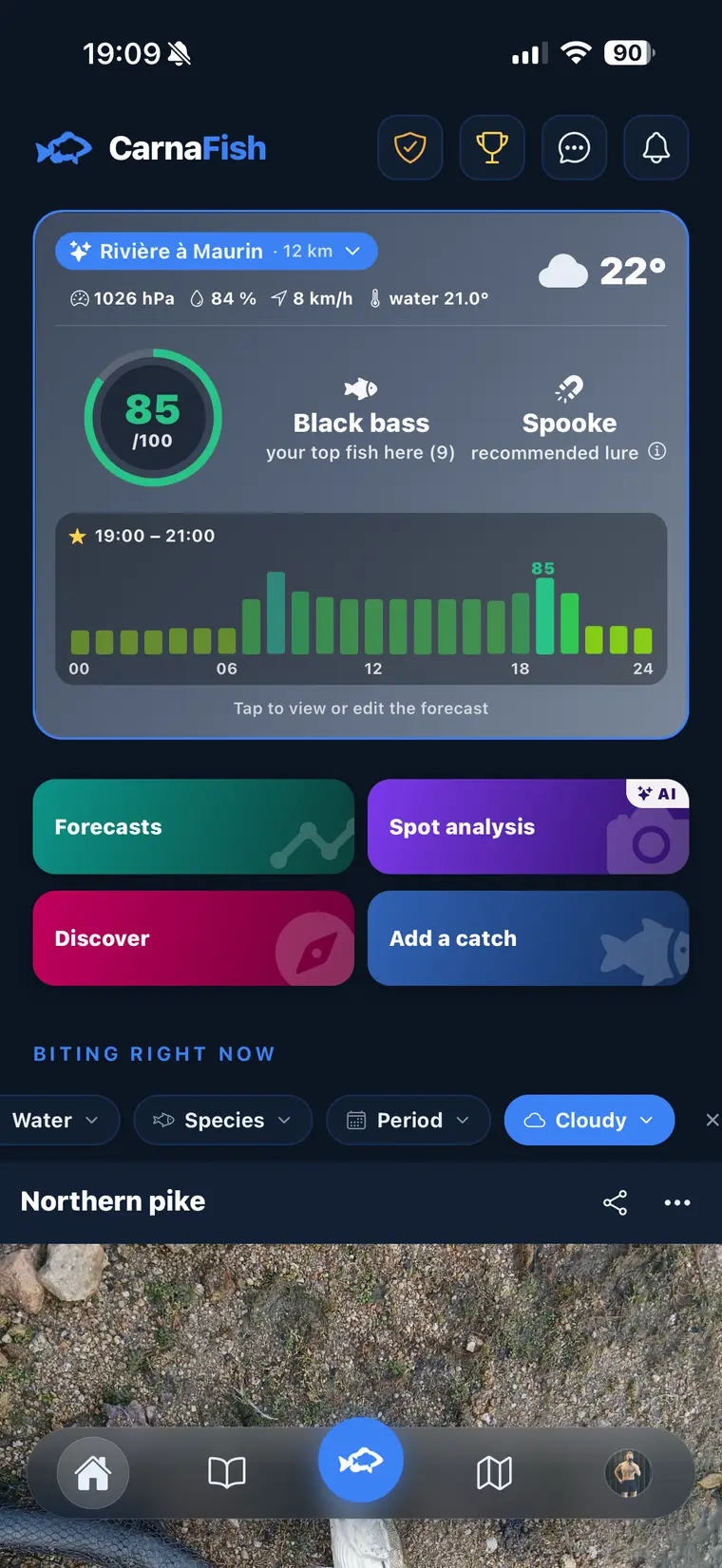
Not sure what to tie on?
Photograph your spot: CarnaFish reads the scene, cross-checks the conditions and gives you the zone, the lure and the retrieve. Free on iOS and Android.
Colors by water clarity
- Clear water: the color in the photo, a brown-green and purple mix in the peanut butter and jelly family, stays the safe pick over gravel and rock — it reads as a crawfish without ever standing out against the substrate.
- Lightly stained water: a straight green pumpkin, possibly lifted by an orange-clawed trailer, keeps a readable silhouette without going fluorescent.
- Dark water or low light: black and blue, which you do not really see but which cuts a clean outline against whatever light makes it down there.
A finesse jig alongside the power jigs
This model is not doing the same job as a flipping jig built to drag a fish out of a brush pile. It will not replace a Dirty Jigs Luke Clausen Compact Pitchin' Jig either, which is designed to slip into cover. Its place is elsewhere: hard, open bottom, breaks, rock flats, wherever discretion counts for more than the ability to penetrate thick stuff. If you want a close neighbour with a published weight, the Strike King Tungsten Football Jig does the same work with figures on the pack.
The best jig in the world will never tell you where the hard bottom it needs to land on actually is. That is exactly what CarnaFish does: one photo of the spot, and the AI suggests the zone, the depth to target and the presentation that fits the day's conditions. To lay the groundwork on tackle and on the classic spot types before you commit to bottom jigs, our beginner's guide to bass fishing is the right place to start.
Key takeaways
- Dirty Jigs publishes neither length nor weight for this model: read the package before buying, because the weight drives everything else.
- The skirt arrives full length and gets trimmed on demand, from a wide profile that slows the fall to a spider cut that drops straight.
- The 60-degree flat line-eye Gamakatsu 4/0 hook is the real technical argument here, and it needs an outfit that can actually drive it at depth.
- Most bites come on the fall and during the pauses, not during the drag: watch your line.
FAQ
What weight should I pick?
The manufacturer publishes no weight range, so you have to go by the package of the jig you are buying. In practice, for bottom fishing in clear water between five and ten metres, you want the lightest head that still lets you feel contact and hold position against wind and drift.
Do I have to trim the skirt before fishing?
No, nothing forces you to: a full-length skirt works very well on inactive fish because it slows the fall and keeps moving on its own at rest. Trim it only when you want a slimmer silhouette and a faster drop, and always cut less than you planned.
Why do two jigs in the same color have different heads?
Because Dirty Jigs is replacing the two-tone head paint with a solid finish, and both versions sit in stock during the changeover. Both match the color you ordered; only the head finish differs.
Which trailer should I use?
A craw or a chunk, with the choice driven by fall rate: broad flat claws to slow things down and add movement in warm water, a compact body with thin appendages for a straight drop in cold water. Change trailers before you change skirt colors, the effect on your bite count is far more obvious.
Does this jig work for pike or zander?
It is a bass jig, and both its hardware and its profile say so. A zander sitting on hard bottom may well take it, but there are far better suited lures for that species. For pike, the lack of a wire leader on this kind of finesse setup makes it a gamble.
The full bass lure guideSeason-by-season strategy: which family of lure, when, and why.Go from theory to fish
CarnaFish reads your spot from a photo and gives you the game plan: zone, lure, retrieve. Free on iOS and Android.