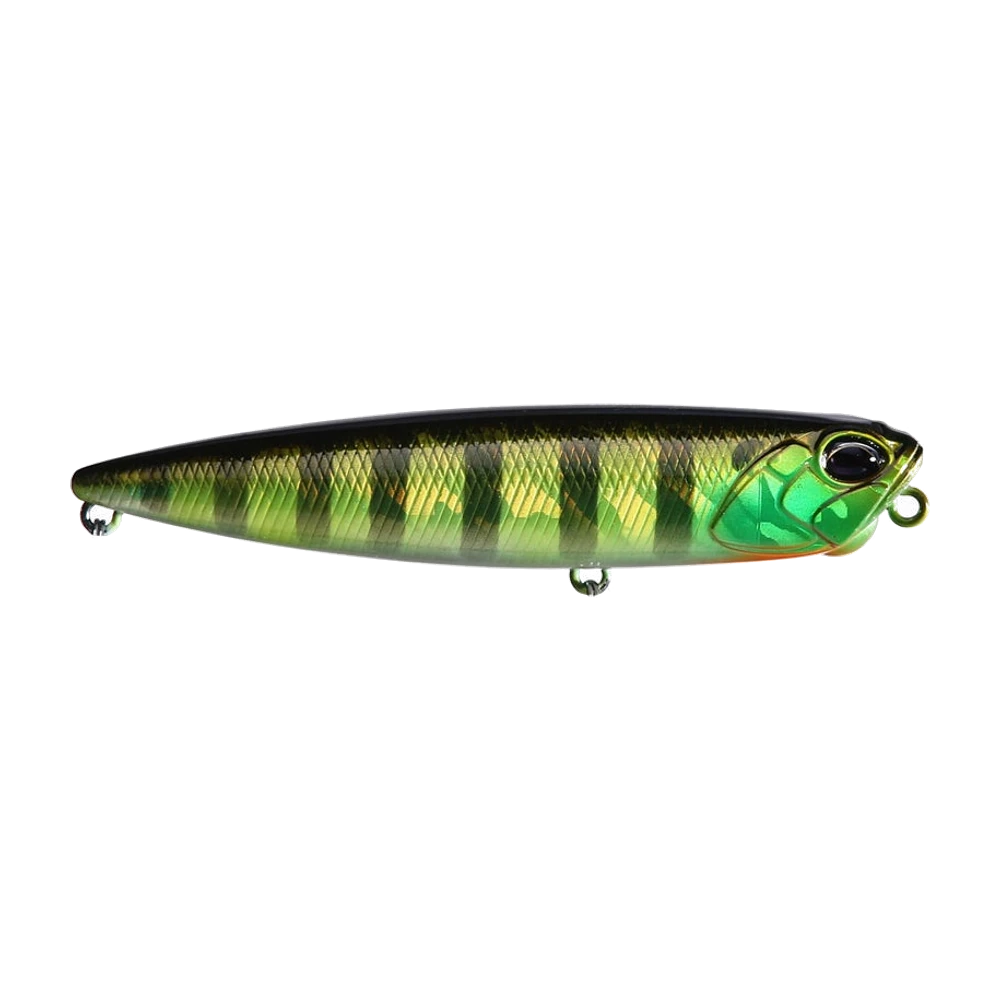
DUO Realis Pencil: the walking bait whose knock triggers the strike
One lure, endless conditions. CarnaFish reads your spot from a photo so you are not just guessing.
Walking the dog has a reputation as a hard technique, reserved for anglers who've already got the wrist action down. The Realis Pencil doesn't make the technique easier by itself, but it makes it more forgiving: its internal sound system helps you feel the right tempo even before the visual swim looks perfect.
The Pencil lineup at a glance
DUO offers the Pencil in several sizes, each with a fairly distinct role:
- 65 mm / 2.5 in (5.5 g): a finesse size, for bass in clear water or heavily pressured spots.
- 85 mm / 3.3 in (9.7 g): versatile, a good balance of casting distance and subtlety.
- 100 mm / 4 in (14.3 g): the reference size, covering the most ground for both pike and bass.
- 110 and 130 mm / 4.3-5.1 in (21-31.6 g): reserved for big fish and long casts, especially pike on large bodies of water.
The double knock system: more than a gimmick
Inside the body, a free-moving weight travels through a sound chamber and strikes a second, fixed weight on every snap. That double contact produces a sharp, high-pitched clack, quite different from the dull thud of a standard hard bait. It's not just a marketing line — that sound also helps the angler feel through the rod whether the snap was sharp enough, a genuinely useful cue for building the technique.
Walking the dog, broken down
- Starting position: rod tip low, pointed at the water, with slack line between snaps.
- The snap: a small, sharp wrist flick, not a big arm movement, immediately followed by slack in the line.
- The chain: each snap should land while the lure is still turning from the previous one, keeping a continuous zigzag rather than isolated jerks.
Field rule: if your Pencil starts swimming straight after a few metres, you're waiting too long between snaps — tighten the rhythm rather than snapping harder.
Matching size to species and spot
For bass, the 65 or 85 mm sizes are plenty and allow a snappier, tighter walk. For pike, the 100 mm is the logical starting point; step up to 110 or 130 mm on waters known for big fish, where a bulkier silhouette naturally selects for larger, more interested predators.
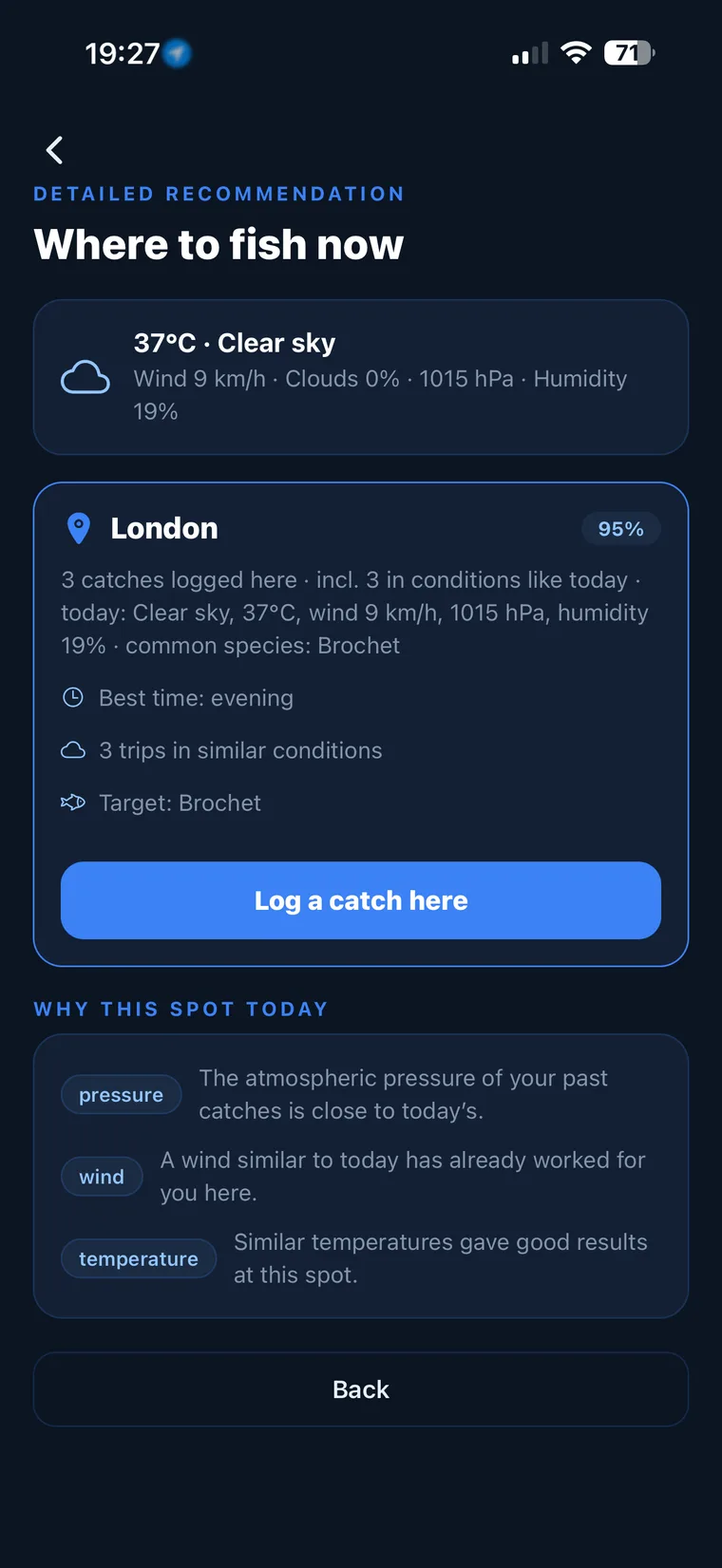
Not sure what to tie on?
Photograph your spot: CarnaFish reads the scene, cross-checks the conditions and gives you the zone, the lure and the retrieve. Free on iOS and Android.
Rhythm changes with the season
In cold water, slow down noticeably: spaced-out snaps, a slow walk with real pauses between series. In warmer water, tighten the rhythm for a fast, continuous zigzag that better matches how actively fish are willing to chase.
Colour by water clarity
In clear water, a natural matte finish (roach, ayu) is enough — the silhouette and the double knock's sound do most of the work. In stained water, a fluorescent or high-contrast tone helps keep the lure visible and increases the odds a fish spots it before even hearing it.
What the Pencil doesn't do
It's a strictly surface lure: once fish stop looking up, neither rhythm nor colour will change much. That's when you need something working lower, like a Sebile Magic Swimmer 128 just under the surface or a Salmo Slider gliding sideways below it. Likewise, over heavy cover its two exposed treble hooks snag fast — a Whopper Plopper worked in a straight line above the obstacles is usually the better call.
Whether it's actually a topwater kind of day is the real question before tying on a stickbait — exactly what CarnaFish helps answer by reading a photo of your spot and handing you a matching zone and technique. The pike lure guide covers the full season-by-season strategy in more depth.
FAQ
What size DUO Realis Pencil should you pick for pike?
The 100 mm is the reference size, covering the widest range of situations. Step up to 110 or 130 mm on waters known for big fish, where a bulkier silhouette selects for larger predators.
How do you properly walk the dog with a stickbait?
With small, sharp wrist flicks followed by slack in the line, chained together while the lure is still turning from the previous snap. The motion comes from the wrist, not the arm.
What does the Realis Pencil's double knock system do?
A free-moving weight strikes a fixed weight on every snap, producing a sharp clack that helps attract fish from a distance and gives the angler an audible cue on how sharp the snap was.
Does the Realis Pencil work for bass?
Yes, particularly in the 65 and 85 mm sizes, which are more discreet and suited to a snappier walk on heavily pressured spots or in clear water.
Why does my Pencil swim straight instead of zigzagging?
Almost always because too much time passes between snaps, letting the lure settle before the next one. Tighten the rhythm rather than snapping harder each time.
What retrieve rhythm works in cold water?
Slow down noticeably: space out the snaps and add real pauses between series, since fish in cold water aren't willing to chase a lure that's too energetic.
The full pike lure guideSeason-by-season strategy: which family of lure, when, and why.Go from theory to fish
CarnaFish reads your spot from a photo and gives you the game plan: zone, lure, retrieve. Free on iOS and Android.