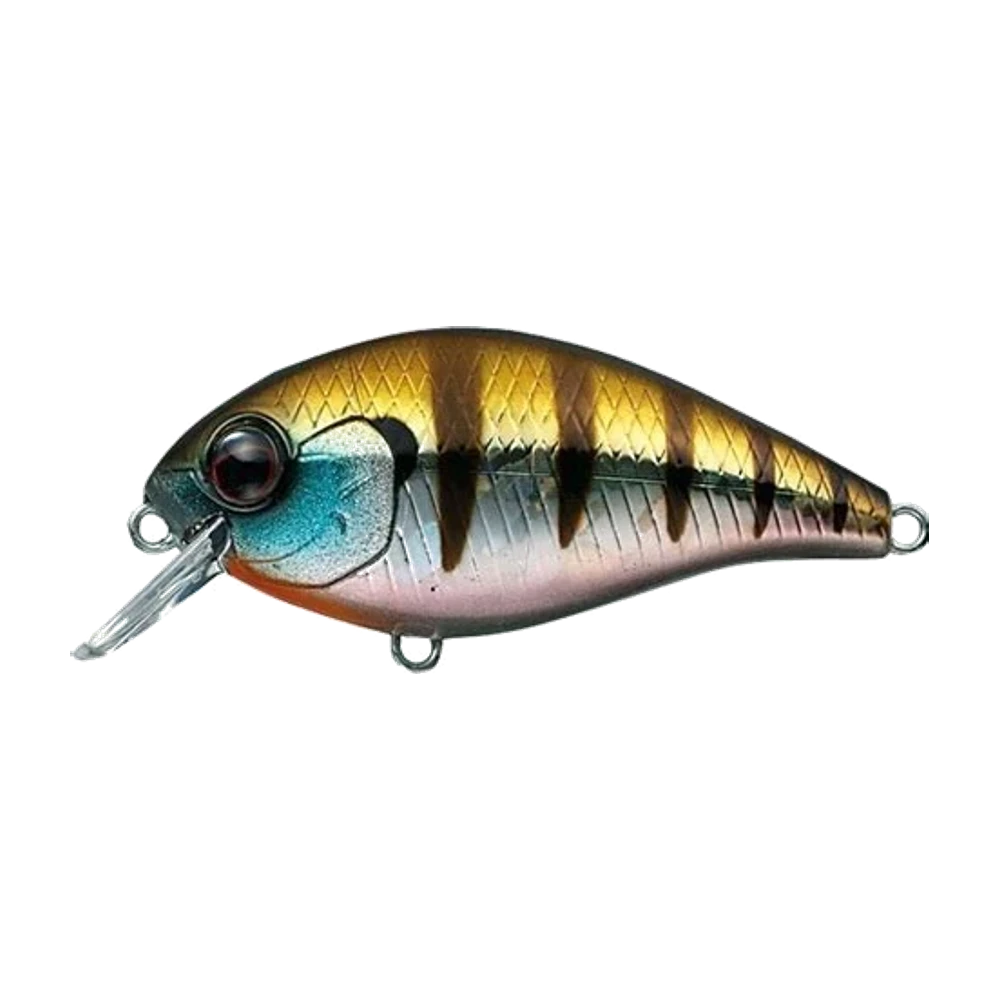
Evergreen Combat Crank: a crankbait is there to hit things, not to swim
Rather not fish it blind? Photograph your spot — CarnaFish cross-checks the conditions and points you the right way.
A crankbait retrieved through ten metres of open water catches next to nothing. The same crankbait, run against a submerged stump, catches fish all day. The difference is not the action: it is what happens at the precise moment the lure hits something and kicks off sideways.
That movement is called deflection. It is a violent, unpredictable swerve over half a metre, during which the lure stops swimming normally. To a bass sitting against the cover, it is the signal of a prey item that has just crashed into something and lost control — and that is when the strike comes, almost never anywhere else.
The Combat Crank is built around that logic: a tough lip, buoyancy that floats the lure up the moment you stop, and an action wide enough to genuinely unbalance it on contact.
What makes a crankbait good on contact
Not all crankbaits behave the same when they hit something solid.
- Positive buoyancy is essential. When the lure wedges against a branch, you just release the tension for a second: it rises and frees itself. A sinking model stays stuck. That is the first selection criterion for fishing wood.
- The lip steers the impacts. A wide, angled lip strikes the cover before the hooks and tips the lure onto its side instead of stopping it dead. That is what produces deflection instead of a plain snag.
- The width of the action determines how violent the swerve is. A tight-wobbling crankbait deviates little; a wide-rolling model kicks hard sideways. The Combat Crank is in the second category.
- Hook position matters. Oversized trebles turn every contact into a snag. Stay with the stock size, or drop one size if the spot is really cluttered.
The retrieve: speed, then the stop
- Cast beyond the cover, not onto it. The lure has to reach its running depth before it gets there.
- Retrieve at a sustained speed for the first few metres to drive the lure down. That is the setup phase, it does not catch fish.
- Settle into an even rhythm once the depth is reached, and fish keeping contact with the bottom or the structure.
- On contact, stop reeling completely for one second. The lure rises a few centimetres and comes free.
- Restart decisively. The swerve and the action kicking back in form the triggering sequence.
Do not strike at the bite. On a crankbait with trebles, a sharp hookset tears the hook holds. Just keep reeling with the fish and let the rod's bend do the work.
On the water: if you make a whole retrieve without ever touching anything, you have just wasted that cast. Switch to a version that dives fifty centimetres deeper, or add five metres to your cast to gain useful depth. A crankbait that touches nothing is not fishing.
Choosing the version and the line
A crankbait's real depth does not depend on the model alone. Line diameter and cast length change it significantly.
| Variable | Effect on depth |
|---|---|
| 0.30 mm fluoro → 0.25 mm | +20 to 30 cm deeper |
| Cast of 20 m → 35 m | +30 to 50 cm over the middle section |
| Rod held high during the retrieve | −30 to 50 cm |
| Faster retrieve | depth reached sooner, not deeper |
In practice: if your Combat Crank is running thirty centimetres above the zone, do not change lure straight away. Drop one fluorocarbon diameter and put the rod tip down near the water. That will often make up the difference.
The tackle is not a detail
With this family of lures, the whole outfit matters as much as the model.
The rod. A semi-parabolic blank that bends over half its length. A stiff rod pulls the trebles out during the fight, especially when the bass jumps. That is the number one cause of lost fish on a crankbait.
The reel ratio. A low ratio, around 6:1, lets you hold an even speed without effort and gives you the torque to drag a high-resistance lure. A fast ratio tires your wrist and makes a constant rhythm almost impossible to maintain.
The line. Fluorocarbon of 0.25 to 0.30 mm. Avoid braid: with no stretch, every jolt goes straight to the hooks, and a bass shaking its head two metres from the bank comes off almost every time.
The knot. Tie straight to the line tie with a tight loop knot. A heavy snap weighs down the front and changes the lip's angle of attack, and therefore the depth reached.
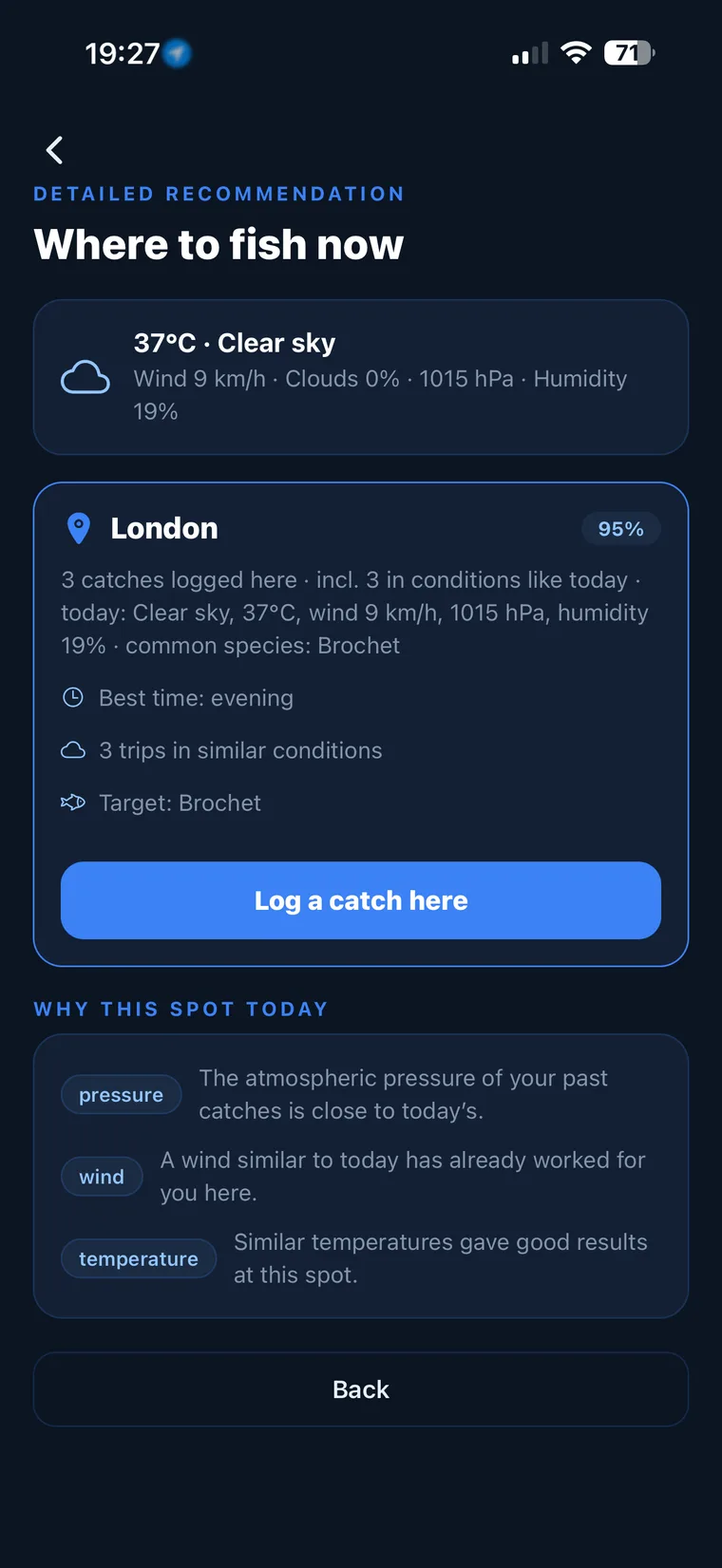
Not sure what to tie on?
Photograph your spot: CarnaFish reads the scene, cross-checks the conditions and gives you the zone, the lure and the retrieve. Free on iOS and Android.
Where it shines, where it falls short
- Margins cluttered with dead wood, submerged stumps, fallen trees. Its buoyancy gets it out of the branches.
- Rock and rubble bottoms, where every stone produces a deflection.
- Spring and autumn, when bass sit on defined structure between 1 and 3 m.
It falls short in very clear water on inactive fish: its wide roll is a strong signal, often too strong when bass inspect before biting. It also suits dense weed badly — the lip collects vegetation and the action dies, where a squarebill copes better. And in the depths of winter, an action this busy rarely gets picked over a slow soft plastic.
Combat Crank or squarebill
The Strike King KVD Squarebill attacks the same problem with a square lip, which bounces off wood even more violently and stays shallower. That is the choice when the zone is very shallow, under a metre and a half, and heavily cluttered.
The Combat Crank covers a wider depth band and offers a broader action, more visible in slightly stained water. Along a two or three metre margin, it takes the lead. Against a Rapala DT6, the difference is one of philosophy: the DT6 relies on reaching depth very quickly and holding it for a long time, ideal for sweeping an even bottom, while the Combat Crank prioritises behaviour on contact.
On deeper spots the Norman Deep Little N remains a budget benchmark. Our beginner's guide to bass fishing sets out where the crankbait fits across a full season. And if you are unsure which version to tie on for the margin in front of you, CarnaFish analyses a photo of the spot and answers.
Key takeaways
- The deflection off cover is the triggering sequence, not the steady swimming action.
- Positive buoyancy: stop reeling for one second to free the lure from a branch.
- A retrieve with no contact at all is a wasted cast.
- Finer line and a low rod tip buy you 20 to 50 cm of depth.
- Semi-parabolic rod and a low ratio, otherwise you lose fish during the fight.
FAQ
What is crankbait deflection?
It is the violent swerve produced when the lure hits cover and kicks off sideways. That brief loss of balance imitates a prey item losing control, and that is when the strikes come.
How do you make a crankbait dive deeper?
Reduce the fluorocarbon diameter, lengthen the cast and keep the rod tip near the water. Those three together are easily worth another fifty centimetres of depth.
What rod should you use for crankbaits?
A semi-parabolic blank that bends over half its length. A stiff rod pulls the trebles out during the fight, which is the main cause of lost fish with this family of lures.
Should you strike on a crankbait bite?
No. Keep reeling with the fish and let the rod load up. A sharp hookset on fine trebles tears the hook holds and costs more fish than it hooks.
Can you fish a crankbait in weed?
Badly. A round lip collects vegetation and the action stops. Over weed, a square-lipped model or a weedless lure is far more suitable.
Braid or fluorocarbon for crankbaits?
Fluorocarbon of 0.25 to 0.30 mm. Braid, with no stretch, transmits every jolt straight to the hooks and multiplies dropped fish on a lure with trebles.
The full bass lure guideSeason-by-season strategy: which family of lure, when, and why.Go from theory to fish
CarnaFish reads your spot from a photo and gives you the game plan: zone, lure, retrieve. Free on iOS and Android.