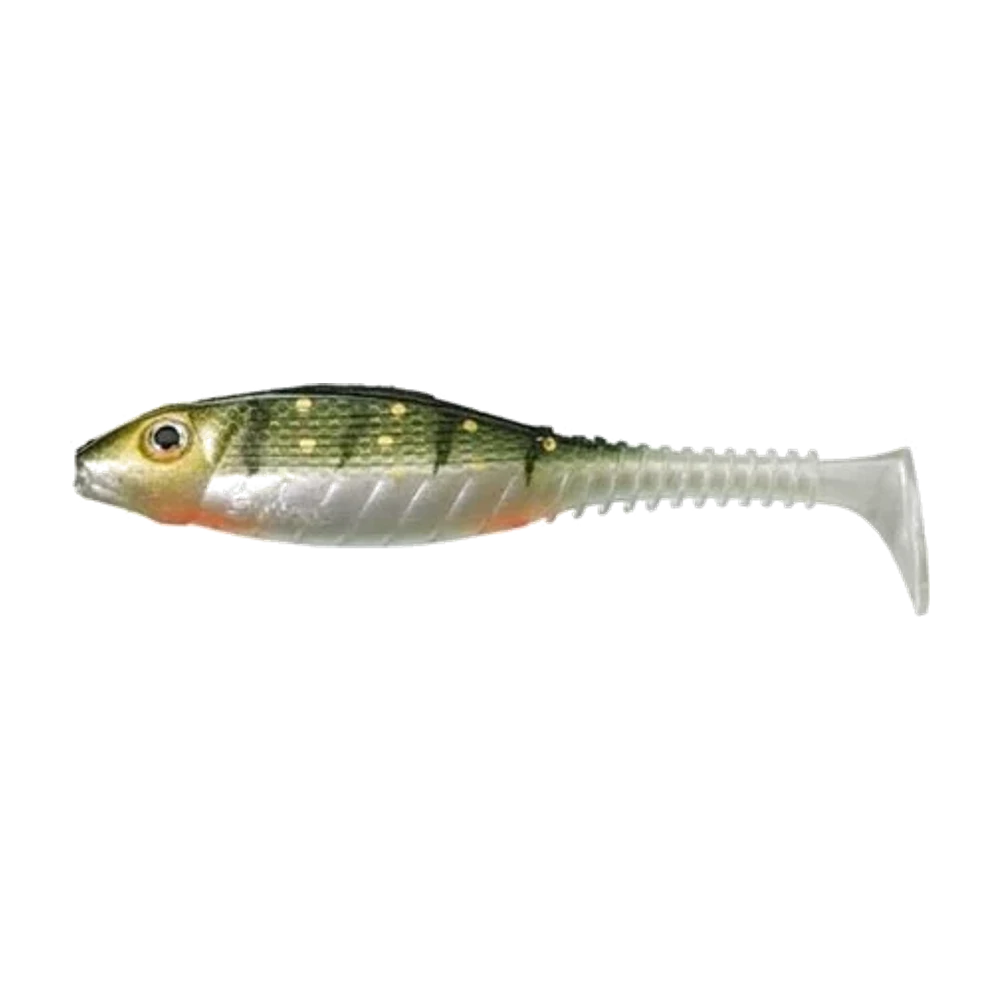
Gunki Grubby Shad: the shad for fishing the drift from the bank
One lure, endless conditions. CarnaFish reads your spot from a photo so you are not just guessing.
In a river, from the bank, most anglers make the same movement they would on a lake: they cast straight out and wind back. The result is predictable. The lure heads downstream, the current catches it side-on, it rises in the water column, and it arrives at the bank two metres down when the zander are at four. The jig head may well be the right one, but the lure never went where it needed to.
The Grubby Shad is the kind of shad you buy in quantity to learn this style of fishing without going broke on snags — its simple shape, with a round, definite paddle tail, works at very low speeds, including when it is the current doing the work and not you.
This page is not a catalogue of weights: it is a method for fishing a controlled drift, the only way to hold the right water layer in a river from the bank.
The controlled drift, move by move
The principle: instead of fighting the current, you send the lure upstream and go with it as it comes down, keeping just enough contact to feel the bottom.
- Cast upstream, at about 45° to the bank, and never downstream.
- Close the bail and let it sink without retrieving, rod pointed at the lure. The lure sinks while the current brings it back towards you: that is when it reaches its depth.
- Follow the line with the rod, sweeping slowly downstream at the pace of the drift. You barely wind at all.
- Take up slack only, never more. If you pull, the lure lifts off.
- When the line reaches a point downstream of you, the lure naturally rises in the current seam. Let it: plenty of bites come at exactly that moment.
- Move ten metres downstream and start again. A spot is fished in three or four drifts, not fifteen casts.
Choose the jig head on the current, not the depth
This is the commonest mistake. In a river, two metres of water with current needs more lead than four metres of dead water.
| Current | Depth | Head recommended |
|---|---|---|
| None to light | 2 to 3 m | 7 to 10 g |
| Moderate | 2 to 3 m | 12 to 15 g |
| Strong | 2 to 3 m | 18 to 21 g |
| Moderate | 4 to 5 m | 15 to 18 g |
| After a flood | all | the heaviest you can handle |
The right setting is easy to check: you should touch bottom every two or three seconds during the drift. If you never touch, add weight. If you stay pinned down and snag, go lighter.
A flat head rather than a round one helps in current: it sits down on the bottom and lifts off less.
On the water: on the drift, do not try to feel the bite in the rod. Watch your line where it enters the water. A zander bite in current shows first as a sideways shift of the line, half a second before you feel anything in the rod tip. Strike on what you see, not on what you feel.
The sizes, and what they really change
The range covers a wide spread, from under 7 cm to over 12 cm. The choice is not random.
The small sizes, under 8 cm. For perch, and for zander when the water is clear and cold. They sink badly in strong current: keep them for calm seams, eddies and margins.
The middle sizes, around 9 to 10 cm. The format to have in quantity. It covers zander and big perch, casts properly, and handles 12 to 18 g heads without the body collapsing.
The big sizes, 12 cm and up. For big zander in coloured water and the occasional pike. From that size on, a stinger becomes useful: a fish that nips the back of the lure will never touch the main hook set at the front.
On spots cluttered with boulders or dead wood, a Texas rig on a wide gap hook replaces the standard jig head and cuts your losses by two thirds.
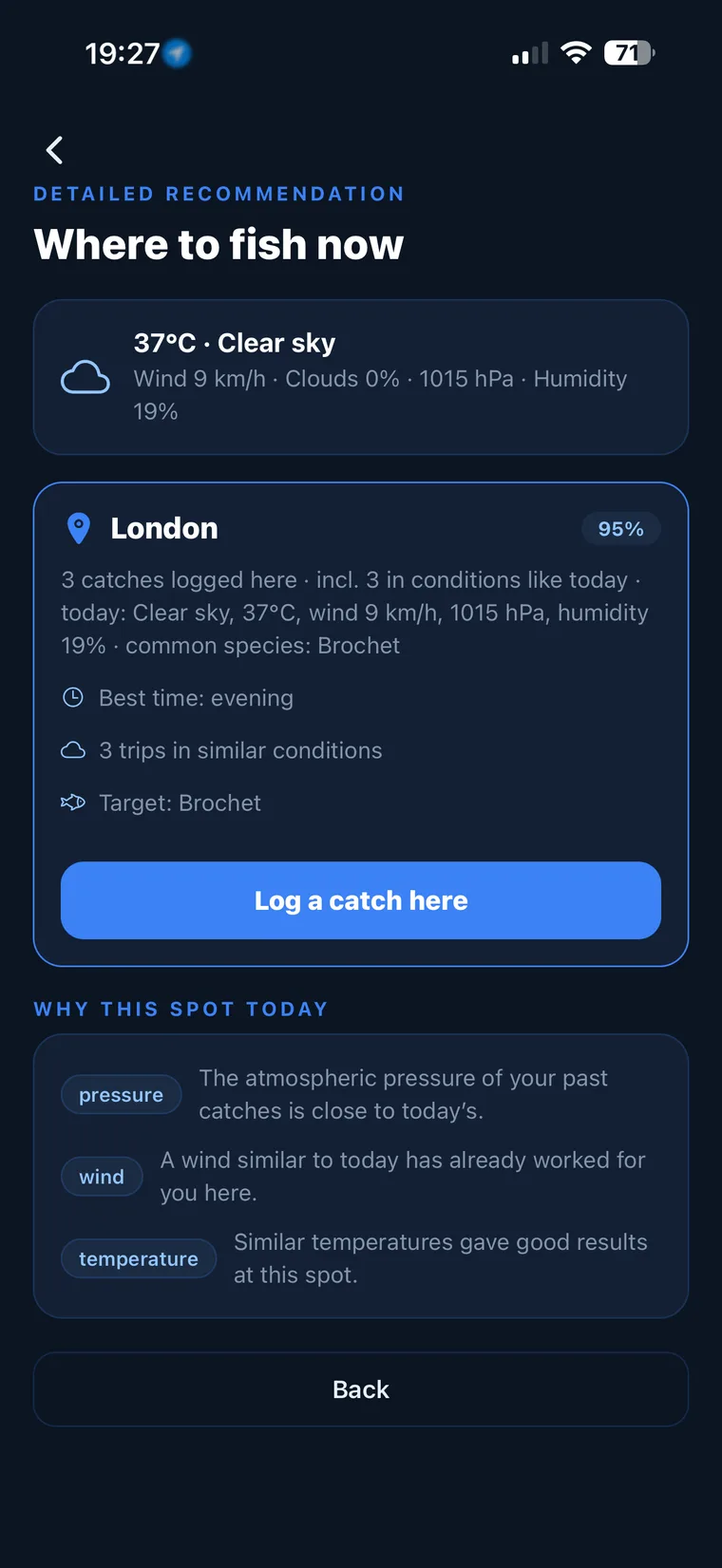
Not sure what to tie on?
Photograph your spot: CarnaFish reads the scene, cross-checks the conditions and gives you the zone, the lure and the retrieve. Free on iOS and Android.
The river spots that genuinely produce
- Holes below bridges, where the current digs and zander hold downstream of the main seam.
- Eddies behind groynes, one of the few places you can fish slowly despite a strong flow.
- Margin drop-offs, often less than three metres from the bank: fish them before casting far, plenty of anglers walk through them without fishing them.
- Confluences, including small outfalls and inflows, particularly after rain.
It is not much use, on the other hand, out in open water on a big featureless lake, where a lure with more lift or a vertical approach will be more effective, and in dense weed, where the tail loads up with algae on every pass.
Grubby Shad or a premium shad
Against a top-end shad such as the Fox Rage Zander Pro Shad, the gap comes down mainly to the quality of the plastic and the life of the body. The premium shad takes more fish before tearing and often offers a better-finished paint job.
But in a river from the bank, you lose lures. Between boulders, branches and bottom snags, a session can cost you five bodies. In that precise context, a simple, effective shad you can sacrifice without hesitation makes you fish more aggressively — so closer to the cover, so where the fish are.
Against a very wide-bodied shad such as the Keitech Swing Impact FAT 3.8, the Grubby Shad moves less water but resists being swept off line in strong current better. Our beginner's guide to zander fishing with lures covers how to approach river spots. And if you are unsure what weight to tie on when you arrive at a current spot, CarnaFish analyses a photo of the spot and answers.
Key takeaways
- Cast upstream and go with the drift: the only way to hold the right water layer.
- Weight is chosen on current strength, not depth.
- Reference setting: touching bottom every two to three seconds.
- The bite is seen on the line before it is felt in the rod.
- Stinger compulsory from 12 cm up, Texas rig on boulder spots.
FAQ
How do you fish a shad in a river from the bank?
Cast upstream at 45°, let it sink without winding, then follow the drift with the rod while taking up slack only. The lure reaches its depth while the current brings it back, and you cover the spot in three or four drifts.
What jig head weight in current?
Choose the weight on the strength of the current rather than the depth: 7 to 10 g in light current, 12 to 15 g in moderate current, 18 to 21 g in strong current. You should touch bottom every two to three seconds.
Do I need a stinger on the Grubby Shad?
Not on the small sizes, where it gets in the way more than it helps. From 12 cm up it becomes necessary: zander often nip the back of the lure, out of reach of the main hook.
What size should I choose for zander?
The 9 to 10 cm format covers the vast majority of situations and handles heavy heads without the body collapsing. Drop under 8 cm in clear, cold water, go up to 12 cm in coloured water to target the bigger fish.
Why does my shad run too high in a river?
Because you are retrieving instead of following. Every turn of the handle lifts the lure in the current. Take up slack only and let the drift do the moving.
How do I detect a zander bite in current?
Watch the point where your line enters the water. A sideways shift or an abnormal stop in the line almost always comes before the feeling in the rod tip. Strike as soon as the line does something unexpected.
The full zander lure guideSeason-by-season strategy: which family of lure, when, and why.Go from theory to fish
CarnaFish reads your spot from a photo and gives you the game plan: zone, lure, retrieve. Free on iOS and Android.