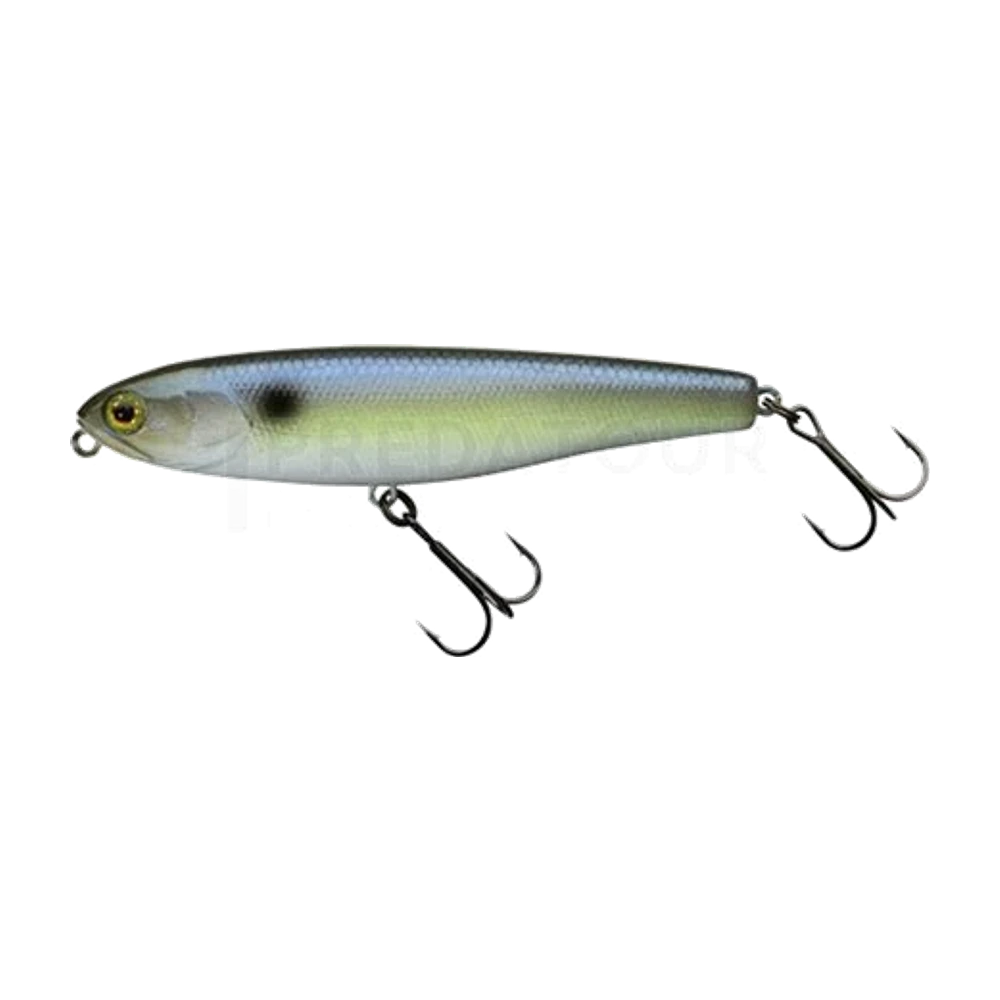
Illex Bonnie 95: walking the water when it blows and the bass are far out
One lure, endless conditions. CarnaFish reads your spot from a photo so you are not just guessing.
The surface stickbait has a reputation as a fair-weather lure. Oily sea, calm dawn, not a breath of wind: everyone can walk a lure in those conditions. The trouble is that sea bass rarely feed when the sea is flat, and the wind is almost always part of the deal.
As soon as there is chop, most stickbaits lose their zigzag. They take off, land sideways, spin out, or simply slide straight ahead. The angler's technique changes nothing: the lure no longer has any purchase on a broken surface.
The Bonnie 95 is built to hold in those conditions. It is short, dense for its size, and it keeps a low point of purchase on the water. The result: it keeps sweeping left to right when the surface crumples, and it casts far beyond what its size suggests.
Why it does not lose its grip in chop
Three elements combine.
Density. For 9.5 cm, this is a relatively heavy lure with rear weighting. It floats slightly tilted, tail down, which anchors it in the water instead of letting it sit flat on the surface. A lure that keeps part of its volume submerged keeps its purchase even when the surface moves.
Weight transfer on the cast. The ballast slides back during the flight, which stabilises the trajectory and increases distance. On a 10 g lure, that is the difference between reaching a feeding shoal and watching it.
The nose shape. It is narrow and pointed, it catches little water and lets the lure pivot sharply on every twitch instead of ploughing.
In practice, the usable limit arrives with formed chop, say beyond twenty centimetres of wave: at that stage no stickbait really holds, and you have to switch to a sub-surface lure.
Walking the dog, move by move
This is the lure's only retrieve, and it takes ten minutes to learn if you understand one point: it is the slack in the line that pivots the lure, not the force of the twitch.
- Cast and take up the slack until you feel the lure, without pulling it.
- Rod tip pointed at the water, rod at 45 degrees downwards, loose wrist.
- Small sharp wrist flicks, one per turn of the handle, very regular. Each flick pivots the head to one side.
- Between two flicks, the line must go slack for a fraction of a second. That release is what lets the lure set off the other way.
- Hold the cadence. The zigzag only settles in after three or four regular twitches.
If the lure goes straight ahead, you are pulling too hard or you are not giving any slack. Slow down and relax.
Two useful variants:
- Fast, tight cadence on feeding sea bass: the lure leaves a continuous trail, imitating a fleeing fish.
- Wide zigzag broken by two-second pauses on bass, or on sea bass that follow without taking. The pause at the end of a sweep often triggers.
On the water: when a sea bass misses the lure or swirls beside it, do not strike and above all do not stop working it. Carry on walking at the same rhythm for three or four twitches. The fish comes back in the great majority of cases, and it comes back committed.
When and where to bring it out
| Context | Timing | Rhythm |
|---|---|---|
| Rocky plateau, lightly churned sea | rising tide, last hour of daylight | fast and continuous |
| Visible surface feeding | any time | very fast, cast to the edge of the shoal, not the centre |
| Estuary, outgoing current | low slack, water draining | slow with pauses |
| Freshwater, weed bed edge | summer dawn and dusk | wide with 2 s pauses |
The Bonnie 95 is a lure for shallow zones and churned water. On sea bass, it is particularly relevant over rocky plateaux covered by a few tens of centimetres to two metres of water, where a diving lure snags immediately.
In freshwater, its small size makes it a good margin stickbait for bass, less intimidating than a 12 cm model and easier to walk in a tight space between two lily pads.
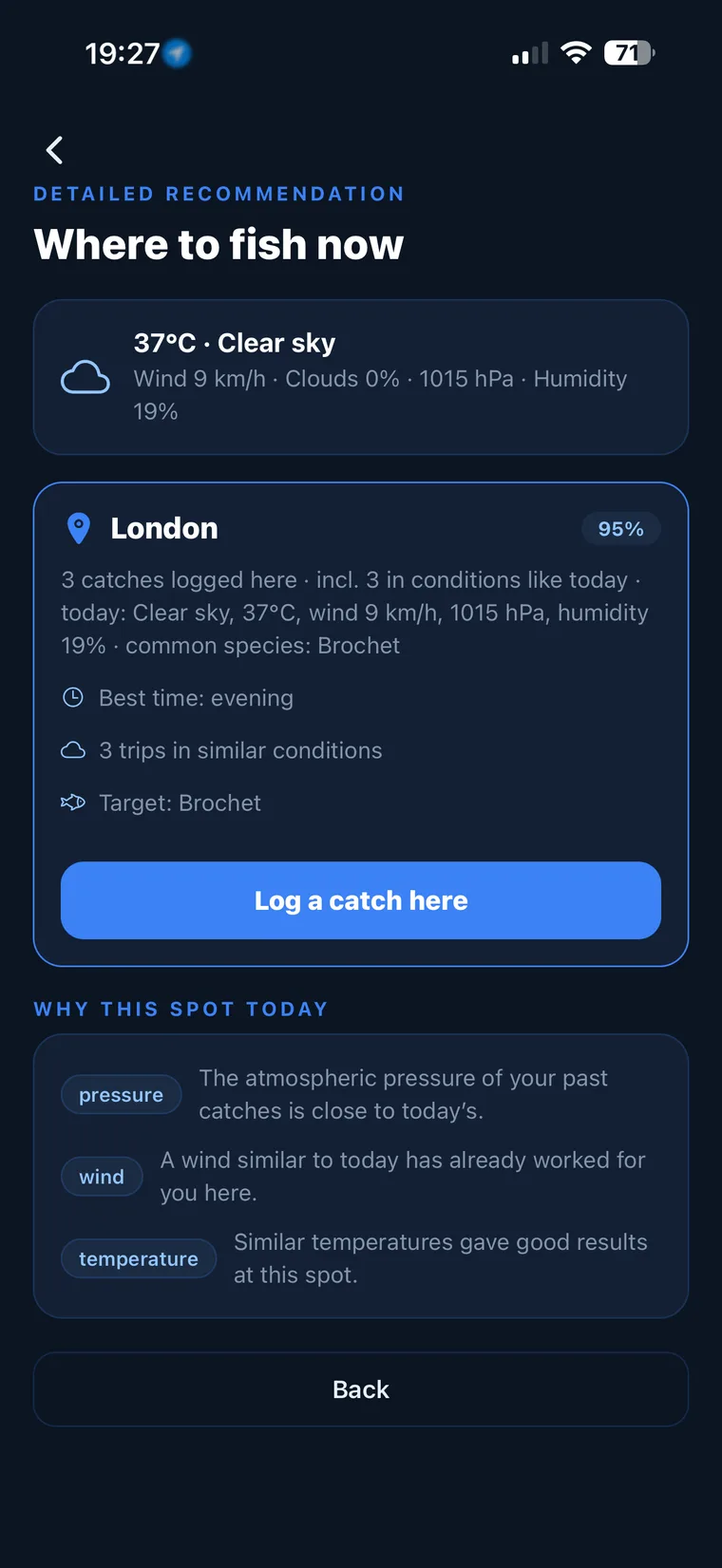
Not sure what to tie on?
Photograph your spot: CarnaFish reads the scene, cross-checks the conditions and gives you the zone, the lure and the retrieve. Free on iOS and Android.
The situations where it does not fit
- Deep water with no surface activity: you are fishing a single plane over ten metres of column. No point.
- Heavy seas: the lure takes off and stops walking.
- Big shoals of very large baitfish: if the sea bass are hunting 25 cm mullet, a 9.5 cm stickbait is beside the point.
- Fishing in pitch darkness: tracking the lure visually becomes impossible, and walking the dog needs you to see what you are doing, at least vaguely.
On the rigging side, one detail matters a lot: use a loop knot or a quality split ring on the nose ring. A knot cinched tight on the ring restricts the lateral pivot and makes the walk laborious.
Bonnie 95 or a bigger stickbait
Against a Xorus Patchinko 140, the Bonnie plays in a different category. The Patchinko is a long-range searching lure, for good-sized sea bass over open, windy ground. It carries further and makes more noise.
The Bonnie 95 aims at the opposite: precise spots, medium-sized fish, and the moments when a big lure scares more than it attracts. At the end of a season with sea bass on small baitfish, it regularly comes out on top.
Against a Bassday Sugapen, which works on the surface but with a lip and a more rolling action, the difference is in the technique: the Sugapen is fished on a straight retrieve, the Bonnie asks for constant active animation.
Our guide to lure fishing for sea bass details the tide windows where the surface takes over from everything else. And if you are hesitating between surface and sub-surface when you arrive at the spot, CarnaFish analyses a photo of the spot and answers.
Key takeaways
- Dense and rear-weighted: it keeps its purchase and keeps walking in chop.
- Weight transfer gives it a casting distance above its size class.
- Walking the dog comes from the slack in the line, not the force of the twitch.
- A sea bass that misses is not done: keep working the lure, it comes back.
- A loop knot is essential, otherwise the lateral pivot is restricted.
FAQ
How do I make a stickbait walk when it goes straight ahead?
You are pulling too hard or keeping the line tight all the time. Drop the rod tip towards the water, give small sharp wrist flicks, and let the line go slack for a fraction of a second between each one. The pivot comes from that release.
Does the Bonnie 95 work when it is windy?
Yes, that is precisely its strength. Its density and rear ballast let it keep the zigzag on a crumpled surface, where many stickbaits lose their grip. Beyond well-formed chop, though, you have to change technique.
Should I strike when a sea bass misses the lure?
No. Striking at nothing pulls the lure out of the zone. Keep working it at the same rhythm for three or four twitches: the fish very often comes back, and its second attack is more committed.
What line and knot should I use?
Fluorocarbon of 0.25 to 0.30 mm as a leader behind braid, tied with a loop knot or mounted on a split ring. A knot locked onto the nose ring stiffens the lure and hinders the walk.
Is it suitable for largemouth bass in freshwater?
Yes. Its 9.5 cm size suits weed bed edges and tight spaces well, where a stickbait of 12 cm or more becomes bulky and intimidating. Add two-second pauses into the zigzag.
At what stage of the tide should I use it for sea bass?
Rising phases over rocky plateaux and the end of the day give the best results, as do slack tides with residual current in estuaries. The key thing remains the presence of baitfish at the surface.
The full sea bass lure guideSeason-by-season strategy: which family of lure, when, and why.Go from theory to fish
CarnaFish reads your spot from a photo and gives you the game plan: zone, lure, retrieve. Free on iOS and Android.