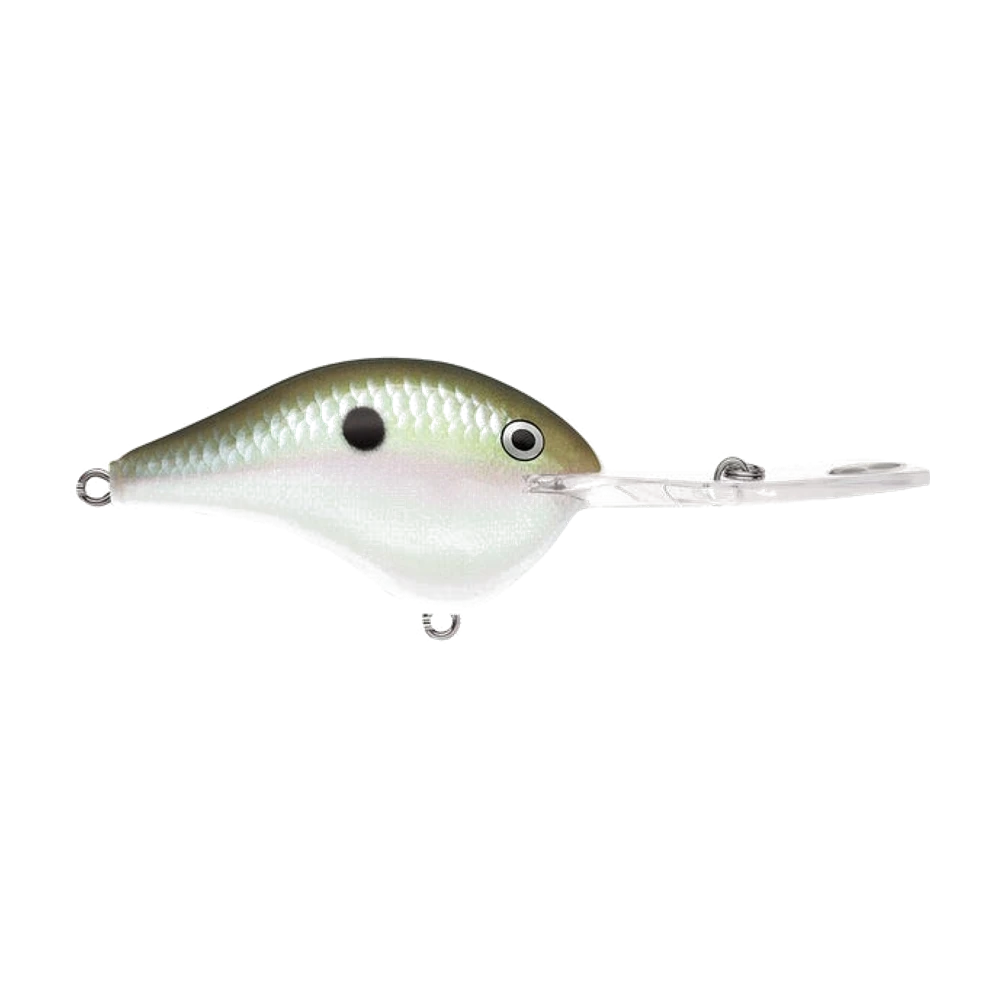
Rapala DT20: the deep crankbait for bumping bottom without hanging up
The right lure in the wrong spot still catches nothing. CarnaFish spots the zone that works, from a single photo.
A deep crankbait has one job: get down fast, bump the bottom, and come back up bouncing off every obstacle it meets. The DT20 does exactly that, with a large lip designed to dive without fighting itself on the retrieve — a detail that matters more than you'd think on a long day of prospecting.
A big lip, one purpose: the bottom
The DT20's lip is proportionally longer than a mid-depth crankbait's, letting it reach 5 to 6 m on a moderate-speed retrieve alone. It also plays a defensive role: on contact with a rock, stump, or submerged log, it deflects the body away from the obstacle rather than driving the hooks straight into it. That's what makes this kind of lure fishable over snaggy bottom where a jig-rigged shad would hang up on the first attempt.
Bottom contact: the technique that triggers strikes
The right way to fish a deep crankbait isn't a straight retrieve start to finish. The technique that actually pays off:
- Cast and let the lure reach cruising depth before starting to reel.
- Retrieve steadily until you feel the lip tap bottom or an obstacle.
- Mark a short pause right at the contact point, then resume the retrieve.
That break in rhythm at the moment of contact triggers the most reaction strikes, on pike and catfish alike. A crankbait that never touches anything is still a lure that swims well, but fishes less.
Catfish take crankbaits too
Catfish get associated mostly with big soft plastics or dead-baiting, but a deep crankbait worked slowly at night, on a long straight retrieve along a drop-off or channel, regularly turns up very good fish. The low-frequency vibration from the internal rattles carries far in the dark, well beyond what the fish can see — a decisive edge when visibility is close to zero.
On a deep crankbait, patience beats speed: the fish has plenty of time to hear the lure coming before deciding whether to hit it.
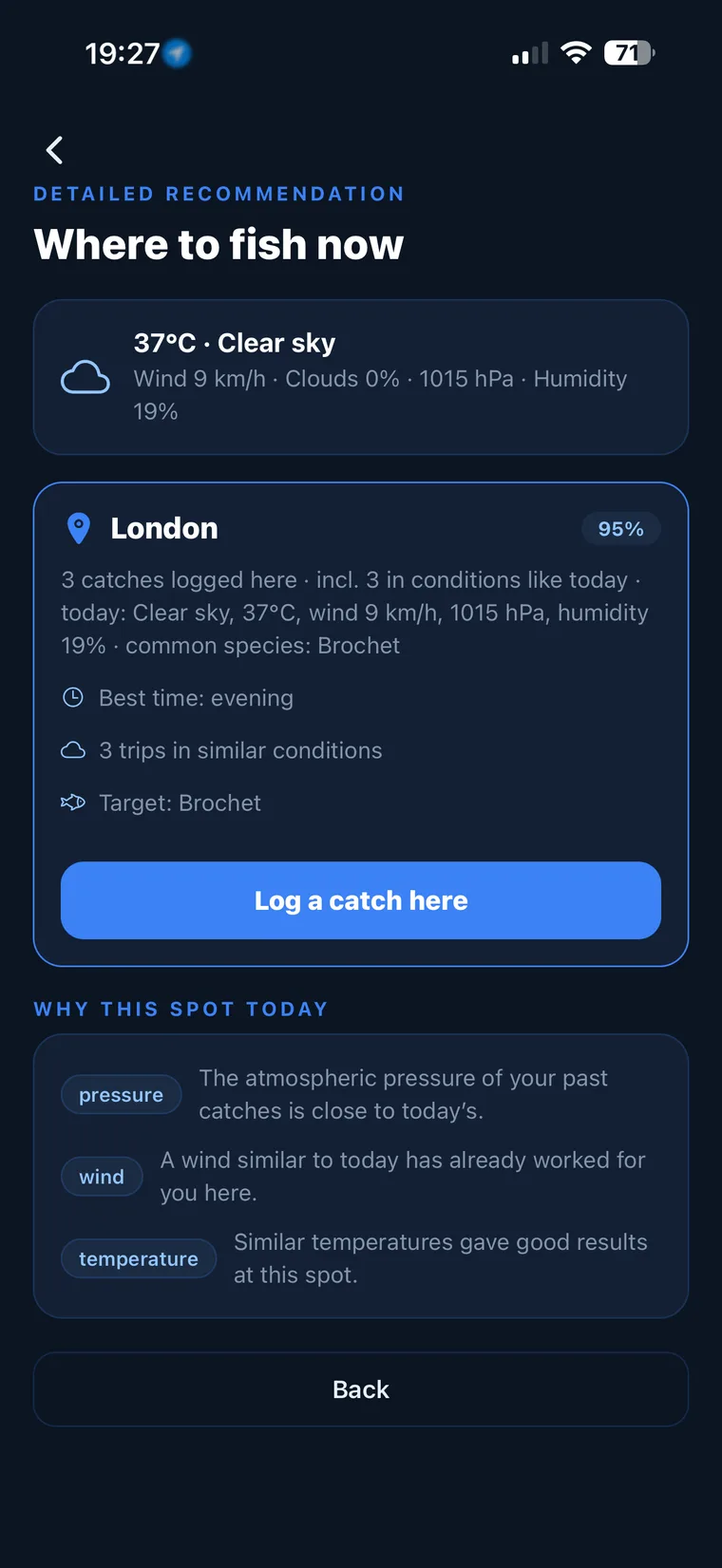
Not sure what to tie on?
Photograph your spot: CarnaFish reads the scene, cross-checks the conditions and gives you the zone, the lure and the retrieve. Free on iOS and Android.
Two setups, two purposes
For pike, a 2.10-2.40 m rod rated 20-60 g with a 40-50 cm wire or titanium leader is enough. Casting a 21 g lure repeatedly just needs a solid reel and 20-30 lb braid.
For catfish, scale up: a heavy 2.40-2.70 m rod, 40-60 lb braid, and a strong fluorocarbon or coated leader around 80-110 lb — no wire needed, catfish jaws have no cutting teeth but wear through thin line fast. Check the trebles regularly after any contact with an obstacle: that's the weak point of the rig on a large fish.
Colour by water and light
- Clear water, daytime: natural roach or perch, to stay subtle against a fish that's watching.
- Stained water: chartreuse or orange, tones that carry contrast well beyond what clarity alone would allow.
- Night, catfish fishing: black, a clean silhouette even under very low light.
If the spot is too snaggy for an exposed-lip crankbait, a weedless Texas-rigged shad like the Squad Shad 65 will get through heavy cover far more easily.
Knowing where the bottom and obstacles actually are before you cast is the whole point of learning to read a fishing spot. It's exactly why CarnaFish exists: a photo of the water, and the AI points you to a zone and a prospecting depth instead of guessing blindly where to bump bottom.
Key takeaways
- A large lip reaches 5-6 m, deflecting naturally off obstacles on contact.
- The technique that pays: straight retrieve to contact, short pause, resume.
- Effective at night for catfish thanks to the low-frequency rattle.
- Different gear by species: standard for pike, notably heavier for catfish.
FAQ
Is the DT20 really suited to catfish fishing?
Yes, particularly at night on a slow, extended straight retrieve along a drop-off or channel. Its low-frequency vibration carries far in the dark and pulls in fish that never see the lure.
How do I reach the right depth with this crankbait?
Let the lure sink to cruising depth before you start reeling, then retrieve steadily until you feel the lip tap bottom. Retrieve speed and braid diameter also affect the depth reached.
What should I do when the lure hits an obstacle?
Mark a short pause right at the contact point before resuming the retrieve. That break in rhythm triggers far more reaction strikes than a continuous, steady retrieve.
Do I need a wire leader to fish the DT20 for pike?
Yes, always. Pike teeth cut through even very strong fluorocarbon. A 40-50 cm wire or titanium leader remains essential with any crankbait.
What gear do I need for catfish with a crankbait this size?
A heavy 2.40-2.70 m rod, 40-60 lb braid, and a strong fluorocarbon or coated leader around 80-110 lb. Check the trebles after every contact with an obstacle.
What colour should I choose in stained water?
Chartreuse or orange, tones that carry strong contrast even when visibility is reduced. Save natural roach tones for clear water where the fish has time to inspect the lure.
The full catfish lure guideSeason-by-season strategy: which family of lure, when, and why.Go from theory to fish
CarnaFish reads your spot from a photo and gives you the game plan: zone, lure, retrieve. Free on iOS and Android.