DUO Crankbait G87 20A: reaching 6 m without fighting your rod
One lure, endless conditions. CarnaFish reads your spot from a photo so you are not just guessing.
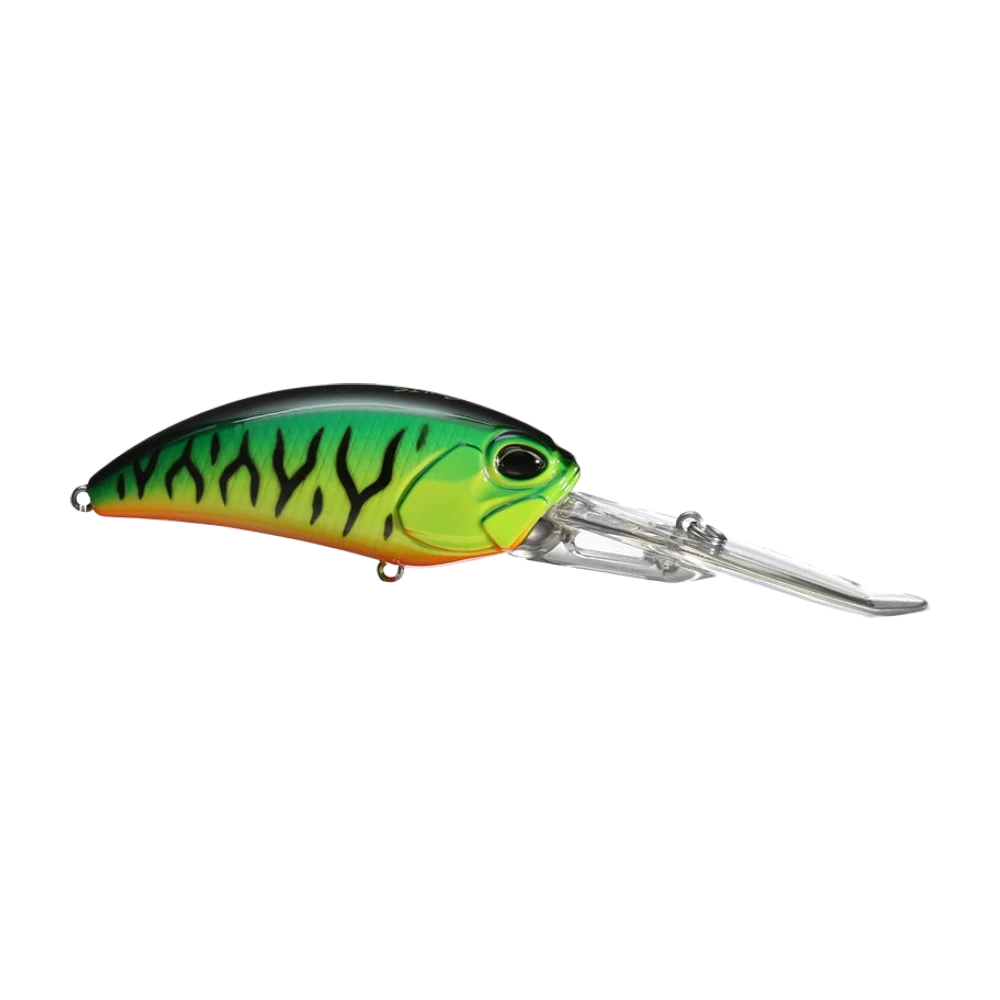
There's a moment on a big summer lake when everyone keeps fishing the banks while the fish have dropped onto a breakline at 6 m / 20 ft. The problem isn't knowing they're there — the sonar says so. The problem is getting a bait down there that actually works at that depth, rather than a crank that runs out of steam at 3 m / 10 ft while sawing your wrists in half. That's exactly the job of the G87 20A.
What the spec table says, and what contradicts it
The maker's copy deserves a careful read, because it contradicts itself. The marketing paragraph calls the bait "three-and-a-half inches," that is 8.9 cm, while the spec table lists 3-1/3 in, or 8.5 cm. On a discrepancy like this the table is what counts: it's the product data line, not a turn of phrase. So take 8.5 cm, knowing that the real gap between the two figures — 4 mm — changes nothing at all on the water.
The rest of the numbers are consistent: 1.25 oz, or 35.4 g, and a rated running depth of 19 to 21 ft, that is 5.8 to 6.4 m. The bait is classed as floating, which is the most useful line in the whole spec sheet — we come back to it below, because it dictates how you fish it in contact with the bottom.
35 g that don't feel like 35 g
A deep crank is a trade-off between bill area, which creates the dive, and pull resistance, which wears the angler out. Most baits in this class charge you a tendon after two hours. DUO says it worked the G87's hydrodynamic build so that drag stays moderate despite the volume, which is what you'd expect from a lure designed over two years for this one job.
The other half of the problem is the cast. A deep crank only reaches its rated depth if you cast far: the bill needs distance to bring the body down to its number and hold it there over a useful stretch of the retrieve. For that, the G87 20A carries a neodymium magnetic weight transfer system — balls that slide back on the cast and lock forward again for the swim. The maker claims casts past 200 ft with 12 lb line. Even taking that figure cautiously, the order of magnitude tells the story: this is a bait you fish a long way out, not under the rod tip.
Count your reel handle turns between splashdown and the first bottom contact. Three casts are enough to know whether the bait really reaches the working zone on this spot, or whether you're dragging a deep crank through two metres of water for nothing.
Why the fact it floats changes the technique
A floating deep crank isn't a catalogue detail. When the bill hits a stump or a rock, give line for one second: the bait rises, frees itself, then carries on. A sinking model stays stuck. On a rocky 6 m / 20 ft breakline, where every lost lure costs you a good slice of the day in anchor-pulling and retying, that property is worth more than any swim-action argument.
It also opens up a specific retrieve: reel until you feel solid contact, pause for a second, let the bait climb a little, then start again. The puff of sediment and the sudden change of path are better triggers than a straight retrieve, especially for zander, which won't willingly chase prey fleeing in a straight line.
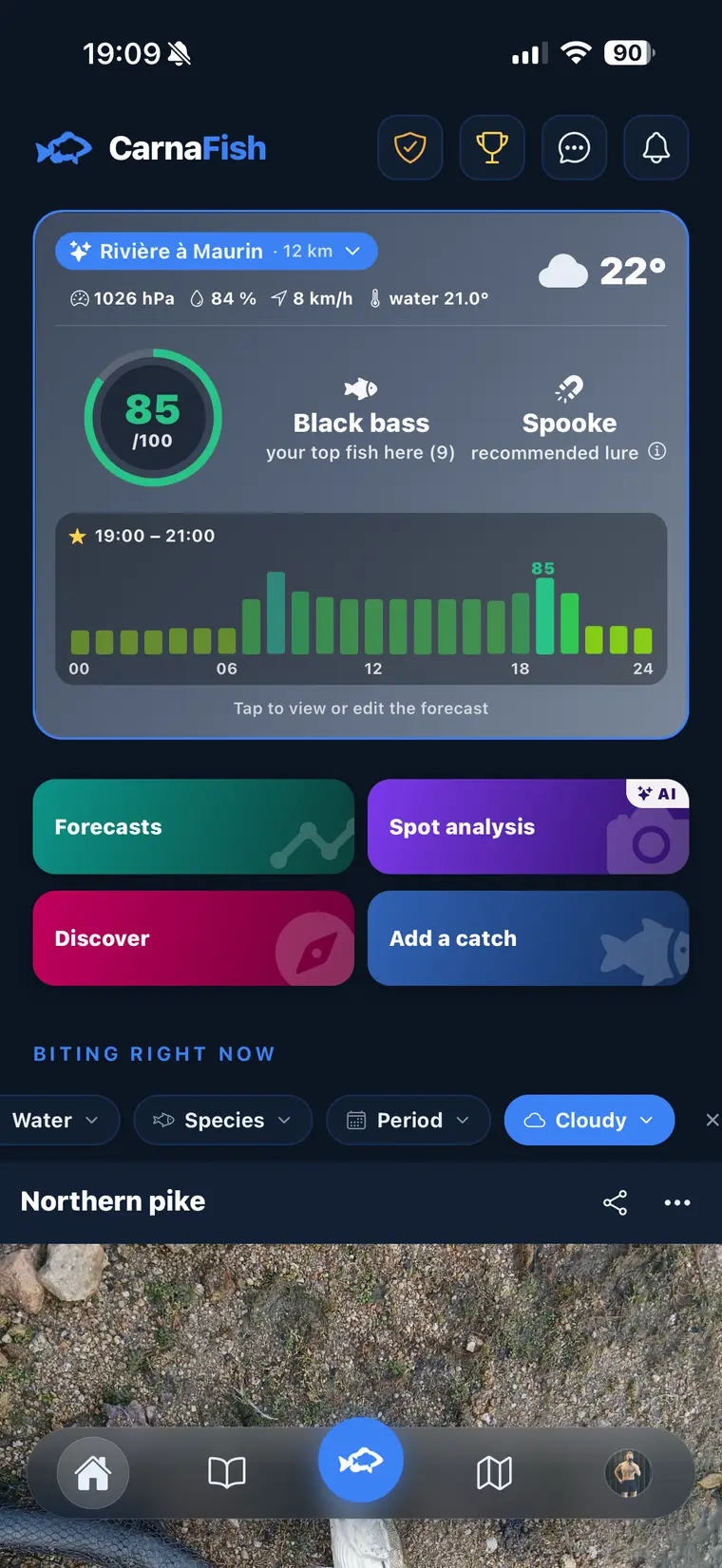
Not sure what to tie on?
Photograph your spot: CarnaFish reads the scene, cross-checks the conditions and gives you the zone, the lure and the retrieve. Free on iOS and Android.
Rigging and tackle: where many go wrong
A snap or a loop knot is essential. A tight knot against the ring restricts the bill and costs you both roll amplitude and a few tens of centimetres of depth — exactly what you were buying with this bait in the first place.
Choosing rod and line
A cranking rod of 2.10 m / 7 ft or more with a parabolic action, which absorbs the weight and cushions a fish's first run. A stiff rod in this game tears trebles out. On line, thin braid casts far and transmits contact, but it floats: a 1.5 to 2 m / 5 to 6 ft fluorocarbon leader pulls the nose down and buys a little real depth. Conversely, straight thin-diameter fluorocarbon down to the spool is the classic answer among American deep-crank anglers.
The classic mistake
Trying to "force" the dive by reeling fast. A deep crank reaches depth through line length out and pull angle, not through speed. Speeding up lifts it in the column, it doesn't take it down. If you're not touching bottom, cast further or go to thinner braid before you touch the retrieve speed.
Colour by water clarity
- Stained water, back of a creek arm, after rain: the green and chartreuse tiger pattern in the photo, with its orange throat — a combination that stays detectable without going fully fluorescent.
- Clear water on a big lake: a roach or ayu tone, natural enough to hold up when the fish has time to watch the bait come.
- Bright sun and clear water: a plain dark back, which reads as a backlit silhouette from below and throws no stray flash.
Knowing that a deep crank is the right tool means reading the spot before casting: depth, bottom type, the presence of a clean breakline. That's exactly what CarnaFish offers — a photo of the spot, and the app suggests the zone, the depth and the lure family that fit the moment. If you want to understand what makes one breakline more interesting than another, our guide to reading a fishing spot is the place to start.
This G87 doesn't make a Strike King 10XD obsolete, which goes deeper, nor a Strike King 6XD, which is easier to crank all day. It takes the intermediate 6 m / 20 ft band with Japanese finish work and contained drag, which is a perfectly coherent proposition.
Key takeaways
- The spec table gives 8.5 cm / 3-1/3 in and 35.4 g / 1.25 oz, where the marketing text says 8.9 cm / 3.5 in: the table is the reference.
- Rated depth of 5.8 to 6.4 m / 19-21 ft, only reached with a long cast and thin line.
- Floating model: it frees itself from obstructions as soon as you give line, a real plus over cluttered bottom.
- Depth comes from casting distance, never from retrieve speed.
FAQ
How deep does the G87 20A really run?
The maker rates it 19 to 21 ft, that is 5.8 to 6.4 m. That figure assumes a long cast and thin line; with a short cast or heavy diameter, expect noticeably less.
Does the G87 20A float at rest?
Yes, the maker classes it as floating. That's what lets it back off an obstruction when you give line for a second.
Exactly how long is it?
The spec table says 3-1/3 in, or 8.5 cm. The marketing text in the same description says three and a half inches, or 8.9 cm: the table is the one to keep, and the 4 mm gap makes no practical difference.
Do I need a specific rod for this crankbait?
Yes, a long cranking rod with a parabolic action. At 35 g with two trebles, a stiff rod multiplies dropped fish and makes for a punishing day on the arm.
Can it be fished for zander?
Yes, and it's a good use on big deep reservoirs. Reel until you make solid bottom contact, pause for a second, then start again: the restart is where zander most often commit.
How does it differ from a Strike King 10XD?
The Strike King 10XD targets a deeper band and demands heavier tackle. The G87 20A stays in the 6 m / 20 ft band with more contained drag, which makes it easier to live with over a full day.
The full bass lure guideSeason-by-season strategy: which family of lure, when, and why.Go from theory to fish
CarnaFish reads your spot from a photo and gives you the game plan: zone, lure, retrieve. Free on iOS and Android.