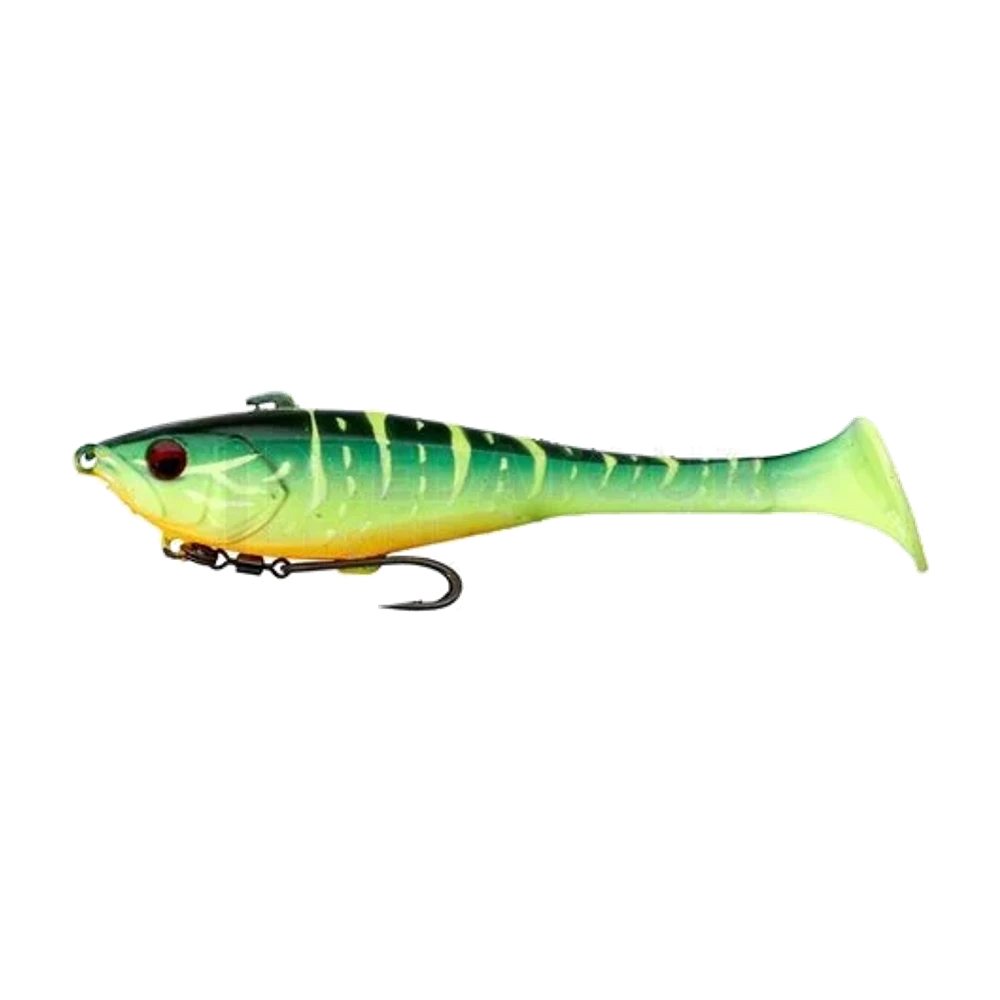
Illex Dunkle: the compact lipless for working the bottom on the yo-yo
The right lure in the wrong spot still catches nothing. CarnaFish spots the zone that works, from a single photo.
On a zander drop-off or plateau, the problem is almost never the depth: it is time. You have three to five metres under you, a drift that keeps moving, and a short window of activity. A soft plastic on a jig head goes down and catches fish, but it costs you time in every phase and it puts out very little. A big lipless drops fast and puts out a lot — sometimes too much for fish that are not aggressive.
The Dunkle sits in the middle ground. It is a short, dense lipless that sinks quickly for its bulk, produces a tight buzz rather than a hammering, and takes very well to the yo-yo near the bottom. It lets you comb a zone at searching-lure speed, with a signal sized for zander and big perch rather than for pike.
A lipless that chose frequency over amplitude
Every lipless vibrates, but not in the same way. The difference that matters is measured on two axes: how fast the body oscillates, and how many centimetres it swings sideways on each oscillation.
The Dunkle sits clearly on the high-frequency, low-amplitude side.
- The body is short and compact, so it pivots quickly around its axis.
- The mass is concentrated low and forward, which limits the sideways travel and keeps the lure tracking straight even on a fast retrieve.
- The signal it produces is fine, closer to a small fish accelerating than to the heavy thump of a big baitfish.
The practical consequence: it does not carry as far as a bulky lipless, but it does not saturate the zone either. On settled zander, on a tight school of perch, or in clear water where the fish already hears perfectly well, that is exactly the trade-off you want.
Second key point: on the pause it falls flat, without nosing down. That horizontal fall is the heart of how it fishes.
The retrieve: the yo-yo, and nothing else to start with
- Cast and let it sink on a semi-tight line until it touches bottom. Count the fall and you will have the depth within three casts.
- Lift with a firm sweep of the rod, forty centimetres to a metre depending on the depth. The lure takes off, buzzing.
- Give line back while following it down, rod tip dropping, line semi-tight. The lure heads back to the bottom flat.
- Wait for contact — a slight slackening in the line, or a dull knock on hard bottom.
- Repeat all the way in, taking up the slack between lifts.
The zander bite almost always comes during the fall. It rarely shows as a knock: most often the line goes slack earlier than expected, or it drifts slightly to one side. Leave the line completely loose and you will see nothing.
| Depth | Lift height | Guide weight |
|---|---|---|
| 1 to 2 m | 30 to 40 cm | 12 g |
| 2 to 4 m | 50 to 70 cm | 14 to 16 g |
| 4 to 6 m | 80 cm to 1 m | 18 to 20 g |
On the water: the real indicator is the number of seconds of fall between two lifts. Go from four seconds to two and you are on rising ground — that is where you slow down and go back over it. A drop-off reads off the fall count, no sounder needed.
The other use: a straight retrieve for perch
The yo-yo is not its only job. On perch active in open water, the Dunkle also fishes straight, at a steady medium speed, letting it brush the top of a structure.
The sequence is simple: cast, count three to five seconds of fall, then wind steadily while staying in touch with the vibration. The moment the lure hits something, hold a one-second stop before setting off again. That stall right after a contact is a classic perch trigger.
It is also the fastest way to work out where the fish are on unfamiliar water, before switching to a slower approach.
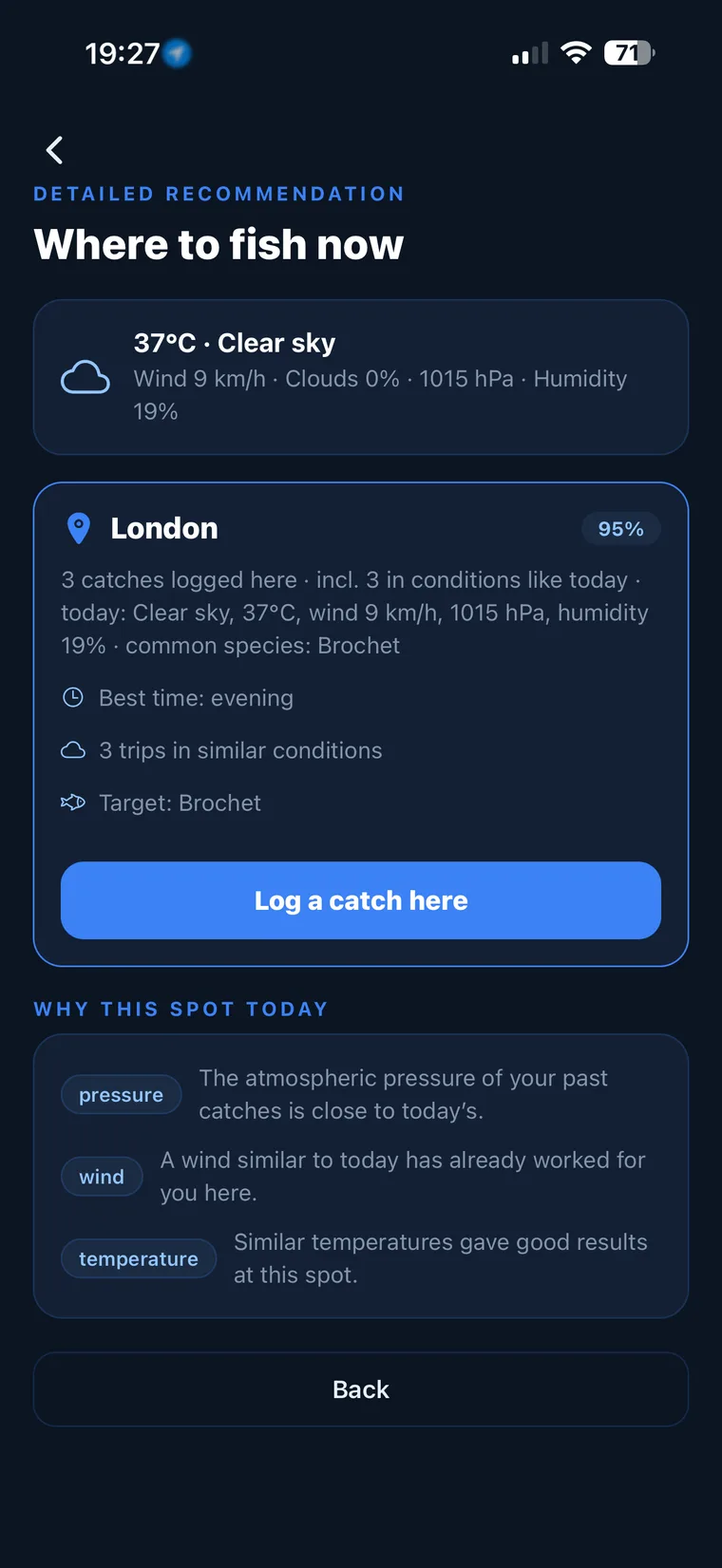
Not sure what to tie on?
Photograph your spot: CarnaFish reads the scene, cross-checks the conditions and gives you the zone, the lure and the retrieve. Free on iOS and Android.
Where it wins, where it has no business
Favourable situations:
- Hard bottoms: gravel, shingle, slabs, rip-rap, where contact sends back usable information.
- Drop-offs and plateaux from 2 to 6 m, drifting or from the bank.
- Autumn and winter, when zander group up on deeper spots.
- Slightly stained water, where the vibration makes up for average visibility.
- Perch feeding in open water, on a straight retrieve.
Situations to avoid:
- Silty or weedy bottoms. The trebles snag and the lure buries itself on every fall.
- Sunken timber. The quickest way there is to lose a lure.
- Very clear water and wary fish, where a constant vibration eventually wears thin: a discreet soft plastic will do better.
- Shallow water. Under a metre you simply do not have the room to work the yo-yo.
Dunkle or a bigger lipless
The Jackall TN 70 plays a similar role but with a wider body and a stronger vibration: it carries better in coloured water and suits you more when you are trying to get a reaction out of scattered fish. The Savage Gear Fat Vibes pushes bulk and water displacement further still, which makes it as much a pike lure as a zander one.
The Dunkle takes the lead exactly where those two do too much: on a tight school of perch, on settled zander in clear water, or on heavily fished water where the fish has already heard every lipless on the market. Its compact format also gives it a practical edge for bank fishing, where you are often working moderate depths.
Against the DUO Realis Vibration 62 you are in the same size bracket, and the difference comes down mainly to the attitude on the drop: pick whichever falls flattest on the spot you are fishing, because that is the parameter that decides on zander.
Our beginner's guide to lure fishing for zander covers reading drop-offs and choosing weights. And if you are unsure which depth to work when you reach the bank, CarnaFish analyses a photo of the spot and answers.
Key takeaways
- High-frequency, low-amplitude vibration: a fine signal, not a hammering.
- It falls flat on the pause, which makes the yo-yo particularly effective on zander.
- The bite comes during the fall: keep the line semi-tight and watch it.
- The number of seconds of fall between two lifts maps the bottom for you.
- Reserved for hard, clean bottoms; keep it away from silt, weed and sunken timber.
FAQ
How do you fish the Dunkle on the yo-yo?
Let it sink to the bottom, lift the rod 40 cm to 1 m depending on the depth, then follow the fall on a semi-tight line until contact. Repeat, taking up the slack between lifts.
How do you detect a zander bite on a lipless?
Rarely as a knock. The line goes slack earlier than expected, or drifts slightly sideways during the fall. That is why you follow the drop and never leave the line completely loose.
Which weight should I choose for a given depth?
Around 12 g down to 2 m, 14 to 16 g between 2 and 4 m, and 18 to 20 g beyond. The right marker is feeling bottom contact clearly without the fall becoming too fast to read.
Does the Dunkle snag a lot?
On hard, clean bottom, no, provided you follow the fall. On silt, weed or sunken timber it snags constantly: that is not the right ground for a lipless carrying two trebles.
Can it be fished on a straight retrieve?
Yes, especially for perch in open water: count the fall, wind at a steady medium speed, and hold a one-second stop after every contact with structure. It is also the fastest way to locate fish.
What is the difference with a bigger lipless?
A bulky lipless puts out more and carries further in coloured water, but it saturates a zone quickly. The Dunkle offers a finer signal, better sized for settled zander, schooling perch, or heavily fished water.
The full zander lure guideSeason-by-season strategy: which family of lure, when, and why.Go from theory to fish
CarnaFish reads your spot from a photo and gives you the game plan: zone, lure, retrieve. Free on iOS and Android.