Megabass Hazedong Shad: knowing when to downsize, and by how much
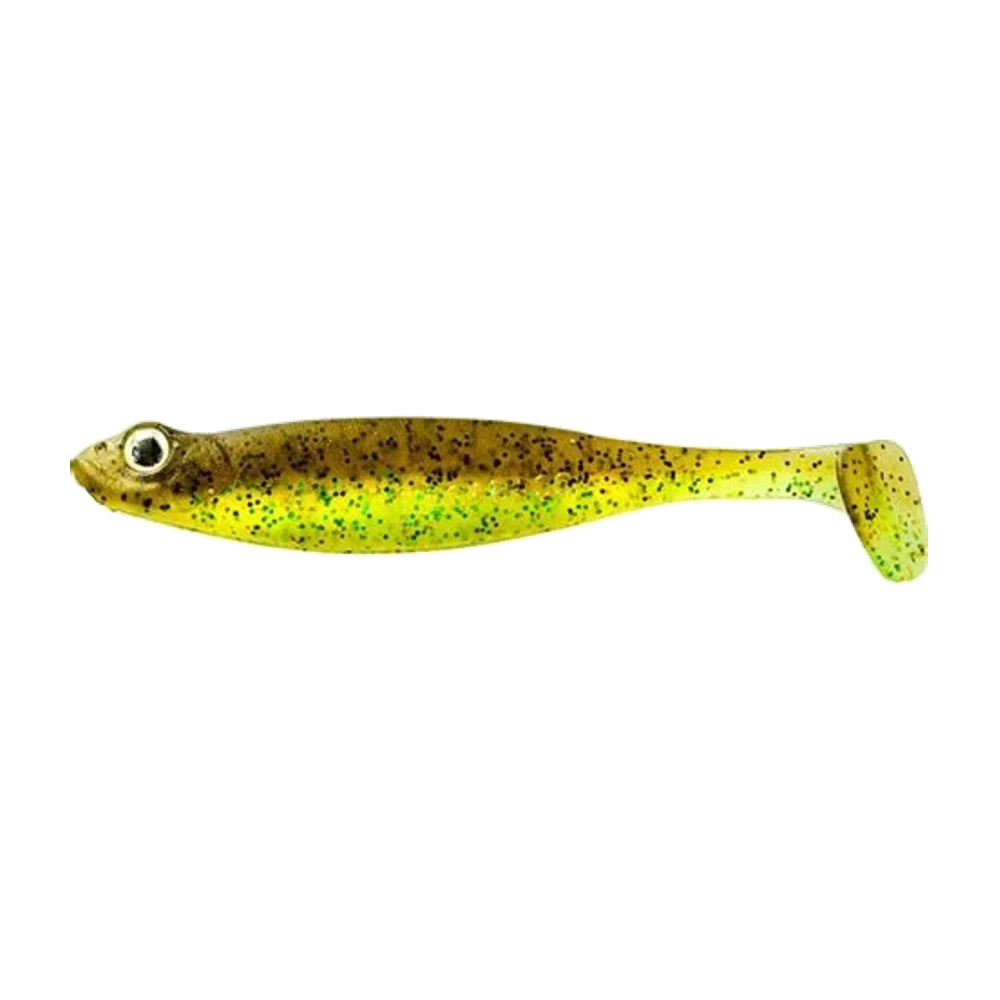
One lure, endless conditions. CarnaFish reads your spot from a photo so you are not just guessing.
You can see the perch following. They come in behind the lure, ride along with it for a couple of metres, turn and leave. It happens five, six times in a row. The reflex is immediate: go smaller.
That reflex is right about half the time. The other half, the problem is not size but speed, or depth, or the fact that the lure never stops. Downsizing without thinking lands you on a micro-lure you can no longer cast far, can no longer feel, and that sorts out the small fish.
The Hazedong Shad is interesting on exactly this point: it is a slim shad, but not a tiny one. It keeps enough volume to stay castable and to interest a decent fish, while offering a slender silhouette and a very soft tail that answer what pressured fish actually need — less signal, more realism.
Get the diagnosis right before downsizing
Before you change lures, check these in order:
- Does the fish follow all the way to the bank? If so, it is interested and active: the problem is probably speed or the lack of a pause, not volume.
- Does the follow break off at a distance? The fish turns away two metres out: that really is a refusal on appearance, and downsizing makes sense.
- Have you tried stopping dead during the follow? It costs nothing, and it converts a good share of follows without changing anything on the rig.
- Is the depth right? A fish that rises to follow and then drops back down often means you are fishing too high.
If the refusal persists after those four checks, downsizing is justified. Going from a 12 cm shad to a slim 8 to 10 cm profile is enough in most cases. Dropping below that is rarely necessary outside very clear, very heavily fished water.
What the thin tail brings
The Hazedong's tail is thin and soft. It does not produce the firm thump of a paddle: it quivers. Three consequences.
- It works under almost no pull. On a motionless drop shot, the slightest movement of the line, the slightest current, is enough to bring it alive.
- It does not disturb the fall. A shad with a big tail planes and slides sideways on the way down; this slim profile drops straighter, which lets you target a precise spot.
- It limits the vibration signal. That is a drawback when searching and an advantage on educated fish that associate strong vibration with danger.
The three rigs that exploit it
The drop shot, the most logical rig for this profile. A single hook nose-hooked, weight thirty to sixty centimetres below. The lure stays up in the water column, above the bottom, and quivers in place. For the knots in detail, see the drop shot rig. It is the king rig for perch in clear water and for bass holding on structure.
The light jig head, 2 to 7 g. For searching while keeping a slow fall. A 3 g head in 4 metres of water gives a fall lasting several seconds: that is long, and that is exactly the point.
The ned rig, on a short-bodied jig head. The lure sits slightly nose-up on the bottom and the tail waves without you doing anything at all. See the ned rig for the principle.
| Rig | Weight | Situation |
|---|---|---|
| Drop shot | 5 to 12 g of lead | holding fish, clear water, vertical |
| Jig head | 2 to 5 g | margins, under 3 m |
| Jig head | 5 to 10 g | 3 to 6 m, wind or light current |
| Ned rig | 3 to 7 g | clean bottom, fish glued down |
On the water: on a drop shot, the best retrieve is not to move the lure but to move the line. Shake the rod tip on the spot, weight planted, without ever shifting the weight. The lure shimmies at a fixed height for ten seconds in the same place. A holding fish eventually cracks on that active stillness, where a lure that travels makes it break off.
The gear that goes with it
These are 2 to 10 g lures, with bites that are sometimes barely perceptible. The gear is not an afterthought.
A rod of 1.90 to 2.20 m, 2-10 g or 3-14 g, with a sensitive tip. A thin 0.06-0.10 mm braid for transmission, and a 0.16-0.22 mm fluorocarbon leader about a metre long. On wary perch in very clear water, drop to 0.14 mm: the difference in bites is real.
Hooks: singles in size 1 to 4 for the drop shot, depending on lure size. Too big and you stiffen the body and lose the undulation.
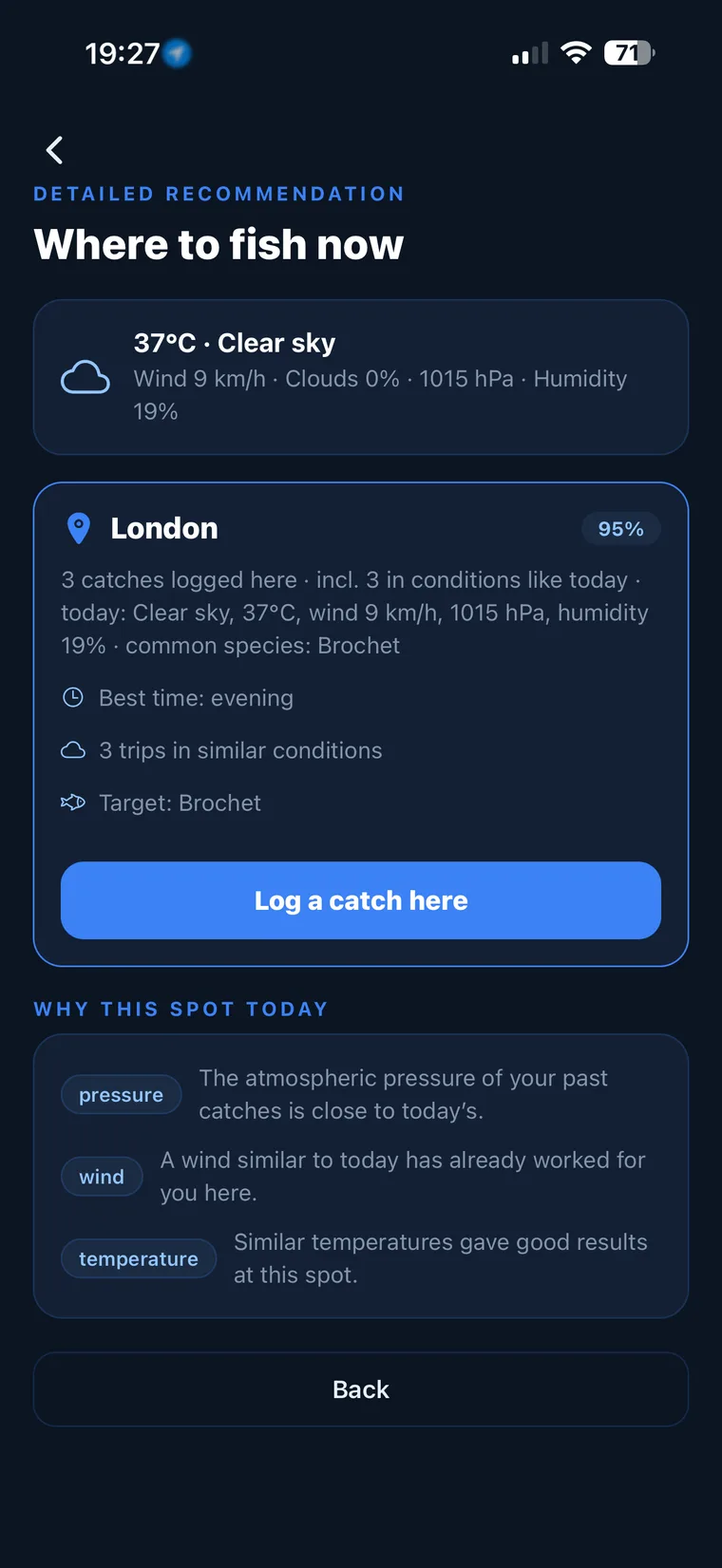
Not sure what to tie on?
Photograph your spot: CarnaFish reads the scene, cross-checks the conditions and gives you the zone, the lure and the retrieve. Free on iOS and Android.
Where it has no place
It is useless for fast searching over a big area: too slow, too little signal. On heavily stained water, a discreet tail does not get detected — a paddle tail shad or a blade bait will be far more effective. In strong current, the drop shot rig becomes unmanageable and the tail stops working.
And on big pike, it is simply the wrong tool: you will lose more lures than you catch fish.
Hazedong Shad or a small paddle tail
A small flat-tailed shad like the Keitech Shad Impact gives a clean vibration as soon as it moves. It searches better, it calls from farther away, and it stays superior in stained water or when the perch are actively hunting a school of fry.
The Hazedong takes over exactly where the other fails: clear water, fish that have already seen lures go by, precise spots you need to work for a long time. For an even slimmer profile in an almost motionless presentation, a fluke-style soft plastic or a hard micro-minnow cover neighbouring cases.
Our guide to perch fishing with lures explains how to identify a pressured fish. And if you are torn between searching and working one spot in slow motion, CarnaFish analyses a photo of the spot and answers.
Key takeaways
- Before downsizing, check speed, depth and whether you are pausing at all.
- Thin tail that quivers under zero pull: this is a lure for active stillness.
- Drop shot first, 2 to 7 g jig head for slow searching.
- Shake the line without moving the weight: that is the most effective retrieve.
- Useless in stained water, strong current or fast searching.
FAQ
When should you downsize your lure?
When the fish turns away at a distance without following to the bank, in clear water and on heavily fished areas. If the fish follows to your feet, the problem is speed or the lack of a pause rather than size.
What rig for the Hazedong Shad?
Drop shot first, with a single hook through the nose and a weight thirty to sixty centimetres below. A 2 to 7 g jig head works for searching, the ned rig for fish glued to the bottom.
What line for finesse perch fishing?
A 0.06-0.10 mm braid with a 0.16-0.22 mm fluorocarbon leader. In very clear water and on wary fish, dropping to 0.14 mm noticeably increases the number of bites.
Does this shad suit bass?
Yes, especially on fish holding on structure in clear water, on a drop shot or a ned rig. It is a decision lure, not a searching lure: find the structure first, then work it at length.
How do you fish a drop shot properly?
By shaking the rod tip without moving the weight resting on the bottom. The lure quivers on the spot at constant height for ten to fifteen seconds, then you move the weight fifty centimetres and start again.
What is the difference with a flat-tailed shad?
The thin tail quivers instead of thumping: less vibration, more realism. A flat-tailed shad stays better for searching, in stained water and on active fish; the slim profile takes over on pressured fish.
The full perch lure guideSeason-by-season strategy: which family of lure, when, and why.Go from theory to fish
CarnaFish reads your spot from a photo and gives you the game plan: zone, lure, retrieve. Free on iOS and Android.