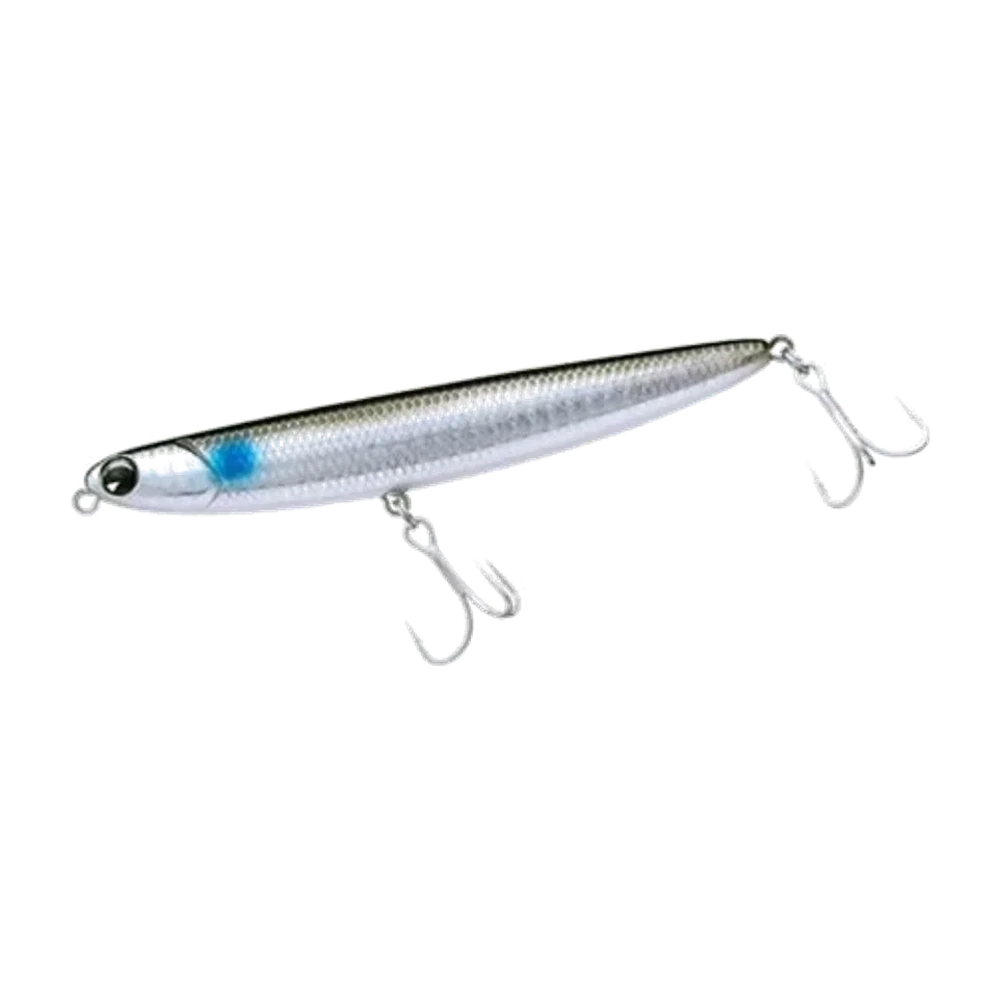
Ima Salt Skimmer: fishing where there is thirty centimetres of water
Before tying this one on, it helps to know if the spot actually calls for it. CarnaFish reads the scene from a photo.
The best sea bass ground is not the deepest. It is often a plateau of sand and rock under fifty centimetres of water at half tide, where bass come to root out crabs and sandeels in the wash. The problem is mechanical: most saltwater minnows dive to a metre or more. Over ground like that you bring back a bundle of weed every other cast, or you leave a lure on a rock.
The Salt Skimmer is built for that precise window. Its lip is short and steeply angled, its body floats decisively, and the whole thing is calibrated to swim between ten and forty centimetres below the surface at any reasonable speed. You can wind it over a field of rock without watching it go down.
The real feat is not there, though. A very light floating lure is easy to design and impossible to cast. This one stays castable in wind thanks to an internal weight transfer.
A shallow draught lure: three consequences
- You fish ground that is otherwise out of reach. Drying plateaux, the edges of sandbanks, eelgrass beds, estuary mouths at low tide. These are rich, lightly fished spots, precisely because standard tackle cannot work them.
- The lure is permanently inside the detection zone. A sea bass holding in fifty centimetres of water sees everything that passes above it, cut out against the sky. The silhouette counts for more than the colour.
- You can lift it whenever you are unsure. Because it floats, you only have to stop winding for it to rise and clear a rock or a clump of weed. That is a comfort no sinking lure offers.
That shallow draught is also a straitjacket, however: this lure will never go down. Over three metres of water with bass pinned to the bottom, it has no business being there.
The retrieve: simple, but two details matter
- Cast with the wind rather than into it if you can, and aim beyond the area: sea bass often move up with the flood and sit on the upstream edge of the plateau.
- Start winding immediately on splashdown, without letting the lure sit. Over thirty centimetres of water, one second of inattention and the front treble is in the wrack.
- A steady straight retrieve, rod at ten o'clock, pointing slightly up. Rod height is your depth control: rod high and the lure works at ten centimetres, rod low and it drops towards thirty or forty.
- Every ten seconds, a half-second stop. The lure rises a few centimetres and sets off again. That is very often the precise moment the bite arrives.
- In current, cast across and let it swing: the lure crosses the flow working on its own, exactly like a wet fly.
On the water: when you are fishing in the wash, set your retrieve to the waves rather than to a fixed cadence. Wind fast while the wave pulls back — that is when the water thins out and the lure risks breaking the surface — then slow down as soon as the next one arrives. A lure that comes out of the water on every wave catches nothing, and that is mistake number one on beaches.
Settings and tackle
| Item | Recommended choice | Why |
|---|---|---|
| Mainline | 0.12 to 0.15 mm braid | Distance and detection, limited wind drag |
| Leader | 0.26 to 0.30 mm fluorocarbon, 1 m | Abrasion on rock and shell |
| Rod | 2.40 to 2.70 m, 7 to 28 g | Casting a light lure and holding the rod high |
| Connection | Direct knot or micro snap | A heavy snap makes the nose dip |
| Hooks | Stainless trebles, or replacement singles | Salt and sand destroy standard trebles in one session |
Swapping the trebles for rear-facing single hooks deserves a word. On a shallow draught lure that is permanently grazing rock and weed, singles massively reduce snagging and cost almost nothing in hook-up rate on sea bass, which attack head on. It is a modification worth making the day you buy it if you fish cluttered ground.
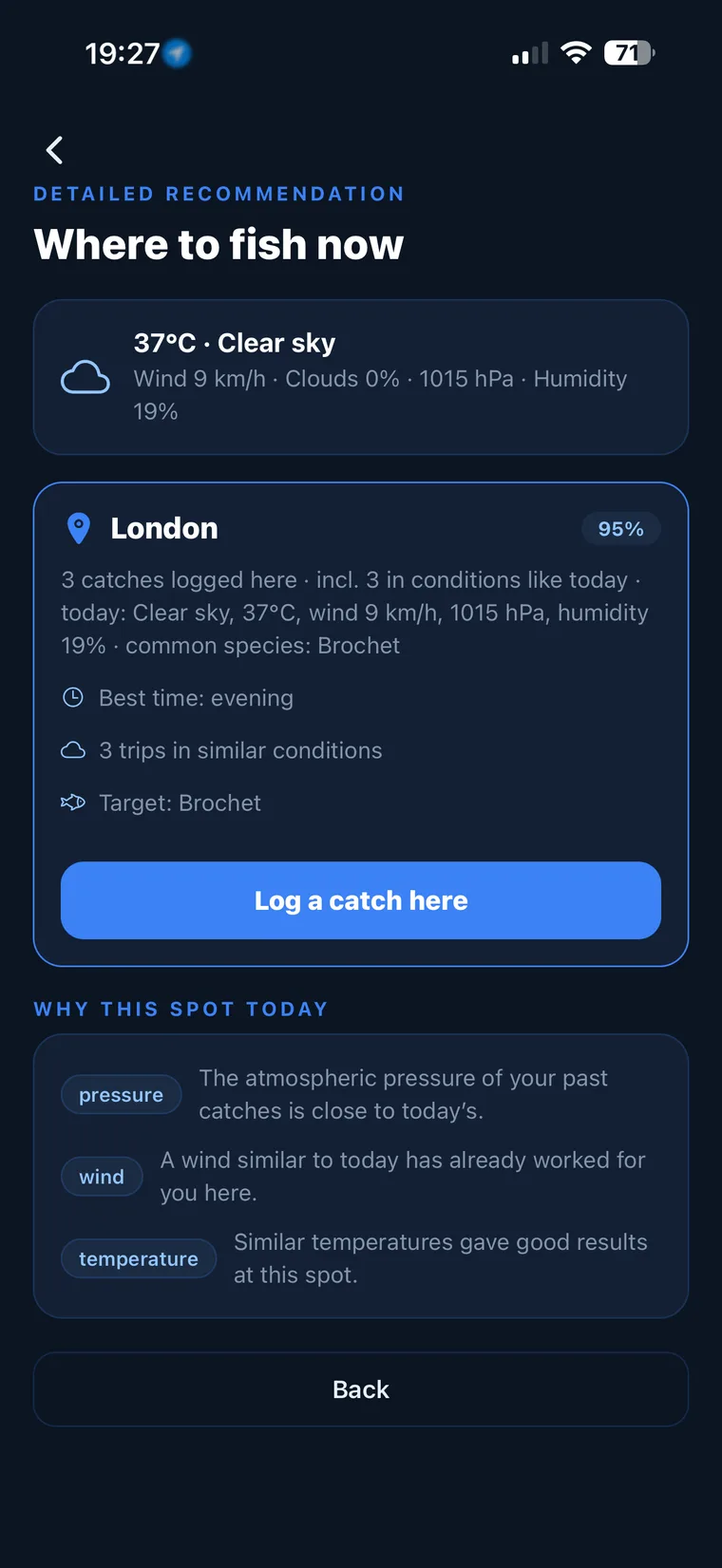
Not sure what to tie on?
Photograph your spot: CarnaFish reads the scene, cross-checks the conditions and gives you the zone, the lure and the retrieve. Free on iOS and Android.
Its best windows, and its limits
It gives its maximum:
- On a flood tide over a drying plateau, in the first hour and a half of the flood, when sea bass move up to feed on sand that has just been covered.
- At dusk and dawn, when sandeels and small prey hold high in the water.
- On a calm to slightly choppy sea. A little wash helps, provided you can still track the lure with your eyes.
- In estuaries, along channel edges at low water, where thirty centimetres is enough to move good sea bass around.
It is useless:
- In a heavy swell, where it comes out of the water on every wave.
- In broad daylight over deep water, where bass have settled and you need to get down.
- On a spot with a strong headwind, weight transfer or not: eleven grams remain eleven grams.
- When sea bass are visibly feeding on the surface: there a stickbait or a popper provokes more than a minnow drowned ten centimetres down.
Salt Skimmer, Komomo or Sasuke
Ima makes several saltwater minnows and the choice comes down to running depth and sea conditions.
The Ima Komomo is a shallow runner with a deeper body, working with a wider action and slightly lower in the water column. It is the pick in calm to slightly choppy water when you want a stronger signal over half a metre to a metre of depth.
The Ima Sasuke is longer and heavier, built for distance and for holding in a big sea. When the wind gets up and you need to reach beyond the bar, that is the one.
The Salt Skimmer is the most specialised of the three: it only does one thing, swim very high, but it does it better than the others. If you can only take one onto a drying plateau, take that one. For the deep complement, a lipless lure like the Sebile Koolie Minnow lets you work the same ground at high water without changing rod.
Our guide to lure fishing for sea bass explains how to work these spots through the tide. And if you are unsure which layer of water to attack as you arrive on an unfamiliar plateau, CarnaFish analyses a photo of the spot and answers.
Key takeaways
- It swims between ten and forty centimetres below the surface and never goes deeper, by design.
- Rod height is your depth control: rod high to skim, rod low to drop a little.
- It floats: stop winding to clear it from a rock or a clump of weed.
- In the wash, set your speed to the waves, never to a fixed cadence.
- Swap the trebles for singles if you fish cluttered ground: far fewer snags, almost no loss on the hookset.
FAQ
How deep does the Ima Salt Skimmer swim?
Between ten and forty centimetres below the surface depending on rod position and speed. That depth is fixed by the short lip and the buoyancy: no adjustment will take it deeper.
Does it cast properly despite its low weight?
Yes, thanks to an internal weight transfer that shifts the ballast to the rear in flight. It remains a lure of around ten grams, though: in a strong headwind a heavier model will carry much better.
Should you replace the stock hooks?
It is advisable if you fish cluttered ground. Rear-facing single hooks strongly reduce snagging on rock and weed without penalising hook-ups on sea bass. And in every case, rinse the lure in fresh water after each session.
When in the tide should you use it?
In the first hour and a half of the flood over a plateau that has just been covered, and late on the ebb along estuary channel edges. Those are the moments when sea bass move around in very little water.
Does it work in the wash?
On a calm sea, yes, provided you set the retrieve speed to the waves: fast as the water pulls back, slow as the wave arrives. In a heavy swell it comes out of the water too often and becomes unusable.
What is the difference with the other Ima saltwater minnows?
The Komomo swims slightly deeper with a wider action, and the Sasuke favours distance and holding in a big sea. The Salt Skimmer is the most specialised: a very shallow draught, for the shallows the other two cannot fish.
The full sea bass lure guideSeason-by-season strategy: which family of lure, when, and why.Go from theory to fish
CarnaFish reads your spot from a photo and gives you the game plan: zone, lure, retrieve. Free on iOS and Android.