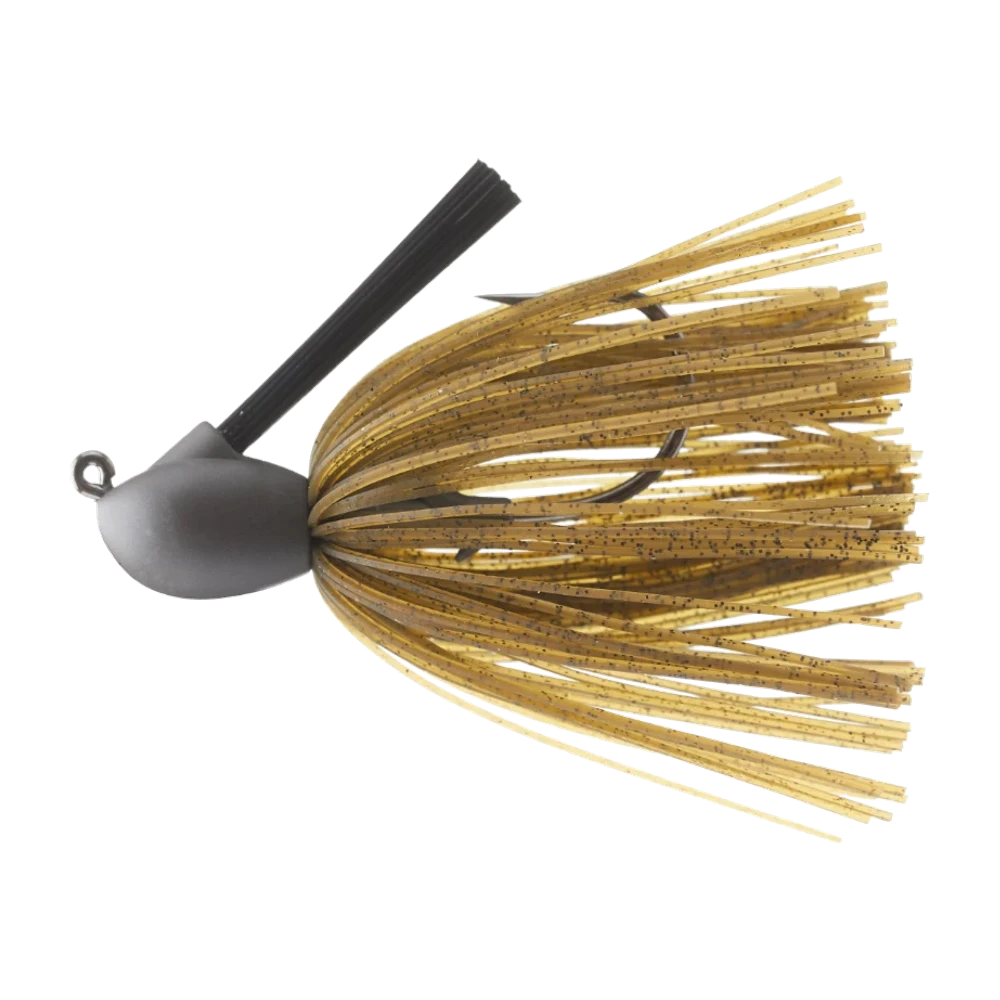
Keitech Tungsten Model I: the compact chatterbait you fish on the fall
Not sure this lure fits YOUR spot today? CarnaFish tells you in 10 seconds, from a photo.
The chatterbait has established itself as a search lure: you cast, you wind straight, the blade vibrates, you cover water. It works, and it is also the only way most anglers ever use one.
The problem shows up on vertical structure. A jetty, a bridge pillar, a sharp drop-off, a reed line that plunges straight down: those spots are fished from top to bottom, not from side to side. And a standard chatterbait, with its bulky lead head and a skirt that acts like a parachute, sinks slowly and crookedly. It is not built to fall.
The Model I changes that at the root: its head is tungsten. At equal weight, tungsten takes up roughly half the volume of lead. The head gets compact, the mass concentrates, and the lure gains a fall behaviour that lead chatterbaits simply do not have.
What tungsten changes in practice
Three effects follow directly from that density.
- The fall becomes fast and vertical. A 14 g lead chatterbait glides down with its skirt open. The Model I at the same weight drops far straighter, with the blade beating all the way down. You can count the metres and know where your lure is.
- The profile shrinks at equal weight. A smaller head slips between reed stems, slides along branches, and gets spotted less by pressured fish. You go heavier without going bigger.
- Contact comes through more clearly. Tungsten is hard: when the head hits a rock or a stump, you feel it precisely. With lead the knock is dull and cushioned.
On top of that comes the family's usual behaviour: the blade starts within the first few centimetres of the retrieve, with no need to accelerate to get it going. That is what makes the yo-yo retrieve possible — on every lift, the vibration restarts instantly.
The weight table
| Weight | Workable depth | Typical use |
|---|---|---|
| 7 to 10 g | 0.3 to 1.5 m | Margins, shallow weed beds, slow retrieve |
| 11 to 14 g | 1 to 2.5 m | All-round size, the backbone of the box |
| 18 to 21 g | 2 to 4 m | Vertical structure, wind, controlled fall |
The trailer alters these figures as much as the weight itself. A wide paddle-tail shad slows the descent and adds volume; a compact craw lets it drop. A Keitech Swing Impact Fat 3.8 threaded on the shank gives a vibration that complements the blade, while a discreet trailer preserves the compactness you came for.
The retrieve: get out of the straight wind
The straight retrieve remains valid, and it is even the one to start with in order to locate fish. But this model's specific value lies elsewhere.
The yo-yo sequence along vertical structure:
- Position yourself parallel to the jetty, the drop-off or the margin, not perpendicular to it.
- Cast short and tight against the structure and let it drop on a semi-tight line. Count the seconds.
- At the depth you want — or on bottom contact — give a firm 60 to 80 cm lift of the rod. The blade starts vibrating immediately.
- Let it drop back while following it down, without throwing slack. The blade keeps working through the fall.
- Repeat two or three times, then wind in and move a metre along the structure.
On the water: during a chatterbait's fall, a bite shows up as a descent that stops, never as a knock. If your line stops sinking after three seconds when it usually takes six, that is a fish. Set the hook without waiting to feel anything — waiting for confirmation means arriving too late.
The setup, spot by spot
The line. A 0.30 mm braid with a metre of 0.35 to 0.40 mm fluorocarbon leader. The braid gives you detection on the fall, the fluoro takes the abrasion against concrete and wood. For pike, add a soft wire trace or fluorocarbon of at least 0.60 mm.
The rod. An MH of 1.95 m to 2.10 m, with enough backbone to set a heavy-wire single hook. Avoid rods that are too stiff: a chatterbait hooks fish well, but a fish shaking its head on a single shank throws the lure easily.
The skirt. If you want maximum compactness, thin the skirt out by pulling some of the strands. You reduce volume, speed the fall up further, and keep the silhouette of a small baitfish. It is a free adjustment and often a decisive one under heavy pressure.
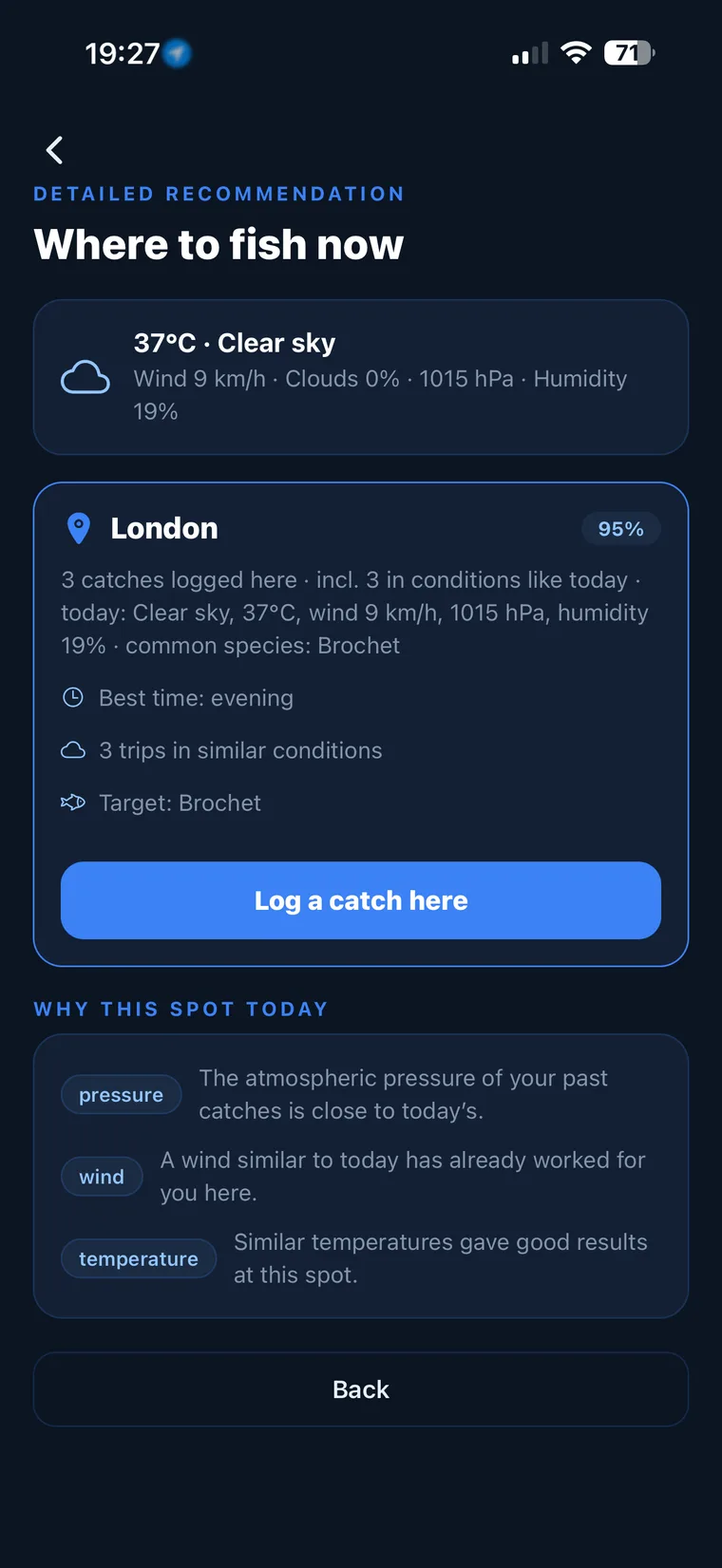
Not sure what to tie on?
Photograph your spot: CarnaFish reads the scene, cross-checks the conditions and gives you the zone, the lure and the retrieve. Free on iOS and Android.
Its ground, and its limits
Where it takes the lead:
- Vertical structure: jetties, pillars, walls, sharp drop-offs — its home ground.
- Dense reed margins, thanks to the reduced profile that slips between the stems.
- Deep or windy water, where you need weight without increasing lure size.
- Pike in the margins, on a straight retrieve just over a weed bed, with the right leader.
Where you should not persist:
- Large flat areas with no structure: any chatterbait will do, so go lighter.
- Very cold water and sluggish fish: vibration remains a strong signal, often too strong in winter.
- Filamentous weed: the blade and the line tie pick up strands, a limitation shared by the whole family.
Model I or a classic chatterbait
A ZMan ChatterBait Jack Hammer remains the reference for the straight retrieve: instant start-up, wide vibration, perfect tracking at high retrieve speed. For horizontal search fishing it is hard to beat. A Strike King Thunder Cricket covers the same ground with slightly more stable behaviour on fast retrieves.
The Model I is not trying to beat them there. What it brings is head density, and therefore two things neither of those models does as well: falling fast and straight along vertical structure, and keeping a compact profile when you have to go up in weight. If your fishing is horizontal, take the classic. If it is vertical, or if the wind forces you to add weight without wanting extra bulk, the Model I is the one to tie on.
Our guide to choosing a pike lure places the chatterbait among the other families of search lures. And if you are unsure what weight to rig facing a line of jetties, CarnaFish analyses a photo of the spot and answers.
Key takeaways
- Tungsten head: at equal weight, half the volume of a lead head.
- The fall becomes fast and vertical, with the blade beating all the way down.
- Fish it yo-yo style along vertical structure, not only on a straight retrieve.
- A bite on the drop is read on a line that stops, not on a feeling in the rod.
- Thinning the skirt cuts volume further and speeds the fall, for free.
FAQ
What does a tungsten head bring to a chatterbait?
Tungsten being roughly twice as dense as lead, the head is smaller at equal weight. The lure gets through dense vegetation better, is spotted less, falls faster and straighter, and transmits bottom contact more clearly.
What weight should I choose?
7 to 10 g for shallow margins, 11 to 14 g as an all-round size, 18 to 21 g for deep structure and windy days. The trailer influences fall speed as much as the weight itself.
Can it be fished any way other than a straight retrieve?
Yes, and that is its main point. Yo-yo it along a jetty or a drop-off: a firm 60 to 80 cm rod lift, then a controlled fall. The blade restarts instantly on every lift.
What trailer should I use?
A paddle-tail shad to add vibration and slow the fall, or a compact craw to keep a reduced profile and a fast descent. Match the choice to the style: horizontal or vertical.
Does it work for pike?
Yes, on a straight retrieve over weed beds, with a soft wire trace or heavy fluorocarbon. The 14 to 21 g sizes with a bulky trailer suit that fishing best.
Should I thin the skirt?
It is a useful adjustment under heavy fishing pressure or in clear water. Removing some strands cuts volume, speeds the fall and slims the silhouette, without changing how the blade works.
The full bass lure guideSeason-by-season strategy: which family of lure, when, and why.Go from theory to fish
CarnaFish reads your spot from a photo and gives you the game plan: zone, lure, retrieve. Free on iOS and Android.