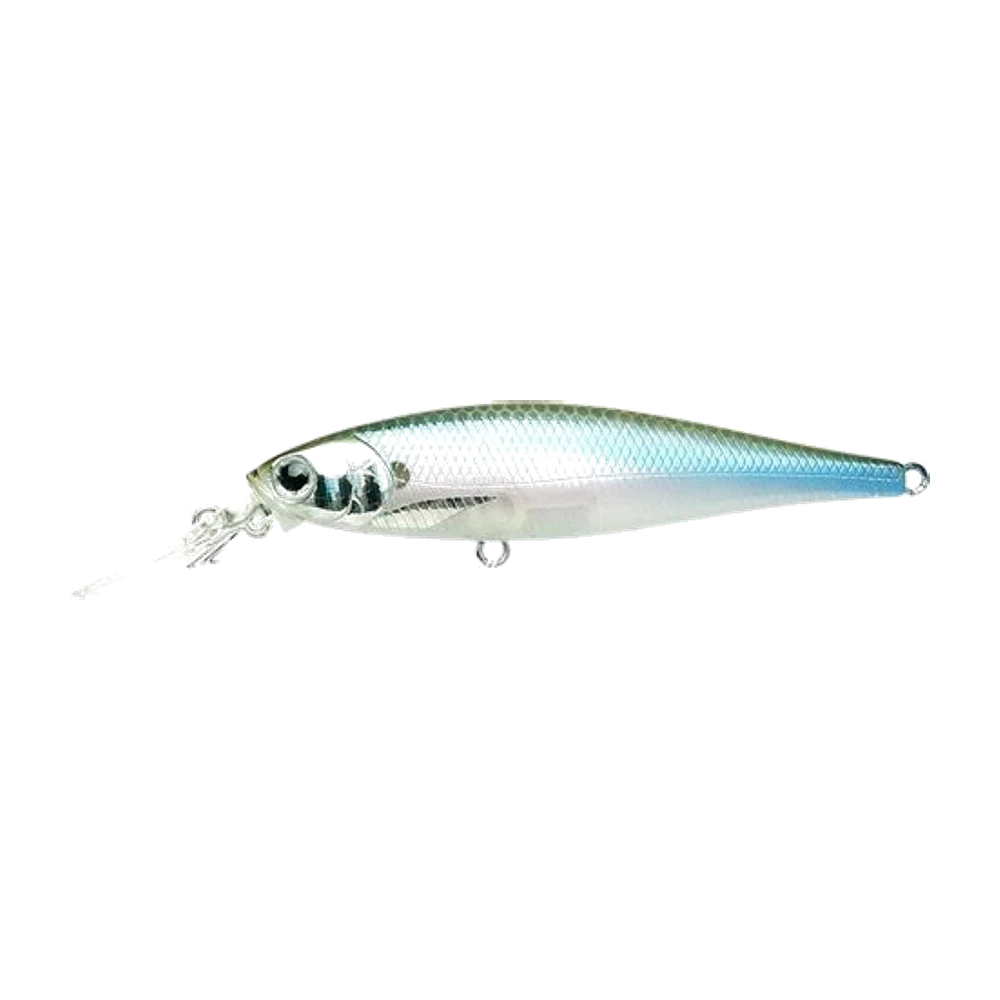
Lucky Craft Pointer 78: the short format you fish fast and twitchy
One lure, endless conditions. CarnaFish reads your spot from a photo so you are not just guessing.
This lure's big brother made one idea stick: on a suspending jerkbait, the pause is what catches the fish. If you are not familiar with how that works yet, the Pointer 100 explains it in detail, and its neutral suspension mechanics apply to this model too.
Except that the short format is not fished like the long one. Plenty of anglers buy the 78 expecting a "little 100" and give it the same ten second pauses. The result is disappointing: few bites, and the feeling that the lure is useless.
The reason is simple. A short, light lure that darts sharply and tightly is a reaction tool, not a contemplation tool. You do not use it to talk a slow fish into biting — you use it to trigger a fast one, and above all to fish where the 100 does not fit.
The differences that change the fishing
Shorter, twitchier darts. With less mass and less length, inertia drops. The lure sets off again faster after each twitch and cuts thirty to forty centimetre darts instead of wide sweeps. The signal is choppier, closer to a fry bolting away.
A higher running range. It works around a metre down instead of a metre and a half. That is exactly what shallow margins and small ponds need, and it is not enough as soon as the fish drop deeper.
A way into perch fishing. The size opens the door properly to perch, which will follow a ten centimetre lure but struggle to take it. On shoals herding fry in late summer, the 78 turns follows into bites.
Lighter tackle. Nine grams fishes comfortably on a two metre L rod with 0.20-0.25 mm fluorocarbon. That changes the feel of a full day and lets you fish light casting or fine spinning gear.
The cadence: tighten the rhythm
The reference retrieve is more sustained than on the long format.
- Cast short and accurate — ten to fifteen metres is plenty, this is placement fishing.
- Three fast, sharp twitches from the wrist, rod tip pointed at the water, almost linked together.
- A one second pause, no more.
- Straight into three more twitches. Over a fifteen metre retrieve you often give forty twitches where the 100 would ask for ten.
- Stretch the pause to three or four seconds only if the water drops below 12 °C or if you see follows without a strike.
On perch feeding at the surface, one variant works very well: a continuous run of six to eight twitches with no pause at all, then a dead two second stop. The break after all that commotion is what triggers.
On the water: on a shoal of hunting perch, never cast into the middle of the activity. Put the lure three or four metres out on the edge and retrieve away from the shoal. Casting into it scatters the fish for ten minutes; fishing the fringe lets you take five or six fish off the same spot.
Settings by spot
| Spot | Line | Cadence | Pause |
|---|---|---|---|
| Pond margin, 1 m of water | 0.20 mm fluoro | 3 fast twitches | 1 s |
| Perch on fry | 0.20 mm fluoro | Run of 6-8 twitches | 2 s after the run |
| River, slow seam | 0.22 mm fluoro | 2 twitches + drift | 2 s |
| Cold water, below 12 °C | 0.25 mm fluoro | 1 wide twitch | 4 s |
| Under low branches | 0.22 mm fluoro | Skip cast, 2 twitches | 1 s |
The rod matters as much as the line. An L or ML of 2 m to 2.10 m with a tip action gives you the crispness to link twitches without tiring your wrist, and stays soft enough not to lose perch — their thin mouths tear quickly on a hard hookset at close range.
Not sure what to tie on?
Photograph your spot: CarnaFish reads the scene, cross-checks the conditions and gives you the zone, the lure and the retrieve. Free on iOS and Android.
Where it beats the long format
- Small waters and narrow arms, where a fifteen metre cast is enough and accuracy beats distance.
- Margins in a metre of water, out of reach of a jerkbait that dives to a metre and a half.
- Perch shoals in late summer and autumn, feeding on fry.
- Cluttered spots — under branches, between two jetties — where a skip cast under cover is possible with a light lure.
- Pressured bass, which refuse bigger profiles on heavily fished waters.
Stay with the 100 when:
- The fish are between one and two metres, outside the 78's range.
- Pike are the target: the small format gets bitten off or swallowed deep for no benefit.
- There is wind: nine grams does not carry and the slack line becomes unmanageable.
- The water is very cold, where a bulkier lure with very long pauses is far more productive.
Pointer 78 or a slow-cadence small minnow
Against a slim jerkbait like the Gunki Whiff, the logic flips: the Whiff plays discretion and near-motionless suspension along the margin, while the Pointer 78 plays twitchiness and provocation. On the same margin, try the fast rhythm first; if you get follows without strikes, switch to the slow register.
A small soft plastic on a light jig head will do better as soon as perch drop below two metres, and a compact shad covers a large area more efficiently when the fish are scattered.
Our guide to lure fishing for perch places the compact jerkbait among the other approaches. And if you are torn between a fast cadence and a long pause when you reach a margin, CarnaFish analyses a photo of the spot and answers.
Key takeaways
- Same suspension principle as the 100, but the opposite use: fast cadence, one second pauses.
- Runs around a metre down: this is a margin lure, not a drop-off lure.
- Opens up perch fishing properly, which the long format does not convert.
- On a hunting shoal, fish the fringe, not the middle.
- Useless in wind, in cold water and for pike: go back to the long format then.
FAQ
What is the difference between the Pointer 78 and the Pointer 100?
The 78 is shorter, lighter, runs about fifty centimetres higher and darts more sharply and tightly. It is fished with a fast cadence and short pauses, while the 100 is built for wide twitches followed by long pauses.
Is the Pointer 78 any good for perch?
Yes, it is one of its best uses. The short format matches the mouth size of perch, which turns the follows you get with a ten centimetre jerkbait into actual bites.
What cadence should I use?
Three sharp, fast twitches followed by a one second pause, repeated all the way in. On hunting perch, try runs of six to eight twitches with no pause, then a dead two second stop.
What rod for a 9 g jerkbait?
An L or ML of 2 m to 2.10 m with a tip action. It lets you link twitches without fatigue and stays soft enough not to tear the mouth of a perch hooked at close range.
Can you fish it for pike?
That is not what it is for. Pike take it happily but swallow it deep, which raises the risk of injury and breakage even with a leader. For pike, the bigger format suits better.
What do I do when fish follow without biting?
Break the rhythm rather than changing lure: a run of very fast twitches followed by a dead two or three second stop converts a good share of followers. If that is not enough, slow right down and lengthen the pauses.
The full perch lure guideSeason-by-season strategy: which family of lure, when, and why.Go from theory to fish
CarnaFish reads your spot from a photo and gives you the game plan: zone, lure, retrieve. Free on iOS and Android.