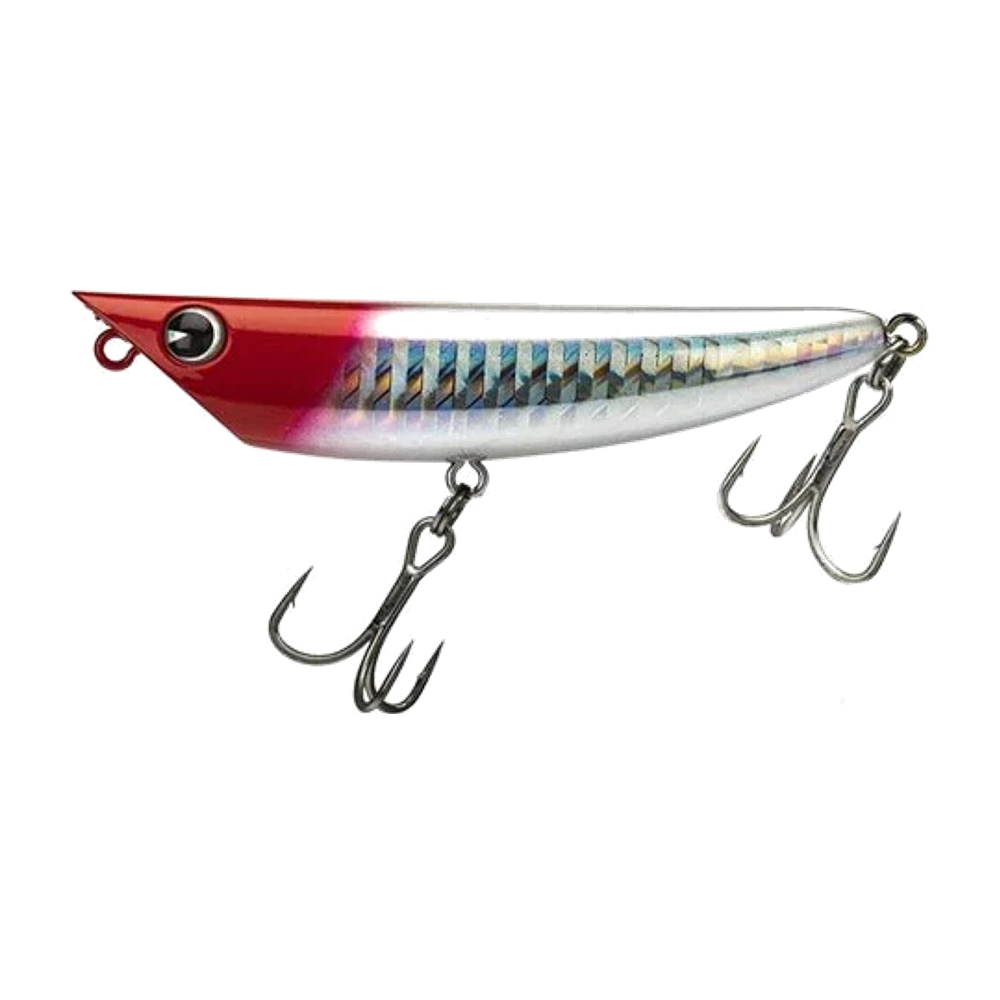
Ima Popkey: the popper that lifts a sea bass that was not feeding
Rather not fish it blind? Photograph your spot — CarnaFish cross-checks the conditions and points you the right way.
The saltwater popper suffers from a misunderstanding. Almost everybody pulls one out at the moment sea bass are smashing the surface, which is to say the moment any lure landing in the shoal would catch a fish. Then the feeding stops, the popper goes back in the bag, and everyone returns to soft plastics.
That is a shame, because the popper's real window is elsewhere: making a fish that was not feeding come up. A sea bass sitting in three metres of water at first light gives nothing away. Yet it is perfectly willing to rise if something above it produces the right signal at the right rhythm.
The Popkey is cut out for that job: enough spray to be heard from a distance on flat water, compact enough not to look excessive when the fish arrives underneath and takes a good look.
Two signals in one lure
Most poppers only know how to do one thing. This one changes behaviour according to how sharp your stroke is, and that is the key to using it.
- Sharp stroke, wrist, rod tip down: the cupped mouth bites into the water and throws a vertical spray with a clean plop. That is the calling signal, the one that carries a long way on a calm sea.
- Soft stroke, a pull you follow through: the lure glides sideways instead of spraying, leaving a wake and a few bubbles. That is the close-range signal, the one that commits a fish that has already come up.
Being able to do both solves the classic popper problem: a lure that calls well is often too violent once the fish is three metres away, and a discreet lure never gets heard. Here you switch from one to the other without changing lure, simply by changing your stroke.
The calling sequence, step by step
- Cast as far as you can, parallel to the shore or out to sea depending on how the current runs.
- Let the rings disperse. Three to five seconds doing nothing. That wait is part of the fishing, not wasted time.
- Three sharp pops a second apart, to announce your presence over the ground.
- A long pause of four to five seconds. This is where the fish sitting below decides to come up.
- Two sharp pops, then a soft pull that slides the lure sideways. Follow it straight away with a three second pause.
- Repeat all the way to the bank, never speeding up. A full retrieve should take considerably longer than you think it needs to.
On the water: when a sea bass misses the lure on the surface — there is a boil, you feel nothing — whatever you do, do not speed up and do not strike into thin air. Stop everything for two seconds, then make a single soft pull that slides the lure thirty centimetres. The fish is almost always still there, disorientated, and it comes back on that soft movement more often than not. This is the costliest mistake in popper fishing.
Conditions: when it works, when it does not
| Condition | Verdict | Why |
|---|---|---|
| Dawn and dusk, flat water | Excellent | The signal carries, the bass sit high in the water column |
| Slight ripple | Very good | The ripple breaks up the silhouette without drowning the noise |
| Big sea, foam | Poor | The spray is lost in the background noise, the lure disappears |
| Full sun, midday, clear water | Weak | The bass have dropped down and will not rise for a surface signal |
| More than 6-7 m under the lure | Weak | Too far for a fish on the bottom to make the trip |
Depth is the most underrated variable. A popper calls a fish effectively within the first three or four metres. Beyond that a sea bass may hear it, but it does not come up. If your spot is ten metres deep, the popper is not the right tool unless fish are showing.
On hooks, fit heavy stainless trebles and check them after every session. A sea bass attacking on the surface often hits sideways at an awkward angle, and a stock treble that is too fine will open up during a fight in the waves.
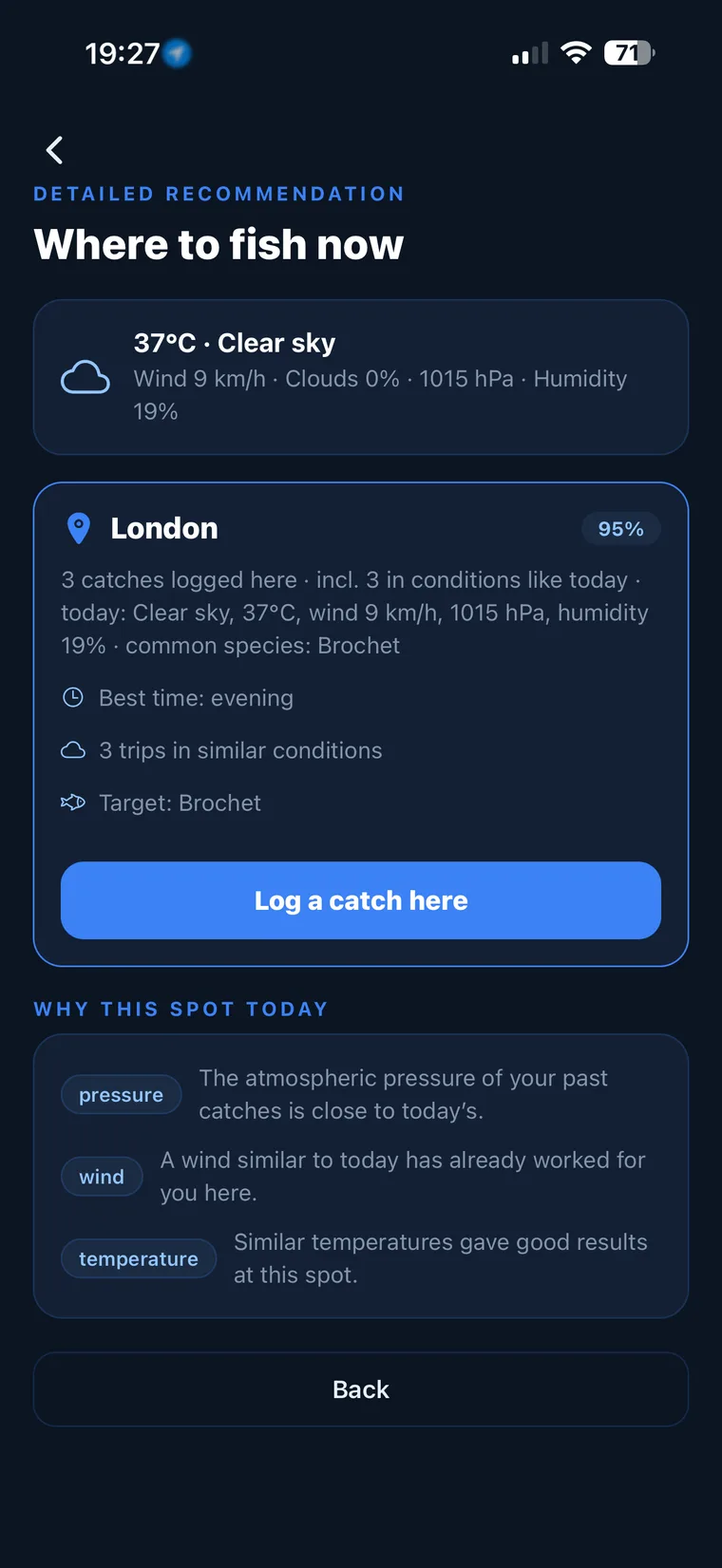
Not sure what to tie on?
Photograph your spot: CarnaFish reads the scene, cross-checks the conditions and gives you the zone, the lure and the retrieve. Free on iOS and Android.
The spots to favour
- Rocky flats under two to four metres of water, at the end of the flood tide.
- Points and the ends of breakwaters, where two currents meet and concentrate the bait.
- Beach margins with a sand bar, when the waves are working and putting matter into suspension.
- Estuaries early on the ebb tide, along the line between clear and coloured water.
Do not, on the other hand, waste time with a popper over uniform deep ground with no structure. The whole idea of a calling lure assumes there is something below holding the fish; otherwise you are making noise over an empty area for an hour.
Popkey or stickbait
A Xorus Patchinko 140 works on a continuous glide with no water displacement. It covers ground faster, casts further, and suits a situation where sea bass are actively feeding on the surface over a moving shoal: you wind it back zigzagging and sweep the area.
The Popkey does the opposite job. It stays almost on the spot, it makes noise, and it waits. You pick it when nothing is happening on the surface and you want to force a fish up, not when the feeding has already started. The two complement each other in the same bag: the popper to open the session on flat water, the stickbait as soon as a fish has shown.
If the bass refuse the surface, the Ima Komomo or the Ima Sasuke take over in the subsurface with a far more discreet action. Our guide to lure fishing for sea bass sets out how to run these three families back to back over a tide. And if you are torn between surface and subsurface as you arrive on the point, CarnaFish analyses a photo of the spot and answers.
Key takeaways
- A popper is first and foremost there to lift a fish that was not feeding, not to cash in on a feeding spree in progress.
- Sharp stroke for the calling spray, soft stroke for the close-range glide: the same lure does both.
- Three pops, four to five seconds of pause. The pause is the useful part.
- On a missed take, stop for two seconds then make one soft pull — the fish often comes back.
- Ineffective in more than six metres of water, in a big sea and in the middle of the day.
FAQ
Do you have to wait for fish to show before using a popper?
No, and that is actually the opposite of its best use. The popper is above all a calling lure: it lifts a sea bass sitting in the first three or four metres of water, on a calm sea, at dawn or dusk.
What depth of water suits a popper?
Roughly one to four metres, up to six in good conditions. Beyond that a fish on the bottom hears the signal but will not make the trip, and a subsurface or soft plastic approach will be more productive.
What do you do when a bass misses the lure?
Stop everything for two seconds, then make one soft pull to move the lure thirty centimetres. Speeding up or striking into thin air scares off a fish that, more often than not, is still right underneath.
Should you change the stock hooks?
Yes, for heavy stainless trebles as soon as you are targeting good sea bass in the waves. Surface takes often come in sideways at a bad angle, and a treble that is too fine will bend during the fight.
What colour should you choose from the shore?
Sardine or translucent tones at daybreak in clear water, and solid white or black in very low light. On the surface the fish mainly sees a silhouette cut out against the sky, so contrast matters more than the exact shade.
Popper or stickbait, which comes out first?
The popper when the surface is calm and nothing is happening, to force a fish up. The stickbait as soon as a fish has shown or bass are feeding, because it covers ground faster and casts further.
The full sea bass lure guideSeason-by-season strategy: which family of lure, when, and why.Go from theory to fish
CarnaFish reads your spot from a photo and gives you the game plan: zone, lure, retrieve. Free on iOS and Android.