Sebile Flatt Shad: the lipless that glides, from river to sea
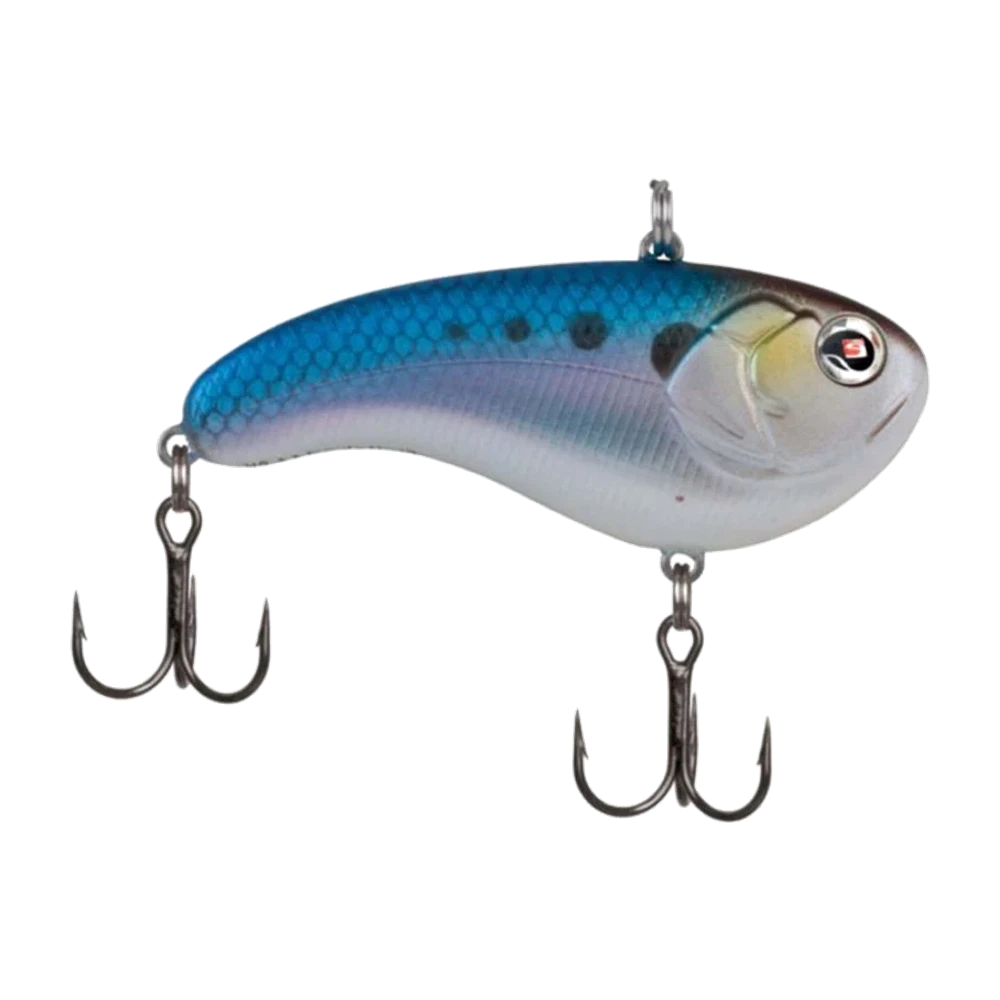
One lure, endless conditions. CarnaFish reads your spot from a photo so you are not just guessing.
There are two moments when a lipless becomes irreplaceable: when you need to search a big unknown area fast, and when you need to reach water no other lure can touch because the wind is in your face. The rest of the time, a soft plastic shad does the job just as well.
The Flatt Shad adds a third card to that hand, and it is the one that sets it apart from most lipless baits: its flattened body does not drop vertically when you stop pulling, it glides off to the side while turning slowly. You get a falling phase that is genuinely a fishing phase, not just a return to the bottom. It is also what makes it one of the rare lipless baits you use equally over a zander flat and off a bass beach.
A flat body that glides instead of sinking
A standard lipless has a fairly thick section: on the stop, it noses down and drops quickly, more or less straight. The Flatt Shad, with its very flat flanks and a mass concentrated low, behaves differently.
- It drifts sideways by fifty centimetres to a metre during the fall, depending on the drop height.
- It turns as it falls, producing a run of quick flashes off the flanks, visible from a distance in clear water.
- It sinks more slowly than its weight would suggest, which stretches the presentation time.
In practice: on a two-metre drop, the lure stays in its attractive phase for three or four seconds instead of one. Over a day, that is a considerable increase in effective fishing time — and nearly every bite comes there.
The yo-yo, the main retrieve
- Cast far. That is this lure's strength, do not waste it fishing at twenty metres. Aim for the limit of your range.
- Let it drop on a tight braid until it touches bottom, counting. You are building your depth map.
- Two or three fast turns of the handle, or one firm pull of the rod, to lift the lure one or two metres. You feel the tight vibration in the rod tip.
- Cut dead and let it fall, keeping just enough tension to feel the line, without restricting the sideways glide.
- Regain contact, then start again until you reach the bank.
In salt water on active bass, replace the yo-yo with a fast, irregular mid-water retrieve: three fast turns, a half-beat stop, three turns. Bass attack on the break, not on the speed.
On the water: on the fall, never leave the line completely slack, but do not tighten it either. If the braid is tight, the lure pendulums back towards you instead of gliding and you delete exactly the phase that produces bites. The right setting is visible on the water: the line should drop in a slow curve, not plummet and not stay straight.
Fresh water or salt: two uses of one lure
| Water | Size | Retrieve | What you are after |
|---|---|---|---|
| Reservoir, zander flat, 3 to 8 m | 6.6 to 7.7 cm | Wide yo-yo, bottom contact every time | A long falling phase |
| River, hole and current | 7.7 cm | Short yo-yo, holding in the flow | Staying in contact despite the current |
| Beach and light shore casting for bass | 6.6 to 7.7 cm | Fast irregular retrieve | Casting distance into a headwind |
| Breakwater and harbour, deep water | 7.7 cm | Vertical yo-yo along the structure | Searching the water column |
| Summer perch, clear water | 5.5 cm | Short, fast yo-yo | Fish busting on the surface and mid-water |
The logic is always the same: the more depth you have, the more you exploit the fall; the more active and high the fish are, the more you speed up and shorten the falling phases.
The setup to review before using it in salt water
This is the point most anglers overlook when moving a freshwater lure to saltwater use.
- Split rings and hooks must be replaced with heavy-duty, saltwater-treated models. A freshwater treble opens on a good bass and rusts in one session.
- A 0.30-0.40 mm fluorocarbon leader of one metre: it takes the abrasion from rock and shellfish.
- A round snap rather than a direct knot. On a lipless, the tie point is on the back and the knot takes a permanent pull from the vibration; a snap spreads it better and saves you time.
- A systematic fresh-water rinse after every saltwater session, hooks included.
In fresh water the stock setup is fine, but if you also run into pike on the same spots, add a short heavy fluorocarbon or titanium leader: a lipless taken deep otherwise ends in a break-off.
Not sure what to tie on?
Photograph your spot: CarnaFish reads the scene, cross-checks the conditions and gives you the zone, the lure and the retrieve. Free on iOS and Android.
Where it takes the lead, where it is useless
Its windows:
- Fast searching over a flat or an unknown area, with an unbeatable water-covered-per-hour ratio.
- Headwinds, where its compact profile and density keep the casting distance.
- Surface feeding in salt and fresh water alike: you reach the shoal, drop below it, come back up.
- Cold deep water, on a very slow yo-yo above drop-offs.
Its limits:
- Very snaggy bottom or weed. Two bare trebles on a lure that keeps returning to the bottom means a snag per cast.
- Extremely wary fish in clear, calm water. The signal is strong and unsubtle; a discreet soft plastic beats it.
- Small, shallow waters. With no depth, the falling phase disappears and the lure loses its main point.
Flatt Shad, fat lipless or perch lipless
The Savage Gear Fat Vibes plays the opposite card: a thick body, high water resistance, a powerful vibration that carries far in stained water, and a fast, straight drop. It is the better choice when visibility is poor and you want to call fish in. The Flatt Shad bets on flash and drift rather than volume of sound: it is superior in clear water and whenever the fall matters more than the call.
The Jackall TN 70 covers yet another ground: reduced size, very tight vibration, calibrated for perch and small fish. It does not cast as far and has none of the saltwater versatility.
In other words, these three lipless baits are not interchangeable: the Fat Vibes for dirty water, the TN 70 for finesse perch fishing, the Flatt Shad for distance, the gliding fall and mixed fresh-salt use. Our guide to lure fishing for bass sets out the tide windows where this kind of lure works best. And if you are unsure which size to clip on facing an unknown beach, CarnaFish reads a photo of the spot and answers.
Key takeaways
- The flat body makes the lure glide sideways on the fall: that is where the bites come.
- Work it yo-yo style, and let the line drop in a slow curve, neither tight nor slack.
- One of the rare lipless baits genuinely versatile across fresh and salt water, as long as you upgrade the hardware for the sea.
- Its casting distance makes it the weapon for headwinds and big areas to search.
- Unsuited to snaggy bottoms and to small waters with no depth.
FAQ
How do you fish a lipless yo-yo style?
You lift the lure one or two metres with two or three fast turns, then cut dead and let it fall back while keeping slight tension. You regain contact and start again until you reach the bank.
Is the Flatt Shad really suitable for saltwater fishing?
Yes, provided you replace the split rings and hooks with saltwater-treated models, add a 0.30-0.40 mm fluorocarbon leader and rinse the lure in fresh water after every session.
What size should you pick?
5.5 cm for perch and clear water, 6.6 cm as the go-anywhere size for zander and bass, 7.7 cm as soon as you need to cast far, fish deep or hold in current.
Why do I snag the bottom so much with this lure?
Because a lipless always drops back to the bottom with two bare trebles. Over snaggy ground, shorten the falling phase, or switch outright to a weedless soft plastic.
What is the difference with a fat lipless like the Fat Vibes?
The fat lipless vibrates harder, carries further in dirty water and drops straight. The Flatt Shad bets on flash and a gliding fall, which makes it better in clear water and on fish that bite on the drop.
Should you set the hook or let the fish hook itself?
On a hit during the fast phase, the fish usually hooks itself. On a bite on the drop, you have to regain contact with one turn of the handle then set sideways: the line is too slack for a direct hookset to work.
The full zander lure guideSeason-by-season strategy: which family of lure, when, and why.Go from theory to fish
CarnaFish reads your spot from a photo and gives you the game plan: zone, lure, retrieve. Free on iOS and Android.