Megabass Vision 95: casting a small jerkbait a long way
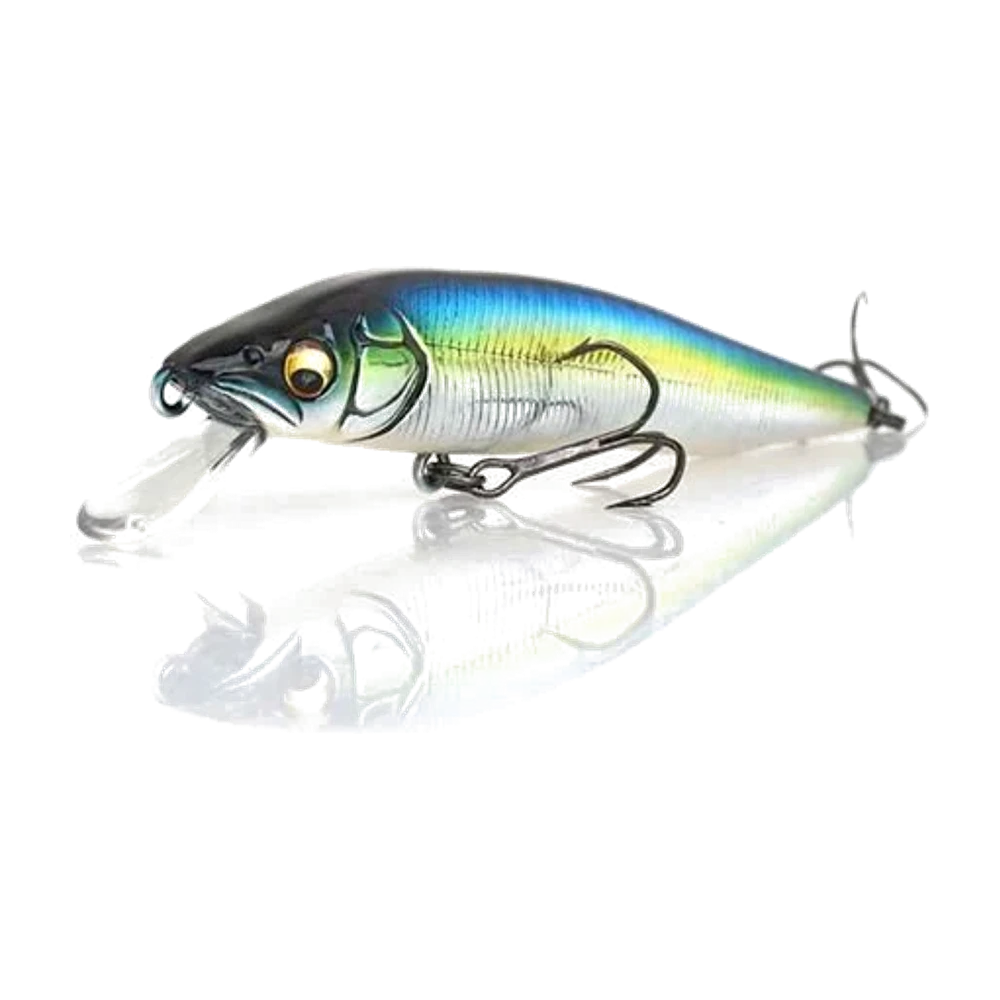
One lure, endless conditions. CarnaFish reads your spot from a photo so you are not just guessing.
Fishing from the bank raises a problem boat anglers never meet: the fish are often out of range. On a big pond, the interesting drop-off sits thirty-five metres out, the perch are smashing bait in the middle, and your 10 g jerkbait lands at twenty-two metres after tumbling through the air. You can see the fish, you cannot reach them.
A small jerkbait casts badly for a simple mechanical reason: it is light, long and flat. In flight it spins on itself and acts like a blade putting on the brakes. The Vision 95 attacks exactly that with a moving weight system whose balls slide to the rear on the cast and lock the lure into a streamlined attitude, then return forward as soon as it hits the water.
The gain is not trivial. On a lure of this size, we are talking about several metres per cast — enough to reach the drop-off that stayed out of range.
How weight transfer works, and what it implies
The principle is mechanical: one or more heavy balls travel along an internal rail.
- On the cast, acceleration throws them towards the tail. The centre of gravity moves back, the lure flies tail-first like an arrow and stops tumbling.
- On impact with the water, and then from the first turns of the handle, they return forward and give the lure its swimming attitude back.
Two practical consequences plenty of anglers miss.
You have to "arm" the lure before the first cast. If the balls stayed at the rear in storage, the first cast's action will be wrong. One or two firm pulls after impact are enough to put them back — you can hear them click.
A soft cast triggers nothing. On a lobbed cast with no acceleration, the balls do not move and you lose the whole benefit. The stroke has to be crisp and accelerating at the end, not wide and slow.
The retrieve: bursts, not single twitches
| Context | Twitch sequence | Pause | Note |
|---|---|---|---|
| Active hunting perch | 4 to 6 fast | 0.5 to 1 s | continuous rhythm, little dead time |
| Settled perch, clear water | 2 sharp | 3 to 4 s | the pause makes the difference |
| Bass on structure | 3 sharp | 2 to 3 s | aim for the edge of the structure |
| Cold water below 12 °C | 2 slow | 5 to 8 s | slow everything down, including your hand |
- Cast hard, accelerating at the end of the stroke to trigger the weight transfer.
- Let it reach its depth: two or three fast turns of the handle after impact, which also resets the balls.
- Run your burst of twitches, rod tip low and slightly to the side, wrist only. Every input must be sharp, not pulled.
- Mark the pause, line semi-slack. It is during the pause that you feel the bite — often just weight, with no knock.
- Take up the slack with half a turn of the handle before the next burst, without moving the lure.
On the water: on a compact jerkbait, the length of your pause should follow water clarity, not just temperature. The clearer the water, the longer the fish takes to come in and study the lure — and the longer the pause needs to be. In dirty water, a long pause simply makes the fish lose sight of the lure: shorten it and keep the bursts coming.
The compact profile, a tactical choice
A 9.5 cm jerkbait sits in an interesting zone: big enough to interest a decent bass, small enough not to put off a 30 cm perch. It is a dual-target size, which makes it a good searching lure when you do not yet know what is in front of you.
On heavily fished water, that reduced size is also a direct advantage. The fish there have seen dozens of 11 to 13 cm jerkbaits go past. A shorter profile, on a snappier trajectory, often gets through where the standard size now only produces follows.
The trade-off is that it does not run deep: the realistic range is 0.8 to 1.5 m depending on the line used. Heavy fluorocarbon makes it swim higher, thin braid with a short leader lets it reach the bottom of its range.
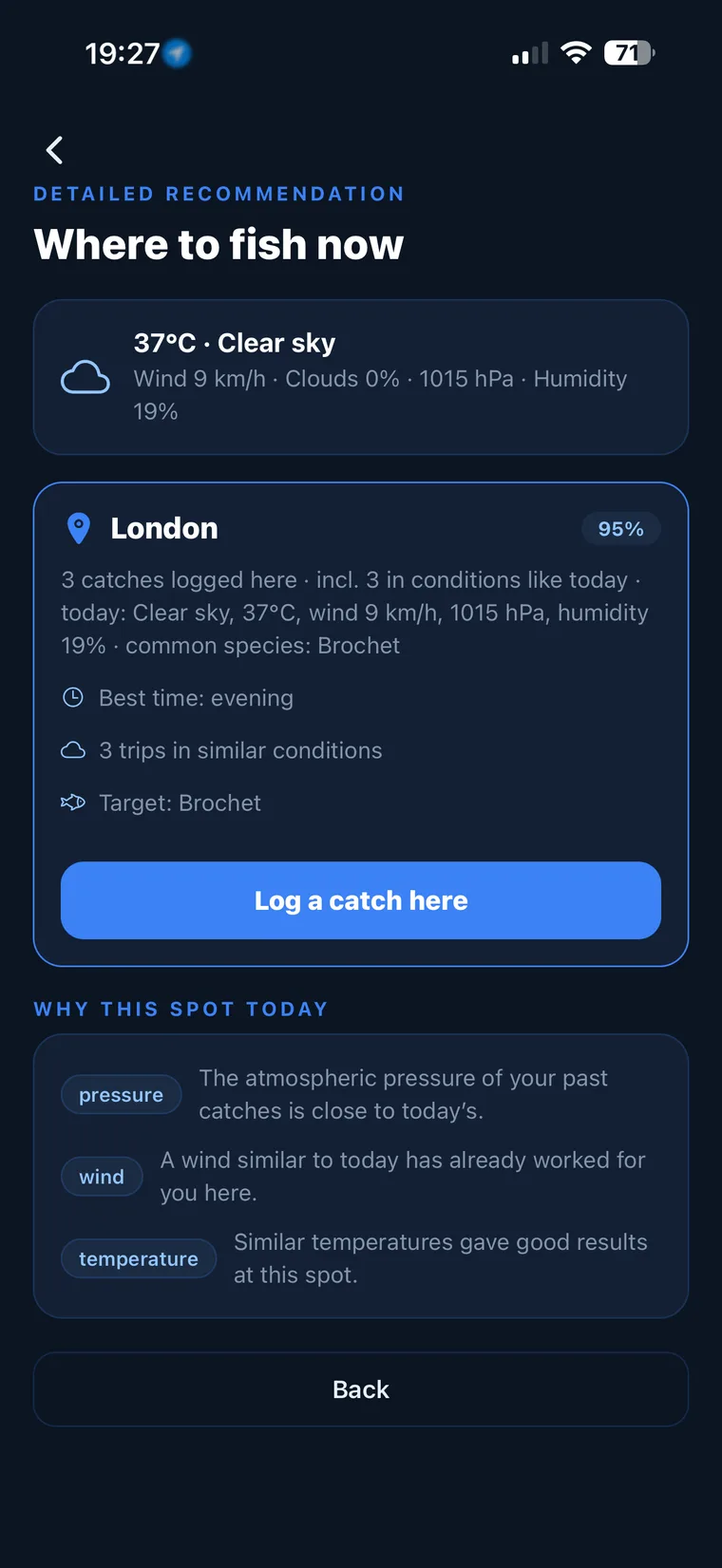
Not sure what to tie on?
Photograph your spot: CarnaFish reads the scene, cross-checks the conditions and gives you the zone, the lure and the retrieve. Free on iOS and Android.
The spots that show it off
- Drop-offs only reachable on a long cast, typically 25 to 35 m from the bank, on big ponds and gravel pits.
- Reed edges, fishing parallel rather than perpendicular, so the lure stays in the hunting zone throughout the retrieve.
- Perch busting bait in open water, where casting distance decides everything: reaching the school before it moves.
- Flooded trees and jetties for bass, provided you keep some margin — the two trebles snag easily.
It is poorly suited, on the other hand, to depths over two metres, to heavily stained water where its visual signal does not carry, and to spots thick with branches where a Texas-rigged soft plastic will get through without snagging.
Vision 95 or Vision 110
The Vision 110 runs deeper, displaces more water and targets bass first and foremost, with the suspension tuning work covered on its own page. The 95 favours something else: a reduced profile that also interests perch, and more snap on the twitch.
The switch between the two comes down to two criteria. Depth: beyond 1.50 m, take the 110. Fishing pressure: on heavily visited water where the fish refuse standard profiles, the 95 converts better.
Against a more classic lake jerkbait such as the Lucky Craft Pointer 100, the Vision 95 stands out mainly for its casting range and for a sharper sideways dart on every rod snap. Our guide to perch fishing with lures places the compact jerkbait among the other approaches. And if you are torn between a jerkbait and a soft plastic on a margin spot, CarnaFish analyses a photo of the spot and answers.
Key takeaways
- The moving balls slide back on the cast and give several metres of range to a light lure.
- Cast hard and accelerate at the end of the stroke, or the system never triggers.
- Two or three turns of the handle after impact put the balls back in swimming position.
- Match the pause to water clarity: long in clear water, short in dirty water.
- Compact dual-target profile for perch and bass, but limited to 1.50 m of depth.
FAQ
Why does the Vision 95 cast farther than an equivalent jerkbait?
It uses moving balls that slide rearwards during the cast. The centre of gravity moves back, the lure stops tumbling in flight and cuts the air instead of braking. On a lure of this weight, the gain is measured in metres.
Do you need to do anything particular after the cast?
Yes, give two or three firm turns of the handle the moment it lands. That brings the balls back to the front position and restores the lure's swimming attitude. Without it, the first metre of the retrieve is wrong.
How deep does the Vision 95 run?
Between 0.8 and 1.5 m depending on the line. Heavy fluorocarbon keeps it high in that range, thin braid with a short leader lets it reach the bottom of it.
Vision 95 or Vision 110, which should you pick?
The 110 for bass and spots deeper than 1.50 m. The 95 for perch, heavily fished waters and any situation where a shorter profile gets through better than a standard size.
How long should the pause be?
From under a second on active perch to more than five seconds in cold water. The criterion people forget is clarity: the clearer the water, the longer the pause needs to be to let the fish come in.
Can you fish it in stained water?
It is not its ground. Its signal is essentially visual, with the flank flash on every dart. In dirty water, a vibrating lure or a soft plastic with a big tail will produce a signal the fish actually detects.
The full perch lure guideSeason-by-season strategy: which family of lure, when, and why.Go from theory to fish
CarnaFish reads your spot from a photo and gives you the game plan: zone, lure, retrieve. Free on iOS and Android.