Missile Baits Missile Craw: the slim craw that replaces the tube
This lure shines under specific conditions. CarnaFish tells you in 10 seconds if today is one of them.
Everyone has lived this with a flipping tube: the bite is solid, you set the hook, and the fish comes off halfway back. The tube's hollow body collapses on the shank at the hookset, soaks up the energy, and the point rarely comes out where it should. The Missile Craw is a direct answer to that problem — a bait that keeps the slim silhouette and the fall rate of a tube, but lets the hook point drive straight through.
The flaw nobody admits about a tube
A flipping tube is a hollow cylinder. At the hookset, the plastic compresses around the hook before the point breaks out, and on a bony mouth like a bass's, that delay is enough to miss the anchor point. The usual fix is to set harder, which tears up more baits than it lands fish.
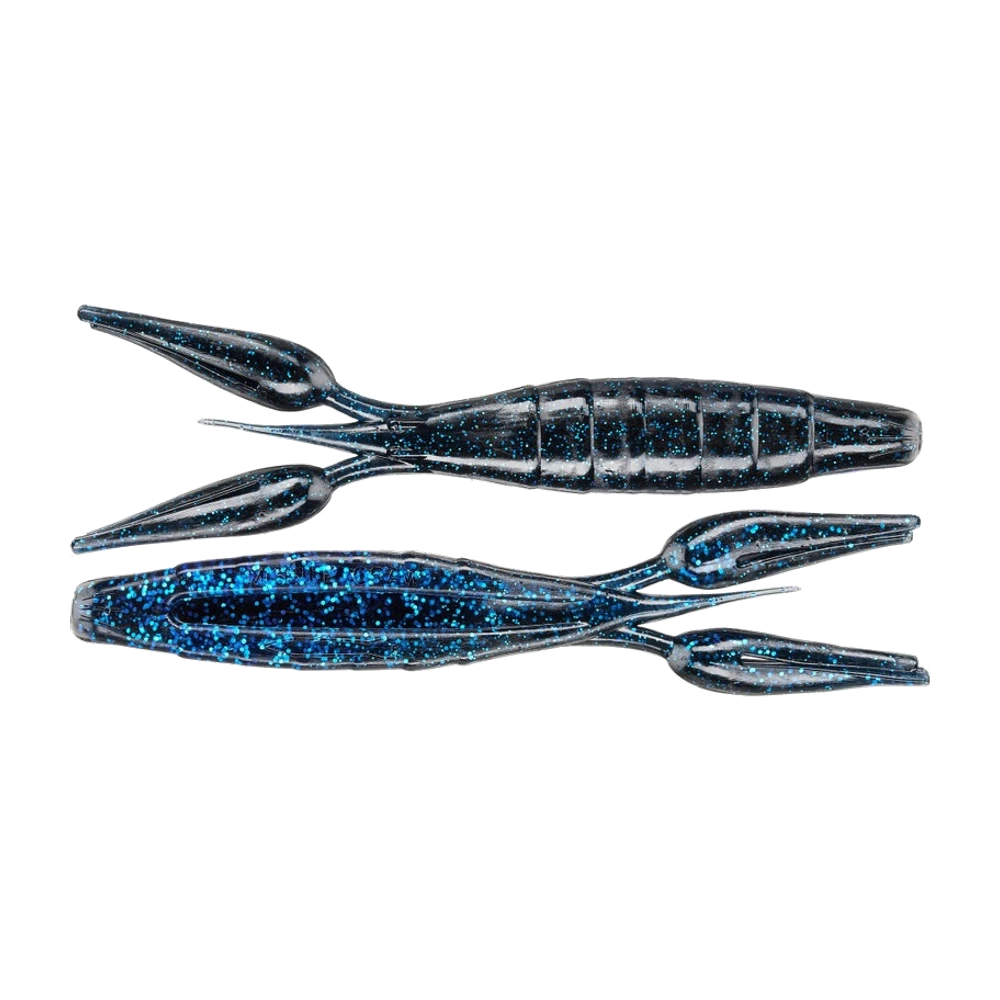
Missile Baits came at it from the other end: keep the slim profile that makes a tube worth flipping, but build the body around a pronounced hook slot, clearly visible on the lower bait in the photo. The hook seats inside it, the point sits under a minimal skin of plastic, and the hookset drives through with no compression. The gain is not up for debate after a day of flipping wood.
A solid head, and why that is deliberate
The nose of the bait is solid, not hollow, and that buys three things. First, hook retention: a solid nose does not tear on the first bite and does not slide down the shank. Second, fall rate: with the mass up front, the bait drops nose-first, straight, without gliding.
Above all, the manufacturer makes one concrete point: despite the slim profile, the bait keeps a little bulk, and that is exactly what makes it skip. A plastic that is too flat or too soft digs in on the first contact with the water; here, the mass in the nose relaunches the bait for two or three bounces.
Skipping under a dock
This is where the Missile Craw stands apart most. Low cast, a trajectory nearly parallel to the surface, and let the bait touch down flat a couple of yards short of the target. Your thumb on the spool kills the last bounce and prevents a backlash. With a 7 to 10 g bullet weight pegged against the nose, you reach shade pockets where nothing is ever presented, and those hold some of the least wary fish on the lake.
What it does besides flipping
The manufacturer lists three other uses, and all of them fit the shape of the bait.
On a shaky head, the slim body stands up and the two flat claws open on the slightest shake. Keep that presentation for hard bottom and inactive fish, when fast fishing has stopped producing.
On a Carolina rig, the bait trails the weight by three to six feet and works above the contour the whole time. The flat claws plane during the phases where the weight pops off a rock, creating an alternation of fall and rise that is nothing like a plain drag.
As a jig trailer, finally, it lengthens the silhouette without thickening it. That is useful on a standard flipping jig like the Dirty Jigs Scott Canterbury Flippin Jig, when you want length but not the bulk of a big creature like the Missile Baits D Bomb.
The habit to build when flipping this bait: do not set on feel, set on the line. The body is slim and drops fast, so the bite very often comes on the fall, before you feel anything in the rod. If the line stops sinking, take up the slack and lean into it.
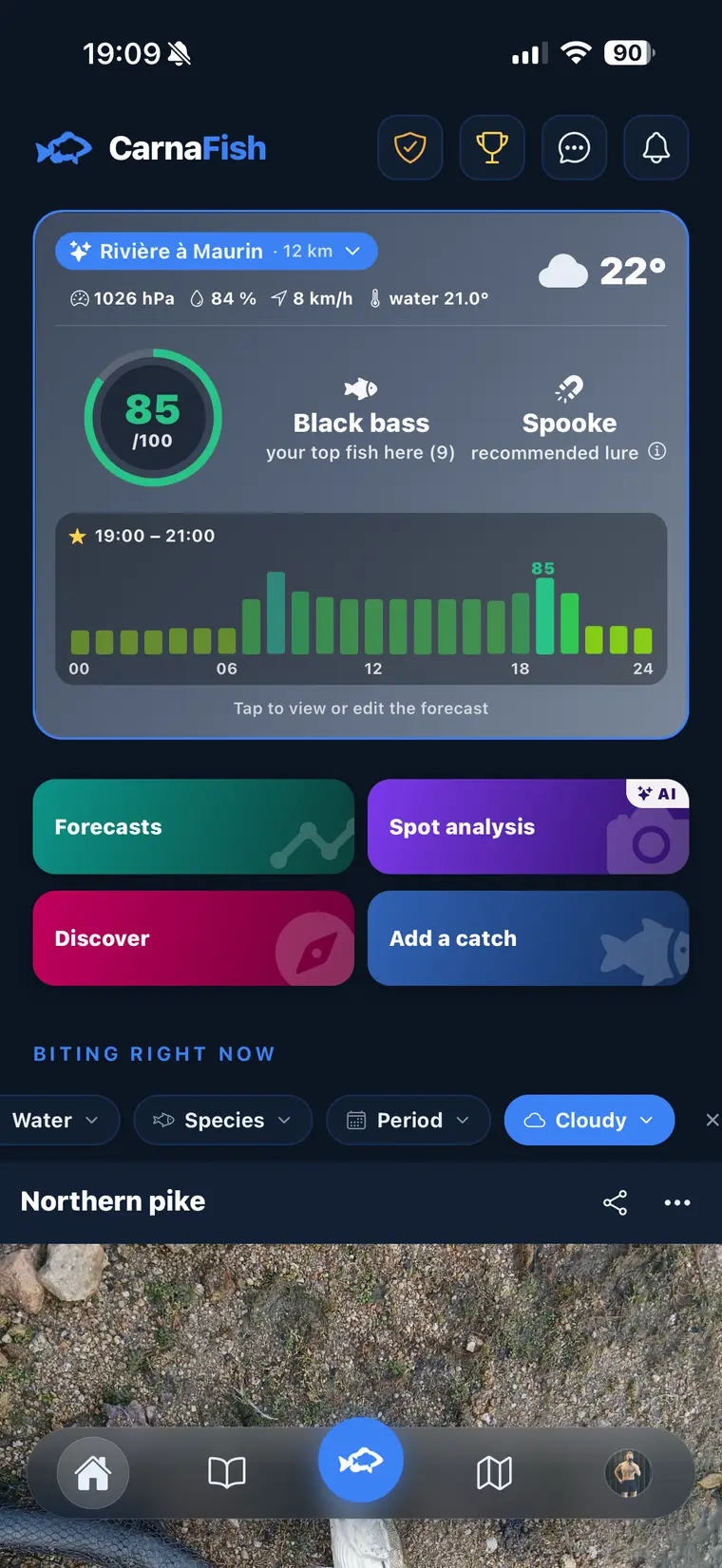
Not sure what to tie on?
Photograph your spot: CarnaFish reads the scene, cross-checks the conditions and gives you the zone, the lure and the retrieve. Free on iOS and Android.
One size, and a modest count
The Missile Craw comes in 4 in, or 10.2 cm, at 8 baits per pack. That is not a lot for a bait aimed at flipping, where the plastic takes a beating on every pass through wood: count on one pack for a solid day in cluttered cover, and bring two if you are working a laydown all morning.
The manufacturer does not publish a bait weight, which makes sense for an unweighted plastic — the bullet weight or the jighead you pick sets the fall rate, not the bait itself.
Missile Baits is a small outfit built around John Crews, a Bassmaster Elite Series pro, and every model goes through the professional circuit before it reaches a shelf. That does not make it a magic bait, but it explains why the brand's shapes are usually cut for one specific problem rather than designed to cover everything.
Colors by water clarity
- Dark or stained water: black with blue flake, the color in the photo, the historical flipping reference — a hard silhouette and flashes that pick up whatever light makes it under a tree.
- Clear water: green pumpkin, more discreet, the pick over vegetation or gravel when fish get a good look at the bait coming.
- Spring, when crawfish molt: an orange or red tone, which matches what bass actually see on the bottom at that time of year.
Against a Big Bite Baits Craw Tube, the Missile Craw gives up the signature sound of a hollow tube trapping air, but wins everything to do with hooking fish. Decide which one your water is missing more.
The right bait never makes up for the wrong spot, and that is exactly what CarnaFish makes easier: a photo of the spot, and the app suggests the zone, the depth and the presentation that fit the day. For the fundamentals of tackle and bass spots, our beginner's guide to bass fishing covers the subject.
Key takeaways
- The pronounced hook slot is the real reason this bait exists: it fixes the hooking flaw of a flipping tube.
- Solid head and a little bulk: the bait genuinely skips under docks, where a flatter plastic noses in.
- One size only, 10.2 cm, in packs of 8 — a count to plan for if you fish cluttered cover.
- Beyond flipping, it holds up perfectly on a shaky head, a Carolina rig and as a jig trailer.
FAQ
What is the difference between the Missile Craw and a flipping tube?
A tube is hollow and compresses at the hookset, which delays the point breaking out. The Missile Craw has a solid body with a pronounced hook slot, so the point drives through immediately. In exchange, it does not produce the tube's trapped-air sound.
How many baits per pack?
Eight in 10.2 cm, according to the manufacturer's information. That is a short count for flipping wood, where plastic wears out fast, so buy ahead if you plan to fish cluttered cover all day.
What weight should I use with the Missile Craw?
For flipping, a 7 to 10 g bullet pegged against the nose lets it drop straight and skip. For a Carolina rig, pick the weight for the current and the depth; the bait itself carries no lead.
Does this bait work as a jig trailer?
Yes, that is one of its stated uses. Its value is adding length without adding bulk, which helps when a big creature would slow the jig's fall too much or catch on the way through cover.
Why does the bait drop so fast?
Because the mass sits in the solid nose and the body is slim. The two flat claws only really brake at the end of the fall, which gives a quick drop followed by a short glide — exactly what you want when flipping.
Which color should I start with?
The black with blue flake from the photo. It is the flipping standard, because it works in stained water and under a tree where light is scarce, and it keeps a readable silhouette in both cases.
The full bass lure guideSeason-by-season strategy: which family of lure, when, and why.Go from theory to fish
CarnaFish reads your spot from a photo and gives you the game plan: zone, lure, retrieve. Free on iOS and Android.