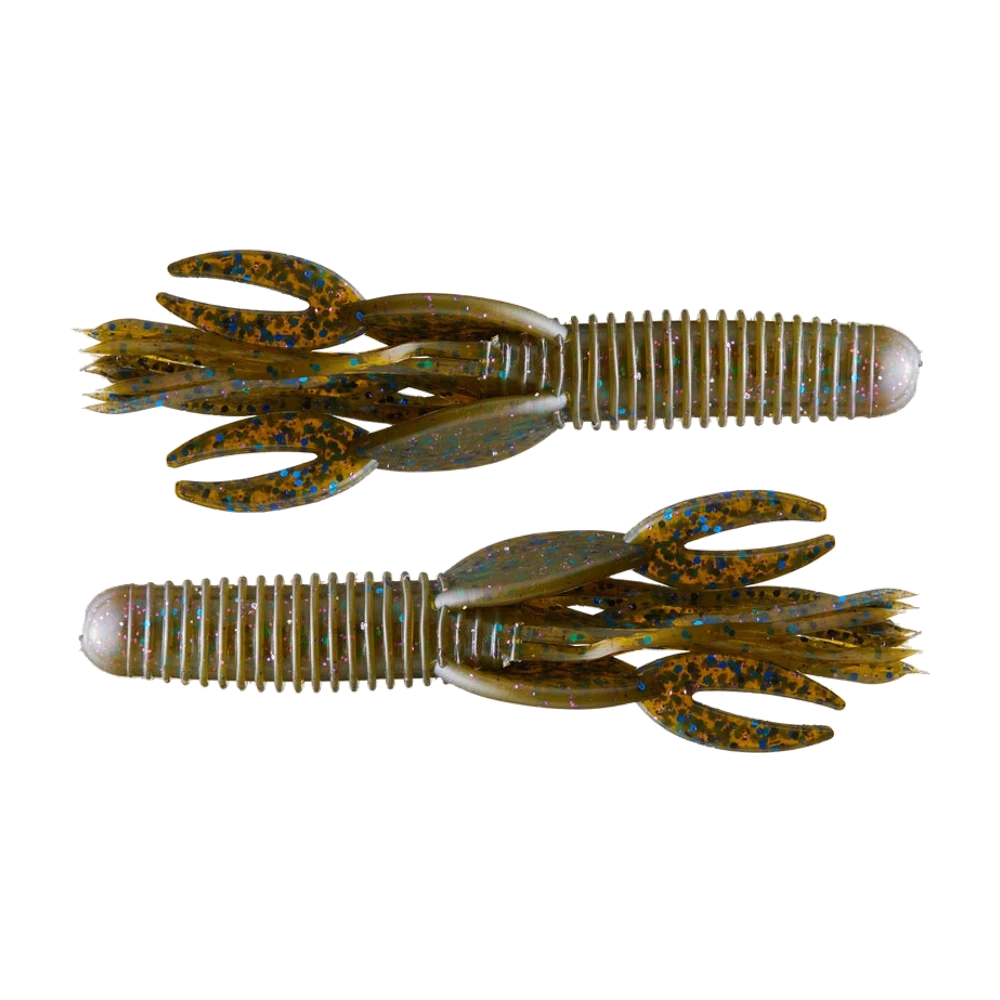
Big Bite Baits Craw Tube: the tube that flips like a crawfish
The right lure in the wrong spot still catches nothing. CarnaFish spots the zone that works, from a single photo.
It is three in the afternoon, the light is hard, and the bass have abandoned the open banks to tuck under the laydowns. You have already run a crankbait and a spinnerbait through without seeing a thing. This is exactly the window where you stop covering water and start picking fish off one target at a time, a rod's length away. The Big Bite Baits Craw Tube is built for that moment, and for very little else.
Two baits in one body
The Craw Tube is not a tube with a pair of claws bolted on for looks. It borrows the two halves that actually work, each for a different reason. The front is a hollow, ribbed tube body with a solid head — not a hollow one. That solid head is what holds up on the hook cast after cast, where a standard tube tears out around the eye by the third bite. The back is a full crawfish: a bundle of fine tentacles plus two flat claws extending off the body.
The result is a noticeably bulkier bait than a finesse tube. Big Bite Baits leans into that: the profile is thick to draw big bites rather than to rack up small ones. If you want a bait that gets a tap every ten minutes, pick something else — a Z-Man TRD TubeZ on a ned rig will give you far more bites, just not the same fish.
What the hollow body changes on the fall
A hollow body traps air when you thread it onto the hook. That air does not last long, but it is enough to slow the first part of the descent and send a thin string of bubbles up along the bait. To a fish sitting under a branch, that detail matters: it watches something come down that does not drop like a rock.
The other effect of the ribbed body is surface area. Each rib grabs a little water and gives the bait a slight side-to-side sway instead of a dead-straight fall. Put the Craw Tube next to a Reaction Innovations Sweet Beaver, which drops hard and straight under its weight, and you see the difference without sonar: the beaver gets to the bottom fast, the Craw Tube loiters on the way down with its claws and tentacles open.
Make your first cast of the day with no weight at all, or with a 3.5 g / 1/8 oz sinker. You will see how long the bait truly takes to cover the first two metres, and from then on you know how many seconds to wait before setting the hook. That is the piece of information missing for almost every angler who complains about missing flipping bites.
Rigs that work
Weedless Texas, the standard
A 3/0 to 4/0 wide gap hook for the common sizes, a 7-14 g bullet sinker depending on depth and how thick the cover is. Drive the hook into the nose of the solid head, bring it out on top about a centimetre back, then bury the point just under the skin of the back. That is what the solid head is for: it keeps the point where you put it, even after a fish.
Leave the sinker free on a clean bank — it outruns the bait, and the Craw Tube arrives behind it, gliding. Peg it with a bead or a silicone stopper the moment you move into wood or lily pads, otherwise the sinker goes one side of a stem and the bait goes the other.
Punch rig for matted vegetation
With an 18-28 g tungsten sinker and a tightly pegged stopper, the Craw Tube punches through floating mats. Its tapered front end makes the hole, and the appendages fold back for the trip through before opening again underneath. This rig demands heavy braid, a powerful rod and an immediate hookset — you do not have the luxury of letting a fish run under a mat.
Jig trailer
Behind a flipping jig, the Craw Tube replaces a standard chunk with far more appendage movement. Trim one or two body ribs off to shorten the package if the overall profile gets too big. One caveat though: its bulk clearly slows the jig's descent, which is an asset in shallow water and a handicap when you need to reach six metres quickly.
Where and when it really produces
The Craw Tube is a contact bait. Laydowns, docks, rock, reed edges, pad lines: anywhere a fish pins itself against something solid and you can drop the bait vertically. It has no business being fan-cast across a bare sand flat.
The obvious window is late spring and summer, when crawfish are active and bass hunt them at the base of cover. In Europe, where American crayfish populations are often dense in ponds and canals, a crawfish imitation is rarely a bad call from June to September. In winter the profile still holds up, but you have to slow right down: drop it, wait ten seconds, lift it twenty centimetres, wait again.
The mistake that costs fish
Working it too much. The natural reflex, once the bait is on the bottom, is to hop it. On an appendage bait like this one, every pull folds the claws and tentacles flat along the body — it is precisely when the bait stops moving that the appendages finish opening and do their best work. Drop it, let the line go slack, count to five. The number of bites that come during that pause is the best argument for the bait.
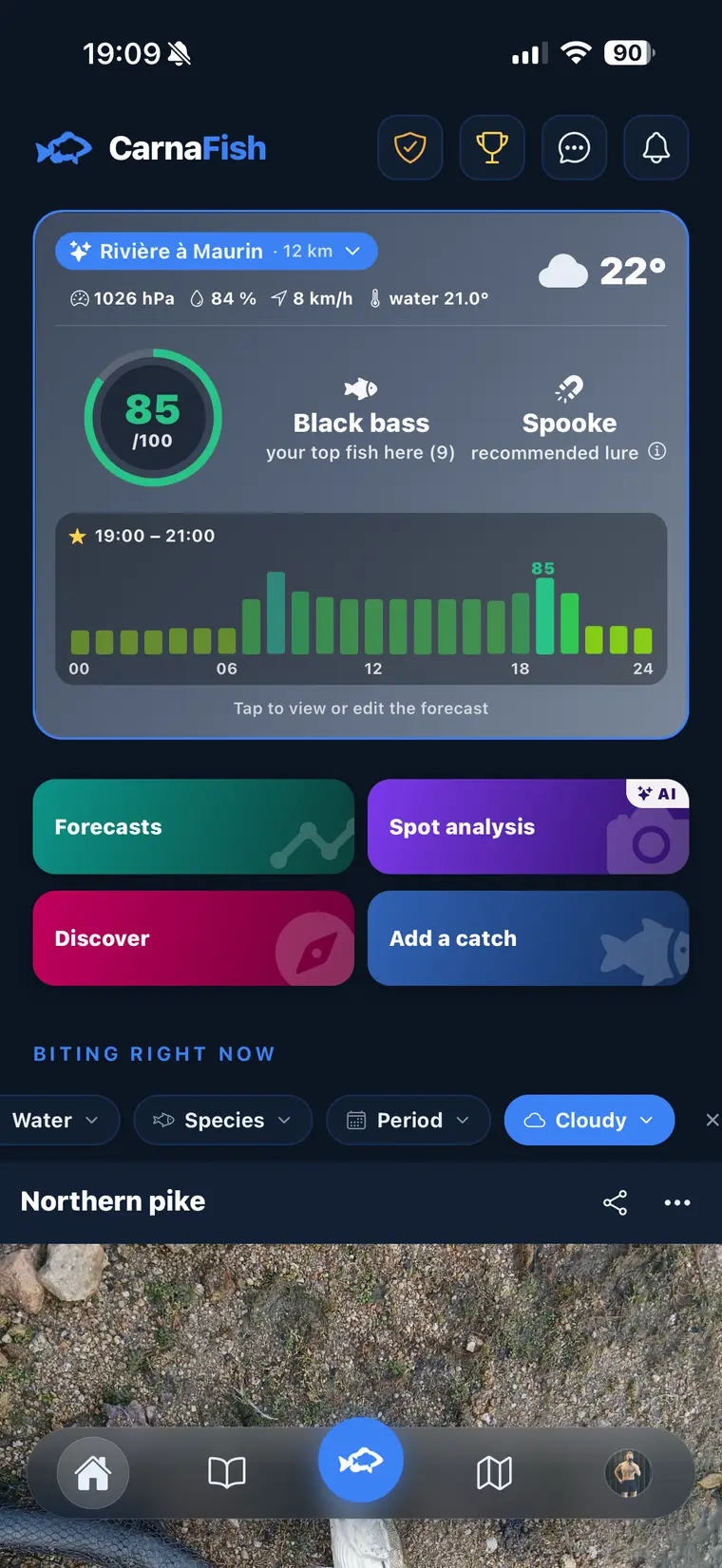
Not sure what to tie on?
Photograph your spot: CarnaFish reads the scene, cross-checks the conditions and gives you the zone, the lure and the retrieve. Free on iOS and Android.
Colour by water clarity
- Clear to lightly stained water: flake Green Pumpkin, exactly the shade in the photo. It is the default crawfish colour, the one you keep on when you have no information.
- Dark water, heavy stain or under a thick mat: Black Blue, because under cover there is no light left and all a fish reads is a silhouette.
- Spring, warming water: Orange Craw or any red-orange leaning version, matching the colour crawfish take on around the moult.
A specialist, not a Swiss army knife
The Craw Tube does not replace a finesse worm or a swimbait. It does one thing — fall slowly along an obstacle while waving a lot of appendages — and it does it better than most. Target choice weighs more here than lure choice: pick the wrong laydown and the best craw in the world will not save the cast. That is exactly what CarnaFish makes easier: a photo of the spot, and the app suggests the zone and the presentation suited to the day's conditions. To build the fundamentals of reading a spot, our guide to reading a fishing spot pairs well with this page.
Key takeaways
- Solid head up front, hollow ribbed body behind: a craw's hook retention with a tube's slowed fall.
- This is a flipping and pitching bait fished against cover, not a search bait.
- The manufacturer does not publish a length for this model; match the hook to the bait in your hand rather than to an assumed spec.
- The bite usually comes during the pause, as the appendages finish opening.
FAQ
What hook size suits a Craw Tube?
A 3/0 to 4/0 wide gap Texas hook covers most cases. Big Bite Baits does not publish an official length for this model, so lay the hook along the bait before you buy: the point should exit around the first third of the ribbed body.
Should the sinker be pegged or free?
Free on a clean bank, so the bait glides in behind the weight. Pegged as soon as you move into wood, pads or dense vegetation, otherwise the sinker and the bait end up on opposite sides of a stem.
Does the Craw Tube work for pike or perch?
That is not what it is for. It is a bass bait designed for flipping, with no hardware suited to a pike's teeth. A perch might grab it out of curiosity, but the profile is far too bulky to call it a perch bait.
How is it different from a standard tube?
A standard tube has only tentacles and an entirely hollow body, which makes it fragile where the hook sits. The Craw Tube adds a solid head that holds the hook, two flat claws and a much thicker profile aimed at big bites.
Can it be used as a jig trailer?
Yes, and it is a good use for it. It brings more movement than a standard chunk, but it slows the jig's fall. Save it for jigs fished shallow, or trim one or two body ribs to cut the bulk.
How long should I wait after it lands?
At least three to five seconds on slack line, longer in cold water. The appendages keep opening and moving after the bait itself has stopped, and that phase is when most flipping bites happen.
The full bass lure guideSeason-by-season strategy: which family of lure, when, and why.Go from theory to fish
CarnaFish reads your spot from a photo and gives you the game plan: zone, lure, retrieve. Free on iOS and Android.