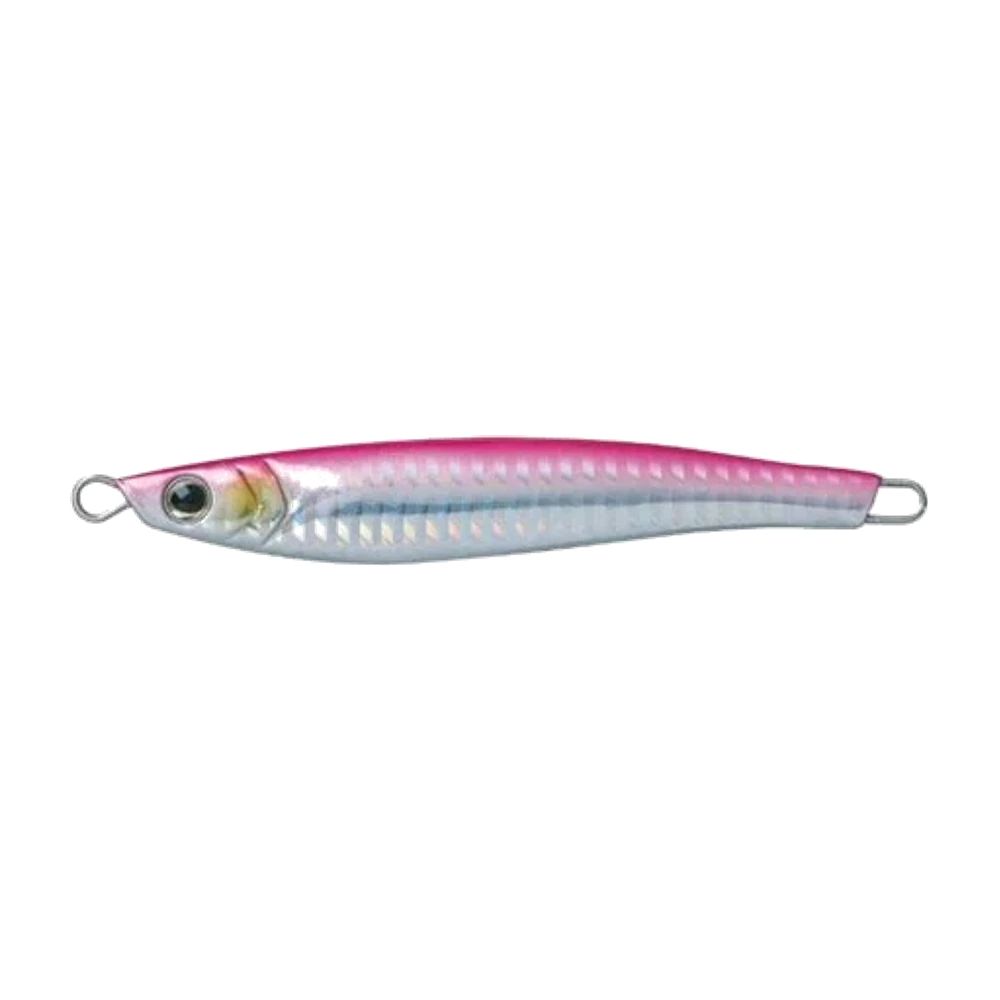
Molix Supernova Jig: the jig that works on the way down
The right lure in the wrong spot still catches nothing. CarnaFish spots the zone that works, from a single photo.
With a saltwater jig, half the fishing is invisible. You cast a long way, you work it back in lifts, you watch your lure come home — and you think you have been fishing. In reality, the phase that catches the most fish is the one you are not watching: the fall, when the jig drops back down while you do nothing at all.
A bass sitting on a drop-off in fifteen metres does not rise to attack a piece of metal fleeing upwards. It waits for it to come back down, off balance, and takes it by the flank. That is why a jig should be judged first on how it behaves going down, not coming up.
The Supernova is built on exactly that principle: its offset centre of gravity makes it glide sideways as it falls, instead of diving straight like a sinker.
What a "fluttering fall" means
A centre-balanced jig drops vertically, fast, with no signal. An offset-balanced jig does something else:
- It slides sideways on every oscillation, tracing a slow zigzag instead of a straight line. The presentation time per metre of descent goes up sharply.
- It shows each of its two faces in turn, which produces a series of separate flashes rather than a continuous shimmer. Deep down, where light is scarce, that alternation is the most visible signal there is.
- It loses contact with the line during the fall — and that is intentional. The fall has to be free, line slack. A jig held on a tight line turns back into a pendulum and loses everything its shape is for.
The direct consequence: the bite is almost never felt as a knock. You see it as the sinking line stopping, or feel it as an abnormal weight when you pick contact back up.
The retrieve: the basic sequence
- Cast and let it drop on a free line, keeping a finger on the line. Count the seconds and you will know what depth you are working.
- On bottom contact, lock up immediately. A jig left on the bottom wedges itself in rock within three seconds.
- Three to five fast lifts, coordinated between rod and reel: one turn of the handle for each lift of the rod tip. The jig climbs, accelerating and zigzagging.
- Stop everything and let it drop back, line slack. Two to four seconds. Watch your line through that phase.
- Pick contact back up and start again. Work gradually up through the water column if nothing happens near the bottom.
Set the hook with a sideways pull, never upwards: on an assist hook, a vertical set often pivots the jig and pulls it free.
On the water: time your free falls. If a fall that normally takes three seconds stops at two, that is a bite, even if you felt nothing. Always set the hook on any shortened descent — deep down, it is the only clue you are going to get.
Weight: don't take the heaviest
The commonest mistake is going too heavy "to be sure of reaching the bottom". A jig that is too heavy drops straight and kills the lateral glide that makes it worth using.
| Depth | Current | Weight |
|---|---|---|
| 5 to 10 m | weak | 20 to 30 g |
| 10 to 20 m | weak to moderate | 30 to 40 g |
| 15 to 25 m | strong | 40 to 60 g |
| From the shore, long casts | any | 30 to 40 g |
The right setting is the lightest jig with which you can still feel the bottom. When in doubt, go one step down and give it more line.
Rigging the hooks properly
A jig is rigged with one or two assist hooks at the front, on the head ring, never with a treble at the back. Two reasons: the take is almost always at the head when a fish attacks a falling jig, and a rear treble turns the lure into a rock magnet.
Choose a short assist whose point reaches the first third of the body. Too long and it tangles around the line during the fall — which completely neutralises the lure without you noticing until you reel in.
A single assist is enough on the light weights; move to two hooks rigged opposite each other from 40 g up, where the wider body leaves more room for a fish to grab alongside. Replace the assist cord as soon as it starts fraying: it is the cheapest part of the setup and the one that lets go first on a good bass.
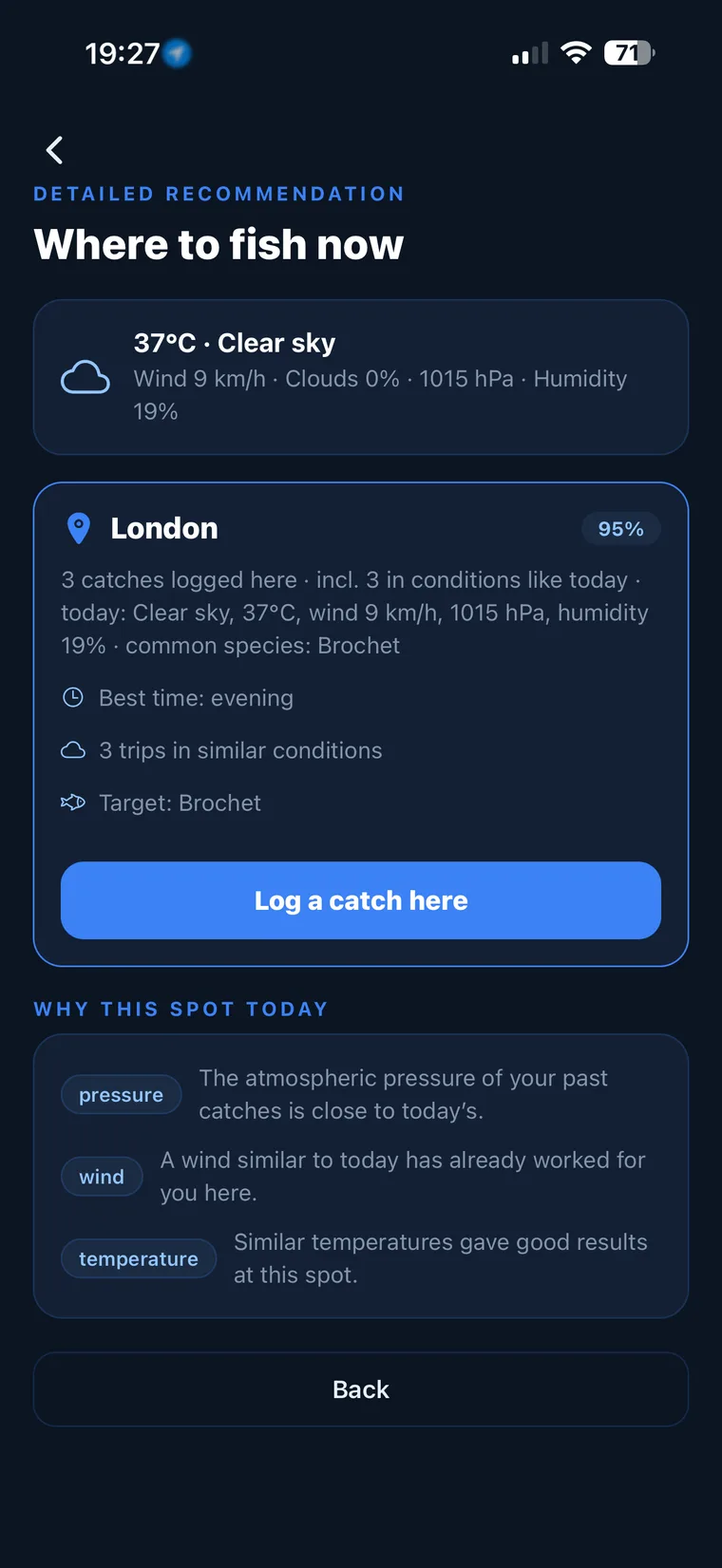
Not sure what to tie on?
Photograph your spot: CarnaFish reads the scene, cross-checks the conditions and gives you the zone, the lure and the retrieve. Free on iOS and Android.
Where it excels, where it is unsuited
- Rocky points and breakwaters dropping into deep water, fishing from the shore, when you need to reach a drop-off forty metres out and fifteen down.
- Bass feeding offshore, where you have to punch through a layer of small fish to reach the big ones sitting underneath.
- Strong tidal current, where a soft plastic on a jig head no longer holds the bottom.
Conversely, it is of no use in shallow water over a sandy beach: it has no room to fall and collects the bottom. It is also poorly suited to calm, clear water with bass close in — a metallic signal that strong often puts fish to flight in a metre of water. And it is not fished over bottoms thick with weed, where every descent brings vegetation back on the assist.
Supernova or an inshore jig
The MajorCraft Jigpara covers a close role but in more modest weights and depths: it is the versatile shore jig, easier to make work on a straight retrieve, less dependent on the quality of the fall. If you are starting out with saltwater jigs, that is where to begin.
The Supernova takes the lead as soon as the depth increases and current sets in, because its lateral glide stays readable where a centre-balanced jig becomes a plain sinker. Against the Illex Dexter Jig, the difference is mainly in the speed of the retrieve: the Dexter accepts slower lifts and a more measured approach, while the Supernova needs speed for the zigzag to form.
On shallower spots where bass are pinned to the sand, a Fiiish Crazy Sand Eel stays more relevant. Our guide to lure fishing for sea bass covers choosing between metal and soft plastic according to the tide. And if you are unsure what weight to fit for the spot in front of you, CarnaFish analyses a photo of the spot and answers.
Key takeaways
- The fall is the phase that catches the fish: leave it completely free.
- Count your seconds on the descent; a shortened fall is a bite.
- Take the lightest jig that still lets you feel the bottom, not the heaviest.
- A short assist hook rigged at the front, never a rear treble.
- Useless in shallow water or in calm, clear water close in.
FAQ
What jig weight should I choose?
20 to 30 g down to 10 m, 30 to 40 g between 10 and 20 m, up to 60 g beyond that or in strong current. Always take the lightest that still lets you feel bottom contact.
Why rig an assist hook at the front?
Because a falling jig is attacked head first. A front hook pins the fish properly and catches far less on rocky bottom than a treble rigged at the back.
How do you detect a bite in deep water?
By timing the free falls. A descent that stops earlier than usual signals a take, even with no feel in the rod. Set the hook sideways as soon as the count comes up short.
Should you work it fast or slow?
Fast on the way up: three to five lifts coordinated between rod and reel, one handle turn per lift. Speed is what creates the zigzag. Then a complete stop for the fall.
Does the Supernova Jig work from the shore?
Yes, off rocky points and breakwaters dropping straight into deep water. It is of no use at all on a shallow sandy beach, where it has no room to fall.
What braid and leader should I use?
Fine braid of 0.20 to 0.30 mm to limit drag in the current, and one to two metres of 0.40 mm fluorocarbon leader to take the abrasion on rock.
The full sea bass lure guideSeason-by-season strategy: which family of lure, when, and why.Go from theory to fish
CarnaFish reads your spot from a photo and gives you the game plan: zone, lure, retrieve. Free on iOS and Android.